Navigation
Install the app
How to install the app on iOS
Follow along with the video below to see how to install our site as a web app on your home screen.
Note: This feature may not be available in some browsers.
More options
Style variation
You are using an out of date browser. It may not display this or other websites correctly.
You should upgrade or use an alternative browser.
You should upgrade or use an alternative browser.
Iran - Israel/US War: Israel-US declare war on Iran, Iran responds
- Thread starter Khorasan Black Flags
- Start date
More options
Who Replied?


Indos
INT'L MOD

and they say Iran is the rogue state
Iran is dealing with emotional driven US leader, using hard approach ( by playing hard) will not result in good outcome. Its different with previous US administrations. From threaten to annex Greenland, US accusing NATO, to stupid trade tarrif have already shown that
Trump is anomaly and Iran leadership should have better approach to deal with such kind of leadership.


Watandar
SpeedLimited

I am not sure. A lot of oil futures are based on speculation. If China can resume buying oil from the market, at just a little bit higher rate, it will bump up the per barrel price by another $5 to $10 and will put Trump under even more pressure.I wonder if oil prices will shoot up quickly in the next few weeks. Its been a couple of weeks since the strait was closed by iran so the oil shock typically hits 4 to 6 weeks later

Feroze
Trusted Member

Iran signals readiness for ‘US ground operations’ as MoU expires
Iran’s more offensive posture comes after Trump commented that the US would soon make the Strait of Hormuz its territory.Listen (7 mins)
Save
Click here to share on social media
Share
Add Al Jazeera on Google

A banner in Tehran depicting Donald Trump with a target on his head, during funeral ceremonies for Supreme Leader Ayatollah Ali Khamenei, July 5, 2026 [Majid Saeedi/Getty Images]

By Maziar Motamedi
Published On 17 Aug 202617 Aug 2026
Tehran, Iran – Iranian authorities have signalled they could shift to a more offensive approach to the war with the United States as a Memorandum of Understanding (MoU) with Washington expires.
Brigadier General Yadollah Javani, head of the political bureau of the Islamic Revolutionary Guard Corps (IRGC), told state television on Sunday night that his forces were ready to take whatever action is needed to defend the country.
Recommended Stories
list of 4 items- list 1 of 4A US territory? Trump unveils proposal to control Strait of Hormuz
- list 2 of 4Did the US really destroy Iran’s ballistic missile capability?
- list 3 of 4Iran says no decision yet on a return to talks with the US
- list 4 of 4US aircraft carrier expected to relieve USS Lincoln in Middle East
Tensions between Iran and the US over control of the Strait of Hormuz have continued to rise despite a ceasefire being agreed between them in June. While the MoU effectively collapsed after fighting restarted last month, the agreement officially expires on Monday.
“The enemy started the war and our efforts have been defensive, although they might take on an offensive aspect,” said Javani.
He did not elaborate on what exactly the offensive measures could entail, but said opponents should expect “strategic surprises”.
IRGC spokesman Hossein Mohebbi last week identified US and regional allies’ infrastructure – such as energy networks, power plants and internet-connected systems – as potential targets, if the US hits Iran’s civilian infrastructure.
Hardline Iranian politicians and media outlets have discussed the idea of mounting a ground incursion against US interests in Bahrain and Kuwait if Washington invades Iran.
Analysts have raised questions over the feasibility of that and the risks involved, while there is no recent indication that the US is planning ground operations in Iran.
Advertisement
The Iranian emphasis on offensive deterrence against the US comes after Supreme Leader Mojtaba Khamenei, viewed as a hardliner, consolidated his power by appointing several IRGC old guard and confidants to key military and security positions last week.
Play Video
4:48
- Now Playing
04:48
Iran says US violations make 60-day negotiation period ‘no longer relevant’
- Next
00:42
Police execute controlled World War II–era Mine explosion
- 01:59
Manila floods grind traffic to a standstill amid heavy monsoon rains
- 00:59
Lula and Bolsonaro’s son launch rival bids for Brazil presidency
- 02:33
Global condemnation of Israeli settler violence against Palestinians
Khamenei said Major General Ahmad Vahidi’s rise to commander-in-chief of the IRGC must represent a mix of “maximum deterrence” with readiness for “powerful offensive operations against the enemy”.
Vahidi said Khamenei’s leadership and the Iranian armed forces had managed to “bring to its knees the most heavily-armed army in world history” after the US and Israel launched strikes in Iran on February 28, starting fierce fighting between the two sides.
US President Donald Trump reiterated on Friday his claim that Iran was defeated in the war while facing a naval blockade acting as a “wall of steel”. He also said the Strait of Hormuz would “pretty soon” be declared US territory.
The White House later suggested that comment was a joke, but Iran’s army chief, Amir Hatami, reacted by setting a $30,000 reward for any man who kills or captures a US soldier, if they are involved in any ground operation on Iranian soil. Women would be given twice the reward if they managed such a feat, he added.
“Our hands are open in terms of reaching the aggressors and they will become more open through our initiatives,” Hatami said, referencing recent Iranian attacks on US forces in Jordan.
Mohsen Rezaee, who has the powerful position of secretary of the Supreme National Security Council, suggested that the Trump administration might have been considering ground operations on Iranian territory, but held off as a result of “half-baked plans”.
Rezaee said that the US Central Command had refrained from hitting Tehran or northern Iran during the two-week flareup in fighting in July, instead attacking about 50 cities in 15 provinces.
He believed that the purpose of the air raids was to prepare for a ground assault to take control of the Strait of Hormuz and potentially reach nuclear facilities in Isfahan, where highly-enriched uranium is suspected of being buried under the rubble of US strikes.

Bridges, roads, maritime control towers, radar and other coastal installations, and military facilities were struck to cut off logistical supplies to southern Iran, Rezaee noted.
“They had not calculated that to land troops for the Strait of Hormuz, it’s not doable with 40,000-50,000 soldiers, you must bring at least 100,000 people,” he said. “You must cross the Zagros Mountains and be able to pass the Fars province.”
Advertisement
Iranian media and commanders have reported in recent weeks that scenarios are in place to defend individual islands and coastal areas in southern Iran that the US military might consider seizing. They include the critical oil export terminals on Kharg Island.
Iranian territories around the Strait of Hormuz have been reinforced with rapid-response units.
Army spokesman Mohammad-Reza Akraminia said last week that the aim will be to prevent any foreign troops landing on Iranian territory.
“If the Americans enter one of our islands, we will certainly target them on our own islands, let alone on other countries’ soil,” he told state TV.
Authorities have also signalled they are ready for any unrest provoked by separatist groups near Iran’s western borders with Iraq and Turkiye, or in the east with Pakistan and Afghanistan.
The IRGC has reportedly bolstered defences and continued to launch missile and drone strikes against armed groups based in Iraqi Kurdistan.
![A U.S. sailor launches an F-35C Lightning II, assigned to Marine Fighter Attack Squadron 314, from the flight deck of Nimitz-class aircraft carrier USS Abraham Lincoln during the ongoing conflict with Iran [U.S. Navy/Handout via Reuters]](https://www.aljazeera.com/wp-content/uploads/2026/08/2026-08-13T142604Z_1808568210_RC2LSMAD8MX4_RTRMADP_3_IRAN-CRISIS-USS-LINCOLN-1786892589.jpg?w=770&resize=770%2C513&quality=80 "A U.S. sailor launches an F-35C Lightning II, assigned to Marine Fighter Attack Squadron 314, from the flight deck of Nimitz-class aircraft carrier USS Abraham Lincoln during the ongoing conflict with Iran [U.S. Navy/Handout via Reuters]")
Iran shrugs off expired MoU
Javani, the political chief of the IRGC, said in a separate interview on Monday that the Strait of Hormuz will only fully reopen when Washington implements commitments agreed under the MoU signed in June.Iran’s Ministry of Foreign Affairs said that a two-month window to halt fighting was not specifically mentioned in the MoU text. The ministry also dismissed that the expiration had any particular significance to the war with the US, or Tehran’s ongoing talks with Oman regarding Hormuz.
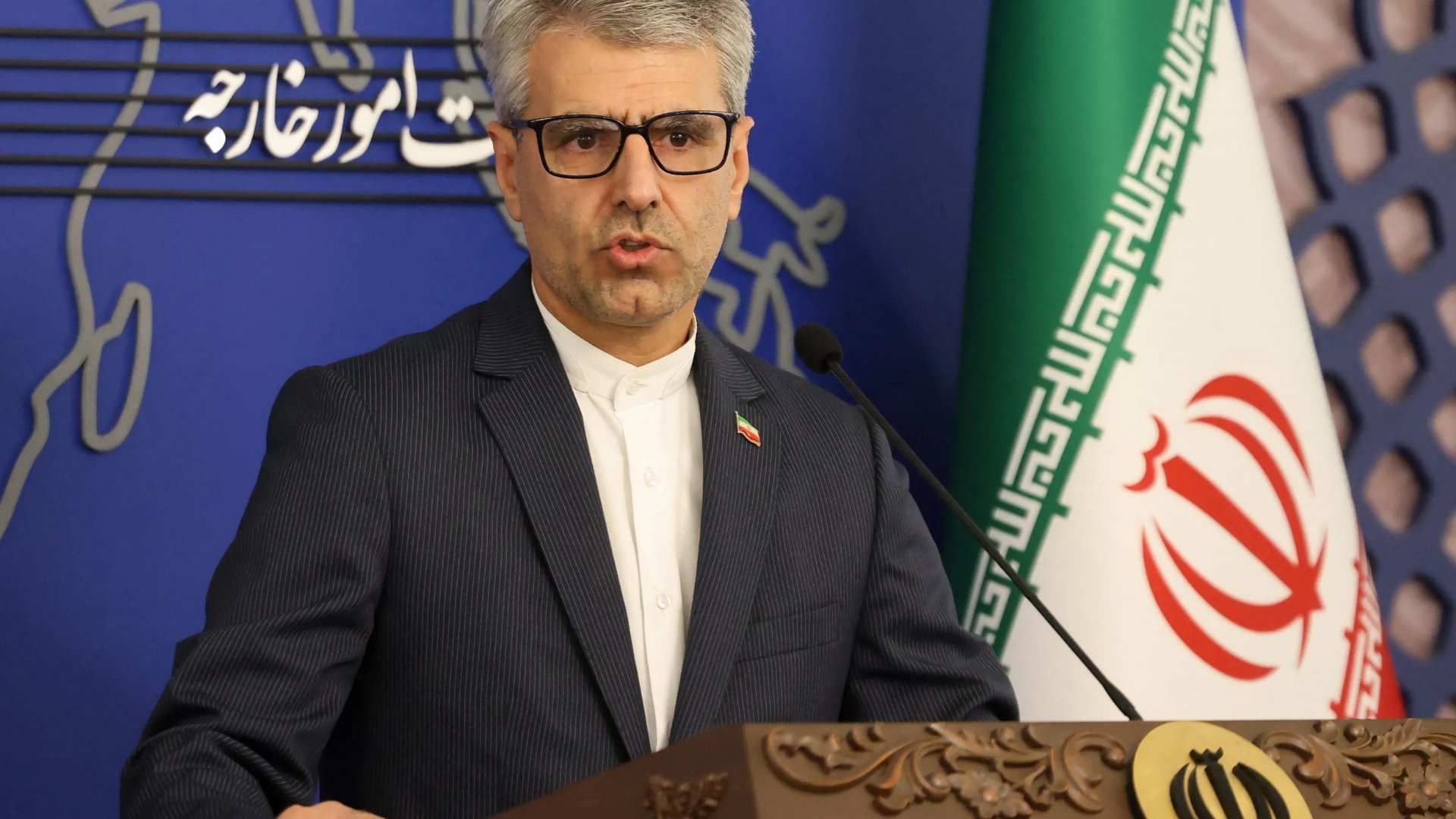
“It has been proven many times that the Islamic Republic of Iran is not a party to devise its policies under pressure, ultimatums and deadlines. We decide based on our evaluations of what guarantees national interests and security,” Baghaei told reporters during a briefing on Monday.
He said the talks with Oman have so far been delayed in producing an arrangement on the partial reopening of Hormuz due to legal and technical complexities, the multiple actors involved and “ill-wishing parties” seeking to spoil the process.
Parliament speaker and chief negotiator, Mohammad Bagher Ghalibaf said during a speech on Sunday night that the MoU was a “document of pride and victory in the field of diplomacy”.
Ghalibaf insisted that the Islamic Republic had emerged “victorious”, both politically and militarily, from the war with the US and Israel.
“I don’t mean that we destroyed their armies, I mean that they attacked us while clearly and repeatedly citing nine objectives, but did not achieve any of these goals at any level. That was the biggest abject failure for the US and the Zionist regime,” he said.
Ghalibaf has not yet managed to convince the Iranian leadership to agree on a long-term diplomatic resolution with the US to end the war.

Iran signals readiness for ‘US ground operations’ as MoU expires
Iran's more offensive posture follows Trump's comment that the US would soon make the Strait of Hormuz its territory.

retaxis
Trusted Member
India is already on the brink of business shutdowns all over due to shortage of oil. China should definitely buy a hell of a lot to hurt America/IndiaI am not sure. A lot of oil futures are based on speculation. If China can resume buying oil from the market, at just a little bit higher rate, it will bump up the per barrel price by another $5 to $10 and will put Trump under even more pressure.


Indos
INT'L MOD
India is already on the brink of business shutdowns all over due to shortage of oil. China should definitely buy a hell of a lot to hurt America/India
For India, I think the sortage of gas is much more damaging to them than the oil price hike.
The gas is needed for industry and most gas for India is supplied by LNG from Middle East that depend on Hormuz, their FDI (manufacturing) will likely get effected.
South Asia in general also badly effected
Indos
INT'L MOD
We have started coal gasification project , future is stable for gas due to this , currently government may be facing shortage for gas
The Hormuz closure and US - Iran conflict indeed will likely make new equilibrium. This will cause trouble for some time, but create opportunities as well like you said with coal gasification, solar pannel, EV, green energy, more public transportation, etc

PakAl
Elite Member
Sounds good on paper but as we witnessed it doesnt work, you need the strikes backed by boots on the ground, backed by local support. In Syria its all over for Iran, in Lebanon they have become weak, Yemen is also weak, Iraq can be a strong ally if Iran plays its cards right.Iran should, even without proof, pre-pre-emptively launch missiles at every country suspected of financing the US or Israel or diplomatically supporting them
Watandar
SpeedLimited
WSJ : Secret Eye-ranean plan to escalate the war !
After President Trump signed a memorandum of understanding with Iran in mid-June, administration officials fanned out to build support for an agreement they hoped would reopen the Strait of Hormuz and start winding down the war.
Iran’s hard-line leaders huddled in Tehran and came up with a different plan, according to Iranian and Arab officials. In their view the pact was likely just an attempt by the U.S. and Israel to take pressure off the global economy and buy time for a bigger attack down the road. Instead of putting faith in talks, they took the past two months to prepare for a bigger fight.
Their efforts include giving the powerful Islamic Revolutionary Guard Corps more control of the country’s regular army, appointing hardened veterans of the war with Iraq and past internal crackdowns to key posts, expanding domestic counterintelligence operations and ramping up production of missiles and drones. The leadership quickly seized the initiative, attacking ships to tighten Iran’s grip on Hormuz and expanding the battlefield to the Red Sea, which Saudi Arabia has used to get around Iran’s chokehold on the Persian Gulf.
 Strikes by Iran-backed Houthi rebels on the city of Moktah, Yemen, on Aug. 9 killed at least 11 people and damaged the city’s port. Khaled Ziad/AFP/Getty Images
Arab intelligence officials have picked up evidence—including communications between Iran and militia allies in countries such as Yemen and Iraq—of a strategic shift inside the country’s hard-line leadership to get their forces ready to widen the war and raise the costs for the U.S., officials familiar with the findings say. Alarming weaker Gulf countries like Kuwait, Iran’s leaders are increasingly talking about offensive operations on enemy territory.
Their overriding goal is to inflict enough pain to ensure the kind of attacks Iran has endured with the 12-day war last year and the continuing conflict aren’t repeated.
“There is also a widespread view in Iran that the main war has not yet begun,” said Mohammad Hassan Sangtarash, a Tehran-based defense analyst close to the Iranian government. “What we have seen so far is increasingly interpreted through the lens of ‘salami-slicing’ tactics—limited, incremental escalation designed to weaken capabilities before a larger confrontation.”
The Iranian preparations point to an enormous gulf between how Washington and Tehran are perceiving this stage of the war. The divergence has driven a hard-line negotiating stance and reluctance to close deals by Iran’s leaders that has persistently flummoxed Trump, who has called them crazy and accused them of lying.

U.S. and Israeli strikes in Iran
Iran strikes against civilian vessels
Iran and allies’ strikes
Arak
Afghanistan
Isfahan
Ahvaz
Iraq
IRAN
Kerman
Shiraz
Kuwait
Zahedan
Qatar
Persian Gulf
Gulf of Oman
Saudi Arabia
U.A.E.
200 miles
Oman
200 km
Note: U.S. and Israel strikes include confirmed and reported.
Source: Institute for the Study of War and AEI’s Critical Threats Project
Emma Brown/WSJ
Iran’s readiness to fight also highlights a deep lack of trust that is likely to keep the two sides from reaching a durable deal to end the conflict any time soon.
Iran’s proclamations include plenty of bravado. The country’s military and economic base have been battered by U.S. and Israeli airstrikes. More pragmatic members of the leadership including Iranian President Masoud Pezeshkian have repeatedly warned Iran needs to negotiate a deal to end the war that brings sanctions relief or face the collapse of its economy.
But Iran is rebuilding its infrastructure and restoring access to missile bases much more quickly than expected, a concern to Israeli officials who are familiar with the progress. It also has successfully targeted U.S. bases and retains enough firepower to threaten ships and Gulf energy infrastructure. Arab officials are bracing for continued fighting and an extended disruption of energy supplies.
For the regime, “the baseline is war,” said Alan Eyre, a former senior U.S. diplomat and nuclear negotiator with Iran. “Iran will remain on a wartime footing, preparing for a subsequent attack.”
When Trump signed the memorandum of understanding with Iran on June 17 at the French palace of Versailles, it looked like the biggest hurdle would be convincing American critics that it wasn’t overly generous to Tehran.
The deal promised sanctions waivers to let Iran sell its oil, access to billions of dollars in frozen cash and the prospect of a $300 billion fund to rebuild the country. Iran’s main obligation was to open the Strait of Hormuz to shipping traffic and then negotiate in good faith on its nuclear program.
When Iran started shooting at ships the U.S. was guiding through the strait three weeks later in early July, it caught the U.S. by surprise.
“The very dangerous people from Iran, they’re sick,” said Trump, who also called Iran’s leaders scum. “There’s something wrong with them.”
In fact Iran was pursuing a two-track policy. While his diplomats pursued a peace deal with the U.S., Iranian leader Mojtaba Khamenei was taking steps to prepare the security apparatus for an expanded confrontation that may be initiated by Tehran itself.
The Revolutionary Guard used the calm created by the memorandum of understanding to lay the groundwork with allied militias around the region to step up attacks if needed, sending advisers to Iraq, Yemen and Lebanon to discuss the plans, the officials familiar with recent Arab intelligence findings said.
The intelligence including intercepted communications showed the Revolutionary Guard sending commanders to areas controlled by Yemen’s Houthis to plan for a stepped-up confrontation with Saudi Arabia in coordination with Iraqi militias that also are backed by Iran.
The Revolutionary Guard supervised deployments of missiles, naval weapons and drone launchers to positions overlooking the Red Sea. It also provided the Yemeni militants with intelligence, target lists including Saudi ports and energy facilities, and advice on sheltering from Saudi retaliation, the officials said.
The result was fighting that escalated through late July. The Houthis struck Yemeni government forces backed by Saudi Arabia and declared the Bab al-Mandeb Strait that links the Red Sea to world markets closed to Saudi Arabia. The militant group has fired on Saudi ships, complicating the kingdom’s efforts to export its oil and raising the supply risks for global markets.
Around the same time, Saudi Arabia said Iran-backed militias in Iraq had launched drone attacks on its oil facilities.
The Revolutionary Guard threatened Gulf states that it would destroy their energy facilities if the U.S. were to hit similar sites in Iran—going as far as sending detailed lists of individual targets to its Arab counterparts, the officials said.
 This satellite image shows smoke rising from the Saudi Aramco oil processing facility in Abqaiq, Saudi Arabia, in July. Planet Labs PBC/AP
Iran also escalated its attacks on American troops. Tehran surprised the U.S. by firing five ballistic missiles at Jordan during a lull in the conflict. The attack came two weeks after another Iranian strike in Jordan killed three U.S. servicemembers.
Officials in the Gulf grew more alarmed as they watched the scope of attacks grow and Iranian missiles evade U.S. defenses and hit targets more precisely in Jordan, Kuwait and Bahrain. The fighting spilled into August, with Iran striking six United Arab Emirates ships over the past two weeks as they tried to transit the Strait of Hormuz.
 A team carries the remains of a U.S. servicemember who was believed to be killed by an Iranian airstrike in Jordan. Jim Lo Scalzo/EPA/Shutterstock
“We took full advantage of the ceasefire period,” Revolutionary Guard spokesman Brig. Gen. Hossein Mohebbi said in an interview with the Guard-affiliated Tasnim news agency in July. “We enhanced our capabilities, accelerated our missile production rate and improved missile accuracy.”
Behind the scenes, Supreme Leader Khamenei was positioning his forces for a more aggressive fight, lining up seven key security leaders to run revamped military and repression institutions in a reorganization that was unveiled a week ago.
The appointments came with aggressive goals that included tightening the military chain of command, turning an ideological militia into a neighborhood intelligence agency and emphasizing an offensive approach.
Mohsen Rezaei, who led the Revolutionary Guard during the war with Iraq in the 1980s, was named secretary of Iran’s top decision-making body, the Supreme National Security Council, where he will be Khamenei’s representative. In the past week, the council squelched progress on a deal to gradually open Hormuz.
To step up internal security, Khamenei returned veteran Hossein Taeb, a close associate who led a deadly crackdown on protests in 2009, to the helm of the Basij. The supreme leader tasked him with pivoting the volunteer force into a “popular intelligence network” in the wake of two wars that showed how thoroughly Iran had been breached by Israeli intelligence.
Iranian government advisers see the next stage of the confrontation going beyond conventional warfare to include external attempts to foster domestic unrest. The government brutally suppressed protests over the country’s economic crisis in January and fears it’s only a matter of time before the continued deterioration under U.S. pressure brings demonstrators back to the street.
Khamenei also consolidated Revolutionary Guard influence over the regular army by unifying control of the two military arms under Brig. Gen. Ali Abdollahi, a veteran Revolutionary Guard senior commander and military leader who has aggressively advocated attacks on Arab states hosting U.S. bases around the Persian Gulf.
New Revolutionary Guard Commander in Chief Ahmad Vahidi—who has been unofficially on the job since March—was formally given the position and tasked with “powerful offensive operations against the enemy,” the decree appointing him said Monday. The next day, Gen. Mohammad Reza Naghdi, an adviser to Vahidi, said the paramilitary force must be prepared to take operations into enemy territory.
“Vahidi’s elevation is consistent with a leadership preparing the security establishment for a period of sustained confrontation rather than a return to normal peacetime politics,” said Saeid Golkar, an expert on Iran’s security services at the University of Tennessee at Chattanooga.
The Revolutionary Guard—an armed force nearly 200,000 strong—has devised new plans for further escalation including pre-emptive strikes, according to Iranian officials and public statements. Among the options: sabotaging internet cables in the Persian Gulf, creating political unrest in countries with Shia communities such as Kuwait and Bahrain, and potentially even ground operations in Kuwait.
Kuwait takes those risks seriously. In early May, the tiny Gulf sheikhdom said its security forces had intercepted six Revolutionary Guard troops that used a rented fishing boat to land on a Kuwaiti island separated from Iran only by a thin strip of Iraqi territory. Some Iranian political figures have suggested the Revolutionary Guard could launch ground raids via southern Iraq if the U.S. were to threaten Iranian territory like Kharg Island.
Some Gulf officials said Iran’s recent behavior is fueling uncertainty about relations with the much larger, newly more aggressive neighbor after the war. They say it remains difficult to assess the extent of the damage the U.S. and Israel did to the Revolutionary Guard’s capabilities. Still, it’s clear the organization hasn’t been defeated or deterred, and its hold on Hormuz has strengthened its regional position, they said.
That reality has helped push Gulf states to support even unfavorable deals that would acknowledge Iranian oversight of the strait if it stops further escalation. But regional leaders are also growing more frustrated by the lack of fundamental changes in Tehran’s behavior in response to diplomatic outreach.
Iran’s security-minded leadership, they said, appears to be growing more confident in its demands.
 Commercial vessels are anchored near a beach in the Strait of Hormuz off Bandar Abbas, Iran. Amirhosein Khorgooi/ISNA/AP
Mediators in the talks said Iranian diplomats agreed early in the month on a deal with Oman to set up and oversee routes through Hormuz that would lead to the gradual reopening of the strait. Those efforts were blocked by the Revolutionary Guard, which went back to attacking ships.
With negotiations blocked and Iran not backing away from escalating the fight, Trump has stepped back to see if the economic pressure from sanctions and the Navy’s blockade will soften Iran’s position, U.S. officials said.
But Iran’s leaders are deeply skeptical of Trump’s motives and are slipping into a survival economy aimed at holding out.
People close to Iran’s top negotiators have warned peace talks could be just an interlude before more conflict. Mehdi Mohammadi, a strategic adviser to chief Iranian negotiator Mohammad Bagher Ghalibaf, described the current stalemate Tuesday as the calm before the storm.
In an earlier social-media post, Mohammadi said the drivers of continued conflict include a “generational project for blood vengeance” for the killing of Supreme Leader Ali Khamenei, Mojtaba’s father, in the opening strikes of the war.
“The Iranian nation still has much unfinished business with Trump,” said Mohammadi, who is also a member of Iran’s negotiating team. “Iran is prepared for the great confrontation.”
Iran’s Secret Plan to Escalate the War
After President Trump signed a memorandum of understanding with Iran in mid-June, administration officials fanned out to build support for an agreement they hoped would reopen the Strait of Hormuz and start winding down the war.Iran’s hard-line leaders huddled in Tehran and came up with a different plan, according to Iranian and Arab officials. In their view the pact was likely just an attempt by the U.S. and Israel to take pressure off the global economy and buy time for a bigger attack down the road. Instead of putting faith in talks, they took the past two months to prepare for a bigger fight.
Their efforts include giving the powerful Islamic Revolutionary Guard Corps more control of the country’s regular army, appointing hardened veterans of the war with Iraq and past internal crackdowns to key posts, expanding domestic counterintelligence operations and ramping up production of missiles and drones. The leadership quickly seized the initiative, attacking ships to tighten Iran’s grip on Hormuz and expanding the battlefield to the Red Sea, which Saudi Arabia has used to get around Iran’s chokehold on the Persian Gulf.
Arab intelligence officials have picked up evidence—including communications between Iran and militia allies in countries such as Yemen and Iraq—of a strategic shift inside the country’s hard-line leadership to get their forces ready to widen the war and raise the costs for the U.S., officials familiar with the findings say. Alarming weaker Gulf countries like Kuwait, Iran’s leaders are increasingly talking about offensive operations on enemy territory.
Their overriding goal is to inflict enough pain to ensure the kind of attacks Iran has endured with the 12-day war last year and the continuing conflict aren’t repeated.
“There is also a widespread view in Iran that the main war has not yet begun,” said Mohammad Hassan Sangtarash, a Tehran-based defense analyst close to the Iranian government. “What we have seen so far is increasingly interpreted through the lens of ‘salami-slicing’ tactics—limited, incremental escalation designed to weaken capabilities before a larger confrontation.”
The Iranian preparations point to an enormous gulf between how Washington and Tehran are perceiving this stage of the war. The divergence has driven a hard-line negotiating stance and reluctance to close deals by Iran’s leaders that has persistently flummoxed Trump, who has called them crazy and accused them of lying.
Strikes after the Memorandum of Understanding
U.S. and Israeli strikes in Iran
Iran strikes against civilian vessels
Iran and allies’ strikes
Arak
Afghanistan
Isfahan
Ahvaz
Iraq
IRAN
Kerman
Shiraz
Kuwait
Zahedan
Qatar
Persian Gulf
Gulf of Oman
Saudi Arabia
U.A.E.
200 miles
Oman
200 km
Note: U.S. and Israel strikes include confirmed and reported.
Source: Institute for the Study of War and AEI’s Critical Threats Project
Emma Brown/WSJ
Iran’s readiness to fight also highlights a deep lack of trust that is likely to keep the two sides from reaching a durable deal to end the conflict any time soon.
Iran’s proclamations include plenty of bravado. The country’s military and economic base have been battered by U.S. and Israeli airstrikes. More pragmatic members of the leadership including Iranian President Masoud Pezeshkian have repeatedly warned Iran needs to negotiate a deal to end the war that brings sanctions relief or face the collapse of its economy.
But Iran is rebuilding its infrastructure and restoring access to missile bases much more quickly than expected, a concern to Israeli officials who are familiar with the progress. It also has successfully targeted U.S. bases and retains enough firepower to threaten ships and Gulf energy infrastructure. Arab officials are bracing for continued fighting and an extended disruption of energy supplies.
For the regime, “the baseline is war,” said Alan Eyre, a former senior U.S. diplomat and nuclear negotiator with Iran. “Iran will remain on a wartime footing, preparing for a subsequent attack.”
When Trump signed the memorandum of understanding with Iran on June 17 at the French palace of Versailles, it looked like the biggest hurdle would be convincing American critics that it wasn’t overly generous to Tehran.
The deal promised sanctions waivers to let Iran sell its oil, access to billions of dollars in frozen cash and the prospect of a $300 billion fund to rebuild the country. Iran’s main obligation was to open the Strait of Hormuz to shipping traffic and then negotiate in good faith on its nuclear program.
When Iran started shooting at ships the U.S. was guiding through the strait three weeks later in early July, it caught the U.S. by surprise.
“The very dangerous people from Iran, they’re sick,” said Trump, who also called Iran’s leaders scum. “There’s something wrong with them.”
In fact Iran was pursuing a two-track policy. While his diplomats pursued a peace deal with the U.S., Iranian leader Mojtaba Khamenei was taking steps to prepare the security apparatus for an expanded confrontation that may be initiated by Tehran itself.
The Revolutionary Guard used the calm created by the memorandum of understanding to lay the groundwork with allied militias around the region to step up attacks if needed, sending advisers to Iraq, Yemen and Lebanon to discuss the plans, the officials familiar with recent Arab intelligence findings said.
The intelligence including intercepted communications showed the Revolutionary Guard sending commanders to areas controlled by Yemen’s Houthis to plan for a stepped-up confrontation with Saudi Arabia in coordination with Iraqi militias that also are backed by Iran.
The Revolutionary Guard supervised deployments of missiles, naval weapons and drone launchers to positions overlooking the Red Sea. It also provided the Yemeni militants with intelligence, target lists including Saudi ports and energy facilities, and advice on sheltering from Saudi retaliation, the officials said.
The result was fighting that escalated through late July. The Houthis struck Yemeni government forces backed by Saudi Arabia and declared the Bab al-Mandeb Strait that links the Red Sea to world markets closed to Saudi Arabia. The militant group has fired on Saudi ships, complicating the kingdom’s efforts to export its oil and raising the supply risks for global markets.
Around the same time, Saudi Arabia said Iran-backed militias in Iraq had launched drone attacks on its oil facilities.
The Revolutionary Guard threatened Gulf states that it would destroy their energy facilities if the U.S. were to hit similar sites in Iran—going as far as sending detailed lists of individual targets to its Arab counterparts, the officials said.
Iran also escalated its attacks on American troops. Tehran surprised the U.S. by firing five ballistic missiles at Jordan during a lull in the conflict. The attack came two weeks after another Iranian strike in Jordan killed three U.S. servicemembers.
Officials in the Gulf grew more alarmed as they watched the scope of attacks grow and Iranian missiles evade U.S. defenses and hit targets more precisely in Jordan, Kuwait and Bahrain. The fighting spilled into August, with Iran striking six United Arab Emirates ships over the past two weeks as they tried to transit the Strait of Hormuz.
“We took full advantage of the ceasefire period,” Revolutionary Guard spokesman Brig. Gen. Hossein Mohebbi said in an interview with the Guard-affiliated Tasnim news agency in July. “We enhanced our capabilities, accelerated our missile production rate and improved missile accuracy.”
Behind the scenes, Supreme Leader Khamenei was positioning his forces for a more aggressive fight, lining up seven key security leaders to run revamped military and repression institutions in a reorganization that was unveiled a week ago.
The appointments came with aggressive goals that included tightening the military chain of command, turning an ideological militia into a neighborhood intelligence agency and emphasizing an offensive approach.
Mohsen Rezaei, who led the Revolutionary Guard during the war with Iraq in the 1980s, was named secretary of Iran’s top decision-making body, the Supreme National Security Council, where he will be Khamenei’s representative. In the past week, the council squelched progress on a deal to gradually open Hormuz.
To step up internal security, Khamenei returned veteran Hossein Taeb, a close associate who led a deadly crackdown on protests in 2009, to the helm of the Basij. The supreme leader tasked him with pivoting the volunteer force into a “popular intelligence network” in the wake of two wars that showed how thoroughly Iran had been breached by Israeli intelligence.
Iranian government advisers see the next stage of the confrontation going beyond conventional warfare to include external attempts to foster domestic unrest. The government brutally suppressed protests over the country’s economic crisis in January and fears it’s only a matter of time before the continued deterioration under U.S. pressure brings demonstrators back to the street.
Khamenei also consolidated Revolutionary Guard influence over the regular army by unifying control of the two military arms under Brig. Gen. Ali Abdollahi, a veteran Revolutionary Guard senior commander and military leader who has aggressively advocated attacks on Arab states hosting U.S. bases around the Persian Gulf.
New Revolutionary Guard Commander in Chief Ahmad Vahidi—who has been unofficially on the job since March—was formally given the position and tasked with “powerful offensive operations against the enemy,” the decree appointing him said Monday. The next day, Gen. Mohammad Reza Naghdi, an adviser to Vahidi, said the paramilitary force must be prepared to take operations into enemy territory.
“Vahidi’s elevation is consistent with a leadership preparing the security establishment for a period of sustained confrontation rather than a return to normal peacetime politics,” said Saeid Golkar, an expert on Iran’s security services at the University of Tennessee at Chattanooga.
The Revolutionary Guard—an armed force nearly 200,000 strong—has devised new plans for further escalation including pre-emptive strikes, according to Iranian officials and public statements. Among the options: sabotaging internet cables in the Persian Gulf, creating political unrest in countries with Shia communities such as Kuwait and Bahrain, and potentially even ground operations in Kuwait.
Kuwait takes those risks seriously. In early May, the tiny Gulf sheikhdom said its security forces had intercepted six Revolutionary Guard troops that used a rented fishing boat to land on a Kuwaiti island separated from Iran only by a thin strip of Iraqi territory. Some Iranian political figures have suggested the Revolutionary Guard could launch ground raids via southern Iraq if the U.S. were to threaten Iranian territory like Kharg Island.
Some Gulf officials said Iran’s recent behavior is fueling uncertainty about relations with the much larger, newly more aggressive neighbor after the war. They say it remains difficult to assess the extent of the damage the U.S. and Israel did to the Revolutionary Guard’s capabilities. Still, it’s clear the organization hasn’t been defeated or deterred, and its hold on Hormuz has strengthened its regional position, they said.
That reality has helped push Gulf states to support even unfavorable deals that would acknowledge Iranian oversight of the strait if it stops further escalation. But regional leaders are also growing more frustrated by the lack of fundamental changes in Tehran’s behavior in response to diplomatic outreach.
Iran’s security-minded leadership, they said, appears to be growing more confident in its demands.
Mediators in the talks said Iranian diplomats agreed early in the month on a deal with Oman to set up and oversee routes through Hormuz that would lead to the gradual reopening of the strait. Those efforts were blocked by the Revolutionary Guard, which went back to attacking ships.
With negotiations blocked and Iran not backing away from escalating the fight, Trump has stepped back to see if the economic pressure from sanctions and the Navy’s blockade will soften Iran’s position, U.S. officials said.
But Iran’s leaders are deeply skeptical of Trump’s motives and are slipping into a survival economy aimed at holding out.
People close to Iran’s top negotiators have warned peace talks could be just an interlude before more conflict. Mehdi Mohammadi, a strategic adviser to chief Iranian negotiator Mohammad Bagher Ghalibaf, described the current stalemate Tuesday as the calm before the storm.
In an earlier social-media post, Mohammadi said the drivers of continued conflict include a “generational project for blood vengeance” for the killing of Supreme Leader Ali Khamenei, Mojtaba’s father, in the opening strikes of the war.
“The Iranian nation still has much unfinished business with Trump,” said Mohammadi, who is also a member of Iran’s negotiating team. “Iran is prepared for the great confrontation.”

PAKISTANFOREVER
Trusted Member

I hope this NEVER happens and is ONLY speculation and rumour but according to some, trump and his allies in the white house are SERIOUSLY considering using tactical nukes against Iran as a way to open the straits of Hormouz as america cannot do it using conventional weapons:
This is all based on what Marjorie taylor greene, a part of the Trump inner circle said.
This is all based on what Marjorie taylor greene, a part of the Trump inner circle said.

Persian Gulf
INT'L MOD
Persian Gulf
INT'L MOD
They should finish off the Barzani clan. No one in Iran or Iraq will ever miss them..............
Users who are viewing this thread
Total: 71 (members: 12, guests: 59)
Pakistan Defence Latest
-

-
 PTI Murad Saeed in Afghanistan, was 'controlling KP govt' from there: Rana Sanaullah (5 Viewers)
- Latest: Starlord
-
 Federal cabinet gives nod to imposition of emergency in KP; summary sent to president (12 Viewers)
- Latest: Forsvaret
-


Country Watch Latest
-

-

-

-
India Opens 298 km Nimmu-Padum-Darcha Road, Expanding Strategic Access to Ladakh Through Zanskar Valley (2 Viewers)
- Latest: indo17787
-


