Iran - Israel/US War: Israel-US declare war on Iran, Iran responds

You are still treating “Iran has not surrendered” as meaning “Iran has not lost leverage.” Those are not the same thing.

The main leverage they have is controlling the output of oil in the strait of Hormuz. Oil exports have definitely dropped. That is leverage and they definitely have not lost it.

If you think US is the only one who can circumvent through this, then so can Iran. So is not exactly losing leverage because Iran is adapting as well.

No agreement comes with a guarantee. That is why hostile states use phased implementation, verification and reciprocal steps. If American bad faith makes negotiations pointless, then why are you praising Iran for combining diplomacy with deterrence? Either negotiations can protect Iranian interests or they are meaningless. You cannot argue both.

You focus on black or white scenario yet casually ignoring the grey region that exist. "American bad faith" as you put is actually negotiations to buy time. Iran has already experienced this last year, and even way before that when they tore up the JCPOA. Of course Iran is not going to be stupid to fall for that same trap again and they know where exactly US interest lies.

Land routes may keep some essential trade moving, but they cannot replace maritime oil exports. Iranian crude loadings have fallen from roughly 2 million barrels per day in March to around 220,000 - 255,000 in August. even iranians are saying that replacing the capacity of a single cargo ship would require around 2,500 trucks. That is damage control and downward shift of leverage.


Which is why I mentioned minimal economic activity. No doubt a super tanker will be the optimal scenario. But that doesn't mean they cannot adapt and sell its oil. There is always a way and Iran is still far from cracking yet. US itself has a very big problem of maintaining that blockade on a longer term. Like I mention, Iran has time on itself and US doesn't.


Iran attacking US bases proves that it retains retaliatory capability. It does not prove that its overall position has not deteriorated. The US is still striking Iran, restricting its oil exports and operating around Hormuz. Deterrence that cannot deter those actions is clearly not the unlimited leverage you are presenting it as.

Don't put words in my mouth. I did not claim unlimited leverage. They have a very strong leverage and it's geography is already extremely advantageous to it. It's not going to be removed unless Iran specifically decides to surrender.

If you claim Iran's strikes are just retaliatory, then the same can be same about US. They are unable to deter Iran from launching its counter-attacks either on the exporting ships or its bases.

And yes, it's overall position is declining as well because they have completely no answers to Iran's capability, which has been thought out for decades.


Iran may still deny regime change and eventually secure an acceptable outcome. But merely surviving while losing leadership, infrastructure, exports and bargaining space is not yet victory in my books atleast. My argument remains that Iran had better leverage earlier and failed to cash it in. What it might achieve later does not erase that mistake.

You are entitled to your opinion and that's fair enough. However, my argument to you is this? Even if Iran had cash in on those terms, what makes you think that agreement would prevent US from ripping it up and proceeding to attack Iran again in a distant future? Jun'25 only emboldened Trump to go for Feb'26. To frame it as a mistake, is actually enveloped with a lack of foresight. There was nothing that could have guaranteed peace. Iran's strategy right now is to hold out till the next president takes charge.
 
That's actually a rather well made point. I hope it is not lost in the ether.

To address this...

I suppose it comes down to Iran feeling that their hand was forced.

The alternative was abandoning their allies in Lebanon to their fate at the hands of the infernal machine steamrolling through their country. Now we can discuss whether Iran having such widely dispersed and strategically vulnerable allies is in itself a risky strategy, which it probably always has been, but given Iran was in that situation (wherein terms of the MoU were broken firstly by Israel), what else could Iran do? To back down and save itself from harm by sacrificing Hezbollah would have rendered every political stance taken by Iran from 1979 onwards pointless (in the sense that, if Iran was prepared to let Israel have its way in order to preserve Iran's safety, why even antagonise Israel to begin with?). To accept that would effectively have been a strategic defeat for Iran.

The MoU was pushed to control the escalation and flow of events, a release valve. That is it... it had no other utility for orange.

To assume otherwise is to assume that this war of naked aggression is a rational act. Both times, in 2025 during the first round... Mileikowsky initiated an attack while US was feigning negotiations. The second time they repeated the same... we are not going to rewrite the history here... a deranged pathological liar acting on behalf of zion while dillydallying with his realtor negotiators is not a serious actor with sound faculties... it is a drone fixated on a target and set forth to do just that... it is the rational minds across the table who start playing mind games and start rationalizing the irrational. They assume good faith by default.

Anyone who brings an argument of missed opportunity isn't working with full set... catering and over compensating for orange follies.
As it stands US is racing towards the next debt ceiling most likely reached around November or December. Bessent is buying own bonds to save the yields as no buyers want less. Ones who own them are one step from panic selling as to not be left holding the bag... the SPR is depleting. The stocks are over inflated by a margin... space x, a loss maker sold as the most expensive IPO in the history to off load on pensioners. The military is running with behemoths, relics of the past... so expensive that they have to limit their engagements for fear of loss...fighting a war where Mileikowsky says so blatantly and outloud while Americans listen bemused and bummed out!

Iran, if anything hasn't scoped the depth... their response still assumes a rational conclusion. Forgetting the fates of those faced with the same in Iraq, Libya, Syria or elsewhere... and I'm not talking about the fate of their leaders but the masses... and diminished carcasses left in their wake! People already start forgetting Gaza where a genocide is still being perpetrated and wise guy @Solomon2 still playing optics for zion.

Iran has no other way... ones sitting across the table see past them... they openly talk about killing the diplomats and leaders they're negotiating with... they do decapitation strikes on those they're talking to...
We're living the dark ages... Orange clowns and all... these times will be noted as craven, merciless death, destruction, mayhem, gore, deceit and exploitation!!!
 
The main leverage they have is controlling the output of oil in the strait of Hormuz. Oil exports have definitely dropped. That is leverage and they definitely have not lost it.

If you think US is the only one who can circumvent through this, then so can Iran. So is not exactly losing leverage because Iran is adapting as well.


You focus on black or white scenario yet casually ignoring the grey region that exist. "American bad faith" as you put is actually negotiations to buy time. Iran has already experienced this last year, and even way before that when they tore up the JCPOA. Of course Iran is not going to be stupid to fall for that same trap again and they know where exactly US interest lies.


Which is why I mentioned minimal economic activity. No doubt a super tanker will be the optimal scenario. But that doesn't mean they cannot adapt and sell its oil. There is always a way and Iran is still far from cracking yet. US itself has a very big problem of maintaining that blockade on a longer term. Like I mention, Iran has time on itself and US doesn't.


Don't put words in my mouth. I did not claim unlimited leverage. They have a very strong leverage and it's geography is already extremely advantageous to it. It's not going to be removed unless Iran specifically decides to surrender.

If you claim Iran's strikes are just retaliatory, then the same can be same about US. They are unable to deter Iran from launching its counter-attacks either on the exporting ships or its bases.

And yes, it's overall position is declining as well because they have completely no answers to Iran's capability, which has been thought out for decades.


You are entitled to your opinion and that's fair enough. However, my argument to you is this? Even if Iran had cash in on those terms, what makes you think that agreement would prevent US from ripping it up and proceeding to attack Iran again in a distant future? Jun'25 only emboldened Trump to go for Feb'26. To frame it as a mistake, is actually enveloped with a lack of foresight. There was nothing that could have guaranteed peace. Iran's strategy right now is to hold out till the next president takes charge.

We are going in circles now. I never claimed hormuz had stopped being leverage or that any agreement guaranteed permanent peace. My point is that the value of leverage changes, and iran failed to cash it in when its position was better.

Iranian crude loadings falling from around 2 million barrels per day to roughly 220,000. Iran can still hurt global oil markets, but it is also choking its own main source of foreign currency.

And you demand a guarantee that the US would honour an agreement, while presenting “wait for the next president” as a strategy. What guarantee is there that the next president will offer better terms or reverse course? Trump remains in office until January 2029, while Iran is paying the economic cost today.

Iran may still eventually obtain a favourable outcome. That does not change my argument that it passed up a better opportunity earlier. Future possibilities do not erase past miscalculations.

I cannot argue same point again and again, so this will be the last message on this line of argument from me.
 
We are going in circles now. I never claimed hormuz had stopped being leverage or that any agreement guaranteed permanent peace. My point is that the value of leverage changes, and iran failed to cash it in when its position was better.

Yes we are going in circles. I vividly told you that it doesn't matter which position Iran is in. US will not honour its words and strike Iran in the end.

Iranian crude loadings falling from around 2 million barrels per day to roughly 220,000. Iran can still hurt global oil markets, but it is also choking its own main source of foreign currency.

Any drop in exports will hurt any nation. But is it enough to completely derail and subject Iran to surrender? Only time will tell. However Iran has went through decades of sanctions, so this is not something exactly new.

And you demand a guarantee that the US would honour an agreement, while presenting “wait for the next president” as a strategy. What guarantee is there that the next president will offer better terms or reverse course? Trump remains in office until January 2029, while Iran is paying the economic cost today.

Nice. Side stepping my question with another question. But since you ask here is the answer.

I quoted you Jimmy Carter's time when Iran held US citizens hostages. Iran just had to wait until Reagan came in and an agreement was made.

Again sanctions on Iran is not going to cause it to collapse as long as Iran still has access to China and Russia's market. The days of US completely starving nations off open markets is over.

Iran may still eventually obtain a favourable outcome. That does not change my argument that it passed up a better opportunity earlier. Future possibilities do not erase past miscalculations.

The problem is you are seeing it through the lense of a miscalculation where it is obviously not a miscalculation at all.

Instead, it was US decision to shred off the MOU and attack Iran to gain better leverage in the deal, while not honouring it's end.


I cannot argue same point again and again, so this will be the last message on this line of argument from me.

If you can't address the fundamental flaws raised by my questions, that' is entirely your choice to answer. In the end, my goal isn't to convince you, but to highlight where your reasoning falls short.
 
You are by far the most delusional person lol. Each and single post of yours is a good dose of laughter only. I can't understand how one can be so afraid of truth and don't want to accept the reality.

Do you think US military was escorting Iranian tankers from PG during these last so many weeks? lol. Iran cannot sell a pint of oil without US approval and that's a reality and only people with integrity can accept this reality. Blind followers/worshippers do not have integrity enough to accept the facts. Also there is open data available that lots of tankers of others passed from SOH in last few weeks with US escorts. That is reason why US is getting so much bold and hitting targets inside Iran every now and then.

The achievement of Iran is that its still able to fire missiles even after such relentless bombing campaign of US & Israel for first 40 days and then in phase-2. But don't take firing missiles as "Iran running da show" lol. US navy blockade is effectively running the show that who passes through SOH. If Iran is able to hit and sink US navy ships parked outside Iran then you can say that yes Iran is running the show.
If you believe fox news then its all good down at the SOH.
 

U.S. Strikes May Have Targeted a New Type of Iranian Naval Mine​

The U.S. military said its attacks against Iran were in response to a threat to the Strait of Hormuz.

The U.S. airstrikes against Iran overnight Monday targeted two Iranian rocket launchers that the military said could have dispensed small naval mines.
But such a weapon — an artillery rocket that releases a mine into the water — would be unusual and could mean that Iran has created yet another way to potentially cause chaos in the Strait of Hormuz.

“Islamic Revolutionary Guard Corps forces were observed preparing to launch rockets with sea mines into Strait of Hormuz,” said Capt. Tim Hawkins, a spokesman for U.S. Central Command, which directs military operations in the Middle East.
After the strikes, the first acknowledged attacks on Iran since July 29, Iran fired a barrage of medium-range ballistic missiles at bases in Jordan and the United Arab Emirates that host U.S. troops. There were no reports of damage or casualties from the Iranian counterattack.

The Strait of Hormuz, through which a significant portion of the world’s oil flows to the marketplace via tankers, has been under constant threat since the United States and Israel launched a combined assault against Iran on Feb. 28.
The war has forced many shipping companies to bypass the strait. Saudi Arabia, the region’s biggest oil producer, has shifted to export more crude via the Red Sea.
Iran has long been known to maintain a robust arsenal of naval mines of various types, from small limpet mines that are attached to a ship’s hull by swimmers, to far larger weapons deployed by boats or ships that can potentially sink a targeted vessel. But little is publicly known about Iran’s land-based rocket-delivered mines.

It was not possible to confirm the military’s report independently, but it would mean that Iran has added a new type of mine to its arsenal — though probably not a very powerful one.
In March, U.S. intelligence officials reported that Iran had laid a number of mines in the strait. On Aug. 25, President Trump said in a social media post that all naval mines in the strait had been cleared from “International Waters” — probably a reference to the traditional route through the strait that commercial ships have had access to for decades under international law.

The Maritime Executive, a shipping and maritime industry news outlet, reported in January 2025 that during military exercises at sea, Iran had demonstrated a variant of its Fajr-5 rocket that could dispense “a single free-floating mine” into the water.
Such a weapon would not cause much damage to merchant ships in the region, many of which are double-hulled tankers that are designed to sustain punctures without leaking their payload of oil.

It could, however, pose a more substantial threat to small fishing boats operating in the Persian Gulf.

The Fajr-5 would be able to carry a mine that is no wider than the rocket’s 333-millimeter diameter and contains perhaps just dozens of pounds of explosives. By comparison, the mines of greatest concern contain many hundreds of pounds of explosives. Those mines are anchored in place and float just beneath the water, or lie on the seafloor.

The small mines described by Central Command could make a small hole in the hull of a warship and cause flooding in perhaps a single watertight compartment within the vessel.

These rocket-delivered munitions, or “drifting mines,” are pushed by winds and currents as soon as they land in the water. Each would eventually make its way into the open ocean or possibly wash up on shore, where it could harm anyone who picked one up.

In 2019, Iranian forces attached limpet mines to the hulls of oil tankers in the Gulf of Oman, some of which exploded and caused minor damage, according to the U.S. military. But since the war began in February, Central Command has not provided details about which kinds of mines it has cleared from the Strait of Hormuz, nor how many.
 

U.S. Strikes May Have Targeted a New Type of Iranian Naval Mine​

The U.S. military said its attacks against Iran were in response to a threat to the Strait of Hormuz.

The U.S. airstrikes against Iran overnight Monday targeted two Iranian rocket launchers that the military said could have dispensed small naval mines.
But such a weapon — an artillery rocket that releases a mine into the water — would be unusual and could mean that Iran has created yet another way to potentially cause chaos in the Strait of Hormuz.

“Islamic Revolutionary Guard Corps forces were observed preparing to launch rockets with sea mines into Strait of Hormuz,” said Capt. Tim Hawkins, a spokesman for U.S. Central Command, which directs military operations in the Middle East.
After the strikes, the first acknowledged attacks on Iran since July 29, Iran fired a barrage of medium-range ballistic missiles at bases in Jordan and the United Arab Emirates that host U.S. troops. There were no reports of damage or casualties from the Iranian counterattack.

The Strait of Hormuz, through which a significant portion of the world’s oil flows to the marketplace via tankers, has been under constant threat since the United States and Israel launched a combined assault against Iran on Feb. 28.
The war has forced many shipping companies to bypass the strait. Saudi Arabia, the region’s biggest oil producer, has shifted to export more crude via the Red Sea.
Iran has long been known to maintain a robust arsenal of naval mines of various types, from small limpet mines that are attached to a ship’s hull by swimmers, to far larger weapons deployed by boats or ships that can potentially sink a targeted vessel. But little is publicly known about Iran’s land-based rocket-delivered mines.

It was not possible to confirm the military’s report independently, but it would mean that Iran has added a new type of mine to its arsenal — though probably not a very powerful one.
In March, U.S. intelligence officials reported that Iran had laid a number of mines in the strait. On Aug. 25, President Trump said in a social media post that all naval mines in the strait had been cleared from “International Waters” — probably a reference to the traditional route through the strait that commercial ships have had access to for decades under international law.

The Maritime Executive, a shipping and maritime industry news outlet, reported in January 2025 that during military exercises at sea, Iran had demonstrated a variant of its Fajr-5 rocket that could dispense “a single free-floating mine” into the water.
Such a weapon would not cause much damage to merchant ships in the region, many of which are double-hulled tankers that are designed to sustain punctures without leaking their payload of oil.

It could, however, pose a more substantial threat to small fishing boats operating in the Persian Gulf.

The Fajr-5 would be able to carry a mine that is no wider than the rocket’s 333-millimeter diameter and contains perhaps just dozens of pounds of explosives. By comparison, the mines of greatest concern contain many hundreds of pounds of explosives. Those mines are anchored in place and float just beneath the water, or lie on the seafloor.

The small mines described by Central Command could make a small hole in the hull of a warship and cause flooding in perhaps a single watertight compartment within the vessel.

These rocket-delivered munitions, or “drifting mines,” are pushed by winds and currents as soon as they land in the water. Each would eventually make its way into the open ocean or possibly wash up on shore, where it could harm anyone who picked one up.

In 2019, Iranian forces attached limpet mines to the hulls of oil tankers in the Gulf of Oman, some of which exploded and caused minor damage, according to the U.S. military. But since the war began in February, Central Command has not provided details about which kinds of mines it has cleared from the Strait of Hormuz, nor how many.

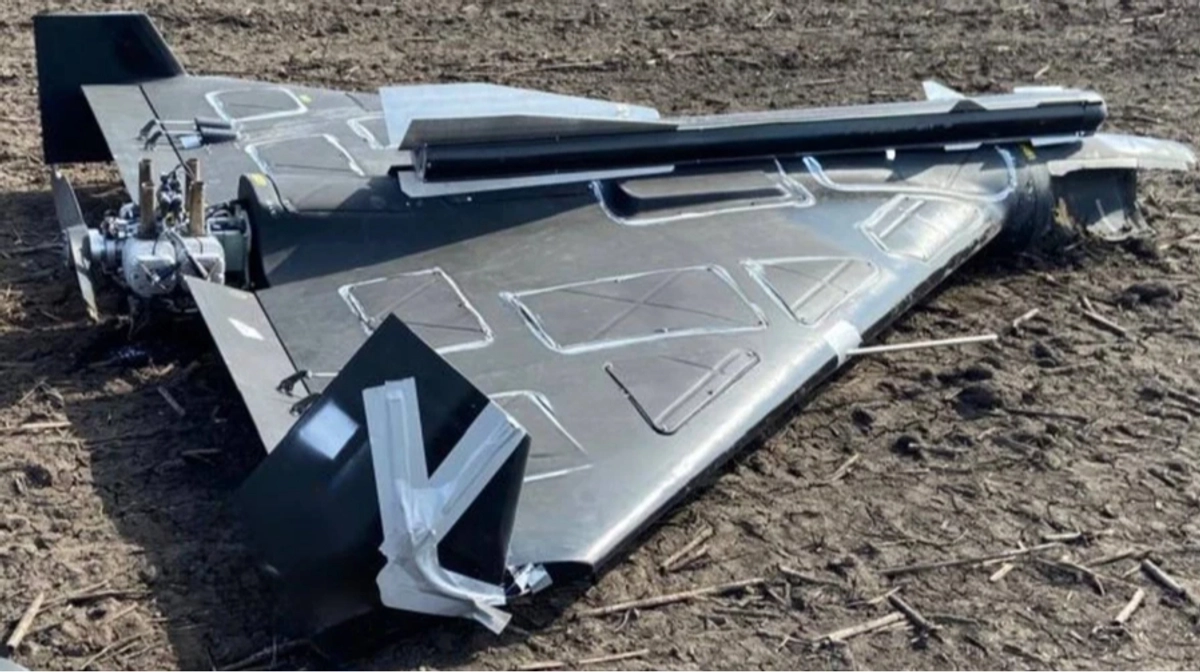
Alternative delivery methods can also be developed in my opinion. Maybe a single limpet mine can be attached-dropped to Hurmuz by a shaheed-136 derivative. shaheed would alse be reusable if it returns back and recovered by parachute.. New variants have 90kg carriage capacity. Airframe can be modified to carry and drop the sea mine over target. Or it can be attached above the drone just like Russians did with R60 a2a missile and the mine can be dropped mechanically over target while drone rolls sideways and turns.


Shaheeds can be launched from longer ranges from deep inside Iran. Each drone can carry a single mine and less efficient than a rocket but longer range and reusability.
 

Users who are viewing this thread

Pakistan Defence Latest

Back
Top