Iran - Israel/US War: Israel-US declare war on Iran, Iran responds

How do we prevent Israel to carry out future operations like this and cause damage within Iran in the future?

E.g for Israel, they are investing more in AD to counter the Iranian Missile threat.
Iran needs more anti airdefence capability which it can launch from its planes hundreds of kms away to hit Israeli radar stations and missile batteries. Not only this helps Iran but the resistance as well.
 
Looks like a quadcopter attack, no so dissimilar to the weak April 1 attack:

To view this content we will need your consent to set third party cookies.
For more detailed information, see our cookies page.
 
Iran needs more anti airdefence capability which it can launch from its planes hundreds of kms away to hit Israeli radar stations and missile batteries. Not only this helps Iran but the resistance as well.
It's harder for them, they have way more area to cover
 
Looks like a quadcopter attack, no so dissimilar to the weak April 1 attack:

To view this content we will need your consent to set third party cookies.
For more detailed information, see our cookies page.

Dude that building is gone
 
People should notice how Israel frame its propaganda

They claim that "all S-300 batteries were destroyed in the country"

Why only S-300? Why not 3rd Khordad, 15th? All of them systems are dangerous and have better radars than S-300, and also mass produced (only 3rd is confirmed to be deployed on multiple sites including south Iran)

Simply because it is easier to do international propaganda using S-300, it is a big name and known by everyone compared to the others especially with the war in Ukraine, easy propaganda value with S-300 compared to others

This is the same type of propaganda that comes from Ukraine and Baku ("we destroyed all their S-400 and S-300")

As i said above, S-300, S-400 is a big name when it comes to propaganda

They destroyed all S-300 but somehow not the others? For which reason?
Those claims are nothing official
 
Interesting they do not claim hits on Bavar-373 which are probably more numerous now 5 years after the system came into service.

Does this means that they only had reach of S-300 or maybe the Bavar-373 is a much better system and managed to shoot down all incoming projectiles?

The fact that the damage is minor and Iran is able to repair already suggests that no critical systems like radars were hit.
Air defense officers were killed, this means control units were hit, which suggests they might as well have hit other parts of the system.

Anyway, the scale of the damage cannot be determined.
 
Dude that building is gone


No that building is not “gone” as we do not see the rubble associated with a destroyed building. The area still looks “clean”.

It looks like fairly minor damage on the roof probably from a quadcopter.

We will need even better image to be certain of course.
 

Satellite photos show Israel hit Iran former nuclear weapons test building, missile facilities, researchers say


  • Iran's military says the Israeli warplanes used 'very light warheads' to strike border radar systems in the provinces of Ilam, Khuzestan, and around Tehran

Reuters
October 27, 2024


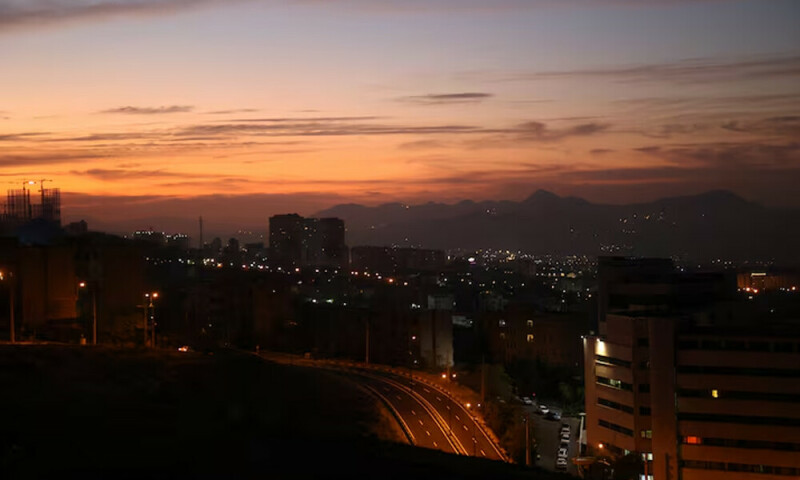
A general view of Tehran after several explosions were heard, in Tehran, Iran, October 26, 2024. Photo: Reuters


A general view of Tehran after several explosions were heard, in Tehran, Iran, October 26, 2024. Photo: Reuters

WASHINGTON: An American researcher said an Israeli airstrike on Saturday hit a building that was part of Iran’s defunct nuclear weapons development program, and he and another researcher said facilities used to mix solid fuel for missiles also were struck.

The assessments based on commercial satellite imagery were reached separately by David Albright, a former UN weapons inspector, and Decker Eveleth, an associate research analyst at CNA, a Washington think tank.

They told Reuters that Israel struck buildings in Parchin, a massive military complex near Tehran. Israel also hit Khojir, according to Eveleth, a sprawling missile production site near Tehran.

Reuters reported in July that Khojir was undergoing massive expansion. Eveleth said the Israeli strikes may have “significantly hampered Iran’s ability to mass produce missiles.”

The Israeli military said three waves of Israeli jets struck missile factories and other sites near Tehran and in western Iran early on Saturday in retaliation for Tehran’s Oct. 1 barrage of more than 200 missiles against Israel.

Iran’s military said the Israeli warplanes used “very light warheads” to strike border radar systems in the provinces of Ilam, Khuzestan and around Tehran.

In posts on X, Albright said commercial satellite imagery showed that Israel hit a building in Parchin called Taleghan 2 that was used for testing activities during the Amad Plan, Iran’s defunct nuclear weapons development program.

The UN nuclear watchdog, the International Atomic Energy Agency, and US intelligence say Iran shuttered the program in 2003.

Iran denies pursuing nuclear weapons. Albright, head of the Institute for Science and International Security research group, was given access to the program’s files for a book after they were stolen from Tehran by Israel’s Mossad intelligence agency in 2018.

On X, he said the archives revealed that Iran kept important test equipment in Taleghan 2.

Iran may have removed key materials before the airstrike, he said, but “even if no equipment remained inside” the building would have provided “intrinsic value” for future nuclear weapons-related activities.

Albright told Reuters that commercial satellite imagery of Parchin showed Israel damaged three buildings about 350 yards (320 m) from Taleghan 2, including two in which solid fuel for ballistic missiles was mixed.

He did not identify the commercial firm from which he obtained the images.

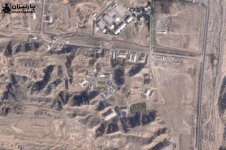
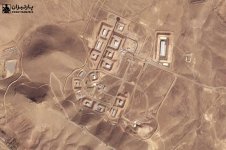
Eveleth said an image of Parchin from Planet Labs, a commercial satellite firm, showed that Israel destroyed three ballistic missile solid fuel mixing buildings and a warehouse in the sprawling complex.

Planet Labs imagery also showed that an Israeli strike destroyed two buildings in the Khojir complex where solid fuel for ballistic missiles was mixed, he said.

The buildings were enclosed by high dirt berms, according to the image reviewed by Reuters.

Such structures are associated with missile production and are designed to stop a blast in one building from detonating combustible materials in nearby structures.

“Israel says they targeted buildings housing solid-fuel mixers,” Eveleth said. “These industrial mixers are hard to make and export-controlled. Iran imported many over the years at great expense, and will likely have a hard time replacing them.”

With a limited operation, he said, Israel may have struck a significant blow against Iran’s ability to mass-produce missiles and made it more difficult for any future Iranian missile attack to pierce Israel’s missile defenses.

“The strikes appear to be highly accurate,” he said. Axios reported that Israel destroyed hit 12 “planetary mixers” used to produce solid fuel for long-range ballistic missiles, quoting three unnamed Israeli sources as saying this severely damages Iran’s ability to renew its missile stockpile and could deter Iran from further massive missile strikes against Israel.

Iran has the Middle East’s largest missile arsenal and supplied missiles to Russia for use against Ukraine, and to Yemen’s Houthi rebels and the Lebanese militia Hezbollah, according to US officials.

Tehran and Moscow deny that Russia has received Iranian missiles.

Planet Labs imagery reviewed earlier this year by Eveleth and Jeffrey Lewis of the Middlebury Institute of International Studies at Monterey showed major expansions at Khojir and the Modarres military complex near Tehran that the pair assessed were for boosting missile production, Reuters reported.

Three senior Iranian officials confirmed that conclusion.


Satellite photos show Israel hit Iran former nuclear weapons test building, missile facilities, researchers say


  • Iran's military says the Israeli warplanes used 'very light warheads' to strike border radar systems in the provinces of Ilam, Khuzestan, and around Tehran

Reuters
October 27, 2024


A general view of Tehran after several explosions were heard, in Tehran, Iran, October 26, 2024. Photo: Reuters


A general view of Tehran after several explosions were heard, in Tehran, Iran, October 26, 2024. Photo: Reuters

WASHINGTON: An American researcher said an Israeli airstrike on Saturday hit a building that was part of Iran’s defunct nuclear weapons development program, and he and another researcher said facilities used to mix solid fuel for missiles also were struck.

The assessments based on commercial satellite imagery were reached separately by David Albright, a former UN weapons inspector, and Decker Eveleth, an associate research analyst at CNA, a Washington think tank.

They told Reuters that Israel struck buildings in Parchin, a massive military complex near Tehran. Israel also hit Khojir, according to Eveleth, a sprawling missile production site near Tehran.

Reuters reported in July that Khojir was undergoing massive expansion. Eveleth said the Israeli strikes may have “significantly hampered Iran’s ability to mass produce missiles.”

The Israeli military said three waves of Israeli jets struck missile factories and other sites near Tehran and in western Iran early on Saturday in retaliation for Tehran’s Oct. 1 barrage of more than 200 missiles against Israel.

Iran’s military said the Israeli warplanes used “very light warheads” to strike border radar systems in the provinces of Ilam, Khuzestan and around Tehran.

In posts on X, Albright said commercial satellite imagery showed that Israel hit a building in Parchin called Taleghan 2 that was used for testing activities during the Amad Plan, Iran’s defunct nuclear weapons development program.

The UN nuclear watchdog, the International Atomic Energy Agency, and US intelligence say Iran shuttered the program in 2003.

Iran denies pursuing nuclear weapons. Albright, head of the Institute for Science and International Security research group, was given access to the program’s files for a book after they were stolen from Tehran by Israel’s Mossad intelligence agency in 2018.

On X, he said the archives revealed that Iran kept important test equipment in Taleghan 2.

Iran may have removed key materials before the airstrike, he said, but “even if no equipment remained inside” the building would have provided “intrinsic value” for future nuclear weapons-related activities.

Albright told Reuters that commercial satellite imagery of Parchin showed Israel damaged three buildings about 350 yards (320 m) from Taleghan 2, including two in which solid fuel for ballistic missiles was mixed.

He did not identify the commercial firm from which he obtained the images.

Eveleth said an image of Parchin from Planet Labs, a commercial satellite firm, showed that Israel destroyed three ballistic missile solid fuel mixing buildings and a warehouse in the sprawling complex.

Planet Labs imagery also showed that an Israeli strike destroyed two buildings in the Khojir complex where solid fuel for ballistic missiles was mixed, he said.

The buildings were enclosed by high dirt berms, according to the image reviewed by Reuters.

Such structures are associated with missile production and are designed to stop a blast in one building from detonating combustible materials in nearby structures.

“Israel says they targeted buildings housing solid-fuel mixers,” Eveleth said. “These industrial mixers are hard to make and export-controlled. Iran imported many over the years at great expense, and will likely have a hard time replacing them.”

With a limited operation, he said, Israel may have struck a significant blow against Iran’s ability to mass-produce missiles and made it more difficult for any future Iranian missile attack to pierce Israel’s missile defenses.

“The strikes appear to be highly accurate,” he said. Axios reported that Israel destroyed hit 12 “planetary mixers” used to produce solid fuel for long-range ballistic missiles, quoting three unnamed Israeli sources as saying this severely damages Iran’s ability to renew its missile stockpile and could deter Iran from further massive missile strikes against Israel.

Iran has the Middle East’s largest missile arsenal and supplied missiles to Russia for use against Ukraine, and to Yemen’s Houthi rebels and the Lebanese militia Hezbollah, according to US officials.

Tehran and Moscow deny that Russia has received Iranian missiles.

Planet Labs imagery reviewed earlier this year by Eveleth and Jeffrey Lewis of the Middlebury Institute of International Studies at Monterey showed major expansions at Khojir and the Modarres military complex near Tehran that the pair assessed were for boosting missile production, Reuters reported.

Three senior Iranian officials confirmed that conclusion.

what a joke of an article, primitive hasbara

There is no such thing as a "nuclear weapon test building" in Iran, and just seeing "Amad plan" mentioned says enough of the article quality
 
???
Source?
Over 3k ballistics is the figure given by the US, there is no other figure given by the Iranians that is significantly larger than it. My point stands.
Prove the US estimate is correct. Ur using US authority/power as basis for your argument, which is false so you don't have a valid estimate of Iran's ballistics inventory yet. Stop trusting US blindly that's naive.
 

Users who are viewing this thread

Country Watch Latest

Back
Top