The 12 days that turned back the clock on Iran’s nuclear program
Now that the rhetorical debris has settled from Israel’s
12-day warwith Iran, there’s growing evidence that Iran’s nuclear program suffered such severe damage that it will be neutered for at least a year, and probably far longer.
“Iran is no longer a threshold nuclear state,” one well-informed Israeli source told me. He said that Iran would now require at least one to two years to build a deliverable nuclear weapon, assuming it could somehow hide its activities. Tehran could conceivably try to demonstrate a crude nuclear device more quickly. But Israel would probably see the test coming and could mount a disabling attack, the source said.
This account supports claims by both the Trump administration and Israel that the Iran campaign achieved its objectives. This new evidence adds weight to that assessment, but some issues are still unclear. Iran could have hidden centrifuges, uranium stockpiles, or weapons that weren’t destroyed. It could react by dashing toward a bomb with its meager resources — or by mounting terrorist campaigns that could be devastating for Israel or the United States. There are still many unknown unknowns.
Israeli and American sources said the bombing campaign, in addition to destroying many of the Iranian centrifuges that enrich uranium, shattered most elements of Iran’s aggressive program to prepare to weaponize that uranium. For example, Israeli sources believe the Iranians were studying an electromagnetic pulse (EMP) weapon that could cripple Israel electronically, a more-complex nuclear fusion bomb, as well as a standard fission warhead.
The most devastating, and least reported, aspect of Israel’s campaign may have been its targeting of Iran’s leading nuclear scientists. Sources said strikes in the first hours of the war killed all of Iran’s first and second tier of physicists and other nuclear scientists, as well as most of the third tier. That’s a massive loss of talent, and Israeli officials believe it will deter younger Iranian scientists from participating in a program that proved to be a death sentence.
By killing key Iranian scientists, Israel believes it halted the exotic EMP and fusion programs, an Israeli source said. Islamic Revolutionary Guard Corps leaders had encouraged the EMP effort because they believed it wouldn’t violate Supreme Leader Ali Khamenei’s fatwa against nuclear weapons, the Israeli source noted. But rapid progress toward nuclear weapons was happening anyway, regardless of the fatwa, awaiting only a final nod from the leader to build a bomb.
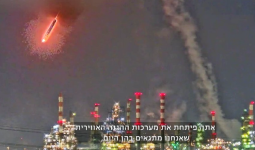
The coordinated and near-simultaneous strikes on Iran’s military and scientific elite were a stunning display of intelligence collection and targeting. But they also demonstrated an ability to coordinate diverse strands of complex data, at a level that may be unprecedented in warfare. Israeli and U.S. sources describe that assault as, at once, an air war, a spy war and an algorithm war. The sources requested anonymity to discuss these sensitive issues.
The United States struck the final blow, with Air Force B-2 bombers carrying bunker-busting bombs and Navy ships launching Tomahawk missiles. That strike capped Israel’s devastation of Iran’s program and gave President Donald Trump a share of the success — and also provided an important demonstration of U.S. military might.
The Trump administration had given Israel a green light to launch its
assault on June 13 but signaled it would intervene only if the campaign was going well, the sources said. When Trump declared a ceasefire, Israel was moving into a final phase of attacks intended to topple the regime.
Israel’s after-action assessment matches most details of
the reported U.S. analysis. The combination of Israeli and U.S. bombing destroyed the Natanz enrichment facility and disabled the big enrichment complex buried underground at Fordow. Strikes on Isfahan destroyed the uranium conversion facility there needed to turn the fissionable material into a metal plate required for a weapon, the Israeli source said. Strikes also buried a site where Iran had hidden 400 kilograms of highly enriched uranium.
Even if Iran has some other secret caches of highly enriched uranium, this probably wouldn’t help build a “dirty bomb” — a device laden with nuclear material to create a Chernobyl-like diffusion of radiation, Israeli sources said.
Operating with total air superiority after the first two days of the war, the Israelis were able to destroy half of Iran’s 3,000 ballistic missiles and about 80 percent of its 500 missile launchers. Iran had planned to boost its ballistic missile stockpile to 8,000, Israeli sources say, so delaying the attack might have meant much greater damage to the Israeli homeland from counterstrikes. In an unwelcome surprise for Israel, Iran had a larger-than-expected arsenal of solid-fuel missiles, which are harder to target in flight, the Israeli source said.
Beyond targeting the nuclear facilities and the scientists who worked there, Israeli attacks destroyed logistical foundations of the program, including its headquarters, archives, laboratories, and testing equipment, the Israeli source said. This devastation may increase Iran’s desire to possess a nuclear deterrent, but it will be hard to reconstruct all these pieces.
After the decisive 12-day war, a remaining policy dilemma for the Trump administration is whether to seek a new nuclear agreement that would prevent Iran from rebuilding its program. So far, according to U.S. officials, Tehran has balked at a U.S. demand for a ban on enrichment — so the issue might be moot.
Israelis and Americans both hope Iran will remain a signatory of the
1968 Non-Proliferation Treaty, allowing inspection of its facilities by the International Atomic Energy Agency. But for now, and probably for a long time to come, most of those facilities are little more than rubble and dust.