Why Washington Will Rue the Costs of Israeli Aggression
Galip Dalay and Sanam Vakil
October 1, 2025
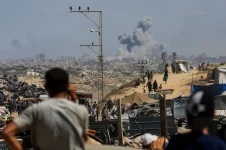
The countries of the Middle East increasingly see Israel as their new shared threat. Israel’s war in Gaza, its expansionist military policies, and its revisionist posture are reshaping the region in ways that few anticipated. Its September strike on Hamas’s political leaders in Qatar—the seventh country hit by Israel since the October 7, 2023, attacks, in addition to the Palestinian territories—has shaken Gulf states and cast doubt on the credibility of the U.S. security umbrella. In the last two years, Israeli leaders have hailed their evisceration of Hezbollah’s leadership in Lebanon, their repeated strikes on targets in Yemen, and their battering of Iran. But rather than consolidate Israeli power or improve relations with Arab states that have long been wary of Iran and its proxies, these actions are backfiring. States that once regarded Israel as a potential partner, including the Gulf monarchies, now perceive it as a dangerous and unpredictable actor.
This week, U.S. President Donald Trump and Israeli Prime Minister Benjamin Netanyahu announced a new 20-point “peace plan,” celebrating the framework as a major breakthrough and a way to return stability to the region. But its prospects are dim as long as
Israel continues to behave aggressively and ignores the legitimate demands and concerns of Palestinians. Although a raft of leaders in the region have welcomed the announcement, the plan seems unlikely to reverse the damage of two years of war. Before the October 2023 attacks, Israel, with strong American backing, had hoped to remake the region to its advantage, casting itself as a partner for Arab governments while sidelining rivals, notably Iran. Now, Israel has only isolated itself, made Arab states reluctant to stomach the reputational and political costs of working with it, and turned former partners into wary adversaries.
Many countries in the region are responding to Israeli aggression by diversifying their security partnerships, investing in their own autonomy, and moving away from normalization with Israel. A welter of projects that sought to bind Israel closer to Arab countries—principally with the help of the
United States, but also with Indian and European support—will likely fall by the wayside. That is bad news not just for Israel but also for the United States. Unstinting American support for Israel is undermining Washington’s standing in the region. Where once the threat of Iran could encourage states in the region to hew close to the U.S. line, the specter of a bristling Israel now pushes them away from the United States.
The United States must wake up to the shifts underway in the Middle East. On its own, the recently proposed framework will not repair the ruptured relations between Israel and the broader region. If Washington refuses to rein in Israel and does not search for a just political answer to the Palestinian question, it risks weakening ties with key regional partners and losing influence over the emerging regional order. Failing to address the issue of
Palestine and allowing Israel to behave aggressively with impunity will also fuel a new wave of radicalism that will threaten U.S. interests, regional stability, and global security.
HOW TO LOSE FRIENDS
For more than two decades, Israel had been able to make common cause with a number of Arab countries. Egypt was the first Arab state to normalize relations with Israel as a result of the 1978 Camp David accords. The peace between the two countries has held for nearly four decades, even though significant connections and exchanges at a deeper societal level have failed to materialize. Until recently, Egypt viewed Turkey as its primary rival in the eastern Mediterranean. Relations between the two countries took a nosedive in 2013 after the overthrow of Mohamed Morsi, Egypt’s first democratically elected Islamist president. Turkey strongly supported him and opposed the coup that brought Egyptian President Abdel Fattah al-Sisi to power. As a result, Egypt under Sisi cut bilateral deals with Israel and worked with Israel inside the East Mediterranean Gas Forum, a regional organization that coordinates energy development to encourage the joint exploration of offshore gas reserves. Those moves also had the implicit goal of countering Turkish claims in the Mediterranean. Beyond energy cooperation, Egypt has also deepened its security coordination with Israel in the Sinai desert, allowing Israeli strikes against militant groups there and helping manage the Gaza border.
That all changed after the October 7, 2023, attacks. Israel’s campaigns have forced Cairo to take a different position. In September, Sisi labeled Israel an “enemy,” a significant rhetorical departure from decades of careful language from Egyptian statesmen. He also took the symbolic step of downgrading security cooperation with Israel. Egypt and its erstwhile rival Turkey undertook a joint naval drill in the eastern Mediterranean, aiming to deepen their defense cooperation.
Before the current war, certain Gulf states tentatively aligned with Israel because they regarded Iran as the paramount threat to their security. Iran’s disruptions in the region, including its cultivation of armed groups in Iraq, Lebanon, Syria, and Yemen and its nuclear ambitions, made cooperation between Gulf monarchies and Israel a convenient choice. The rise of political Islam and the 2011 Arab uprisings strengthened this alignment, as Gulf rulers and Israel alike feared that these movements could topple regimes, reshape the region, and constrain Israel’s regional role. The Abraham Accords, the normalization deals negotiated between Israel and a handful of Arab states in 2020 with help from the United States—emerged from this context, with the central imperative of containing Iran and insulating regimes from any prospective domestic and regional transformation.
Today, however, the logic of normalization is unraveling. Israel’s new forward defense doctrine, which has it breaching the sovereignty of other states at will, is making almost all the states in the region feel insecure. The devastating war in Gaza, the expansion of Israeli settlements in the West Bank (often justified with religious rhetoric), Israel’s uncompromising approach in Lebanon, and its repeated strikes in Syria and encroachment into Syrian territory, have turned the maintenance of formal ties with Israel into a political and strategic liability for Arab governments. Indeed, Israeli actions have provoked such outrage across the Arab world that any form of visible alignment with Israel has become a direct threat to the legitimacy and security of regimes. According to an analysis of recent surveys by the research group Arab Barometer, public backing for normalization with Israel remains extremely low across the region, with no country exceeding 13 percent support and Morocco dropping from 31 percent in 2022 to just 13 percent in 2023 after the October 7 attacks.
Saudi Arabia, once under intense American pressure to normalize relations with Israel, now hesitates not only because of domestic risks but also because of doubts over Israel’s reliability as a strategic partner, given the range of aggressive Israeli actions in recent years. The United Arab Emirates, once Israel’s closest ally in the Gulf, has paid reputational costs among the publics of Arab and Muslim countries for defending the Abraham Accords even as Israeli leaders openly discuss the depopulation of Gaza and the potential annexation of the West Bank. After Israel’s strike on Hamas negotiators in Doha, Qatar has positioned itself as the principal Arab critic of Israeli policy in Gaza. Kuwait and Oman remain aloof and wary of being drawn into any association with Israel that could undermine the domestic legitimacy of their governments, antagonize their publics, or complicate their careful regional balancing strategies. Israel, once imagined by some Gulf and U.S. policymakers as a potential pillar of Gulf security, is now seen as a liability and a destabilizing threat.
Turkey’s reversal is equally striking. For years, Ankara condemned Israel for its treatment of the Palestinians but did not consider it a direct security rival. Israel, for its part, did not overtly seek to antagonize Turkey in geopolitical and security matters. During a 2020 standoff between Greece and Turkey in the eastern Mediterranean, Israel took a far less confrontational stance toward Turkey than did Egypt and a slew of European countries. During the 2023 war between Azerbaijan and Armenia, both Israel and Turkey supported Azerbaijan and provided its military with equipment. Israeli President Isaac Herzog paid an official visit to Ankara in 2022, and only weeks before October 7, Turkish President Tayyip Erdogan and Israeli Prime Minister Benjamin Netanyahu met on the sidelines of the UN General Assembly in New York, exploring potential energy cooperation in the eastern Mediterranean.
The
war in Gaza has pushed the two countries further apart. Turkey has suspended trade with and closed its airspace to Israel as punishment for the campaign in Gaza. Israeli actions in Syria have also deeply alarmed Turkey: its longest land border is with Syria, and millions of refugees have crossed into Turkey since the eruption of the Syrian civil war over a decade ago. Ankara wants a stable neighbor and a centralized Damascus. Israel, by contrast, has been supporting minority groups in southern Syria, as well as advancing into Syrian territory, undermining the country’s new government and promoting division and instability. As Syria becomes a key zone of geopolitical contestation, Turkey now perceives Israel as a major threat.
LOOKING ELSEWHERE
Israel’s revisionism and aggression are also accelerating militarization and a diversification in defense strategies across the region. States are drawing lessons from these two years of conflict, including the poor performance of Russian weaponry in the conflict between Iran and Israel and the political and security constraints that come with reliance on American weapons systems. Governments are hedging by investing in domestic capabilities and diversifying their suppliers. Saudi Arabia has expanded cooperation with China on missiles and drones, sought to further localize defense production, and recently signed a defense cooperation pact with Pakistan signaling its desire for alternative security partnerships and intent to build ties with a fellow Muslim power outside the U.S.-led security architecture. The United Arab Emirates has purchased French fighter jets and partnered with South Korea on missile defense and nuclear energy, strengthening its technological capacities while reducing its dependence on the United States. Qatar and Kuwait have respectively acquired Eurofighter Typhoons from the United Kingdom and Italy, embedding themselves further in European security networks. Gulf countries are all buying cost-effective Turkish drones. For its part, Turkey unveiled its Steel Dome integrated air defense system in August, comparable to Israel’s Iron Dome system of antimissile defense—suggesting a doctrinal shift in which Turkish planners now feel obliged to measure their capacities against Israel’s.
This widening network of partnerships leaves shrinking space for Israel. Regional initiatives such as the Abraham Accords; the India-Middle East-Europe Economic Corridor, a U.S.-backed trade and connectivity project linking India, the Middle East, and Europe; the Negev Summit, a regional security forum that brought Israel together with Arab and Western partners; and I2U2, grouping India, Israel, the United Arab Emirates, and the United States for technological and economic cooperation, were designed to build a new order rooted in Arab-Israeli cooperation under American supervision. The goal was to bind Arab states to Israel, exclude Turkey, and contain Iran. American and Israeli officials assumed that normalization and greater acceptance of Israel in the region were inevitable. That vision is collapsing. Israeli policy has made the very subject toxic, turning normalization into a domestic and strategic risk for Arab leaders and their governments.
The Israeli attack in Doha underscored these dynamics.
Qatar is a mediator between Israel and Hamas, as well as a close American ally hosting the largest U.S. base in the region. The attack undermined not only Qatar but also American prestige and credibility: from that episode, Gulf rulers have taken the lesson that Israel is unpredictable and aggressive—and American security guarantees are unreliable. As a result, they will seek diversified relations with other powers and expanded investment in homegrown defense industries.
These developments will create new alignments that could reshape the region. Turkey and Saudi Arabia, two of the most significant regional powers, will likely cooperate more closely. Although they were previously rivals in many regional hot spots, including in Libya, the two now share concerns about regional instability and Israel’s disruptive role. They could work together to try to stabilize Syria and coordinate joint efforts in multilateral forums to push for ending the war in Gaza and restraining Israeli aggression. Indeed, Turkish Foreign Minister Hakan Fidan has called for the establishment of a joint security platform with regional states, notably Egypt and Saudi Arabia. Both Erdogan and Crown Prince Mohammed bin Salman of Saudi Arabia must manage domestic political costs from the Gazan war. Erdogan faced mounting public anger over continued trade with Israel, which Ankara has since suspended, and pressure from Islamist and conservative constituencies to take a harder line; Mohammed faces criticism within his kingdom and in the wider Arab world for having even considered normalization with Israel. Both must also contend with the prospect of further conflict between Israel and Iran.
To be sure, Iran has not disappeared as a concern, and its regional network of proxies is weakened but not eliminated. Saudi Arabia and Turkey will have to tread carefully. For Saudi Arabia, that means continuing the cautious détente with Iran that was launched with Chinese mediation in 2023, reducing escalation risks in Yemen and the Gulf. For Turkey, it means balancing cooperation and competition in Iraq, Syria, and the South Caucasus. Both Saudi Arabia and Turkey are seeking to ensure that they can counter Iran without making it feel cornered, since a cornered Iran could double down on asymmetric tactics and create new crises.
A CREDIBLE ORDER
For the United States, these dynamics demand a reevaluation of strategy. U.S. policymakers are missing the profound alarm caused by Israel’s actions, and they must reckon with the ensuing imperative in the region to diversify security partnerships. Continued unconditional support for Israel undermines American influence and reinforces perceptions that Washington sees the region solely through the prism of Israeli interests. Regional elites are already hedging by cultivating China, Europe, Russia, and other powers. This trend will only accelerate as long as the United States blithely backs Israel and ignores the attending collateral damage to its own relations with other regional countries. Without a course correction, the United States will be left behind in a region defined less by the challenge posed by Iran than by the revisionist and disruptive role of Israel. If it fails to adjust, Washington will end up being complicit in the demolition of the very strategic architecture it has sought for years to build in the Middle East.
With its considerable heft, the United States will no doubt remain an important actor in the region for the foreseeable future. But to preserve its credibility and influence, it must recalibrate its approach by directly addressing the concerns of Egypt, the Gulf states, and Turkey and working toward cooperative security frameworks that prioritize de-escalation, conflict prevention, and economic integration. That would be a sharp departure from its recent track record of encouraging the militarization of the region and bloc politics. Washington must further anchor U.S. policy in support of a just resolution of the Palestinian question. Ending Israel’s crushing campaign in Gaza, preventing the depopulation of the territory, stopping the manmade famine there, and halting the annexation of the West Bank should be the starting points. The United States cannot skirt the plight of the Palestinians and ignore Israeli revisionism if it wants to foster a functional and credible regional order.


