Iran killed any delusions of US military domination over China

Chinese didn't take back Hong kong from Britain untill 1997, Macau from Portugal in 1999, China has a different mindset from the west who believes all things can be only achieved by force.
 
To what end? None of these force projections thousands of miles away from home has yielded America any strategic gains, stalemated in Korea, lost in Vietnam, gave Iraq on a platter to Iran, lost in Afghanistan and losing against Iran.

Against Iran specifically US went up against a mid-tiered powered, one that was crippled with sanctions for 47 years with no modern AF or Navy, but still unable to dominate. In fact US has never fought a near peer enemy at anytime in its history and only dominated mid-tiered/near-peer nations with full support of its allies. Now that it is seeing some real opposition with Iran which barely has a mid-tiered military it is struggling majorly.

China has always advocated peaceful development, and we have not participated in a war for 47 years.

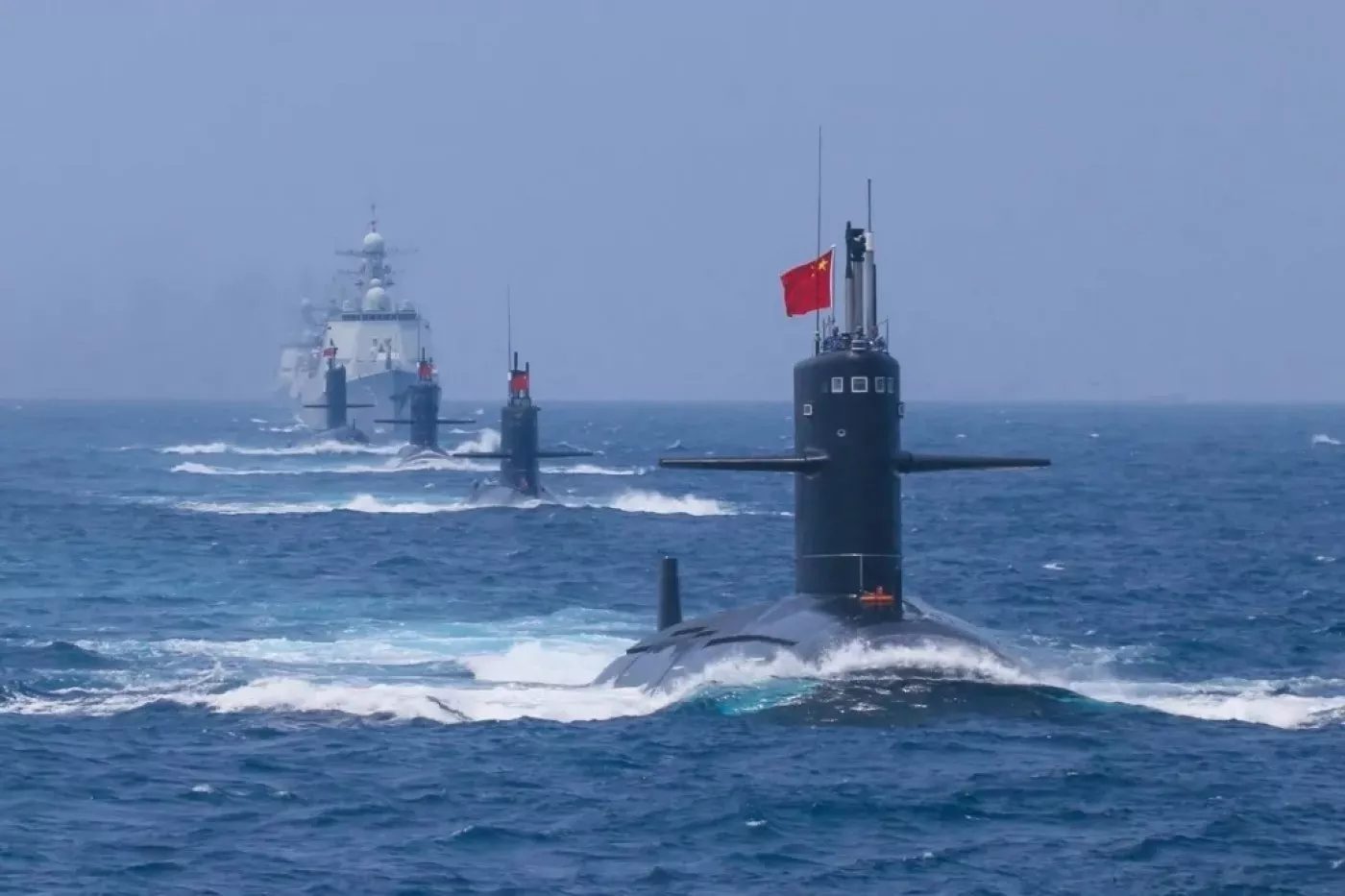
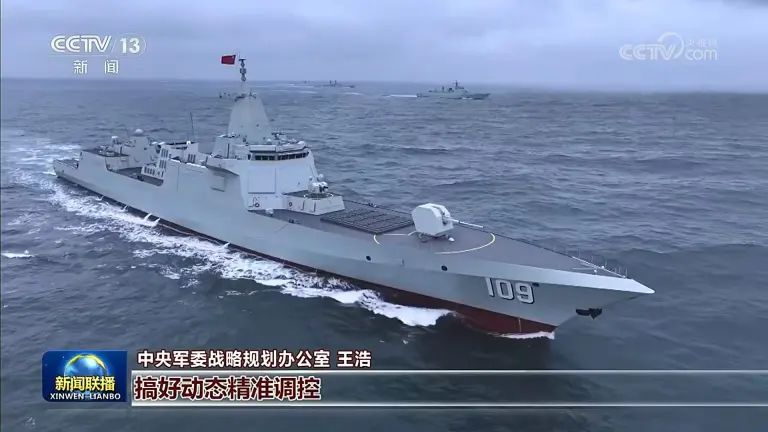
Iran has gained an advantage using missiles. Fortunately, we have more and more advanced missiles and advanced air defense and anti-missile systems, as well as a complete navy, air force, army, rocket forces, electronic warfare units, military aviation units, and cyberspace forces.

According to the latest reports:

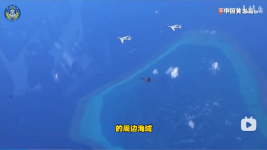
1. The Chinese navy conducted exercises near the locations of U.S.-Japan-Philippines military drills. The tonnage of the Chinese naval fleet exceeded that of the seven-nation fleet, and the Chinese navy launched anti-ship missiles.
1777603994212.png
1777604017310.png

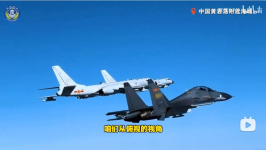
2. Chinese H-6K bombers carrying anti-ship missiles flew over the U.S.-Japan-Philippines exercise area, forcing a Philippine C-208 patrol plane to retreat.
1777604098734.png
1777604166832.png
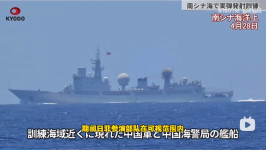
3. Chinese naval electronic reconnaissance ships were spotted within visual range at the U.S.-Japan-Philippines exercise site, causing them to suspend that day's military exercises.
1777604210400.png
4. The Chinese Foreign Minister had a phone call with the U.S. Secretary of State. The Chinese Foreign Minister emphasized that Taiwan Province is a core interest of China.

5. The Chinese Foreign Minister met with the Australian Foreign Minister. The Chinese Foreign Minister emphasized China's position on the Taiwan Province issue. The Australian Foreign Minister stated support for the One-China policy, does not support "Taiwan independence," and hopes to work with China to uphold international rules and ensure energy security.
 
Chinese didn't take back Hong kong from Britain untill 1997, Macau from Portugal in 1999, China has a different mindset from the west who believes all things can be only achieved by force.
War is a continuation of politics. War only occurs after political preparations are completed. If a problem can be resolved through politics, war will not happen.

Of course, the mindset of world hegemony is different. The United States can start a war without preparation, without reason, without plans, without diplomacy, without ceasefire, without allies, and even without sufficient ammunition and supplies.

This is Trump's tactic.
1777604726811.png
 
this was the last war US goes to and never comes back defeating their enemies

and I think Chinese military satellites had a very big role to play
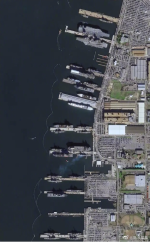
Iran is not using China's military satellites; no country would share these core secrets. Pakistan may obtain partial independent usage rights, but Iran is unlikely to be granted permission.

Iran's military satellite system is mainly led by the Islamic Revolutionary Guard Corps, forming two models: 'domestic independent development' and introducing satellites from Russia.

Iran may be using China's civilian satellite services as a supplement. This is part of the long-term cooperation framework agreement signed on March 27, 2021.

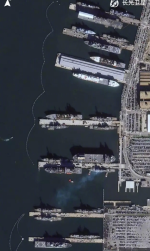
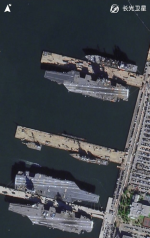
This is the U.S. Norfolk Naval Base captured by a Chinese civilian satellite. This civilian satellite company has 138 satellites.
1777606912123.png
1777606946269.png
1777606976459.png
 

China’s 435-Ship Navy Surge vs U.S. Fleet Collapse: Indo-Pacific Power Balance Faces Strategic Shock by 2030​

Beijing’s accelerating naval expansion toward 435 battle force ships threatens to overwhelm a shrinking U.S. fleet, reshaping deterrence calculations across Taiwan, the South China Sea, and the wider Indo-Pacific.

On May 1, 2026

China
Beijing is accelerating toward a 435-ship People’s Liberation Army Navy by 2030 while the United States risks falling below 300 battle force vessels, creating a strategic imbalance with direct consequences for Taiwan, the South China Sea and Indo-Pacific deterrence.

(DEFENCE SECURITY ASIA) — Beijing is accelerating toward a 435-ship People’s Liberation Army Navy by 2030 while the United States risks falling below 300 battle force vessels, creating a strategic imbalance with direct consequences for Taiwan, the South China Sea and Indo-Pacific deterrence.

The People’s Liberation Army Navy is moving toward a projected 435 battle force ships by 2030, creating the most consequential maritime power shift since the United States emerged as the world’s dominant naval power after 1945.

If current construction rates remain unchanged, China could field approximately 141 more battle force vessels than the U.S. Navy by the end of this decade, fundamentally reshaping military calculations surrounding Taiwan, the South China Sea and the wider Western Pacific.

China
PLAN submarines

American assessments increasingly warn that China’s accelerating naval construction is no longer merely narrowing a traditional capability gap, but is beginning to create a structural numerical imbalance Washington may struggle to reverse.

Pentagon projections indicate that the PLAN already exceeds 370 battle force ships today and could expand toward 395 vessels before 2025 concludes, before ultimately reaching 435 ships by 2030.

By comparison, the U.S. Navy operated 296 battle force ships during late 2024 and is projected under current funding plans to decline toward approximately 294 ships by 2030.

Senior American analysts increasingly argue that the most important question is no longer whether China possesses the world’s largest navy, but whether Washington can still deter Beijing regionally.

China’s Naval Expansion Is Being Driven by Industrial Capacity America Cannot Currently Match

China’s projected 435-ship navy is not emerging from isolated defence spending increases, but from a national industrial system capable of sustaining naval construction on a scale unmatched anywhere globally.


China Is No Longer a Rival—It’s aBattlefield Equal
April 30 2026

A top U.S. Marine Corps general warns that Beijing’s military, economic, andtechnological power now rivals Washington’s in every domain, reshaping the future ofglobal conflict.

The United States is facing a strategic reality it has long debated but rarely acknowledged so bluntly: China is no longer a “near-peer” competitor—it is afull equal. That stark assessment comes from Lt. Gen. Stephen Sklenka, asenior Marine Corps leader responsible for sustaining forces in combat, whosays the implications of such parity are profound and deeply unsettling.

Speaking at a major defense gathering in Washington, Sklenka dismissed whathe called outdated thinking about China’s capabilities. In his view, framingBeijing as anything less than an equal adversary underestimates the scale of the challenge ahead.

China’s reach, he argued, now extends across nearlyevery dimension of national power, from military modernization andindustrial capacity to economic influence and emerging technologies.Drawing from his experience in the Indo-Pacific, Sklenka described a strategicvision from Chinese leadership that goes far beyond regional ambitions. Hepointed to Beijing’s long-term objective of reshaping the global order andpositioning itself as the dominant world power.

This is not merely a militarycompetition, he suggested, but a systemic challenge that encompassespolitical, economic, and informational domains.The warning comes at a time when the United States is already engaged inongoing tensions with Iran, a conflict that Sklenka said offers soberinglessons.

Despite America’s overwhelming military advantages, Iran hasdemonstrated how even a mid-tier power can inflict meaningful damagethrough asymmetric tactics, including drone strikes, missile attacks, andeconomic disruption. The closure of critical maritime routes has furtherillustrated the vulnerability of global supply chains.Yet Sklenka emphasized that any comparison between Iran and China onlyhighlights the magnitude of the latter’s capabilities.

China’s economy ranksamong the largest in the world, its industrial base is unmatched in scale, andits military modernization has accelerated at a pace that few anticipated adecade ago. In such a scenario, the logistical and operational challengesfacing U.S. forces would multiply exponentially.

According to Sklenka, China’s industrial output alone represents a decisivefactor. Over the past decade, its manufacturing sector has outpaced that of theUnited States in key areas, including shipbuilding, steel production, andadvanced materials. This industrial strength translates directly into militarycapacity, enabling rapid expansion of naval fleets, missile arsenals, and spacebased systems.

He highlighted China’s growing shipbuilding capability, which reportedlydwarfs that of the United States, as well as its expanding fleet of nuclearpowered submarines. At the same time, Beijing’s investments in artificialintelligence, drone warfare, and what Sklenka described as “intelligentizedwarfare” are reshaping how future conflicts may unfold. These innovationsextend into non-kinetic domains, such as cyber operations and informationwarfare, where traditional defenses are often inadequate.

The implications for U.S. military strategy are far-reaching. Sklenka stressedthat no currently serving American military personnel have operated in anenvironment where an adversary can simultaneously contest every domain—land, sea, air, space, and cyberspace. Future conflicts, he warned, will notresemble those of the late 20th century. Instead, they will require new approaches to mobility, resilience, and sustained operations under constantthreat.

One of the most urgent concerns, he said, is the vulnerability of U.S. militaryinstallations. Historically viewed as secure hubs for logistics and command,these bases are increasingly exposed to both physical and non-physicalattacks. Sklenka argued that this outdated perception must changeimmediately, as installations are now likely to be among the first targets inany major conflict

This concern has been echoed in reporting by The War Zone, which has longhighlighted the risks facing U.S. bases in an era of drone warfare and cyberthreats. Recent conflicts have demonstrated how relatively low-costtechnologies can bypass traditional defenses, striking critical infrastructurewith precision and minimal warning.

Sklenka pointed to examples from recent operations where drones and prepositioned assets were used to devastating effect. These tactics, onceconsidered unconventional, are rapidly becoming standard practice. In afuture conflict with China, such methods could be deployed on a much largerand more sophisticated scale, targeting not only overseas bases but alsoinstallation

The general warned that the opening phase of a war with China may notinvolve missiles or large-scale troop movements. Instead, it could begin withcyberattacks on power grids, disinformation campaigns aimed at militaryfamilies, or coordinated drone strikes launched from within or near U.S.territory.

These actions would be designed to create confusion, disruptdecision-making, and undermine readiness before conventional fighting evenbegins.Such scenarios underscore the need for a fundamental shift in how the U.S.prepares for war. Sklenka called for stronger defenses against unmannedaerial systems, more resilient energy and communication networks, andhardened infrastructure capable of withstanding both kinetic and non-kineticattacks.

He emphasized that these measures are not optional but essential formaintaining operational capability in a contested environment.

At the same time, he acknowledged that achieving this level of preparednesswill require close collaboration with industry. The complexity of modernwarfare, particularly in areas like cybersecurity and advanced manufacturing,demands resources and expertise that extend beyond the military itself.

Perhaps most striking was Sklenka’s assertion that future conflicts mayinvolve fighting not just from U.S. bases, but for them.

This represents asignificant departure from traditional assumptions about American militarydominance and highlights the evolving nature of global power competition.As tensions between major powers continue to rise, his message is clear: theUnited States must adapt quickly to a world where its adversaries are nolonger outmatched, but evenly matched. The consequences of failing to do so,he warned, could be far greater than any conflict currently underway.

 
Taiwanese are like Beijingers and Shanghainess, we are all Chinese, they fled to Taiwan after their defeat in mainland China in 1949. Ethnic Han account for 99% of Taiwan's population, highest among Taiwan, mainland China and Hong kong.
Is it the same as "Ukrainian is just like Russian, who fled the famine, but overall, 99% of Ukrainian are Slavs, and they both speak Russian," Or both Koreans are Korean, and South Koreans only fled south to escape the Russians and Japanese occupation, and they would be more than willing to reunited with the North seeing ethnic Korean account for 99% of South Korean Population.

Dude, again, you can think whatever you want to think, the problem is, you aren't Taiwanese, you are Chinese, and you will never know what the Taiwanese think simply because you are not them. The only way you know is if you fight them. And if you plan an operation, "counting on them are going to rise and welcome you as liberator with both arms because they are both Chinese," wait a minute, geez, where have I heard that before?
 
Last edited:
even CCP doeas not believe this. An idiot pair of HegsethTrump does not translate to correct understanding of American might. China is getting stronger than before probably but still not anywhere near what this guy claims.
 
Is it the same as "Ukrainian is just like Russian, who fled the famine, but overall, 99% of Ukrainian are Slavs
Han is unsubdividable ethnicity, Slavs are like east Asians, including many related ethnicities, it's like you are claiming we are all humans to generalise everything.
Taiwanese are like Beijinger and Shanghaiese, they are never a seperate ethnic group.

Taiwan issue is the direct result of an unfinished civil war, US also had a civil war, it's China's domestic affair.
 
you aren't Taiwanese, you are Chinese, and you will never know what the Taiwanese think simply because you are not them.
I'm Beijinger cause I was born and live in Beijing, Taiwanese were born and live in Taiwan province, but naming after a home city or province doesn't stop all of us being Chinese as well. There's no such a country called Taiwan and not such an ethnic group called Taiwanese.
 
Some people in Taiwan actually live in Fujian province, even republic of China , ROC, recogizes this fact.

 
I always knew that US had long lost its capabilities to wage overseas wars. They only realised it now. Pure arrogance blinded their eyes for too long.
The US military potential is directly linked to military potentials of allies. With it the US to win the war against Iran is impossible to 0, as a veteran US military general puts it.
Least against any other bigger military rivals.

Trump just threatens to withdraw or reduce the US troop in Germany. If he wants to shrink the US military might further, he is welcome. The Germans just say they don’t care.
 
I'm Beijinger cause I was born and live in Beijing, Taiwanese were born and live in Taiwan province, but naming after a home city or province doesn't stop all of us being Chinese as well. There's no such a country called Taiwan and not such an ethnic group called Taiwanese.
Again, only one way to find out.

And Putin and Kim Jong did find out. So do you want it to be the Chinese turn?
 
Last edited:
Han is unsubdividable ethnicity, Slavs are like east Asians, including many related ethnicities, it's like you are claiming we are all humans to generalise everything.
Taiwanese are like Beijinger and Shanghaiese, they are never a seperate ethnic group.

Taiwan issue is the direct result of an unfinished civil war, US also had a civil war, it's China's domestic affair.

Dude..........

1777612708871.png

1777612730554.png

Both are ethnic groups. Slav to East Asian would have been "European." Slav is a subgroup of European the same way Han is a subgroup of Asian. Otherwise, you are saying Slavs, Normans, Anglo-Saxons, or Nordics are the same people because they are all European, or Poles, Slavs, Bosniak and Romani are all the same because they are all Eastern European
 
Last edited:
An invasion of Taiwan is so risky as so
many scenarios can happen, that l've always thought the Chinese would try a coup d'etat instead, and overthrow the rebellious Taiwanese government internally, where majority of Taiwanese and a new government would "invite" China to restore political order on the island.
 

Users who are viewing this thread

Pakistan Defence Latest

Back
Top