Persian Gulf
INT'L MOD


- Thread starter
- #3,721
the real question is what those numbers would be without the revolution. and that we can never know but only speculate aboutData from Grok
View attachment 113650
Follow along with the video below to see how to install our site as a web app on your home screen.
Note: This feature may not be available in some browsers.
the real question is what those numbers would be without the revolution. and that we can never know but only speculate aboutData from Grok
View attachment 113650
even if they unveil the ABM system there is no guarantee it will enter into service. IRGC-ASF revealed Mehran but it has not been deployed. Bavar-373 was unveiled as complete in 2016 but only now are they starting they deploy the first battery very slowly after further testing and upgrades since 20162029 - 50th anniversary of the Islamic Republic.
Some weapon systems waiting to be unveiled until 2029:
1) anti-ballistic missile defense system - 2026
2) Qaem 105 - 2025
3) Qaem 110 - 2026
4) Qaem 120 - 2027
5) supersonic cruise missile - 2026
6) Shahed 216 - 2026
7) Loghman class destroyer - 2026
8) Simorgh-2 - 2025
9) Sarir SLV - 2026
10) Sarir Heavy - 2028
11) Sourush-1 - 2029
And then they have to unveil something special on the 50th anniversary of the Islamic Republic

Because of the engagement in a hypothetical new deal, you can discard any SLV. But the rest it is bitter truth.even if they unveil the ABM system there is no guarantee it will enter into service. IRGC-ASF revealed Mehran but it has not been deployed. Bavar-373 was unveiled as complete in 2016 but only now are they starting they deploy the first battery very slowly after further testing and upgrades since 2016
the Qaem timeline is too fast. if any launch fails they will need an additional 6-18 months to resolve the problems (like with the first orbital launch attempt of Qaem 100) before moving on to the next version
Loghman class destroyer in 2036 maybe
and I doubt I will see Soroush in my lifetime. I will settle for Simorgh-2 and Qaem-105 by 2026

People should really pay more attention to these developments before they start their incessant rants concerning the Islamic Republic so called failures. Few countries, if any, in the world can match these metrics. Last I checked, a few years back, only China came close. The progress is even more impressive considering that it was achieved under the most draconian sanctions placed on a state until recently. Kudos the IRI! We who know SALUTE you!Data from Grok
View attachment 113650
We know only what we know. The rest is as you stated just figments. Iran has done well. Very well considering from where it started.the real question is what those numbers would be without the revolution. and that we can never know but only speculate about
very well? in 1970s and 1980s our GDP was 6x Israel's GDP and 3x Turkey's GDPWe know only what we know. The rest is as you stated just figments. Iran has done well. Very well considering from where it started.

31 million people is off, but 77 million sounds reasonable.UN 2100 population projections:
These are UN projections. INHE uses a different model that forecasts Iran will fall into the "low-fertility trap" (like South Korea and Japan).
- Iran: 77 million (down from 89 million)
- Afghanistan: 97 million (up from 45 million)
- Pakistan: 586 million (up from 245 million)
- Iraq: 123 million (up from 45 million)
- Turkey: 95 million (up from 88 million)
INHE's projection for Iran's population in 2100? 31 million.
1) education driven fertility collapse: Fertility in places like Tehran is already around 1.3–1.4. IHME assumes that pattern spreads nationally.
2) urbanisation trends: Iran is 75% urban, and expected to rise. urban environments consistently correlate with lower birth rates.
3) delayed and non-marriage patterns.
4) skepticism towards pro-natalist policies. assumes limited success from tax breaks etc citing global examples (Japan, South Korea, parts of Europe) where huge investments in fertility incentives barely moved the needle.
I understand your figures but the reality is that the zionist entity's and Türkiye's economies are smoke and mirrors, especially when counted in dollar terms. One is a beggar state while the other is drowning in zionist debt dollar trap. Gdp figures matters very little when your main economic trading partner threatens to destroy your economy in case of dissent. Please refer to the case of Russia being thought of only a gas station that would collapse immediately once the West refused to buy it's raw materials. We learned that natural resource based economy matters way more than one orientated on services and stock manipulation.very well? in 1970s and 1980s our GDP was 6x Israel's GDP and 3x Turkey's GDP
now it is smaller than Israel's GDP and around 1/3 of Turkey's GDP
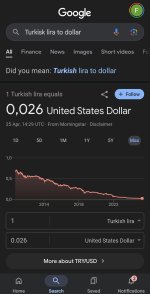
The national currency of a self-sufficient and self-sustainable economy doesn't lose 99% of its value in 15 years and it doesn't regain 20% of its value after the news of negotiation with the US.Iran in comparison is a relatively self-sufficient and self sustainable economy built through four decades of maximum zionist western sanctions.
@ShapurIIUN 2100 population projections:
These are UN projections. INHE uses a different model that forecasts Iran will fall into the "low-fertility trap" (like South Korea and Japan).
- Iran: 77 million (down from 89 million)
- Afghanistan: 97 million (up from 45 million)
- Pakistan: 586 million (up from 245 million)
- Iraq: 123 million (up from 45 million)
- Turkey: 95 million (up from 88 million)
INHE's projection for Iran's population in 2100? 31 million.
1) education driven fertility collapse: Fertility in places like Tehran is already around 1.3–1.4. IHME assumes that pattern spreads nationally.
2) urbanisation trends: Iran is 75% urban, and expected to rise. urban environments consistently correlate with lower birth rates.
3) delayed and non-marriage patterns.
4) skepticism towards pro-natalist policies. assumes limited success from tax breaks etc citing global examples (Japan, South Korea, parts of Europe) where huge investments in fertility incentives barely moved the needle.
Iran's currency didn't loose it's value, it's lost it's value in COMPARISON to the USD. That's a totally different matter. The Rial gained AGAINST the Dollar because of the segment of the economy that has the most to gain from the eventual lifting of sanctions. You need to differentiate between external currency fluctuations and internal purchasing power.The national currency of a self-sufficient and self-sustainable economy doesn't lose 99% of its value in 15 years and it doesn't regain 20% of its value after the news of negotiation with the US.
Iran's currency didn't loose it's value, it's lost it's value in COMPARISON to the USD. That's a totally different matter. The Rial gained AGAINST the Dollar because of the segment of the economy that has the most to gain from the eventual lifting of sanctions. You need to differentiate between external currency fluctuations and internal purchasing power.
I can go and write an essay concerning this matter but I would digress.

Actually economy is my strong suit. At least according to my degree and the the years I spent at uni.
If you think Iran's currency has lost its value in "COMPARISON" to the USD, then why is the price of all other foreign currencies and precious metals, or nearly every good, have increased proportionally?
It is the Iranian currency that has lost its value.
Please do not write an essay about something you are absolutely clueless about. Economy doesn't seem to be your strong suit.

Sorry, I didn't mean to be rude. You think it is, but it is not.Actually economy is my strong suit. At least according to my degree and the the years I spent at uni.
Let me though answer your question. The simple answer is because the greenback is the world's reserve currency and henceforth ALL commodities are priced in the USD. Internal price fluctuations will occur even for commodities that are not priced in USD because of delicate thing call price elasticity.
Let me state once more. Currencies are only valuable in RELATION to other currencies. This is basic economics last I went to school. Might be that the study of economics has change since I graduated.
I'll skip the essay. Don't want to kill you with laughter