Navigation
Install the app
How to install the app on iOS
Follow along with the video below to see how to install our site as a web app on your home screen.
Note: This feature may not be available in some browsers.
More options
Style variation
You are using an out of date browser. It may not display this or other websites correctly.
You should upgrade or use an alternative browser.
You should upgrade or use an alternative browser.
Iranian Missiles | News and Discussions
- Thread starter Persian Gulf
- Start date
More options
Who Replied?


Negative DF 21D has thruster MARV. Chinese overcame these challenges, in the early 2000s. I have seen similar arrangement on a another missile too the Shaheen 2. Thrusters would only perform lateral maneuvers and not pop up/gliding maneuvers, Those liquid fuelled miniature thruster would allow for a quick small scale lateral bursts of thrust to allow lateral maneuvers at high speed maneuvers to defeat any BMD.This is not correct at all.
A thruster exclusive approach is extremely challenging as the [iranian] warhead has limited time and space onboard for such a system. First, you would need a thruster with a very high thrust to weight ratio to overcome the challenging aerodynamic forces (Mach 6+) acting upon the warhead. Where as fins work alongside said forces a thruster would be working against such forces. And need I tell you those forces are quite immense as the atmosphere becomes denser and the plasma shroud and shockwave grows.
You cannot adjust in upper atmosphere since air is too thin and limited ability to predict final atmospheric conditions, so a small error can throw the warhead off much further than a smaller error at a lower altitude.
Later on the atmosphere becomes too dense and control of warhead becomes even harder as the shockwave/plasma is greater around the warhead.
More engineering challenges include the weight of propellant needed and space it takes up inside the warhead, sensor limitations in a plasma environment, delays from onboard computer to actual thruster output, and the extremely short time you have for adjustments. A slight miscalculation can increase thermal stress and lead to warhead disintegration.
So I have to disagree strongly, thrusters only cannot do what a winged warhead can do and certaintly not a warhead the size of the typical Iranian BM carriers.
So taking a K-4 warhead and trying to add a sometime of thrust vectoring system that can accurately provide enough thrust to offset course deviations AND the severe aerodynamic forces acting upon it is impractical for terminal guidance of an Iranian conventional warhead and unnecessary for a nuclear one.
I cannot think of a single BM in existence today that does that and does it at a reasonable cost.
Even China’s “carrier killer” DF-21D uses a finned MarV. Russia’s Avanguard - also has fins on its glide vehicle.
So I am curious what ballistic missile you are referring to that has already overcome these engineering challenges?
Plasma is not necessary at speeds below MACH 15. I will explain these in a later post.
Immortals
Elite Member
Negative DF 21D has thruster MARV. Chinese overcame these challenges, in the early 2000s.
DF-21D has FINS. Fins + thrusters is much easier (and traditional approach) than thrusters only with no control surfaces (which you claim in your original point).
Again you have not demonstrated a missile with thruster only (no control surface) based warhead
I have seen similar arrangement on an another missile too the Shaheen 2.
Shaheen-2 never tested in combat and has estimated CEP of 200-350 meters not <25 meters like Iranian warheads with control surfaces. Again proving my point.
In case of Shaheen-2 tactical precision is not needed since it’s intended to carry a nuclear warhead rather than a conventional one.
Thrusters would only perform lateral maneuvers and not pop up/gliding maneuvers, Those liquid fuelled miniature thruster would allow for a quick small scale lateral bursts of thrust to allow lateral maneuvers at high speed maneuvers to defeat any BMD.
You are all over the place sir. Now you are talking about thrusters for anti BMD maneuvers and not thrusters for course correction due to atmospheric errors.
Two completely different topics at hand. And your knowledge in both area seems based on erroneous assumptions.
A warhead re entering earths atmosphere has tremendous gravity and atmospheric pressures acting all around the warhead, so to get a shift left or right (example) requires quite high thrust to weight vectoring to off set these forces and exceed them. If you have control surfaces then the thrusters do not need to be nearly as powerful.
But you are claiming a thruster only approach can deliver precision strike capability. I call bullocks.
Plasma is not necessary at speeds below MACH 15. I will explain these in a later post.
It depends on quite a number of factors including re entry angle, ballistic coefficient, the heat shield, etc.
You can achieve partial ionization rather than full plasma as well, don’t forget that. Partial ionization of molecules in the atmosphere creates a shroud that has been well documented on Iranian warheads with a terminal velocity exceeding Mach 5.
We have already seen Emad in a plasma shroud
Either way, my point stands. A thruster only approach with no control surfaces to achieve <25m CEP is an engineering nightmare both cost wise and feasibility.
You have yet to provide a missile that does this that currently exists.
The consensus in OSINT community is K-4 has a dummy RV and does all MaRV outside the atmosphere.
Here:
And a rough idea what the RV could look like in a tri-warhead configuration
DF-21D has FINS. Fins + thrusters is much easier (and traditional approach) than thrusters only with no control surfaces (which you claim in your original point).
Again you have not demonstrated a missile with thruster only (no control surface) based warhead
Shaheen-2 never tested in combat and has estimated CEP of 200-350 meters not <25 meters like Iranian warheads with control surfaces. Again proving my point.
In case of Shaheen-2 tactical precision is not needed since it’s intended to carry a nuclear warhead rather than a conventional one.
You are all over the place sir. Now you are talking about thrusters for anti BMD maneuvers and not thrusters for course correction due to atmospheric errors.
Two completely different topics at hand. And your knowledge in both area seems based on erroneous assumptions.
A warhead re entering earths atmosphere has tremendous gravity and atmospheric pressures acting all around the warhead, so to get a shift left or right (example) requires quite high thrust to weight vectoring to off set these forces and exceed them. If you have control surfaces then the thrusters do not need to be nearly as powerful.
But you are claiming a thruster only approach can deliver precision strike capability. I call bullocks.
It depends on quite a number of factors including re entry angle, ballistic coefficient, the heat shield, etc.
You can achieve partial ionization rather than full plasma as well, don’t forget that. Partial ionization of molecules in the atmosphere creates a shroud that has been well documented on Iranian warheads with a terminal velocity exceeding Mach 5.
We have already seen Emad in a plasma shroud
Either way, my point stands. A thruster only approach with no control surfaces to achieve <25m CEP is an engineering nightmare both cost wise and feasibility.
You have yet to provide a missile that does this that currently exists.
The consensus in OSINT community is K-4 has a dummy RV and does all MaRV outside the atmosphere.
Here:
And a rough idea what the RV could look like in a tri-warhead configuration
Stop reading specs of wikipedia.
I've my self seen the Shaheen 2's RV striking within 10 metres of its Target. That guy quoted got its ass handed over by neutrino on His plasma bs.
Your r free to believe what you want

Flotilla
Trusted Member

Use them in Israel. Until that moment arrive, your information is also wikipedia BS.Stop reading specs of wikipedia.
I've my self seen the Shaheen 2's RV striking within 10 metres of its Target. That guy quoted got its ass handed over by neutrino on His plasma bs.
Your r free to believe what you want
ToddE
Trusted Member
I watched footage of K-4 its an attitude control system on its RV, not a PBV but it can be considered a crude PBV.
K-4 has a PBV Bus for exoatmospheric corrections. Its circular RCS can deploy adjustments in roll/pitch/yaw for PBV corrections. Remember K-4 is destined to launch sub-munitions or hypothetical MIRVs so it needs to have PBV for post-boost corrections otherwise the BUS will not be at the right X,Y,Z for dispensing its contents.

Immortals
Elite Member
Stop reading specs of wikipedia.
If by Wikipedia you mean all publicly available sources of information, then what would you like me to use? Classified Pakistani military documents? Please provide those if you have them.
I've my self seen the Shaheen 2's RV striking within 10 metres of its Target.
So your evidence of the tactical accuracy of such weapon system…is yourself?
My point stands Shaheen-2 has never been combat tested. And if video footage of test strikes were released (haven’t looked) then any accuracy measures are in a controlled test environment with limited information on the missile, its guidance system, how many attempts were made, etc. I can also show you videos of Iranian missiles known to have wider CEPs hitting with extreme accuracy in controlled tests. It doesn’t mean a whole lot.
Achieving CEP <25 using 4 small motors at distances of 1500KM+ relies heavily on technology that Pakistan has yet not demonstrated capability, specifically in the field of INS and gyroscopes.
To date the most declassified advanced INS system ever built was the Peacekeeper ICBM AIRS system which had an INS system made up of 16,000 parts that cost $300,000 in 1980 (1.2 million dollars today) and 6 months to put together. That system was revolutionary for its time and goes toe to toe with the most capable system today due to its suspended design.
It was able to achieve <40 CEP at distances of 10,000+ KM, which is quite remarkable without any GPS course correction. Drift rate error of .000015 degree/hr
So having motors in a warhead is only one set of the the problem as your accuracy is tied to how accurate your INS is during its flight in absence of GPS/GLNSS.
INS/Gyroscope technology is currently in SLRG, RLG, FOG, DFOG, mechanical, electrostatic.
Iran started with mechanical in the 90’s and has made it to Ring laser gyroscope in its most advanced model missiles and fiber optics in its more cheaper missiles in the last decade. Pakistan has shown off mechanical gyroscopes production, although it’s possible they import military grade FOG/DFOG from China, you might have evidence of that, I’m just too lazy to look.
Nonetheless to achieve <10m CEP reliably, you would need RLG based gyroscope and likely silicon based solid state. All of which unlikely exist in Shaheen-2.
. That guy quoted got its ass handed over by neutrino on His plasma bs.
It seems your remarks are dropping in intellectual quality.
You deny partial and full plasma ionization below Mach 15, when I provided you direct photographic evidence of such events happening with Emad MaRV. Ionization and heating of the air molecules will happen especially on high ballistic co efficient warheads with steep reentry angle. You are arguing against physics at this point.
The neutrino debate was about full Plasma ionization blocking RCS of a K-4 warhead for long enough to prevent the optimal interception altitude of PAC and Davids sling being reached and causing them to fail in interception.
The debate was wether the plasma shroud would be intense enough and long enough to provide meaningful RCS reduction and Neutrino may have provided enough [pubically available] information to cast doubt on the possibility.
Their discussion on plasma shroud (full or partial) had nothing to do with accuracy of a warhead or lack thereof, so I am not sure why you are celebrating it as “plasma bs”. I provide the source to show you that the consensus is RV/Bus of K-4 is an exo MarV.
Again really, I don’t know what you trying to argue at this point. You originally stated that with a thruster only system you can chive tactical precision. You have yet to provide any evidence of known RV that can achieve tactical precision below 25 meters reliably that uses only thruster based tech. And “trust me bro” Shaheen-2 can do sub-10 meters CEP is not believable without citing a valid source.
You said you provide evidence of this technology and you haven’t. So if you don’t have such evidence than there is no point in continuing your discussions and we can disregard your assumptions as merely unproven.
Last edited:

muhammed45
SpeedLimited
China helps Pakistan's missile program. As a close ally, i am sure that Pakistan is already armed with laser based systems.
So, the debate is not that necessary. China is Pakistan's all weather ally.
So, the debate is not that necessary. China is Pakistan's all weather ally.
Not every test is announced publicly. I've seen several such vids of Shaheen 1 and 2 striking within 10 metres of their targets at their extreme ranges. utilizing A PBV and a thruster MARV to achieve surgical orevision. Wikipedia is one big pool of lies, Analyze stuff urself if you don't have any tech/links background in military domain. The photos you provided prove nothing.If by Wikipedia you mean all publicly available sources of information, then what would you like me to use? Classified Pakistani military documents? Please provide those if you have them.
So your evidence of the tactical accuracy of such weapon system…is yourself?
My point stands Shaheen-2 has never been combat tested. And if video footage of test strikes were released (haven’t looked) then any accuracy measures are in a controlled test environment with limited information on the missile, its guidance system, how many attempts were made, etc. I can also show you videos of Iranian missiles known to have wider CEPs hitting with extreme accuracy in controlled tests. It doesn’t mean a whole lot.
Achieving CEP <25 using 4 small motors at distances of 1500KM+ relies heavily on technology that Pakistan has yet not demonstrated capability, specifically in the field of INS and gyroscopes.
To date the most declassified advanced INS system ever built was the Peacekeeper ICBM AIRS system which had an INS system made up of 16,000 parts that cost $300,000 in 1980 (1.2 million dollars today) and 6 months to put together. That system was revolutionary for its time and goes toe to toe with the most capable system today due to its suspended design.
It was able to achieve <40 CEP at distances of 10,000+ KM, which is quite remarkable without any GPS course correction. Drift rate error of .000015 degree/hr
So having motors in a warhead is only one set of the the problem as your accuracy is tied to how accurate your INS is during its flight in absence of GPS/GLNSS.
INS/Gyroscope technology is currently in SLRG, RLG, FOG, DFOG, mechanical, electrostatic.
Iran started with mechanical in the 90’s and has made it to Ring laser gyroscope in its most advanced model missiles and fiber optics in its more cheaper missiles in the last decade. Pakistan has shown off mechanical gyroscopes production, although it’s possible they import military grade FOG/DFOG from China, you might have evidence of that, I’m just too lazy to look.
Nonetheless to achieve <10m CEP reliably, you would need RLG based gyroscope and likely silicon based solid state. All of which unlikely exist in Shaheen-2.
It seems your remarks are dropping in intellectual quality.
You deny partial and full plasma ionization below Mach 15, when I provided you direct photographic evidence of such events happening with Emad MaRV. Ionization and heating of the air molecules will happen especially on high ballistic co efficient warheads with steep reentry angle. You are arguing against physics at this point.
The neutrino debate was about full Plasma ionization blocking RCS of a K-4 warhead for long enough to prevent the optimal interception altitude of PAC and Davids sling being reached and causing them to fail in interception.
The debate was wether the plasma shroud would be intense enough and long enough to provide meaningful RCS reduction and Neutrino may have provided enough [pubically available] information to cast doubt on the possibility.
Their discussion on plasma shroud (full or partial) had nothing to do with accuracy of a warhead or lack thereof, so I am not sure why you are celebrating it as “plasma bs”. I provide the source to show you that the consensus is RV/Bus of K-4 is an exo MarV.
Again really, I don’t know what you trying to argue at this point. You originally stated that with a thruster only system you can chive tactical precision. You have yet to provide any evidence of known RV that can achieve tactical precision below 25 meters reliably that uses only thruster based tech. And “trust me bro” Shaheen-2 can do sub-10 meters CEP is not believable without citing a valid source.
You said you provide evidence of this technology and you haven’t. So if you don’t have such evidence than there is no point in continuing your discussions and we can disregard your assumptions as merely unproven.
Attitude control system can do all that too. PBV has its navigation system, Chaff, decoys and sideways to perform radical maneuvers. thrust termination and velocity trimming can not be labelled as a PBV. Iranians are not there just yet but they will get there soon enough. Other possibility is that they wanted a cost effective system, so they went for the next best thing, not cause of technological hurdle.K-4 has a PBV Bus for exoatmospheric corrections. Its circular RCS can deploy adjustments in roll/pitch/yaw for PBV corrections. Remember K-4 is destined to launch sub-munitions or hypothetical MIRVs so it needs to have PBV for post-boost corrections otherwise the BUS will not be at the right X,Y,Z for dispensing its contents.
No it isn't!!.Use them in Israel. Until that moment arrive, your information is also wikipedia BS.
ToddE
Trusted Member
Attitude control system can do all that too. PBV has its navigation system, Chaff, decoys and sideways to perform radical maneuvers. thrust termination and velocity trimming can not be labelled as a PBV. Iranians are not there just yet but they will get there soon enough. Other possibility is that they wanted a cost effective system, so they went for the next best thing, not cause of technological hurdle.
Wrong again. You somehow have mistaken an advanced Radial-RCS system (like in K-4's Bus) for an ACS which is technically wrong or lack of understanding of guided Radial-RCS system against a simple ACS!
K-4's PBV has an onboard independent navigation system, it can perform roll+yaw+pitch+Velocity Kill+XYZ corrections which an ACS does not do. Watch the video again, they showed how the PBV changed its trajectory radically and navigated independently before positioning itself for deploying submunitions or (possibly MIRVs) from designated XYZ. ACS does not do that. ACS stabilizes the bus but K-4's Radial-RCS performs trajectory corrections, maneuvers, and independent navigation.
Iranians are not there just yet but they will get there soon enough.
Forget PBV or any MaRV, Iran regularly uses solid-fueled TVC kick-off stages in its SLVs to execute precise exoatmospheric corrections independently. These capabilities exceed the much simpler requirements for PBVs in ballistic missile systems. Both ISA and IRGCAF have used TVC Kickoff stages for years. Thus adapting a PBV is well within their capability for years.
These are some 10-12 years old systems of Iran.


Other possibility is that they wanted a cost effective system, so they went for the next best thing, not cause of technological hurdle.
Please explain to us how an advanced Radial-RCS PBV carrying 80+ clustered submunitions (or possibly MIRVs) with onboard navigation performing roll+pitch+yaw+V kills+altitutde corrections loaded on a hypergolic fueled vehicle for a ~3000 KM strike is "cost-effective"?
ToddE
Trusted Member
This is a dual guidance/evasion system i.e. exoatmospheric ACS + endoatmopheric MaRV system on Ghadr-F MRBM. Totally different from K-4's PBV but highly effective in its own way.
People often focus too much on K-4, Sejjil or Fattah Hypersonic MRBM but Ghadr-F is one monster in itself as well.

For educating us, can you provide evidence partner? Something like a pic or video like below? K-3 (K-4s MaRV version), Sejjil, Fattah hypersonic MARV striking targets.
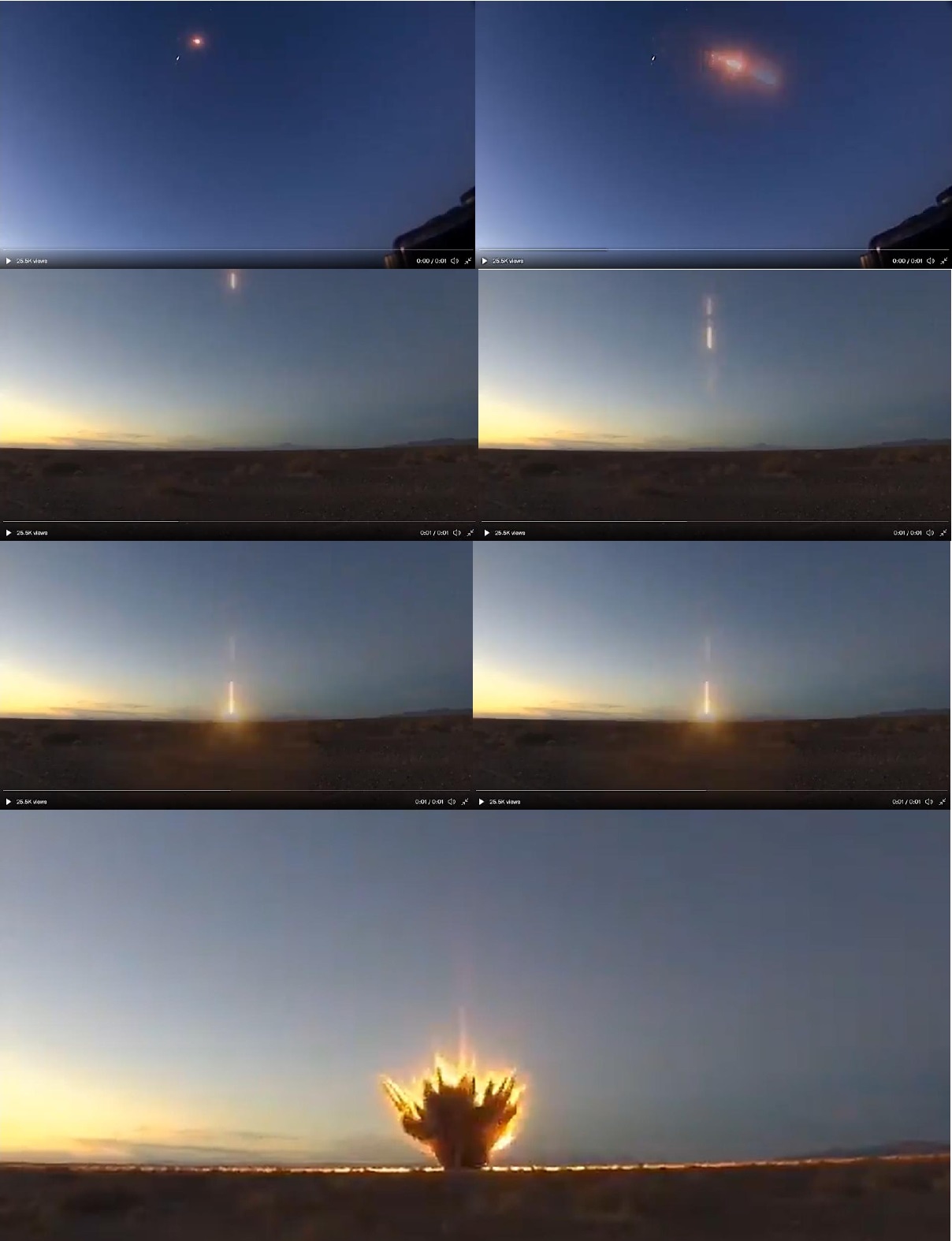

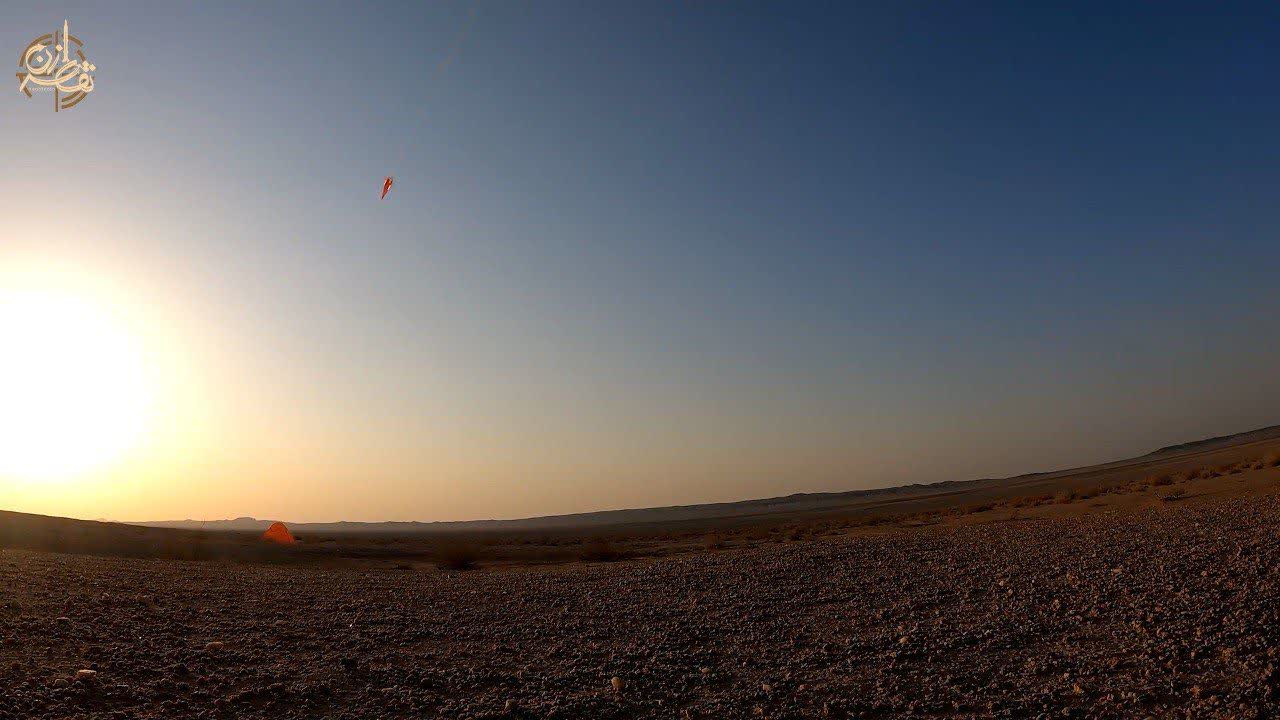
People often focus too much on K-4, Sejjil or Fattah Hypersonic MRBM but Ghadr-F is one monster in itself as well.
I've seen several such vids of Shaheen 1 and 2 striking within 10 metres of their targets at their extreme ranges.
For educating us, can you provide evidence partner? Something like a pic or video like below? K-3 (K-4s MaRV version), Sejjil, Fattah hypersonic MARV striking targets.


Users who are viewing this thread
Total: 16 (members: 5, guests: 11)
Pakistan Defence Latest
-
-
 Bangladesh - China keen to build 100MW nuclear power plant in Mongla (8 Viewers)
- Latest: LeonBlack08
-

-
After uneasy questions, Bangladesh Army chief broke into Nazrul geeti during Oct 1 darbar (2 Viewers)
- Latest: baldfish
-


