
Solomon2
Elite Member

Iran’s Killing Machine Is Operating in Plain Sight
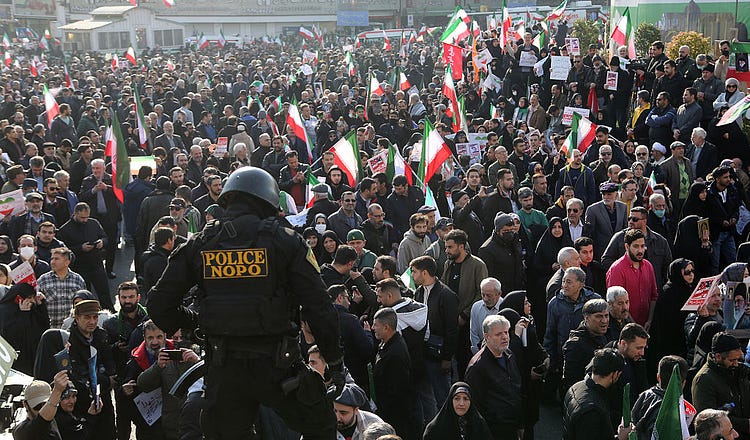
The Islamic Republic of Iran has been running a quiet, systematic execution campaign against the young people who dared to stand up for their freedom. (Fatemeh Bahrami/Anadolu via Getty Images)
Two Iranian teenagers were just executed for opening their doors to fleeing protesters. They are only the latest victims of a regime that uses the world’s distractions to carry out mass killing.
By Masih Alinejad
07.20.26 —International
Yesterday, I woke up to a message that broke my heart. Erfan Esfandiari had been hanged. He was 18 years old, and his parents’ only child. His crime, according to reports circulated by Iranian journalists and human rights activists, was opening a door. Specifically, he opened his door to let terrified protesters in as they ran from security forces during the January 2026 uprising against the Iranian regime.
That act of compassion was enough to send him to the gallows.
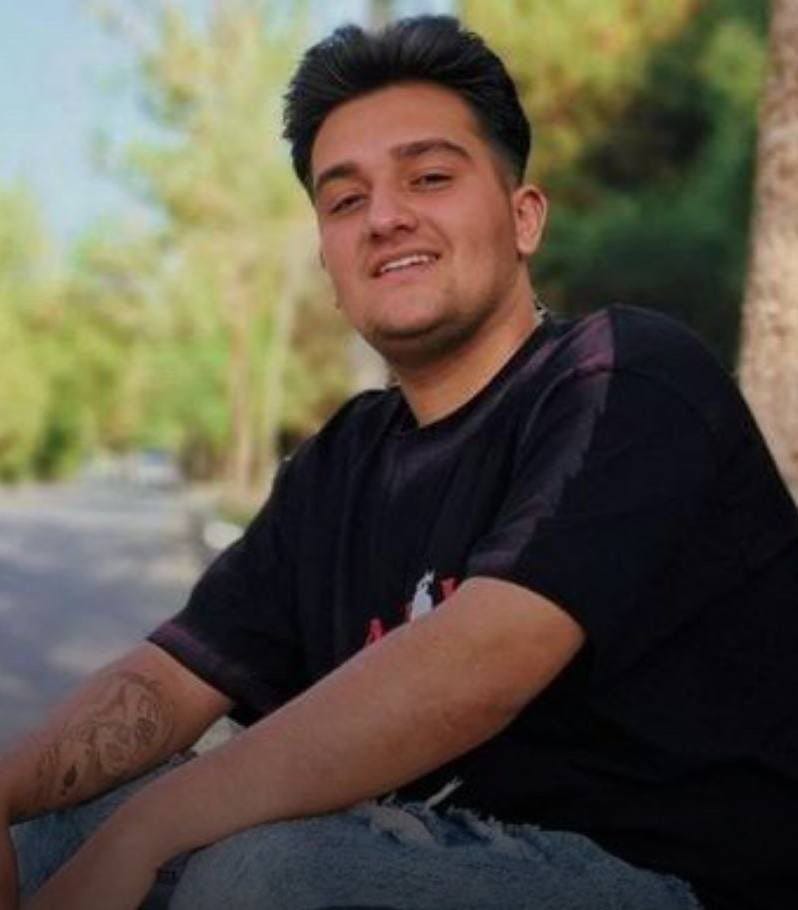
Erfan Esfandiari was hanged in Iran. (via @soulluxgh on X)
On that same Sunday morning, the regime hanged Gol-Mohammad Mohammadi, a 23-year-old Afghan refugee who had fled to Iran seeking safety. His crime, according to those same reports, was identical: He opened his door for protesters fleeing bullets. He was arrested, thrown into a show trial, and forced to endure three hearings, each lasting one hour. There was no independent lawyer.
Erfan and Gol-Mohammad were two of 59 men arrested together during the January uprising, in what has since become known as the Alikhani Square case. The two of them, alongside 10 others, were sentenced to death. Last week, all 12 were moved to quarantine. That is the signal: For the 10 still alive, execution is likely imminent.
On that same Sunday morning, the regime hanged Gol-Mohammad Mohammadi. (via @soulluxgh on X)
On Sunday, the chess champion Garry Kasparov posted a comment on X about the executions. “How tragic that these executions became the norm in Iran and accepted as such by the Free World,” he wrote.
He’s right. The world is not paying enough attention. While diplomats negotiate, bombs fall, and flimsy ceasefire agreements are signed, the Islamic Republic of Iran has been running a quiet, systematic execution campaign against the young people who dared to stand up for their freedom. And they are using the world’s distraction as cover.
During the war, President Donald Trump publicly urged the Islamic Republic’s leaders to stop executing protesters. He even said they promised they would. But we Iranians knew better. We knew that the regime was only buying time to turn mass arrests into mass executions. That is exactly what has happened.
I know that international pressure works. I have seen it. In April, Trump shared a photo of eight women who were about to be hanged, writing, “Please do them no harm!” The regime paused. On Monday, Trump shared my post about Esfandiari hanging on Truth Social, where it reached millions. But at that point, it was too late. And Esfandiari is not alone. Since the war began on February 28, according to CNN, at least 47 people have been put to death. Hundreds more remain under death sentences. We do not know the exact numbers, because the regime puts pressure on families to stay silent.
To understand Iran’s execution machine, you have to understand its language. The regime does not call these killings what they are. It gives them names.
Moharebeh, “enmity against God” or “waging war on God,” is the charge most commonly used against protesters. I want you to picture a scene from January that I cannot get out of my mind: A teenager, Shervin Bagherian, 18 years old, is being interrogated on state television. The official tells him he has been charged with moharebeh. Shervin does not know what the word means. He asks. The answer comes in one word: execution. He breaks down. “I swear to God to not kill me,” he begs. “Please forgive me. I’m just a child.”
To understand Iran’s execution machine, you have to understand its language.
Then there is the charge of “acting against national security,” which translates to: You protested. Bita Hemmati, a young woman, and her husband, Mohammad Reza Majidi Asl, are currently in Evin Prison with this very charge.
The third category is espionage. It is the one the regime reaches for whenever it wants to kill someone without allowing a defense. At least nine people have been executed on espionage charges since the war began, including Kourosh Keyvani, a Swedish Iranian dual national. His real crime was that he opposed the regime, so it wanted him dead and needed a label that would silence international objection. “Spy for Israel” works every time.
There are three categories of people that the regime targets in particular: athletes, women, and minorities.
On Sunday, the 2026 World Cup came to a close in New Jersey. FIFA welcomed the Iranian national team onto the global stage. But just months before, Iran’s own champions—those who dared to support the protesters—were being led to the gallows.
On March 19, 2026, the Islamic Republic publicly hanged Saleh Mohammadi in Qom, alongside two other men, on charges of moharebeh. He was 19 years old and a national wrestling champion—he’d won a bronze medal at an international competition in 2024. He had his whole career ahead of him. The accusation against him was that he had killed a police officer, something his family and friends say was fabricated. No matter: The regime marched him to a public square and put a rope around his neck.
Read
How the Country I Was Taught to Hate Saved My Life
On April 30, the same thing happened to 21-year-old karate champion Sasan Azadvar, who was arrested after joining the January protests. Security forces executed him secretly, at dawn. Only a few close relatives were allowed to attend his funeral, which was conducted under heavy security. Even in death, the regime would not allow him dignity.
After his execution, I spoke with former Iranian national women’s soccer player, Shiva Amini. “The criminal regime of Iran has executed dozens of our champions for taking to the streets and protesting,” she told me. “Tell us, what can we do to stop this criminal regime from destroying Iran’s youth and its future? FIFA has taken no action. The International Olympic Committee has said nothing meaningful. The world keeps inviting Islamic Republic to the tournament while its government executes its own gold medalists. This regime uses sports to whitewash its crimes.”
Iran’s athletes are not just athletes. They represent Iran to the outside world. That is precisely why the regime targets athletes who sympathize with the protesters: to tell every young person in the country, “Even if you are a champion, even if the world knows your name, we will hang you.”
The regime also turns its machinery of death toward women and minorities.
Zeinab Mousavi, known as “Aban,” is a barista who was arrested in February alongside her brother, Hassan. She has been charged with moharebeh for protesting. The charge carries the death penalty. Now her health is collapsing. For several consecutive nights, she has been suffering seizures in her sleep. Her family has demanded she be transferred for emergency medical care. That demand has been ignored.
Along with her are Pakhshan Azizi, a Kurdish humanitarian worker condemned to death for her peaceful work helping women and children, and Maryam Hodavand, a 45-year-old mother of two sentenced to death for participating in the January 2026 protests without meaningful access to independent counsel. The exact number of women currently on death row remains unknown, because the regime hides court records and carries out many proceedings in secret.
There are three categories of people that the regime targets in particular: athletes, women, and minorities.
Sepideh Qolian, an Iranian activist who was herself just released from prison, wrote on her social media about these women: “I reached out to almost every newspaper inside Iran. No one will touch this story.” She added: “I am at my most helpless. If I speak to foreign media, I’ll be arrested again.”
Meanwhile, if you are Kurdish or Baluch and you protest in Iran, you face a compounded sentence: one for being a protester, one for your ethnicity. Human rights monitors report that Kurdish and Baluch individuals account for nearly half of all political executions in Iran in 2026, despite being a fraction of the population. Kurdish prisoners, Hossein Palani Jaf and others from Kermanshah, were among those executed in recent weeks. The regime is sending a message: If you are from a marginalized community, if you speak a different language, if you carry a history of resistance, the rope finds you faster.
Iran has built a perfect trap: Beat those inside, silence those who witness it, and punish anyone who speaks out.
And yet, still, inside the prisons, people are resisting.
For 130 consecutive weeks, prisoners across Iran, in at least 57 different prisons, have been holding “No to Execution Tuesdays.” They stop eating. They protest in their cells. They refuse to be erased. They are sending a message to whoever is still listening outside: We are here, we are alive, do not forget us.
Their families are begging the world to act. I am in touch with some of them. They are not asking for sympathy. They are asking for intervention. They are telling me: If the world speaks loudly enough, the regime will pause. If the world stays silent, the executions continue.
If you are wondering whether these executions are an anomaly, a wartime exception that will end when peace comes, the answer is no. It is not.
From the first days of the Islamic Revolution in 1979, Ayatollah Khomeini oversaw mass executions of political prisoners. Thousands of leftists, monarchists, and dissidents were killed in a matter of weeks. The names were kept secret for decades. Families were told nothing.
Khomeini is gone. Khamenei is now gone too. But the regime is still here. And the tactic is the same.
They executed protesters after the 2009 Green Movement. They executed protesters after the 2019 protests, when over 1,500 were killed. They executed protesters after the Woman, Life, Freedom protests in 2022. And they are executing protesters now.
Read
I Know What Iran Does to Women Who Sing
Even when missiles were striking Iranian territory, the regime found time to organize show trials. Even in the middle of war, they found time to build gallows. They are devoted to their ideology of death, and that ideology requires a steady supply of young bodies to prove that resistance is not worth it.
Where are the global feminist leaders? Where are the women’s organizations who filled streets with red cloaks, evoking The Handmaid’s Tale? These are not characters in a television drama. They are real people in real prisons. And they are being sentenced to death for demanding the exact same freedoms that people in democracies take for granted every single day.
The silence of comfortable progressives in free countries, while Iranians face execution, is not neutrality. It is complicity. Every day of diplomatic engagement that does not include a firm, named demand to stop these killings is a day the regime reads as permission.
I am in touch with the mothers and sisters and brothers of people on death row. They are not asking for prayers. They are asking for noise. Loud, sustained, repeated noise, from governments, from celebrities, from organizations, from every person who believes that 18-year-olds should not be hanged for opening a door.
The Islamic Republic executes in the dark. The only weapon against that is light.
Say their names. And then refuse to be silent.
The Islamic Republic of Iran has been running a quiet, systematic execution campaign against the young people who dared to stand up for their freedom. (Fatemeh Bahrami/Anadolu via Getty Images)
Two Iranian teenagers were just executed for opening their doors to fleeing protesters. They are only the latest victims of a regime that uses the world’s distractions to carry out mass killing.
By Masih Alinejad
07.20.26 —International
Yesterday, I woke up to a message that broke my heart. Erfan Esfandiari had been hanged. He was 18 years old, and his parents’ only child. His crime, according to reports circulated by Iranian journalists and human rights activists, was opening a door. Specifically, he opened his door to let terrified protesters in as they ran from security forces during the January 2026 uprising against the Iranian regime.
That act of compassion was enough to send him to the gallows.
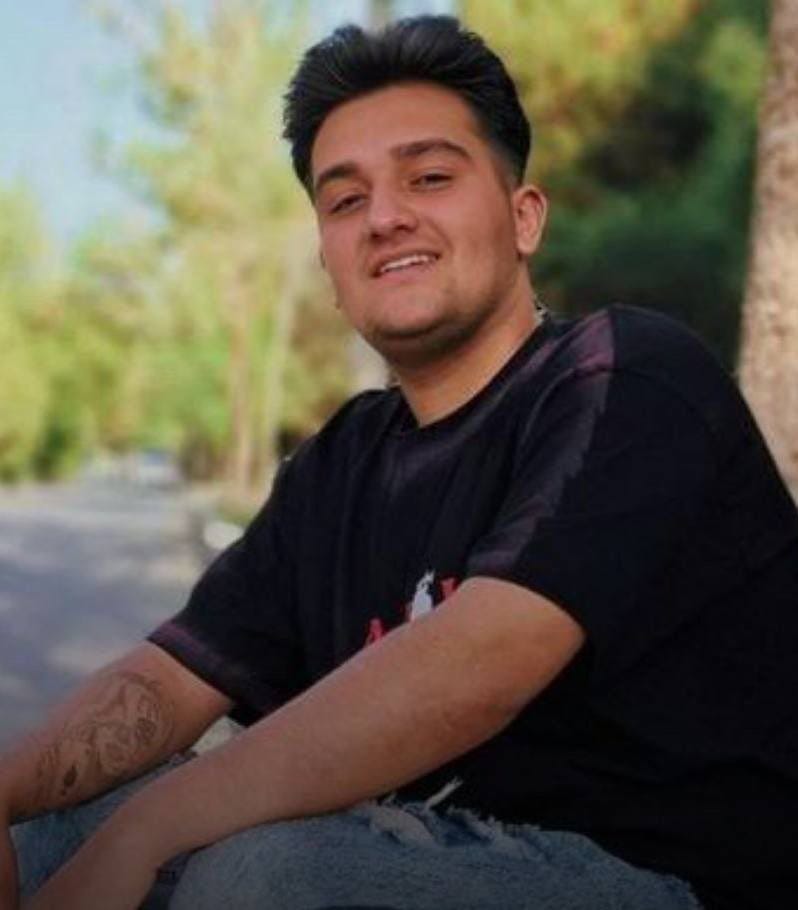
Erfan Esfandiari was hanged in Iran. (via @soulluxgh on X)
On that same Sunday morning, the regime hanged Gol-Mohammad Mohammadi, a 23-year-old Afghan refugee who had fled to Iran seeking safety. His crime, according to those same reports, was identical: He opened his door for protesters fleeing bullets. He was arrested, thrown into a show trial, and forced to endure three hearings, each lasting one hour. There was no independent lawyer.
Erfan and Gol-Mohammad were two of 59 men arrested together during the January uprising, in what has since become known as the Alikhani Square case. The two of them, alongside 10 others, were sentenced to death. Last week, all 12 were moved to quarantine. That is the signal: For the 10 still alive, execution is likely imminent.
On that same Sunday morning, the regime hanged Gol-Mohammad Mohammadi. (via @soulluxgh on X)
On Sunday, the chess champion Garry Kasparov posted a comment on X about the executions. “How tragic that these executions became the norm in Iran and accepted as such by the Free World,” he wrote.
He’s right. The world is not paying enough attention. While diplomats negotiate, bombs fall, and flimsy ceasefire agreements are signed, the Islamic Republic of Iran has been running a quiet, systematic execution campaign against the young people who dared to stand up for their freedom. And they are using the world’s distraction as cover.
During the war, President Donald Trump publicly urged the Islamic Republic’s leaders to stop executing protesters. He even said they promised they would. But we Iranians knew better. We knew that the regime was only buying time to turn mass arrests into mass executions. That is exactly what has happened.
I know that international pressure works. I have seen it. In April, Trump shared a photo of eight women who were about to be hanged, writing, “Please do them no harm!” The regime paused. On Monday, Trump shared my post about Esfandiari hanging on Truth Social, where it reached millions. But at that point, it was too late. And Esfandiari is not alone. Since the war began on February 28, according to CNN, at least 47 people have been put to death. Hundreds more remain under death sentences. We do not know the exact numbers, because the regime puts pressure on families to stay silent.
To understand Iran’s execution machine, you have to understand its language. The regime does not call these killings what they are. It gives them names.
Moharebeh, “enmity against God” or “waging war on God,” is the charge most commonly used against protesters. I want you to picture a scene from January that I cannot get out of my mind: A teenager, Shervin Bagherian, 18 years old, is being interrogated on state television. The official tells him he has been charged with moharebeh. Shervin does not know what the word means. He asks. The answer comes in one word: execution. He breaks down. “I swear to God to not kill me,” he begs. “Please forgive me. I’m just a child.”
To understand Iran’s execution machine, you have to understand its language.
Then there is the charge of “acting against national security,” which translates to: You protested. Bita Hemmati, a young woman, and her husband, Mohammad Reza Majidi Asl, are currently in Evin Prison with this very charge.
The third category is espionage. It is the one the regime reaches for whenever it wants to kill someone without allowing a defense. At least nine people have been executed on espionage charges since the war began, including Kourosh Keyvani, a Swedish Iranian dual national. His real crime was that he opposed the regime, so it wanted him dead and needed a label that would silence international objection. “Spy for Israel” works every time.
There are three categories of people that the regime targets in particular: athletes, women, and minorities.
On Sunday, the 2026 World Cup came to a close in New Jersey. FIFA welcomed the Iranian national team onto the global stage. But just months before, Iran’s own champions—those who dared to support the protesters—were being led to the gallows.
On March 19, 2026, the Islamic Republic publicly hanged Saleh Mohammadi in Qom, alongside two other men, on charges of moharebeh. He was 19 years old and a national wrestling champion—he’d won a bronze medal at an international competition in 2024. He had his whole career ahead of him. The accusation against him was that he had killed a police officer, something his family and friends say was fabricated. No matter: The regime marched him to a public square and put a rope around his neck.
Read
How the Country I Was Taught to Hate Saved My Life
On April 30, the same thing happened to 21-year-old karate champion Sasan Azadvar, who was arrested after joining the January protests. Security forces executed him secretly, at dawn. Only a few close relatives were allowed to attend his funeral, which was conducted under heavy security. Even in death, the regime would not allow him dignity.
After his execution, I spoke with former Iranian national women’s soccer player, Shiva Amini. “The criminal regime of Iran has executed dozens of our champions for taking to the streets and protesting,” she told me. “Tell us, what can we do to stop this criminal regime from destroying Iran’s youth and its future? FIFA has taken no action. The International Olympic Committee has said nothing meaningful. The world keeps inviting Islamic Republic to the tournament while its government executes its own gold medalists. This regime uses sports to whitewash its crimes.”
Iran’s athletes are not just athletes. They represent Iran to the outside world. That is precisely why the regime targets athletes who sympathize with the protesters: to tell every young person in the country, “Even if you are a champion, even if the world knows your name, we will hang you.”
The regime also turns its machinery of death toward women and minorities.
Zeinab Mousavi, known as “Aban,” is a barista who was arrested in February alongside her brother, Hassan. She has been charged with moharebeh for protesting. The charge carries the death penalty. Now her health is collapsing. For several consecutive nights, she has been suffering seizures in her sleep. Her family has demanded she be transferred for emergency medical care. That demand has been ignored.
Along with her are Pakhshan Azizi, a Kurdish humanitarian worker condemned to death for her peaceful work helping women and children, and Maryam Hodavand, a 45-year-old mother of two sentenced to death for participating in the January 2026 protests without meaningful access to independent counsel. The exact number of women currently on death row remains unknown, because the regime hides court records and carries out many proceedings in secret.
There are three categories of people that the regime targets in particular: athletes, women, and minorities.
Sepideh Qolian, an Iranian activist who was herself just released from prison, wrote on her social media about these women: “I reached out to almost every newspaper inside Iran. No one will touch this story.” She added: “I am at my most helpless. If I speak to foreign media, I’ll be arrested again.”
Meanwhile, if you are Kurdish or Baluch and you protest in Iran, you face a compounded sentence: one for being a protester, one for your ethnicity. Human rights monitors report that Kurdish and Baluch individuals account for nearly half of all political executions in Iran in 2026, despite being a fraction of the population. Kurdish prisoners, Hossein Palani Jaf and others from Kermanshah, were among those executed in recent weeks. The regime is sending a message: If you are from a marginalized community, if you speak a different language, if you carry a history of resistance, the rope finds you faster.
Iran has built a perfect trap: Beat those inside, silence those who witness it, and punish anyone who speaks out.
And yet, still, inside the prisons, people are resisting.
For 130 consecutive weeks, prisoners across Iran, in at least 57 different prisons, have been holding “No to Execution Tuesdays.” They stop eating. They protest in their cells. They refuse to be erased. They are sending a message to whoever is still listening outside: We are here, we are alive, do not forget us.
Their families are begging the world to act. I am in touch with some of them. They are not asking for sympathy. They are asking for intervention. They are telling me: If the world speaks loudly enough, the regime will pause. If the world stays silent, the executions continue.
If you are wondering whether these executions are an anomaly, a wartime exception that will end when peace comes, the answer is no. It is not.
From the first days of the Islamic Revolution in 1979, Ayatollah Khomeini oversaw mass executions of political prisoners. Thousands of leftists, monarchists, and dissidents were killed in a matter of weeks. The names were kept secret for decades. Families were told nothing.
Khomeini is gone. Khamenei is now gone too. But the regime is still here. And the tactic is the same.
They executed protesters after the 2009 Green Movement. They executed protesters after the 2019 protests, when over 1,500 were killed. They executed protesters after the Woman, Life, Freedom protests in 2022. And they are executing protesters now.
Read
I Know What Iran Does to Women Who Sing
Even when missiles were striking Iranian territory, the regime found time to organize show trials. Even in the middle of war, they found time to build gallows. They are devoted to their ideology of death, and that ideology requires a steady supply of young bodies to prove that resistance is not worth it.
Where are the global feminist leaders? Where are the women’s organizations who filled streets with red cloaks, evoking The Handmaid’s Tale? These are not characters in a television drama. They are real people in real prisons. And they are being sentenced to death for demanding the exact same freedoms that people in democracies take for granted every single day.
The silence of comfortable progressives in free countries, while Iranians face execution, is not neutrality. It is complicity. Every day of diplomatic engagement that does not include a firm, named demand to stop these killings is a day the regime reads as permission.
I am in touch with the mothers and sisters and brothers of people on death row. They are not asking for prayers. They are asking for noise. Loud, sustained, repeated noise, from governments, from celebrities, from organizations, from every person who believes that 18-year-olds should not be hanged for opening a door.
The Islamic Republic executes in the dark. The only weapon against that is light.
Say their names. And then refuse to be silent.


