Is China encroaching upon Indian territory in Arunachal Pradesh?

Yasser76

Elite Member
Joined
Jan 3, 2024
Messages
11,576
Reaction score
27,978
Reputation
23,162.6
Country of Origin
Country of Residence

Is China encroaching upon Indian territory in Arunachal Pradesh?​

India and China are tangled in yet another border dispute, angering locals in the eastern state of Arunachal Pradesh.

Listen (9 mins)
Save


By Yashraj Sharma
Published On 17 Aug 202617 Aug 2026
New Delhi, India — China has denied the Indian army access to key patrolling points and encroached on land in the Indian border state of Arunachal Pradesh, according to a fact-finding team of regional politicians allied with Prime Minister Narendra Modi’s government.

The report has sparked political outrage in New Delhi, where the opposition has criticised Modi for silence over alleged Chinese encroachment on several border fronts in recent years.

The new revelations pertain to Upper Subansiri, a remote and rugged, mountainous district in the northeastern state of Arunachal Pradesh. The fact-finding report threatens to upend a thaw in ties between India and China, bitter rivals that fought a war in 1962, amid US President Donald Trump’s trade wars that have targeted both New Delhi and Beijing. It also comes weeks before Chinese President Xi Jinping is expected to visit India for the BRICS summit, which New Delhi is hosting on September 12-13.

India shares a 3,488-km border with China, which runs along New Delhi’s northern and eastern borders, in regions like Jammu and Kashmir, Ladakh, Sikkim and Arunachal Pradesh. Large parts of the border are disputed. India and China do not even agree on the demarcation line — the so-called Line of Actual Control — that is supposed to notionally distinguish between territory controlled by the two countries.

Here is everything we know about the alleged Chinese encroachment in northeastern India.

A Border Roads Organisation (BRO) car carrying officials is seen on a highway under construction in the Ladakh region, in India, on September 17, 2020
A Border Roads Organisation (BRO) car carrying officials is seen on a highway under construction in the Ladakh region, in India, on September 17, 2020 [Danish Siddiqui/Reuters]

What did the fact-finding team find?​

Following initial reports of alleged encroachment, the People’s Party of Arunachal Pradesh (PPA) sent a four-member fact-finding team to the remote location, the party’s Vice President Kaling Jerang told Al Jazeera.

Advertisement

The PPA is part of the North East Democratic Alliance, a Bharatiya Janata Party-led regional bloc. Arunachal Pradesh is also ruled by the BJP.

After the visit, the team noted that Indian armed forces are unable to patrol in the Taksing area of the state from April to October due to inclement weather — devastating flash floods, pre-monsoon and monsoon downpours and resulting landslides. On the other hand, the report said, Chinese forces “continue to remain active throughout” this period in the border region, in effect raising questions about the preparedness of infrastructure on the Indian side for the military to be able to defend against potential aggression.

Jerang’s report also claimed that residents told the team that Indian forces had abandoned Shera 5, a border patrolling point, after a confrontation with China’s People’s Liberation Army (PLA) in 2023.


Jerang also told Al Jazeera that locals were furious over losing ancestral hunting grounds. “The ground reports of these intrusions are irrefutable,” he said.

“These encroachments are not new or sudden, but expanded over the years gradually,” he said, “while the BJP governments in New Delhi and in the state have turned their back on the people at the border”.

Last month, the Nah Welfare Society (NWS), a local tribal body, also wrote to government officials that Chinese encroachment has “increased manifold with an intention to occupy as much land as possible”.

India’s Prime Minister Narendra Modi presents a bouquet to China’s President Xi Jinping before their meeting in the western Indian city of Ahmedabad, on September 17, 2014
India’s Prime Minister Narendra Modi presents a bouquet to China’s President Xi Jinping before their meeting in the western Indian city of Ahmedabad, on September 17, 2014 [Amit Dave/Reuters]

How have China and India responded?​

The Indian army said that media reports on the alleged encroachment by Chinese forces “are incorrect and without any basis”.

But India’s Foreign Ministry has been less categorical in dismissing the reports.

Randhir Jaiswal, the Indian Foreign Ministry spokesperson, told reporters that New Delhi has “always emphasised in discussions with the Chinese side that we consider [border] issues as most serious and that the maintenance of peace and tranquillity in these areas is of the utmost importance”.

“We have also stated that the state of border affairs will reflect on the state of our larger bilateral ties,” he added.

Like New Delhi, Beijing also has responded with caution, appearing to neither confirm nor deny fresh border tensions.

“The China-India border situation is generally stable at the moment,” said Guo Jiakun, a Foreign Ministry spokesperson in Beijing, adding that both countries held their 36th meeting on China-India Border Affairs last week.

Advertisement

“The two sides agreed to maintain communication via diplomatic and military channels and jointly uphold peace and tranquility in the border areas,” Guo added.

This undated handout photograph, released by the Indian army on February 16, 2021, shows People Liberation Army soldiers and tanks during a military disengagement along the Line of Actual Control (LAC) at the India-China border in Ladakh
This undated handout photograph, released by the Indian army on February 16, 2021, shows People Liberation Army soldiers and tanks during a military disengagement along the Line of Actual Control (LAC) at the India-China border in Ladakh [India’s Ministry of Defence handout/AFP]

Do India and China have a border dispute?​

Yes, and it’s at the heart of their larger differences.

And like most border disputes involving South Asia, the British played a historical role.

In 1914, British India and Tibet, not under Chinese control at the time, signed what’s known as the Simla Convention, demarcating their border as the so-called McMahon Line. Henry McMahon was the foreign secretary of British India at the time and the central negotiator of that pact.

Since gaining independence in 1947, India has treated the McMahon Line as its border with China. But China, which came under communist rule in 1949, rejects the line as the boundary with India, arguing that it wasn’t involved in the Simla Convention negotiations.

Beijing claims the entire state of Arunachal Pradesh and refers to it as “South Tibet” or “Zangnan”. China also controls Aksai Chin, a slice of the disputed Kashmir region that India and Pakistan claim in full.

In 1962, India and China agreed to treat the Line of Actual Control (LAC), meant to acknowledge the actual areas they each control, as their de facto boundary while negotiating their broader border differences.

But they haven’t even been able to agree on the same LAC, said BR Deepak, a professor of Chinese studies at the Jawaharlal Nehru University (JNU) in Delhi.

Their claims of where the LAC lies differ in several areas, allowing patrols by both sides to enter areas that are claimed by the other, he added.

Along the western sector of the LAC, in mountainous Ladakh, both New Delhi and Beijing have been engaged in face-offs and tensions at multiple points in recent years. In June 2020, Indian and Chinese troops engaged in hand-to-hand combat, leading to the deaths of at least 20 Indians and four Chinese soldiers.

Tensions persist over the eastern sector of the border as well, which includes the states of Sikkim and Arunachal Pradesh from India’s side. In Sikkim’s Naku La, Indian and Chinese troops clashed in May 2020, then again in January 2021.

In the middle sector of the LAC, China and India have smaller disputes in Uttarakhand’s Barahoti and Himachal Pradesh’s Shipki La regions.

And in Doklam, a plateau at the trijunction of China, India and Bhutan, Beijing moved heavy road-building equipment to extend a military road southward, leading to a 73-day tense military standoff with Indian forces in 2017.

“These issues snowballing is always a possibility. A small untoward incident can lead up to massive escalation, as it has happened earlier at times, for example in Galwan,” said JNU’s Deepak, referring to the clash in Ladakh in June 2020.

Advertisement

Praveen Donthi, a senior analyst at the Brussels-based International Crisis Group, said that even though Trump’s tariffs have forced India and China to try to revive their bilateral ties, they are still engaged in “cautious re-engagement”, recovering from their border tensions in recent years.

“China uses the border dispute as a pressure point and to send mixed signals, as it has in the past, leaving India guessing whether local commanders are acting on their own or under direction from the [military] leadership,” Donthi told Al Jazeera.

Indian army soldiers walk along the Line of Control at the Indo-China border in Bumla at an altitude of 4,780 metres (15,700 feet) above sea level in Arunachal Pradesh, India, on October 21, 2012
Indian army soldiers walk along the Line of Control at the Indo-China border in Bumla at an altitude of 4,780 metres (15,700 feet) above sea level in Arunachal Pradesh, India, on October 21, 2012 [Anupam Nath/AP]

How are India-China trade ties?​

Even though border relations remain tense, bilateral trade has ballooned over the last decade.

According to the Indian Embassy in Beijing, the bilateral goods trade reached $151.1bn in the 2025-26 financial year. That’s more than double the $71.45bn of trade between the neighbours in 2016-17.

Those numbers are driven overwhelmingly by Indian imports from China, which rose from $61.28bn in 2016-17 to $131.63bn in 2025-26, while Indian exports only increased from $10.17bn to $19.47bn in this period.

In fact, the Trump administration in Washington recently identified India as the tier-1 country that it alleges is part of a “shadow transhipment network” designed to help China circumvent American sanctions and tariffs.

Saheli Chattaraj, an assistant professor at Somaiya Vidyavihar University, in Mumbai, who specialises in relations with China, said that this dichotomy of better diplomatic and trade relations in the face of border disputes is central to the bilateral relationship.

“Economic and diplomatic engagement can improve without resolving the underlying strategic dispute. The border is not simply a bilateral irritant,” she told Al Jazeera. “India-China relations are best characterised as managed competition rather than genuine normalisation.”

“China’s behaviour can be understood as an attempt to preserve an asymmetry of power along the disputed frontier and to remind India that improved bilateral relations do not alter the underlying strategic balance,” she noted.

Donthi agreed.

In the larger geopolitical equation, “India and China are destined to be competitors”, he said. “The unresolved boundary dispute will continue to haunt relations until it is settled.”
 
The Indian army said that media reports on the alleged encroachment by Chinese forces “are incorrect and without any basis”.
Already debunked by Indian Army.

These locals have agenda against improvement in Indo China ties as admitted by China too.

To view this content we will need your consent to set third party cookies.
For more detailed information, see our cookies page.
 
Already debunked by Indian Army.

These locals have agenda against improvement in Indo China ties as admitted by China too.

To view this content we will need your consent to set third party cookies.
For more detailed information, see our cookies page.


The report was by members of a party affiliated to BJP, if you bother to read the article, so unsure what agenda they may have.

More importantly it exposes as utter BS the lies about infrastructure being better on Indian side, seems Indians had to withdraw due to bad weather and bad infra and Chinese stepped in
 
Recent engagements have shown Bharat looses her will to fight too early in the game. Huge Western capital inflows means it'll dictate stability. Wars disturb that....
 
The report was by members of a party affiliated to BJP, if you bother to read the article, so unsure what agenda they may have.

More importantly it exposes as utter BS the lies about infrastructure being better on Indian side, seems Indians had to withdraw due to bad weather and bad infra and Chinese stepped in
It only says, after flooded, indian Army is not patrolling in that areas? And no preparedness due to infrastructure issues?

Anything else missed?
 
Last edited:
Recent engagements have shown Bharat looses her will to fight too early in the game. Huge Western capital inflows means it'll dictate stability. Wars disturb that....
Which recent India–Pakistan conflict are you referring to? Are you also including incidents where India and Pakistan each declared themselves the winner, but no neutral third country or international body officially acknowledged either side as the victor?
 
Last edited:
  • Haha
Reactions: TAC
It only says, after flooded, indian Army is not patrolling in that areas? And no preparedness due to infrastructure issues?

Anything else missed?

Read below carefully and slowly, then let me know if you need further clarification. Thanks

"On the other hand, the report said, Chinese forces “continue to remain active throughout” this period in the border region, in effect raising questions about the preparedness of infrastructure on the Indian side for the military to be able to defend against potential aggression"
 
Read below carefully and slowly, then let me know if you need further clarification. Thanks

"On the other hand, the report said, Chinese forces “continue to remain active throughout” this period in the border region, in effect raising questions about the preparedness of infrastructure on the Indian side for the military to be able to defend against potential aggression"
Okay, be active at border reason..

Already I mentioned it, right?

April to October due to inclement weather — devastating flash floods, pre-monsoon and monsoon downpours and resulting landslides. On the other hand, the report said, Chinese forces “continue to remain active throughout” this period in the border region.

It only means, infrastructure is not properly developed at indian side. So that indian army can not have presence there during the flooding times as well.
 
Already debunked by Indian Army.

These locals have agenda against improvement in Indo China ties as admitted by China too.
So the Indian Army is now considered a reliable source for objective analysis of an Indian border dispute? Please make sure you pass whatever is being smoked around the rest of the group.
 
So the Indian Army is now considered a reliable source for objective analysis of an Indian border dispute? Please make sure you pass whatever is being smoked around the rest of the group.

Yeah, Indian Army denying reports that Indian Army got pushed out. Sounds credible...
 
  • Like
Reactions: TAC
meanwhile -
  • comment.png
CHINA / DIPLOMACY
Chinese experts dismiss hype of border issue, call for China, India to prevent it from hijacking bilateral ties
By
Deng Xiaoci
Published: Aug 13, 2026 11:45 PM


  • comment.png
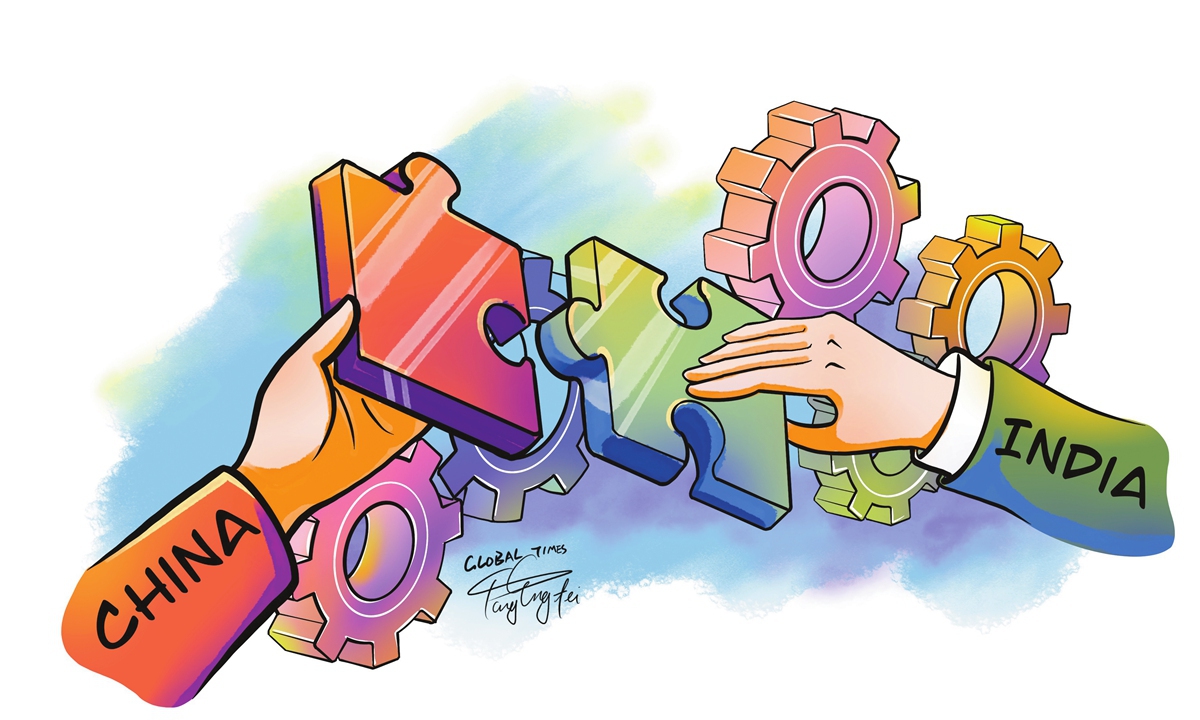
Illustration: Tang Tengfei/GT

Illustration: Tang Tengfei/GT


Some Indian media outlets and regional political forces have recently sought to amplify allegations of an unverified China-India border confrontation, while official signals from Beijing and New Delhi have emphasized stability, communication and the importance of managing differences through established mechanisms.

The contrasting narratives have emerged at a moment when exchanges between China and India in various fields have gradually resumed, and cooperation has been advanced in an orderly manner, Chinese experts noted, warning that sensationalizing border-related claims could disrupt the hard-won momentum in bilateral ties and the two countries should prevent the boundary question from hijacking their broader relationship.

Contrasting narratives

The latest media speculation was partly triggered by claims made by the People's Party of the so-called "Arunachal Pradesh" (PPA), a regional Indian political party. According to The Arunachal Times, a local Indian newspaper, a four-member PPA "fact-finding committee" led by former minister and party adviser Kahfa Bengia visited the so-called "Taksing area" (known as Taxin, in Zangnan, Southwest China's Xizang Autonomous Region) on July 10 and subsequently alleged that Indian forces had been prevented from accessing several patrolling points.

The claims were then amplified by Indian news outlet ThePrint, which reported on Tuesday, citing unnamed sources, that Chinese and Indian patrols had allegedly come "face to face" near Taxin in late July.

The outlet further claimed that Chinese personnel subsequently left before returning in early August and setting up "two or three tents."

However, ThePrint acknowledged that sources in India's defense and security establishment said the "situation was well under control."

Some other Indian reports have also questioned the sensational allegations. India Today reported on Wednesday that Indian government sources dismissed social media claims circulating about what was described as "slow encroachment," while noting that similar allegations regarding the area had previously been rejected by local authorities and the Indian Army.

In fact, the claims stand in contrast to the official diplomatic signals coming from both sides.

Asked on Tuesday about reports concerning the border, Indian Ministry of External Affairs spokesperson Randhir Jaiswal said New Delhi takes border matters seriously and reiterated India's position that "the state of the border affairs will reflect on the state of our larger bilateral ties," according to a media briefing released by the ministry on its website on Tuesday.

He also referred to existing mechanisms for dealing with border issues and preventing misunderstanding and miscalculation, according to the briefing.

Responding on Wednesday to questions from Bloomberg and Reuters concerning social media claims about stepped-up Chinese military activity and a possible new border incident, Chinese Foreign Ministry Spokesperson Guo Jiakun said, "The China-India border situation is generally stable at the moment."

"China and India held the 36th meeting of the Working Mechanism for Consultation and Coordination (WMCC) on China-India Border Affairs last week. The two sides agreed to maintain communication via diplomatic and military channels and jointly uphold peace and tranquility in the border areas," Guo said.

Qian Feng, director of the Research Department at Tsinghua University's National Strategy Institute, told the Global Times on Thursday that the fact that the two sides continue to communicate through established channels shows that the border situation has not developed in the direction of escalation portrayed by some Indian media.

Such hype also came amid another development concerning Zangnan. India on August 7 announced what it called "standard" names for 27 locations in so-called "Arunachal Pradesh," a move that some Indian media outlets portrayed as an effort to counter China and further connected with the latest reports of border tensions.

China has firmly rejected the move. Responding to the issue on Monday, spokesperson Guo said, "Zangnan region is China's territory. China does not recognize the so-called 'Arunachal Pradesh' illegally set up by India."

Guo said India's attempt to replace names long used by China with its so-called "standard names" is "illegal, null and void," and stressed that it would not change the fact that Zangnan belongs to China.

Hu Zhiyong, a professor from Zhejiang International Studies University and a research fellow at the Institute of International Relations at the Shanghai Academy of Social Sciences, told the Global Times on Thursday that border and security issues have traditionally been susceptible to political manipulation in India's domestic politics. "When domestic economic and social problems become difficult to address, issues involving the borders with China or Pakistan can easily be pushed to the forefront to divert public attention," Hu explained.

He said economic pressures, concerns over foreign investment and the domestic business environment, together with accumulated public sentiment, could provide incentives for some political forces to magnify external disputes.

Hu argued that another problem lies in the tendency of some Indian political figures to bind the boundary question too closely to the entire China-India relationship. "The boundary issue is one part of bilateral relations, which also encompass political, economic, diplomatic, security and people-to-people exchanges," Hu said. "It should not be allowed to hijack the entire relationship."

Dialogue matters

According to the Chinese Foreign Ministry's statement of the August 6 meeting, the two sides conducted constructive dialogue in a candid and friendly manner, had an in-depth exchange of views on further implementing the consensus reached during the 24th Round of Talks between the Special Representatives of China and India on the Boundary Question, and agreed to jointly prepare for the coming 25th Round of SR talks. The two sides also discussed boundary delimitation, border management, mechanism development, cross-border exchange and cooperation. The two sides agreed to continue to maintain diplomatic and military communication, and jointly safeguard peace and tranquility in the border areas.

Hu pointed out that the timing of the latest speculation is noteworthy, as border issues have at times been used by some forces in India in an attempt to gain leverage ahead of important bilateral interactions.

The 36th WMCC meeting demonstrates that the two sides possess functioning channels through which disagreements can be addressed. This is particularly important as China and India seek to sustain the improvement in relations and prepare for further high-level interactions, said Chinese observers.

"The boundary dispute is a complicated issue left over from history and cannot be resolved overnight," Qian said. "What matters is to keep diplomatic and military communication channels open, promptly handle frontline frictions through established mechanisms, expand people-to-people exchanges and strengthen coordination under multilateral frameworks such as BRICS and the SCO."

 
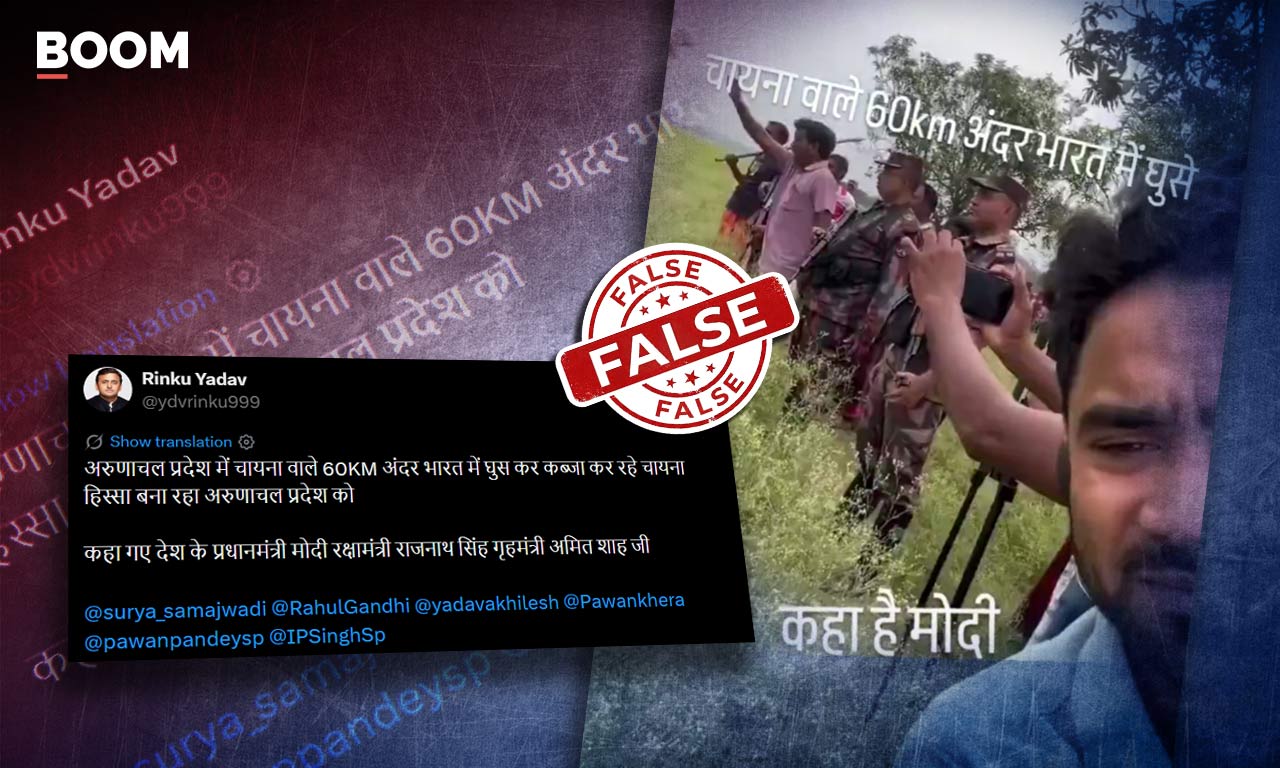
And opposition members don’t miss such opportunities. They often fail to understand the difference between national and international matters and end up posting misleading or false claims. Unfortunately, many people get carried away by such posts without checking the facts.
1786974361086.png


Since we know our Pappu, he gets such videos from these fans and gets very excited about them.
 
meanwhile -
  • comment.png
CHINA / DIPLOMACY
Chinese experts dismiss hype of border issue, call for China, India to prevent it from hijacking bilateral ties
By
Deng Xiaoci
Published: Aug 13, 2026 11:45 PM


  • comment.png
Illustration: Tang Tengfei/GT

Illustration: Tang Tengfei/GT


Some Indian media outlets and regional political forces have recently sought to amplify allegations of an unverified China-India border confrontation, while official signals from Beijing and New Delhi have emphasized stability, communication and the importance of managing differences through established mechanisms.

The contrasting narratives have emerged at a moment when exchanges between China and India in various fields have gradually resumed, and cooperation has been advanced in an orderly manner, Chinese experts noted, warning that sensationalizing border-related claims could disrupt the hard-won momentum in bilateral ties and the two countries should prevent the boundary question from hijacking their broader relationship.

Contrasting narratives

The latest media speculation was partly triggered by claims made by the People's Party of the so-called "Arunachal Pradesh" (PPA), a regional Indian political party. According to The Arunachal Times, a local Indian newspaper, a four-member PPA "fact-finding committee" led by former minister and party adviser Kahfa Bengia visited the so-called "Taksing area" (known as Taxin, in Zangnan, Southwest China's Xizang Autonomous Region) on July 10 and subsequently alleged that Indian forces had been prevented from accessing several patrolling points.

The claims were then amplified by Indian news outlet ThePrint, which reported on Tuesday, citing unnamed sources, that Chinese and Indian patrols had allegedly come "face to face" near Taxin in late July.

The outlet further claimed that Chinese personnel subsequently left before returning in early August and setting up "two or three tents."

However, ThePrint acknowledged that sources in India's defense and security establishment said the "situation was well under control."

Some other Indian reports have also questioned the sensational allegations. India Today reported on Wednesday that Indian government sources dismissed social media claims circulating about what was described as "slow encroachment," while noting that similar allegations regarding the area had previously been rejected by local authorities and the Indian Army.

In fact, the claims stand in contrast to the official diplomatic signals coming from both sides.

Asked on Tuesday about reports concerning the border, Indian Ministry of External Affairs spokesperson Randhir Jaiswal said New Delhi takes border matters seriously and reiterated India's position that "the state of the border affairs will reflect on the state of our larger bilateral ties," according to a media briefing released by the ministry on its website on Tuesday.

He also referred to existing mechanisms for dealing with border issues and preventing misunderstanding and miscalculation, according to the briefing.

Responding on Wednesday to questions from Bloomberg and Reuters concerning social media claims about stepped-up Chinese military activity and a possible new border incident, Chinese Foreign Ministry Spokesperson Guo Jiakun said, "The China-India border situation is generally stable at the moment."

"China and India held the 36th meeting of the Working Mechanism for Consultation and Coordination (WMCC) on China-India Border Affairs last week. The two sides agreed to maintain communication via diplomatic and military channels and jointly uphold peace and tranquility in the border areas," Guo said.

Qian Feng, director of the Research Department at Tsinghua University's National Strategy Institute, told the Global Times on Thursday that the fact that the two sides continue to communicate through established channels shows that the border situation has not developed in the direction of escalation portrayed by some Indian media.

Such hype also came amid another development concerning Zangnan. India on August 7 announced what it called "standard" names for 27 locations in so-called "Arunachal Pradesh," a move that some Indian media outlets portrayed as an effort to counter China and further connected with the latest reports of border tensions.

China has firmly rejected the move. Responding to the issue on Monday, spokesperson Guo said, "Zangnan region is China's territory. China does not recognize the so-called 'Arunachal Pradesh' illegally set up by India."

Guo said India's attempt to replace names long used by China with its so-called "standard names" is "illegal, null and void," and stressed that it would not change the fact that Zangnan belongs to China.

Hu Zhiyong, a professor from Zhejiang International Studies University and a research fellow at the Institute of International Relations at the Shanghai Academy of Social Sciences, told the Global Times on Thursday that border and security issues have traditionally been susceptible to political manipulation in India's domestic politics. "When domestic economic and social problems become difficult to address, issues involving the borders with China or Pakistan can easily be pushed to the forefront to divert public attention," Hu explained.

He said economic pressures, concerns over foreign investment and the domestic business environment, together with accumulated public sentiment, could provide incentives for some political forces to magnify external disputes.

Hu argued that another problem lies in the tendency of some Indian political figures to bind the boundary question too closely to the entire China-India relationship. "The boundary issue is one part of bilateral relations, which also encompass political, economic, diplomatic, security and people-to-people exchanges," Hu said. "It should not be allowed to hijack the entire relationship."

Dialogue matters

According to the Chinese Foreign Ministry's statement of the August 6 meeting, the two sides conducted constructive dialogue in a candid and friendly manner, had an in-depth exchange of views on further implementing the consensus reached during the 24th Round of Talks between the Special Representatives of China and India on the Boundary Question, and agreed to jointly prepare for the coming 25th Round of SR talks. The two sides also discussed boundary delimitation, border management, mechanism development, cross-border exchange and cooperation. The two sides agreed to continue to maintain diplomatic and military communication, and jointly safeguard peace and tranquility in the border areas.

Hu pointed out that the timing of the latest speculation is noteworthy, as border issues have at times been used by some forces in India in an attempt to gain leverage ahead of important bilateral interactions.

The 36th WMCC meeting demonstrates that the two sides possess functioning channels through which disagreements can be addressed. This is particularly important as China and India seek to sustain the improvement in relations and prepare for further high-level interactions, said Chinese observers.

"The boundary dispute is a complicated issue left over from history and cannot be resolved overnight," Qian said. "What matters is to keep diplomatic and military communication channels open, promptly handle frontline frictions through established mechanisms, expand people-to-people exchanges and strengthen coordination under multilateral frameworks such as BRICS and the SCO."


China is asking India not to make a fuss over Chinese incursions. You do get this right?
If Indians were on Chinese land the pf ed would be very different. This is China telling India to keep quiet and take it...
Desperate times when you need Chinese official media to tell you everything is OK at the China-India border no?
 

Users who are viewing this thread

Pakistan Defence Latest

Back
Top