Israel is itching to go to war with Turkiye and Egypt

The entire NATO bloc, with its 32 countries, is confronting Russia alone, yet it has still lost large amounts of territory. Is that really something to be proud of?
When did any NATO member lose its territory to Russia?

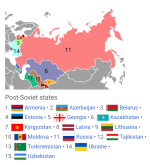
I do recall the Soviet Union breaking up into 15 countries.

Screenshot_20260630-163514_Chrome.png

If it isn't garbage, what is it, then?
Go on. Tell us why everyone wants to join NATO and not a single country wants to join Russia?
 
My prediction is that soon Türkiye will be thrown out of NATO, or, in case of war, NATO won't come to help Türkiye.
I don't think this viewpoint needs predicting.

Russia has broken through NATO countries multiple times.

NATO hasn't openly gone to war with Russia so far.

NATO is the US's NATO, not a NATO that belongs to all NATO countries together.
 
When did any NATO member lose its territory to Russia?

I do recall the Soviet Union breaking up into 15 countries.

View attachment 203948


Go on. Tell us why everyone wants to join NATO and not a single country wants to join Russia?
Ants need to stick together for survival
an elephant has no need to befriend ants.

Haven't you noticed? Even the United States doesn't want to play along with that bunch of trash in NATO anymore.
 
NATO will join the war to subdue Turkey if Israel ever goes to war with Turkey.

Turkey’s NATO membership is as credible as Pakistan’s major Non-NATO ally designation. At least 3 NATO powers have already sanctioned Turkey.
 
The United States first proposed the G2, meaning the U.S. and China. After China rejected the G2, the U.S. then proposed the C5, including the United States, China, Russia, India, and Japan.
Where is there a single piece of NATO trash in that group?NATO is just a bunch of cheerleaders; it is not important at all.
 
I hate wars but defence enthusiastic inside me would like to see a full fledged war between 2 regional powers Israel and Turkiye....
Indians have always hoped for chaos in the world, then profit from the countries at war. A despicable mindset, one that is anti-human. It seems now that Pakistan hasn’t tamed India. Maybe next time in a war, the Pakistani army shouldn’t hold back.

Americans, Israelis, and Indians are the reason this world can’t have peace.
 
Whatever the truth, Türkiye look eastward is a good balkwark against the zionist genociders.

Id like to see a politically and militarty aligned block of Türkiye, SA, Pak and Qatar, with all countries that host US bases reducing that footprint.

Then once this block matures, and neighbourly relations strengthen to include Egypt and Iran.

Forget Israelis, no one will mess with such a block.
 
I hate wars but defence enthusiastic inside me would like to see a full fledged war between 2 regional powers Israel and Turkiye....
Here gentleman is an Indian who openly admits he would like to see a full fledged war. This really is an Indian mindset - doesnt matter of the millions of lives that would be lost or devastated - to satisfy his “enthusiasm”.
Thank the lord we aint indian - thanks Jinnah
 
Well Turks are a great warrior race with marvellous history. But in recent decades they are westernized cucks with zero to no real battle experience. Don't know how the war of isreal will pan out for Turkey. They shot themselves in the foot by joining NATO.
 
Here gentleman is an Indian who openly admits he would like to see a full fledged war. This really is an Indian mindset - doesnt matter of the millions of lives that would be lost or devastated - to satisfy his “enthusiasm”.
Thank the lord we aint indian - thanks Jinnah

Bro, do we really need toxic shit like this Paj on this forum? All for free speech but...
 

Truth, Timing, and Turkey: Why Israel Finally Recognized the Armenian Genocide

Jun 30, 2026, 10:31 AM
Share
1
Please note that the posts on The Blogs are contributed by third parties. The opinions, facts and any media content in them are presented solely by the authors, and neither The Times of Israel nor its partners assume any responsibility for them. Please contact us in case of abuse. In case of abuse,
Report this post.
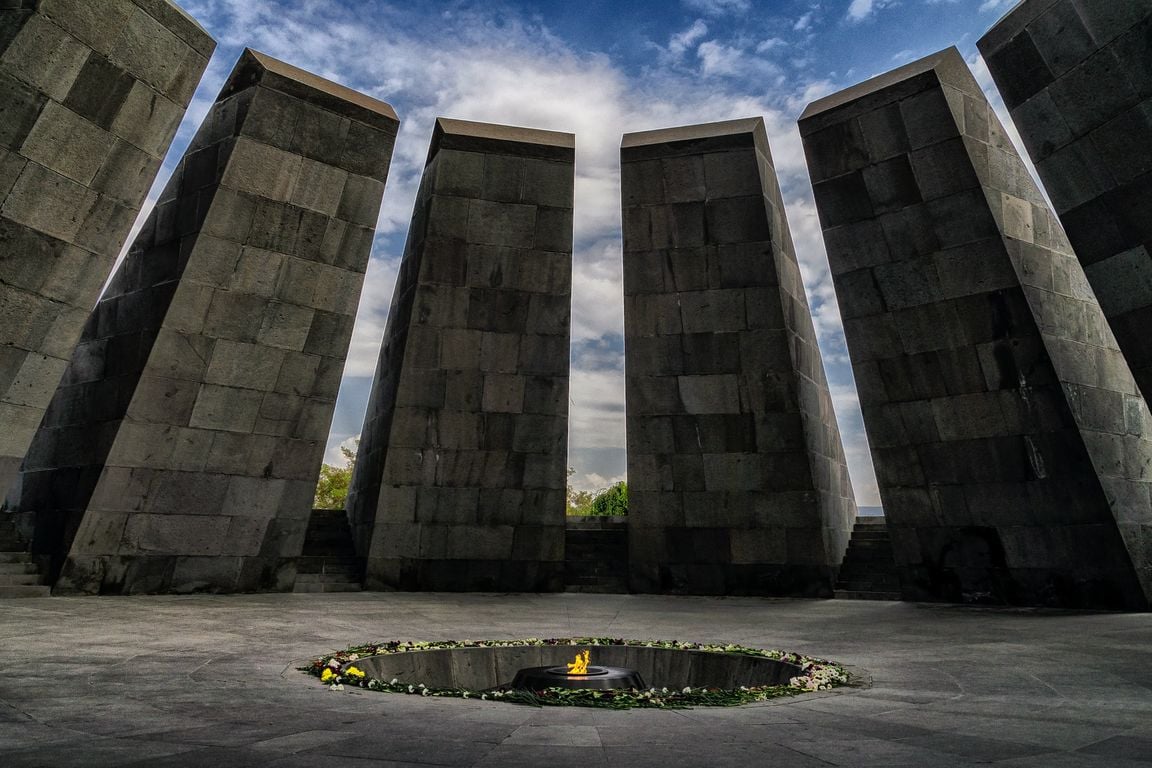
Memorial to the Armenian Genocide in Yerevan, Armenia.
Memorial to the Armenian Genocide in Yerevan, Armenia (Unsplash)

History did not change on the day Israel’s Cabinet voted to recognize the Armenian Genocide.

Politics did.

The Armenian Genocide was a historical fact in 1915. It remained a historical fact while governments debated whether acknowledging it was politically convenient. It remained true during every decade Israel chose strategic caution over formal recognition. What changed was not the evidence. What changed was the politics.

Israel’s Cabinet has unanimously approved recognition of the Armenian Genocide, describing the decision as a moral and historical duty. The proposal still requires approval by the Knesset before becoming formal state policy. That procedural distinction is important, but it should not distract from the larger question: why did this moment arrive now rather than decades ago?

For Armenians, recognition is not simply symbolic. It is an affirmation that historical truth cannot be erased through diplomacy or denial. The genocide claimed an estimated 1.5 million Armenian lives and destroyed families, churches, schools, businesses, and centuries of cultural heritage. The pain has always extended beyond the killings themselves. Denial became a second injustice, forcing survivors and their descendants to defend history instead of simply remembering it.

The historical record has not changed. Historians have long documented the systematic destruction of the Armenian people, and many democratic nations have formally recognized those events as genocide. What changed was the geopolitical landscape.

For decades, successive Israeli governments avoided formal recognition because Turkey occupied a critical place in Israel’s regional strategy. Military cooperation, intelligence sharing, trade, and broader security interests made leaders reluctant to jeopardize an important relationship. Whether that calculation was justified remains open to debate, but it explains why recognition was repeatedly postponed despite the strength of the historical evidence.

That caution came at a moral cost. The victims of 1915 were asked to wait while diplomacy took precedence over historical truth. Justice delayed may still be justice, but delay always carries consequences.

Today, relations between Israel and Turkey have deteriorated sharply. Against that backdrop, recognition inevitably carries diplomatic significance alongside its moral importance.

It would be too simplistic to conclude that Israel acted solely to rebuke Turkey. Governments rarely make consequential foreign-policy decisions for only one reason. Moral conviction, changing leadership, public opinion, and geopolitical realities often converge. The more important question is why politics delayed recognition for so long.

If recognition is morally right today, it was morally right decades ago. Historical truth should never depend upon the state of bilateral relations or shifting strategic interests.

Recognizing the Armenian Genocide does not diminish the Holocaust. It reinforces a universal principle: no people’s suffering should be denied or erased because acknowledging it is politically inconvenient. Memory is not a competition. Truth is not a finite resource.

History did not change.

Politics did.

The Armenian Genocide did not become true because Israel’s Cabinet approved recognition. Israel acted because the historical truth had never changed.

History rendered its verdict more than a century ago. Governments are only now catching up.

Israel has taken an important step. The challenge now is ensuring that this recognition endures not because relations with Turkey remain strained, but because historical truth deserves permanent recognition regardless of changing political circumstances. If this decision reflects an enduring commitment to truth rather than the circumstances of a particular moment, it will stand not only as an important diplomatic milestone, but also as a lasting moral one.

About the Author
Mihran Kalaydjian is a devoted civic engagement activist for education spearheading numerous academic initiatives in local political forums with over twenty years’ experience in government relations, legislative affairs, public policy, community relations and strategic communications in Los Angeles, California.
 

Israeli companies shutting down Turkish operations

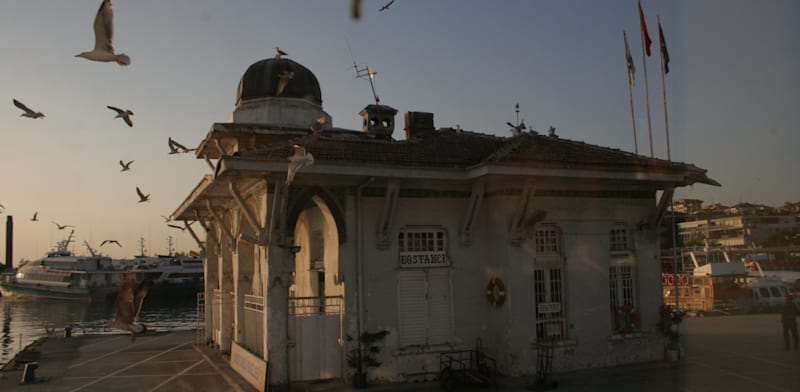
Istanbul  credit: Shlomi Yosef

Istanbul credit: Shlomi Yosef


25 Jun, 2026 9:54
Dean Shmuel Elmas

Sanitaryware company Hamat left Turkey last week but some including Teva, ICL and Netafim continue to operate there despite the political tensions between the countries.​


Israeli sanitaryware company Hamat decided last week to shut down the operations of MCP, its Turkish subsidiary in Izmir due to the difficulties in marketing its products on the local market and other markets outside Israel. The closure of the company, which produced ceramic sanitaryware, is another step in an ongoing process in which Israel is gradually disconnecting from Turkish industry.

The move was expected given Ankara’s strict anti-Israel trade policy, but from a business perspective it is a missed opportunity. Turkish industry is a major engine for the local economy, and after a slowdown in industrial output growth from 1.61% to 0.38%, last year there has been a new jump to 2.58%. This recovery has boosted Turkish production from $262 billion in 2024 to $273.4 billion in 2025.


Hamat’s decision leaves the presence of Israeli-owned business assets in Turkey even more limited, to the point of being negligible. Due to the current trend, it seems that just as the economy has already become accustomed to minimal trade relations with the Turks, a similar picture will now characterize direct economic activity in the country.

Dr. Galia Lindenstrauss, a senior research fellow at the Institute for National Security Studies (INSS), notes that in contrast to imports from Turkey to Israel, which are still taking place on a limited scale through third countries, Israeli exports to Turkey have completely stopped. She adds in this context that "Israeli companies that operated in Turkey are also having difficulty - as is evident from the closure of Hamat's operations in Turkey."

A complex business picture, in the shadow of political tensions

Israel ended 2025 with imports of goods from Turkey totaling $924.1 million, compared with about $2 billion in 2024, while exports fell from $598.6 million to only $10.9 million. The dramatic gap stems from the decision of Turkish President Recep Tayyip Erdogan in May 2024 to impose a complete trade embargo on Israel - an unprecedented step in relations between the countries, which was revealed at the time in Globes.

Despite the tensions, Israeli irrigation company Netafim continues to maintain operations in Turkey. Ownership in the company is divided between Mexico’s Orbia Corp., which owns 80%, and Kibbutz Hatzerim, which owns 20%. The company’s Turkish facility is responsible for the production and marketing of irrigation and agricultural support products for Turkey itself, and not for export. Another Israeli company that still operates in the country as part of its global deployment is ICL (formerly Israel Chemicals). The company operates 38 production sites in 13 countries, including the UK, Brazil, China, Australia and Turkey. The Rotem plant, located in the city of Bandirma, produces calcium phosphate and industrial cleaning materials, according to ICL.

RELATED ARTICLES​

Turkish President Recep Tayyip Erdo?an  credit: Shutterstock

Turkey tightens trade embargo against Israel​


Turkey prevents ZIM ship from docking at Istanbul Port​


Teva Pharmaceuticals also includes the Turkish market as part of its international operations. The company's Turkish headquarters are in Istanbul, which is the center for commercial drug marketing activities in the country, alongside collaborations with local organizations to improve access to medical care.

The Turkish market presents extensive business potential for companies in many fields, partly due to the size of the Turkish population of 87.9 million residents.

In contrast, the Central Bottling Company - Coca Cola - a large private company that was active in Turkey in the past - has not held any assets there for about two years.

Before the Marmara Gaza flotilla crisis in 2010, the company acquired Tuborg Turkey, the second-largest beer producer in the country at the time, which held a market share of 35%, for $80 million. However, during the war, the company completed divestment of its assets in Turkey.

Explorations to reduce tensions

A senior Israeli businessperson, who still works with Turkey on a large scale worldwide, tells "Globes" nothing will change until there is a different approach from the government in Ankara towards Israel. "From the Turks' perspective, there are all kinds of explorations to reduce tensions and find a certain common ground with Israel," he says, "However, until there are different results in the elections, there will be no change. At the root of the problem is a personal issue between Erdogan and Netanyahu. Will a new Israeli leadership be more cooperative diplomatically with Turkey? It is possible. The Turkish goal is to gain better access to activity in the Gaza Strip."

Although Turkish-made products can still be found on Israeli shelves, such as Uluda? brand cheese or Alpedo ice cream, food imports from the country have never been considered a leading industry. On the other hand, in other sectors, a dramatic change has occurred, and Israel, which in the past relied significantly on Turkey's status as an international textile powerhouse, has almost withdrawn from there. Today, the Israeli presence in this field is completely negligible and amounts to a single Delta Galilee sock factory.

Long-standing ties with traders

The bottom line is that Israeli companies that remain active in Turkey expose themselves to risks that become increasingly severe the larger and better known the company becomes. A striking illustration of this was seen last August, when Turkey decided to block ZIM ships - a step that was first reported in "Globes" and was influenced by prolonged protests and even sabotage attempts in the Turkish ports where the company operated.

These protests went beyond just ZIM alone, and even Israeli companies. Azerbaijan's national oil company, SOCAR, also faced unusual protests due to its extensive activities in Turkey and its continued supply of oil to Israel during the war. The protesters refrained from pointing an accusing finger at Erdogan, even though the oil is pumped to Israel via Turkey via the Baku-Tbilisi-Ceyhan pipeline and from there loaded onto tankers at the Turkish port of Ceyhan.

"In terms of the willingness of Turkish traders to still trade with Israelis, it should be remembered that some of these ties are long-standing, with a lot of mutual benefit," concludes Dr. Lindenstrauss. She adds, "The fact that Israel and Turkey are in many ways complementary economies and the short distance between the countries makes shipping costs negligible - and therefore this is an advantage that is difficult to give up. The concern is of a backlash from the Turkish public, but as long as it can be done quietly, especially if these are companies without a high media profile and through third countries, there is still motivation to continue economic ties."

Published by Globes, Israel business news - en.globes.co.il - on June 25, 2026.

© Copyright of Globes Publisher Itonut (1983) Ltd., 2026.
 
Netanyahu wants war to stay in power, and not end up in prison.
 

Users who are viewing this thread

Country Watch Latest

Back
Top