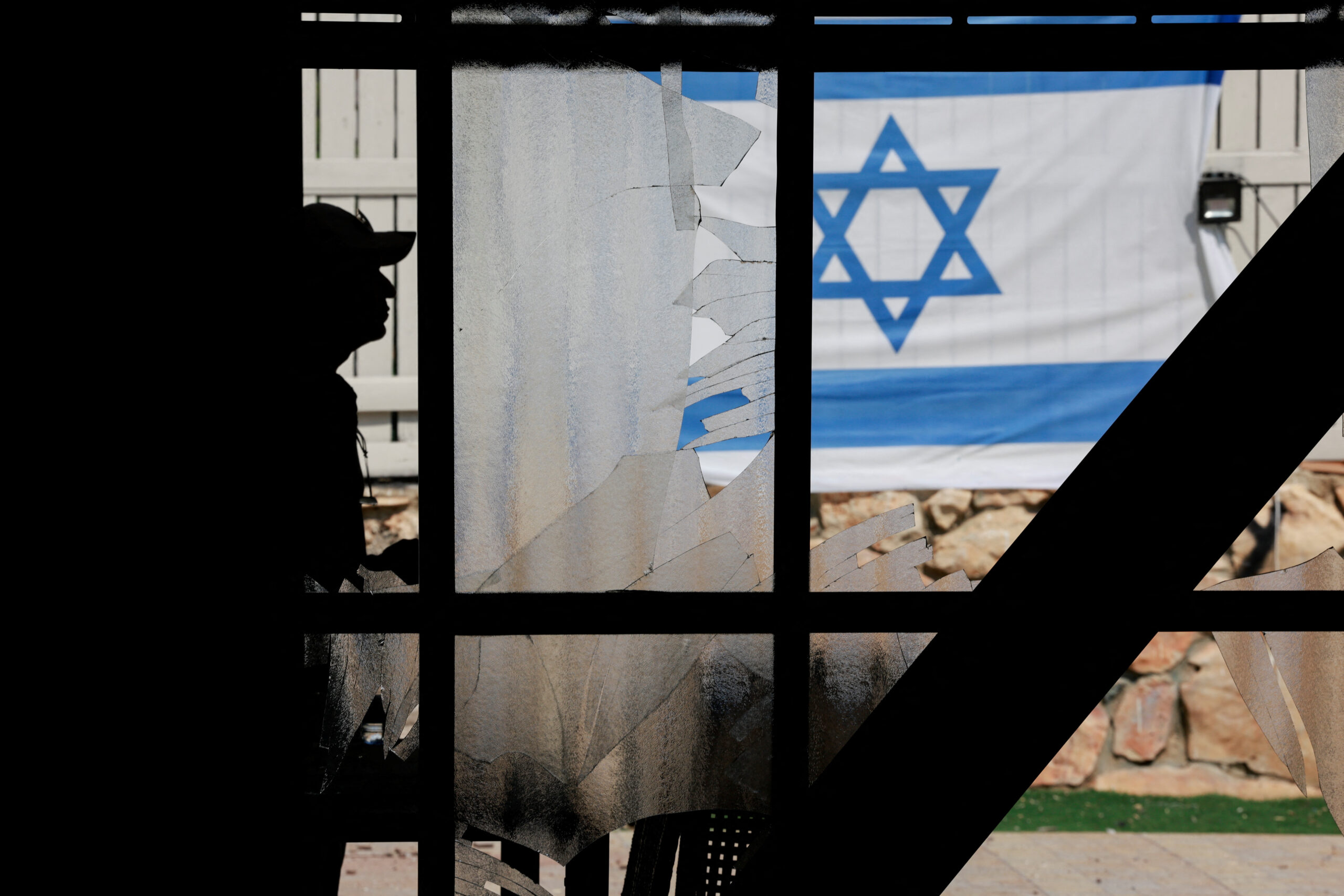
Israel’s Genocide in Gaza | 2023- till present

Status
Not open for further replies.
To view this content we will need your consent to set third party cookies.
For more detailed information, see our cookies page.

Namibia knows what nazis are and put in shame all arab state subjects that did not render relations with genociders to zero.
 
Barely a fraction of the world but will engulf the world in WW3

And we in America will be far less likely to be affected in case of a regional or a World War, just like in the previous two World Wars!! Two mighty oceans, two peaceful land neighbors are a lot of buffer, plus the best defense systems.

In a yesterday's video I shared, I think that's what Lavrov was trying to say: The safety accorded to America due to the oceans. Of course it is all relatively speaking.

And I would laugh at those idiotic Europeans here who are more Zionists than the Zionists, and who are more Ukrainians then the Ukrainians!! Once again, the American Neo Cons would burn Eurasia and watch the fireworks from a distance--and maybe even stimulate the American economy. After all, war is a big business here!!
 
To view this content we will need your consent to set third party cookies.
For more detailed information, see our cookies page.
 
To view this content we will need your consent to set third party cookies.
For more detailed information, see our cookies page.


Think we will need more than 1 twitter report to confirm if this is true or not . Should be easy to match to an airforce based on the colour of the paraachute itself ?
 
Last edited:
New AtlanticistAugust 27, 2024 • 1:00 pm ET

How the Israeli intelligence community got its mojo back​

By Marc Polymeropoulos

In my twenty-six-year career at the Central Intelligence Agency (CIA), I found that there were many misnomers in the intelligence business that were shared by the public and even policymakers. One is the notion that the CIA should be able to foresee world events, a concept that I termed (with some derision) “predictive certainty.” Policymakers would quite naturally welcome—and likely push—the US intelligence community to tell them precisely what will happen on any given subject. That of course rarely occurs; it is a notion derived from espionage books and movies.

Instead, I always believed as an operations officer that we must strive to collect intelligence that ultimately can provide a warning to policymakers. That warning function was—and still is—key in any CIA station’s job description. The CIA performed admirably if we sent up the bat signal, so that policymakers can decide on various courses of action if or when something went down. An event may seem likely to occur (with signs, never definitive, that an invasion or a coup was planned, for example), so the intelligence collected must spur on policymakers to consider several options. “No surprises” was the mantra I would follow. During management stints in Washington, and while serving abroad as an operations officer, I would tell my State Department, White House, and Department of Defense colleagues that my collection missions should be judged as successful if they were never blindsided.

Yet there was an important caveat to my promises: I would assure a US ambassador that we would collect, we would warn, we would analyze and assess. But do not expect the intelligence to have such a level of granularity that it implied certainty of an outcome.

This will go down in Israeli military history, just like the preemptive strikes in 1967 by the IDF against Egyptian land and air forces.​


During these last several days of late August, however, the Israeli intelligence community hit a grand slam by obtaining such exquisite intelligence that it was highly predictive in nature—and not only that, it also likely staved off a wider war. As such, the Israeli intelligence community deserves extraordinary credit for this intelligence coup. According to media reports, the Israelis collected information that not only indicated that Hezbollah was about to launch a significant attack against northern and central Israel, but also the precise time—5:15 a.m. local time on August 25—when the launches would occur and the specific units that would conduct the attacks.

This was a very noteworthy feat, in my view presumably gleaned from a combination of Israeli signals intelligence (an intercept of a warning order from within the Hezbollah hierarchy, for example); imagery of movement within the rocket, missile, or drone units themselves, perhaps via Israeli drones or other overhead collection; and even reporting from human sources, who could have told the Israelis the precise plans and intentions of the Hezbollah leadership. Let us not forget that Israel has shown an ability to penetrate Hezbollah, with the late July assassination in Beirut of Fuad Shukr, a close confidant and military adviser to Hezbollah leader Hassan Nasrallah.

This intelligence collection then allowed the Israel Defense Forces (IDF), launching reportedly up to one hundred aircraft, to effectively preempt the Hezbollah attack, destroying up to two-thirds of the rockets and missiles that would have been launched. This will go down in Israeli military history, just like the preemptive strikes in 1967 by the IDF against Egyptian land and air forces. So once again, how good was the intelligence this time around? It seems quite clear that Israeli pilots knew the precise location of the Hezbollah rocket and missile units, which was obtained by their colleagues in the Israeli intelligence community. As such, there must have been great satisfaction in the hallways of Israeli intelligence, having provided actionable targets to their military brethren.

This intelligence saved the lives of those Israelis—both civilian and military—who might have been hit by several hundred rockets and missiles. That in and of itself is a significant success. But there is more to praise, as this Israeli intelligence coup almost certainly avoided a wider war. In fact, the preemptive strike, based on the extraordinary collection, was de-escalatory in nature. Since there was no mass casualty event in Israel (military or civilian casualties emanating from a new Hezbollah attack), a massive Israeli response, including perhaps strikes on Beirut, was avoided. The Israeli intelligence community certainly won the day by avoiding that scenario. As did the region as a whole.

Finally, Hezbollah claims it was targeting Israeli national security infrastructure, including Mossad headquarters and a building housing elements of Unit 8200, the Israeli equivalent to the US National Security Agency. I sent a message to a former Israeli government official who is a friend of mine, noting, “You know you are doing something right if the enemy is trying to kill you.” What a sign of flattery for the Israeli intelligence officers, who nearly a year ago were reeling from the catastrophic intelligence failures of October 7, 2023. The attacks that day resulted in more than 1,160 Israelis and foreigners brutally killed, smashing the aura of the Israeli intelligence community. I am sure that there remains an enormous sense of guilt within the hallways of Mossad, Israeli military intelligence, and Shin Bet—similar to what we at the CIA felt after September 11, 2001. Yet as seen from the events of the last several days, on top of the successful hunt for high-value targets, the Israeli intelligence community has pulled itself up by its bootstraps and regained its mojo. That should reassure the Israeli public and policymakers, who rely on the intelligence community as Israel’s first line of defense.

 
To view this content we will need your consent to set third party cookies.
For more detailed information, see our cookies page.
 
GV_JY_7XwAAH5HF.jpegNew AtlanticistAugust 27, 2024 • 1:00 pm ET

How the Israeli intelligence community got its mojo back​

By Marc Polymeropoulos

In my twenty-six-year career at the Central Intelligence Agency (CIA), I found that there were many misnomers in the intelligence business that were shared by the public and even policymakers. One is the notion that the CIA should be able to foresee world events, a concept that I termed (with some derision) “predictive certainty.” Policymakers would quite naturally welcome—and likely push—the US intelligence community to tell them precisely what will happen on any given subject. That of course rarely occurs; it is a notion derived from espionage books and movies.

Instead, I always believed as an operations officer that we must strive to collect intelligence that ultimately can provide a warning to policymakers. That warning function was—and still is—key in any CIA station’s job description. The CIA performed admirably if we sent up the bat signal, so that policymakers can decide on various courses of action if or when something went down. An event may seem likely to occur (with signs, never definitive, that an invasion or a coup was planned, for example), so the intelligence collected must spur on policymakers to consider several options. “No surprises” was the mantra I would follow. During management stints in Washington, and while serving abroad as an operations officer, I would tell my State Department, White House, and Department of Defense colleagues that my collection missions should be judged as successful if they were never blindsided.

Yet there was an important caveat to my promises: I would assure a US ambassador that we would collect, we would warn, we would analyze and assess. But do not expect the intelligence to have such a level of granularity that it implied certainty of an outcome.

This will go down in Israeli military history, just like the preemptive strikes in 1967 by the IDF against Egyptian land and air forces.​


During these last several days of late August, however, the Israeli intelligence community hit a grand slam by obtaining such exquisite intelligence that it was highly predictive in nature—and not only that, it also likely staved off a wider war. As such, the Israeli intelligence community deserves extraordinary credit for this intelligence coup. According to media reports, the Israelis collected information that not only indicated that Hezbollah was about to launch a significant attack against northern and central Israel, but also the precise time—5:15 a.m. local time on August 25—when the launches would occur and the specific units that would conduct the attacks.

This was a very noteworthy feat, in my view presumably gleaned from a combination of Israeli signals intelligence (an intercept of a warning order from within the Hezbollah hierarchy, for example); imagery of movement within the rocket, missile, or drone units themselves, perhaps via Israeli drones or other overhead collection; and even reporting from human sources, who could have told the Israelis the precise plans and intentions of the Hezbollah leadership. Let us not forget that Israel has shown an ability to penetrate Hezbollah, with the late July assassination in Beirut of Fuad Shukr, a close confidant and military adviser to Hezbollah leader Hassan Nasrallah.

This intelligence collection then allowed the Israel Defense Forces (IDF), launching reportedly up to one hundred aircraft, to effectively preempt the Hezbollah attack, destroying up to two-thirds of the rockets and missiles that would have been launched. This will go down in Israeli military history, just like the preemptive strikes in 1967 by the IDF against Egyptian land and air forces. So once again, how good was the intelligence this time around? It seems quite clear that Israeli pilots knew the precise location of the Hezbollah rocket and missile units, which was obtained by their colleagues in the Israeli intelligence community. As such, there must have been great satisfaction in the hallways of Israeli intelligence, having provided actionable targets to their military brethren.

This intelligence saved the lives of those Israelis—both civilian and military—who might have been hit by several hundred rockets and missiles. That in and of itself is a significant success. But there is more to praise, as this Israeli intelligence coup almost certainly avoided a wider war. In fact, the preemptive strike, based on the extraordinary collection, was de-escalatory in nature. Since there was no mass casualty event in Israel (military or civilian casualties emanating from a new Hezbollah attack), a massive Israeli response, including perhaps strikes on Beirut, was avoided. The Israeli intelligence community certainly won the day by avoiding that scenario. As did the region as a whole.

Finally, Hezbollah claims it was targeting Israeli national security infrastructure, including Mossad headquarters and a building housing elements of Unit 8200, the Israeli equivalent to the US National Security Agency. I sent a message to a former Israeli government official who is a friend of mine, noting, “You know you are doing something right if the enemy is trying to kill you.” What a sign of flattery for the Israeli intelligence officers, who nearly a year ago were reeling from the catastrophic intelligence failures of October 7, 2023. The attacks that day resulted in more than 1,160 Israelis and foreigners brutally killed, smashing the aura of the Israeli intelligence community. I am sure that there remains an enormous sense of guilt within the hallways of Mossad, Israeli military intelligence, and Shin Bet—similar to what we at the CIA felt after September 11, 2001. Yet as seen from the events of the last several days, on top of the successful hunt for high-value targets, the Israeli intelligence community has pulled itself up by its bootstraps and regained its mojo. That should reassure the Israeli public and policymakers, who rely on the intelligence community as Israel’s first line of defense.


You are like a good house slave.

You've accepted your Jewish masters, wilfully choking on whatever they thrust down your throat.

What a sad way to spend your time. Do something productive?GV_JY_7XwAAH5HF.jpeg
 
A video that went viral on Twitter
It shows an Israeli who entered a swimming pool in Texas, America, carrying a weapon with him, so two Mexican men took the weapon away from him and beat him.

To view this content we will need your consent to set third party cookies.
For more detailed information, see our cookies page.
 
Urgent | Israeli Broadcasting Authority: Soldiers in Gaza were summoned to military trials after they requested rest periods due to exhaustion

To view this content we will need your consent to set third party cookies.
For more detailed information, see our cookies page.
 
Status
Not open for further replies.

Users who are viewing this thread

Pakistan Defence Latest

Back
Top