Follow along with the video below to see how to install our site as a web app on your home screen.
Note: This feature may not be available in some browsers.
It’s a shame that literally 100s of babies have been slaughtered by the Israeli - not been able to see the first week of their lives and you my dear fellow want us to focus on this piece of news?IDF officer holds son’s bris at kibbutz where harrowing October 7 battle unfolded
Moshe Barsheshet and his wife Renana hold their newborn son’s circumcision ceremony at Kibbutz Holit where he bravely fought terrorists during Hamas' attack
Roni Green Shaulov|05:30
“When I heard about the chaos in the south, I immediately knew it was something big,” recalls Moshe Barsheshet, reflecting on the day that changed the course of Israel’s history — and his own life. “I was an IDF company commander when a soldier named Rafael Hayun connected us with two people from Kibbutz Holit."
"They told us the kibbutz was devoid of military presence and infiltrated by Hamas terrorists. Although I was instructed not to head in, I decided to go anyway. On the way, we witnessed horrifying scenes,” he recounts.
4 View gallery
![]()
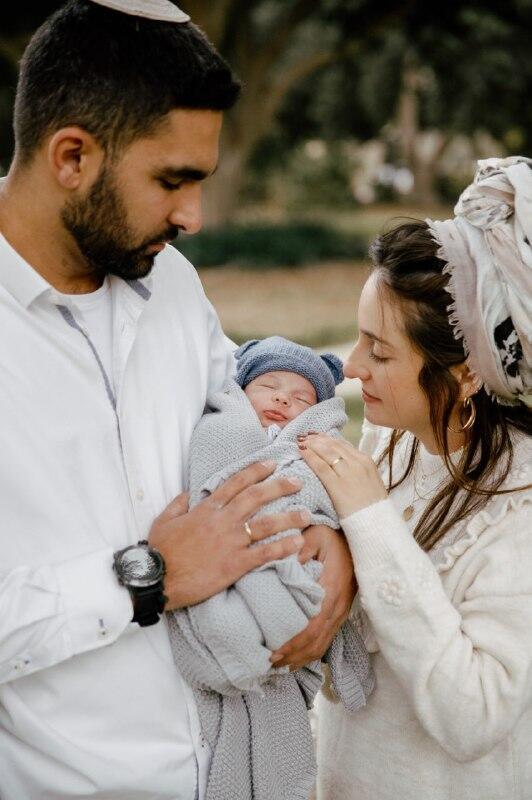
Moshe Barsheshet with his family at Kibbutz Holit
(Photo: Yael Buhbut)
When Barsheshet and his team arrived at Holit, the situation was dire. “We discovered around 60 terrorists in the kibbutz,” he says. “Houses were burning and there were many wounded. We engaged in a fierce battle, during which some of our comrades were injured. But by dawn we regained control of the kibbutz with the help of additional military forces.”
Barsheshet and his unit worked tirelessly to evacuate the wounded to the kibbutz gate, clear homes, and rescue survivors. The experience left a profound mark on him. “I feel a deep connection to the kibbutz, its people, and the place itself,” he says.
![]()
(Photo: Yael Buhbut)
“A person who experiences battle or a significant event either becomes repelled by the location or deeply attached to it. My life could have ended there and terrorists cruelly took the lives of so many. But for me, it was essential to return to that place, find closure and raise a new generation where there was once so much sorrow and blood.”
A moment of closure
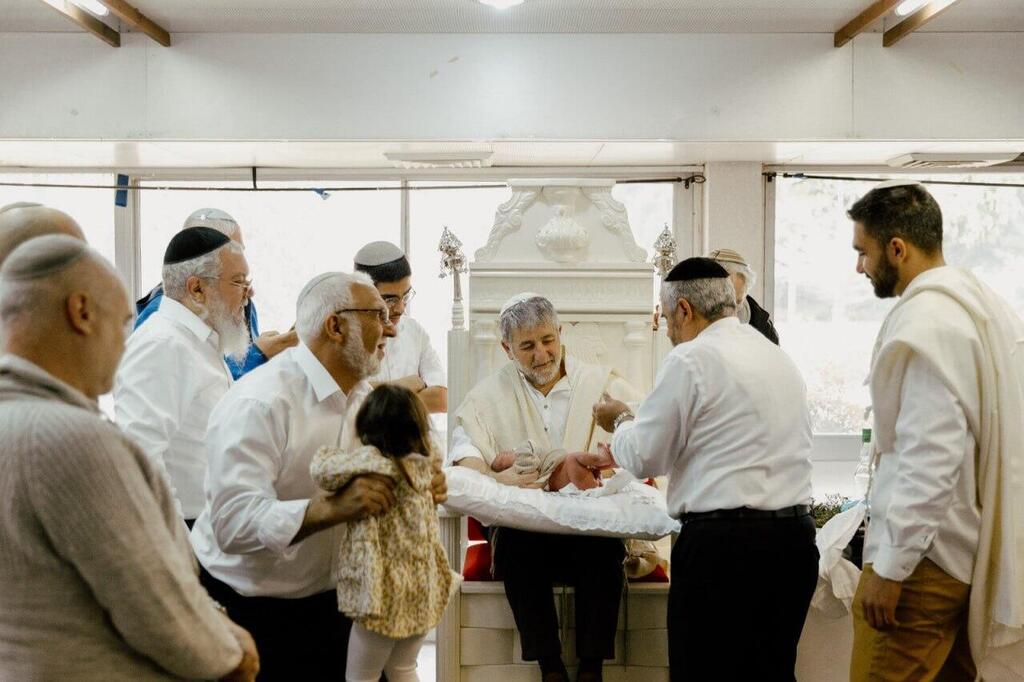
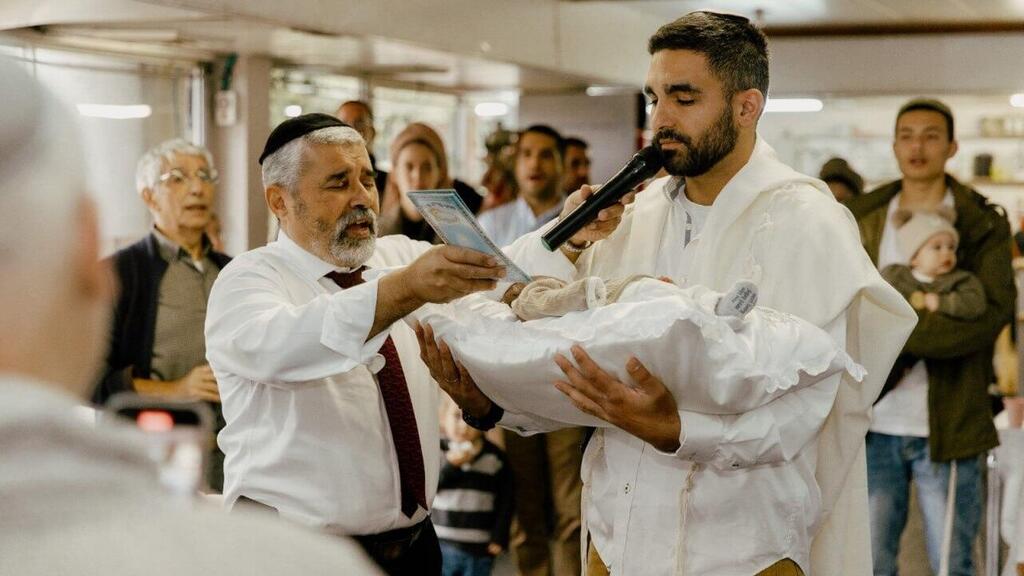
Last Friday, Barsheshet and his wife, Renana, returned to Holit but for their son’s brit milah (Jewish circumcision ceremony) — a symbolic act of renewal.
Holit remains a closed military zone, largely uninhabited except for soldiers and a few kibbutz members maintaining the site. Despite this, Barsheshet secured the necessary permissions from both the military and the kibbutz.
“We brought catering, invited the soldiers who were with me that day, kibbutz members and security personnel,” he shares. “It was an incredibly emotional and joyful moment — to bring new light to a place once shrouded in darkness. It truly felt like closing a circle.”
![]()
(Photo: Yael Buhbut)
Barsheshet shared a deeply personal message. “I’m a settler from Kiryat Arba and they’re kibbutz residents from Holit. Before October 7, our paths rarely crossed. But the terrorists’ bullets didn’t discriminate between us."
![]()
(Photo: Yael Buhbut)
“We need to set aside our divisions,” he says. “We all know how fractured the nation was before. I want to raise my children with certain values and holding the Brit milah at Holit is part of that. It’s a testament to our shared humanity and resilience.”
nothing to say about the destruction of the last hospital in north Gaza and ongoing holocaust of Palestinians?IDF officer holds son’s bris at kibbutz where harrowing October 7 battle unfolded
Moshe Barsheshet and his wife Renana hold their newborn son’s circumcision ceremony at Kibbutz Holit where he bravely fought terrorists during Hamas' attack
Roni Green Shaulov|05:30
“When I heard about the chaos in the south, I immediately knew it was something big,” recalls Moshe Barsheshet, reflecting on the day that changed the course of Israel’s history — and his own life. “I was an IDF company commander when a soldier named Rafael Hayun connected us with two people from Kibbutz Holit."
"They told us the kibbutz was devoid of military presence and infiltrated by Hamas terrorists. Although I was instructed not to head in, I decided to go anyway. On the way, we witnessed horrifying scenes,” he recounts.
4 View gallery
![]()
Moshe Barsheshet with his family at Kibbutz Holit
(Photo: Yael Buhbut)
When Barsheshet and his team arrived at Holit, the situation was dire. “We discovered around 60 terrorists in the kibbutz,” he says. “Houses were burning and there were many wounded. We engaged in a fierce battle, during which some of our comrades were injured. But by dawn we regained control of the kibbutz with the help of additional military forces.”
Barsheshet and his unit worked tirelessly to evacuate the wounded to the kibbutz gate, clear homes, and rescue survivors. The experience left a profound mark on him. “I feel a deep connection to the kibbutz, its people, and the place itself,” he says.
![]()
(Photo: Yael Buhbut)
“A person who experiences battle or a significant event either becomes repelled by the location or deeply attached to it. My life could have ended there and terrorists cruelly took the lives of so many. But for me, it was essential to return to that place, find closure and raise a new generation where there was once so much sorrow and blood.”
A moment of closure
Last Friday, Barsheshet and his wife, Renana, returned to Holit but for their son’s brit milah (Jewish circumcision ceremony) — a symbolic act of renewal.
Holit remains a closed military zone, largely uninhabited except for soldiers and a few kibbutz members maintaining the site. Despite this, Barsheshet secured the necessary permissions from both the military and the kibbutz.
“We brought catering, invited the soldiers who were with me that day, kibbutz members and security personnel,” he shares. “It was an incredibly emotional and joyful moment — to bring new light to a place once shrouded in darkness. It truly felt like closing a circle.”
![]()
(Photo: Yael Buhbut)
Barsheshet shared a deeply personal message. “I’m a settler from Kiryat Arba and they’re kibbutz residents from Holit. Before October 7, our paths rarely crossed. But the terrorists’ bullets didn’t discriminate between us."
![]()
(Photo: Yael Buhbut)
“We need to set aside our divisions,” he says. “We all know how fractured the nation was before. I want to raise my children with certain values and holding the Brit milah at Holit is part of that. It’s a testament to our shared humanity and resilience.”
Egypt destroyed part of Rafah on their side of border couple of years ago and that basically prevented any supplies, what jews destroyed is irrelevant if is there dedicated force for maintaining and digging up new tunnels. That is the problem which is caused by morons from egypt.Israel has blown up huge amounts of tunnels so far and controls border with Egypt
before this genocide Egypt was already destroying those tunnels now Israel controls a large buffer zone on the border and destroys everything
Palestinians in Gaza are truly fighting against all odds
no matter how long your thinly-veiled pro-holocaust propaganda posts are, you are fooling nobody.
We use essential cookies to make this site work, and optional cookies to enhance your experience.