IWT.

Until Modi is in power as keeping it in abeyance means India wants war. It is up to Pakistan to maintain peace for as long as it’s possible with ground realities.
Dude, until Modi is in power? Do you know who yogi is?

Even if congress is elected, you think they are reasonable and sensible when it comes to Pakistan and Kashmir? In fact I think they might be even harsher in their actions, but in a graceful way unlike the Sanghis.

Unless India's policy since its inception changes, there will be war. So be prepared.
 
Any update on the current situation?
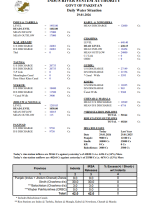
Has the flow of water been curtailed or diminished?

What is the situation on the Chenab river waters flow ?
 

Pakistan secures key ruling in Indus Waters Treaty case against India​

Top Story
By Khalid Mustafa
January 30, 2026


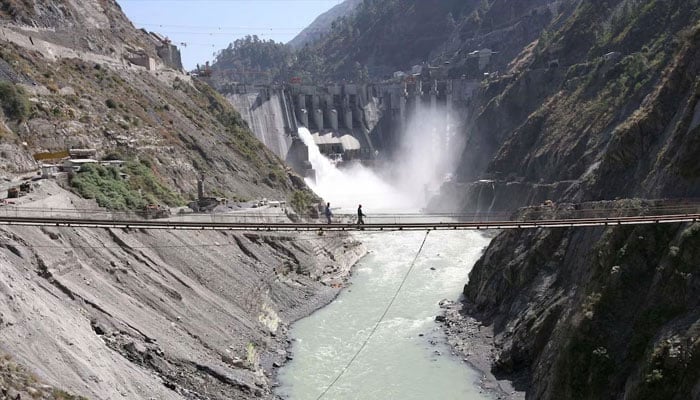
Labourers walk on a bridge near the 450-megawatt hydropower project located at Baglihar Dam on the Chenab river which flows from Indian Kashmir into Pakistan, at Chanderkote, about 145 km (90 miles) north of Jammu October 10, 2008. — Reuters
ISLAMABAD: In a significant development for Pakistan in the long-running Indus Waters Treaty dispute, an international court has ordered India to produce key operational records from its hydropower projects on rivers allocated to Pakistan. The Court of Arbitration, constituted under the 1960 Indus Waters Treaty (IWT), issued a 13-page Procedural Order directing India to submit operational logbooks from the Baglihar and Kishanganga hydroelectric plants by February 9, 2026, or formally explain any refusal to do so.

Pakistan has been instructed to specify the exact documents it seeks by February 2, 2026. A hearing in the Second Phase on the Merits is scheduled to take place in The Hague from February 2 to 3, regardless of India’s participation. A high-level Pakistani delegation, led by the attorney general and including the Pakistan Commissioner for Indus Waters, will depart for The Hague on Saturday. Pakistan’s international legal team and the ambassador to the Netherlands will also join.

Pakistan has consistently argued that India has misused the IWT’s hydropower provisions by exaggerating installed capacity and anticipated electricity load to justify excessive water storage—a practice Islamabad says directly undermines Pakistan’s water security.

The court agreed that the operational records—known as “pondage logbooks”—appear directly relevant and material to the issues under consideration, particularly in determining how installed capacity and anticipated load should be calculated for maximum permissible pondage.

Pakistan has indicated it may seek interim measures to prevent further prejudice to its treaty rights, including steps to halt actions that could aggravate the dispute. While the court did not rule on interim measures at this stage, it confirmed that only a court of arbitration—not a Neutral Expert—has the authority to grant such relief.

Independent legal experts say the ruling marks an important procedural win for Pakistan, strengthening its position that India’s actual hydropower operations, rather than theoretical design claims, are central to determining treaty compliance.


Indus Waters Treaty at the crossroads: Arbitration, obligations, and the rule of international law​


At the heart of the Treaty lies a permanent and unqualified allocation of rivers

Ahsaan Ahmad Khokhar
February 08, 2026


photo file


The Indus Waters Treaty of 1960 stands as one of the most carefully negotiated and legally robust transboundary water agreements in modern international law.

Concluded between Pakistan and India with the good offices of the World Bank, the Treaty was designed to remove water from the volatility of politics and conflict and to anchor it firmly in law, engineering discipline, and neutral dispute resolution.

It is not a political understanding subject to shifting bilateral moods, but a binding international instrument governed by the foundational principle of pacta sunt servanda—that treaties must be honoured in good faith.

Its endurance through wars, military crises, and prolonged diplomatic breakdowns testifies to its legal clarity and resilience. Today, however, the Treaty faces an unprecedented challenge, not from interpretive ambiguity but from India’s unilateral conduct and rejection of Treaty-mandated adjudication.

At the heart of the Treaty lies a permanent and unqualified allocation of rivers. Article II vests the eastern rivers—Ravi, Beas, and Sutlej—exclusively in India, while Article III accords Pakistan exclusive rights over the western rivers—Indus, Jhelum, and Chenab. This allocation was the Treaty’s foundational bargain.

India’s access to the western rivers is permitted only within the narrow confines of Article III(2), read with Annexures D and E, which allow limited, non-consumptive uses, principally run-of-the-river hydroelectric projects.

These permissions are subject to strict design and operational constraints, including tight limits on pondage, prohibition of storage for flow regulation, and a ban on engineering features that would enable control over the timing or quantum of water flows to Pakistan.
 
These limits were deliberately imposed to protect Pakistan’s position as the lower riparian and to ensure that water could never become a strategic weapon. Pakistan’s objections to India’s hydropower projects, particularly Kishanganga and Ratle, arise squarely from these provisions. Pakistan has consistently maintained that excessive pondage capacity, gated spillways, drawdown flushing mechanisms, and specific intake and outlet configurations violate Annexure D, paragraphs 8 to 15.

These provisions strictly circumscribe permissible pondage and expressly bar designs that enable manipulation of flows beyond instantaneous power generation. The concern is not theoretical. Technical assessments demonstrate that such features can materially affect downstream flows, especially during lean seasons, undermining the guarantees embedded in Article III(1) of the Treaty.

The dispute entered a more troubling phase in April 2025, when, following a terrorist incident in Pahalgam, India announced that it was placing the Indus Waters Treaty “in abeyance.” This declaration finds no support in the Treaty or in international law.

The Treaty contains no suspension or termination clause. Article XII permits modification only by mutual agreement, underscoring its permanent character.

Under Article 26 of the Vienna Convention on the Law of treaties, which reflects customary international law, every Treaty in force is binding upon the parties and must be performed in good faith.

Articles 60 and 62 permit suspension only in narrowly defined circumstances, none of which apply here. Security incidents, however serious, do not entitle a state to suspend obligations governing essential shared resources vital to civilian survival.
 
International jurisprudence has consistently rejected unilateral abandonment of treaties involving long-term resource management. In the Gabčíkovo–Nagymaros Project case, the International Court of Justice held that political necessity or alleged fundamental change of circumstances cannot justify unilateral withdrawal from Treaty obligations.

Against this settled legal background, India’s claim that the Indus Waters Treaty has been suspended is legally void and incapable of extinguishing either substantive obligations or procedural mechanisms.

Pakistan responded not through countermeasures or reciprocal suspension, but by invoking the Treaty’s dispute-resolution framework under Article IX.

This framework establishes a graduated mechanism culminating in arbitration under Annexure G where disputes of legal interpretation arise.

In accordance with these provisions, a Court of Arbitration was duly constituted under the auspices of the Permanent Court of Arbitration (PCA) at The Hague.

India’s refusal to participate or recognise the tribunal does not deprive it of jurisdiction. Annexure G is explicit: once arbitration is validly triggered, jurisdiction vests in the tribunal and cannot be defeated by unilateral non-appearance.

Over the past year, the Court of Arbitration has repeatedly and rightly affirmed its jurisdiction, categorically rejecting India’s objections.

In its Award on Competence, the tribunal unanimously held that it was properly constituted and fully competent to adjudicate Pakistan’s claims.

In a subsequent Supplemental Award in 2025, the tribunal expressly dismissed India’s plea that the Treaty had been placed in abeyance, holding that unilateral declarations have no legal effect, that the Indus Waters Treaty remains fully in force, and that the Court retains jurisdiction notwithstanding India’s continued non-participation.
 
Compliance, the tribunal emphasised, is determined by substantive effect on downstream flows, not by labels or formal designations.

The most consequential development occurred at the end of January 2026 during the merits phase. The Court of Arbitration issued a detailed 13-page procedural order directing India to submit comprehensive technical and operational data relating to the Kishanganga and Ratle/Baglihar hydropower projects.

Acting under its authority derived from Annexure G, the tribunal required disclosure of daily inflows, outflows, storage levels, and operational logs—data essential to assess compliance with Annexure D and Article III. Pakistan was directed to specify precise data categories, ensuring procedural fairness and evidentiary integrity.

February 9, 2026 marks the deadline fixed by the Court for India’s compliance. The order is legally binding. The tribunal has made clear that proceedings will continue irrespective of India’s participation and that failure to produce the required data may result in adverse inferences.

Under established international practice, including that of the International Court of Justice, adverse inference permits a tribunal to presume that withheld evidence would have been unfavourable to the non-complying party.
 

Users who are viewing this thread

Pakistan Defence Latest

Latest Posts

Back
Top