Navigation
Install the app
How to install the app on iOS
Follow along with the video below to see how to install our site as a web app on your home screen.
Note: This feature may not be available in some browsers.
More options
Style variation
You are using an out of date browser. It may not display this or other websites correctly.
You should upgrade or use an alternative browser.
You should upgrade or use an alternative browser.
IWT.
- Thread starter Fatman17
- Start date
More options
Who Replied?


ghazi52
THINK TANK: CONSULTANT

ghazi52
THINK TANK: CONSULTANT
Indus Waters Treaty Update:
Pakistan’s Legal Victory in the Court of Arbitration
In a historic and unanimous decision, the Court of Arbitration has reaffirmed its jurisdiction in the Indus Waters Treaty dispute, despite India’s attempts to unilaterally place the treaty “in abeyance.”
| The Facts
 Pakistan initiated arbitration in 2016 over India’s controversial dam designs.
India countered by seeking a Neutral Expert, and the World Bank paused both tracks.
In 2022, the pause was lifted — and the Court was officially constituted.
India’s Challenge Rejected:
On 23 April 2025, India declared the Treaty suspended due to regional tensions. But the Court firmly ruled:
"No party can unilaterally suspend or abrogate an international treaty or dispute process once initiated."
 Important
The Treaty remains binding..
The Court retains full authority.
India’s action cannot derail international arbitration.
This ruling is not just a legal milestone, it’s a testament to the power of international law and Pakistan’s principled, peaceful pursuit of justice through legal channels.
The Court is chaired by Prof. Sean D. Murphy and supported by world-renowned legal and hydrology experts.
Pakistan stands firm. The Indus Waters Treaty must be upheld, not only in letter, but in spirit.
Pakistan’s Legal Victory in the Court of Arbitration
In a historic and unanimous decision, the Court of Arbitration has reaffirmed its jurisdiction in the Indus Waters Treaty dispute, despite India’s
attempts to unilaterally place the treaty “in abeyance.”|
The FactsPakistan initiated arbitration in 2016 over India’s controversial dam designs.India countered by seeking a Neutral Expert, and the World Bank paused both tracks. In 2022, the pause was lifted — and the Court was officially constituted.India’s Challenge Rejected:On 23 April 2025, India declared the Treaty suspended due to regional tensions. But the Court firmly ruled:
"No party can unilaterally suspend or abrogate an international treaty or dispute process once initiated."
ImportantThe Treaty remains binding..
The Court retains full authority.
India’s action cannot derail international arbitration.
This ruling is not just a legal milestone, it’s a testament to the power of international law and Pakistan’s principled, peaceful pursuit of justice through legal channels.
The Court is chaired by Prof. Sean D. Murphy and supported by world-renowned legal and hydrology experts.
Pakistan stands firm. The Indus Waters Treaty must be upheld, not only in letter, but in spirit.

Asfandyar Bhittani
THINK TANK: CONSULTANT
India warns Pakistan of possible flooding under IWT in first contact since May war
In an unprecedented move since the May military confrontation, India has contacted Pakistan under the Indus Waters Treaty (IWT) to share advance information about possible flooding, official sources said.
According to the sources, New Delhi warned Pakistan of a potential major flood in the Tawi River at Jammu.
The Indian High Commission in Islamabad conveyed the alert, with the communication made on the morning of August 24, they added.
It is the first major contact of its kind since the Pakistan-India war in May, the sources noted.
Following the alert, Pakistani authorities issued warnings based on the information provided by India, the sources confirmed.
In the wake of the killing of 26 people in the Pahalgam area of the Indian Illegally Occupied Jammu and Kashmir (IIOJK) in April, India held the IWT with Pakistan in abeyance.
New Delhi accuses Islamabad of orchestrating the deadly militant attack, an allegation that Pakistan denies.
Based on these groundless allegations, India waged a war against Pakistan in May, resulting in the heaviest military engagement in decades, before a ceasefire was brokered by the US.
The nuclear-armed neighbours disagree over the use of the water from rivers that flow downstream from India into the Indus River basin in Pakistan.
The use of the water is governed by the IWT, which was mediated by the World Bank and signed by the neighbours in September 1960.
There is no provision in the treaty for either country to unilaterally suspend or terminate the pact, which has clear dispute resolution systems.
The treaty had survived three wars and other conflicts between the two rivals, while withstanding many twists and turns in diplomatic ties.
Reuters reported on May 16 that Delhi is considering projects that would likely reduce the flow of water into Pakistan from rivers allocated to that country.
India has also said that it will "keep the treaty in abeyance until Pakistan credibly and irrevocably abjures its support for cross-border terrorism."
In contrast, Islamabad says "any attempt to stop or divert the flow of water belonging to Pakistan" will be an "act of war".
What is Indus Waters Treaty?
The nuclear-armed neighbours disagree over the use of the water from rivers that flow downstream from India into the Indus River basin in Pakistan.
The use of the water is governed by the IWT, which was mediated by the World Bank and signed by the neighbours in September 1960.
The agreement split the Indus and its tributaries between the two countries and regulated water sharing. India was granted the use of water from three eastern rivers — Sutlej, Beas and Ravi — while Pakistan was granted most of the three western rivers — Indus, Jhelum and Chenab.
There is no provision in the treaty for either country to unilaterally suspend or terminate the pact, which has clear dispute resolution systems.
What are the concerns over water?
The countries have argued over and disputed several projects on the Indus and its tributaries for years.
Pakistan is heavily dependent on water from this river system for its hydropower and irrigation needs. Pakistan says India unfairly diverts water with the upstream construction of barrages and dams, a charge India denies.
Pakistan is concerned that India's dams will cut flows on the river, which feeds 80% of its irrigated agriculture. It has asked for a neutral expert and then an arbitration court to intervene in two recent hydropower projects.
India has accused Pakistan of dragging out the complaints process, and says the construction of its Kishanganga and Ratle hydroelectric projects is allowed under the treaty. It has also sought modification of the pact to get around such delays.
What could suspension change?
The suspension of the accord is not expected to have an immediate impact on the flow of water to Pakistan, as India does not have enough storage capacity. However, water at a key receiving point in Pakistan briefly fell by as much as 90% in early May after India started maintenance work on some Indus projects.
India's move could also bring uncertainty to Pakistan's agricultural system.
The suspension means India can stop sharing crucial information and data on the release of water from barrages/dams or on flooding, Indian officials said, adding that New Delhi will also not be obliged to release minimum amounts of water during the lean season.
How has Pakistan reacted to the decision?
Pakistan says the treaty is a binding international agreement brokered by the World Bank and contains no provision for unilateral suspension.
Ghasharib Shaokat, the head of product at Pakistan Agriculture Research, called the treaty the backbone of the country's agriculture sector.
"It puts our agricultural future on shaky ground. If water flows become erratic, the entire system takes a hit — especially irrigation-dependent crops such as wheat, rice, and sugarcane," Shaokat said.
"Yields could drop. Costs could rise. Food prices would likely spike. And small-scale farmers, who already operate on thin margins, would bear the brunt of it."
Khalid Hussain Baath, chairman of a national farmers' union in Pakistan, painted the move as an act of belligerence.
"This is a true war," Baath said from Lahore. "We already have a water shortage because of climate change. Low rainfall this year, and limited snow, means that the water level is already 20-25% lower than last year."
Key win in the Hague court
In a major victory, the Permanent Court of Arbitration in The Hague issued a Supplemental Award in the IWT case in June, favouring Pakistan.
According to a statement issued by the government, Pakistan reiterated its commitment to resolving the issue under the framework of the IWT and stressed the need for renewed diplomatic engagement between the two countries.
The arbitration court's ruling confirmed that India’s unilateral actions could not undermine the jurisdiction of either the court of arbitration or the Neutral Expert in proceedings under the IWT.
"Court has affirmed its competence in light of recent developments and that unilateral action by India cannot deprive either the Court or the Neutral Expert... of their competence to adjudicate the issues before them,” read the statement.
Following the award, Pakistan called on India to immediately resume the normal functioning of the IWT, and to fully and faithfully honour its treaty obligations.
“In a supplemental award announced on June 27 2025, the Court hearing the Pakistan-India dispute over Kishenganga and Ratle hydroelectric projects has found that its competence remains intact, and that it has a continuing responsibility to advance these proceedings in a timely, efficient, and fair manner,” the Foreign Office (FO) said in a statement.
"The Court of Arbitration decided to announce this supplemental award in the wake of India’s illegal and unilateral announcement to hold the Indus Waters Treaty in abeyance," it added.
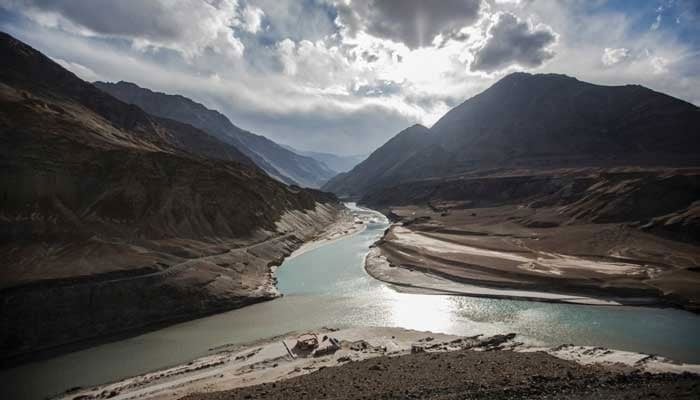
India warns Pakistan of possible flooding under IWT in first contact since May war
In an unprecedented move since the May military confrontation, India has contacted Pakistan under the Indus Waters Treaty to share advance information about possible flooding, official sources...
 www.thenews.com.pk

gamaji
Registered Member
I think it’s worth watching video.
- Pakistan has huge aquifers (i.e. the underground geological formation that holds this water) under its rivers.
- Time for IWT between India and Pakistan is over.
- It is a God gifted opportunity for Pakistan to get out of this treaty after Modi has put it under abeyance.
- Pakistan has nothing to further lose. If anything, Pakistan can defend its rights as a lower riparian country in a much better way under the international treaties and UN charter.
- Under IWT, India is dumping significant amounts of dirty water/industrial waste into Pakistan through four nallahs. The world is now much more concerned for population health and environmental pollution. It is the time for Pakistan to get out of this disastrous
drkrn86
Registered Member
Centre Plans Big Indus Gift For North India Ahead Of 2029 Elections
Navigation
Open Search page
advertisement
Ad
NDTV 24x7
Centre Plans Big Indus Gift For North India Ahead Of 2029 Elections
Story by Reported by Akhilesh Sharma, Edited by Chandrajit Mitra • 1d
Centre Plans Big Indus Gift For North India Ahead Of 2029 Elections
Centre Plans Big Indus Gift For North India Ahead Of 2029 Elections
India is gearing up to make massive changes to the Indus River system to meet the water demands of the northern states. In a strategic move after suspending the Indus Water Treaty with Pakistan, the government is now trying to ensure that the project is ready ahead of the 2029 Lok Sabha elections.
SBI Life - ULIP Insurance Plan
Ad
SBI Life Insurance
SBI Life - ULIP Insurance Plan
During a review meeting by senior ministers last Friday, it was stated that a detailed project report (DPR) is already being prepared to construct a 14-km tunnel that would connect the Indus River with the Beas River, both part of the Indus system, according to people privy to the developments.
Retirement Plan
Ad
SabsePehleLifeInsurance
Retirement Plan
Multinational construction firm L&T has been tasked with preparing the project report. It is expected to be ready by next year.
The work on the proposed 113-km canal that would deliver the Indus water to the northern states was also reviewed at the meeting, sources added.
NDTV Explains: Story Of Indus Waters Treaty, Partition, Planning, Pakistan Impact
"Investing in a licensed plan makes all the difference." – Shallu & Nisha.
Ad
Adobe Creative Cloud Pro
"Investing in a licensed plan makes all the difference." – Shallu & Nisha.
The Indus Water Treaty was a landmark water-sharing deal signed in 1960 between India and Pakistan following an intervention by the World Bank. India suspended the treaty in the aftermath of the April 22 Pahalgam terror attack, with the government asserting that "water and blood can't flow together".
Annual Cover Starts @ Rs. 36000/year*
Ad
SBI Life Insurance
Annual Cover Starts @ Rs. 36000/year*
The government had since been working on a detailed plan to utilize India's share of the Indus water. To make this a reality, an ambitious project has been conceived under the Inter-Basin Indus Water Transfer Scheme and is being monitored at the highest levels of the government.
The most challenging part of this project is the construction of the 14-km tunnel, say sources. Such a tunnel would require a detailed study of the mountain rocks, and in case of weaker rocks, the tunnel will be laid through pipes. Its construction will begin after the government receives the DPR report.
The use of tunnel boring machines and rock shield technology has been proposed to ensure speed and safety. The tunnel would also be connected to the Ujh Multipurpose Project in Kathua district of Jammu and Kashmir to enable water transfer from the Ujh River, a tributary of the Ravi, to the Beas Basin.
The completion of this tunnel will connect the Ravi-Beas-Sutlej system to the Indus Basin, enabling India to maximize the utility of its share of water. Sources estimate that its construction will take three to four years and be ready by 2028. The estimated cost is around Rs 4,000-5,000 crore.
Read: India's Goodwill Gesture To Pakistan After Indus Treaty Abeyance
The tunnel's construction will be carried out in separate sections, it was informed during Friday's meeting.
The project aims to increase irrigation capacity in the arid regions of Rajasthan by diverting water to the Indira Gandhi Canal. States like Jammu and Kashmir, Haryana, Delhi, and Punjab will also benefit from this project. A canal will be built to connect the Chenab River to the Ravi-Beas-Sutlej system. It will be linked to the existing canal systems of these states so that water can reach the Indira Gandhi Canal directly and deliver the water to Sri Ganganagar in Rajasthan.
Besides, the project will also enhance drinking water availability in Delhi, Punjab, Haryana, and Rajasthan.
The project will stop the excess water from India's share from flowing to Pakistan, thus strengthening the country's water security and reaffirming the government's resolve that "water and blood can't flow together". It will also help address the impacts of climate change and changing rainfall patterns, besides strengthening the existing 13 canal systems.
There are further plans to extend the length of the Ranbir Canal from 60 to 120 km in Jammu
Navigation
Open Search page
advertisement
Ad
NDTV 24x7
Centre Plans Big Indus Gift For North India Ahead Of 2029 Elections
Story by Reported by Akhilesh Sharma, Edited by Chandrajit Mitra • 1d
Centre Plans Big Indus Gift For North India Ahead Of 2029 Elections
Centre Plans Big Indus Gift For North India Ahead Of 2029 Elections
India is gearing up to make massive changes to the Indus River system to meet the water demands of the northern states. In a strategic move after suspending the Indus Water Treaty with Pakistan, the government is now trying to ensure that the project is ready ahead of the 2029 Lok Sabha elections.
SBI Life - ULIP Insurance Plan
Ad
SBI Life Insurance
SBI Life - ULIP Insurance Plan
During a review meeting by senior ministers last Friday, it was stated that a detailed project report (DPR) is already being prepared to construct a 14-km tunnel that would connect the Indus River with the Beas River, both part of the Indus system, according to people privy to the developments.
Retirement Plan
Ad
SabsePehleLifeInsurance
Retirement Plan
Multinational construction firm L&T has been tasked with preparing the project report. It is expected to be ready by next year.
The work on the proposed 113-km canal that would deliver the Indus water to the northern states was also reviewed at the meeting, sources added.
NDTV Explains: Story Of Indus Waters Treaty, Partition, Planning, Pakistan Impact
"Investing in a licensed plan makes all the difference." – Shallu & Nisha.
Ad
Adobe Creative Cloud Pro
"Investing in a licensed plan makes all the difference." – Shallu & Nisha.
The Indus Water Treaty was a landmark water-sharing deal signed in 1960 between India and Pakistan following an intervention by the World Bank. India suspended the treaty in the aftermath of the April 22 Pahalgam terror attack, with the government asserting that "water and blood can't flow together".
Annual Cover Starts @ Rs. 36000/year*
Ad
SBI Life Insurance
Annual Cover Starts @ Rs. 36000/year*
The government had since been working on a detailed plan to utilize India's share of the Indus water. To make this a reality, an ambitious project has been conceived under the Inter-Basin Indus Water Transfer Scheme and is being monitored at the highest levels of the government.
The most challenging part of this project is the construction of the 14-km tunnel, say sources. Such a tunnel would require a detailed study of the mountain rocks, and in case of weaker rocks, the tunnel will be laid through pipes. Its construction will begin after the government receives the DPR report.
The use of tunnel boring machines and rock shield technology has been proposed to ensure speed and safety. The tunnel would also be connected to the Ujh Multipurpose Project in Kathua district of Jammu and Kashmir to enable water transfer from the Ujh River, a tributary of the Ravi, to the Beas Basin.
The completion of this tunnel will connect the Ravi-Beas-Sutlej system to the Indus Basin, enabling India to maximize the utility of its share of water. Sources estimate that its construction will take three to four years and be ready by 2028. The estimated cost is around Rs 4,000-5,000 crore.
Read: India's Goodwill Gesture To Pakistan After Indus Treaty Abeyance
The tunnel's construction will be carried out in separate sections, it was informed during Friday's meeting.
The project aims to increase irrigation capacity in the arid regions of Rajasthan by diverting water to the Indira Gandhi Canal. States like Jammu and Kashmir, Haryana, Delhi, and Punjab will also benefit from this project. A canal will be built to connect the Chenab River to the Ravi-Beas-Sutlej system. It will be linked to the existing canal systems of these states so that water can reach the Indira Gandhi Canal directly and deliver the water to Sri Ganganagar in Rajasthan.
Besides, the project will also enhance drinking water availability in Delhi, Punjab, Haryana, and Rajasthan.
The project will stop the excess water from India's share from flowing to Pakistan, thus strengthening the country's water security and reaffirming the government's resolve that "water and blood can't flow together". It will also help address the impacts of climate change and changing rainfall patterns, besides strengthening the existing 13 canal systems.
There are further plans to extend the length of the Ranbir Canal from 60 to 120 km in Jammu

Fatman17
Moderator
- Thread starter
- #55
Pakistan has denounced India’s unilateral suspension of the Indus Water Treaty (IWT), saying that such acts set a precedent for “resource-based coercion”.
Ambassador Asim Iftikhar Ahmad, Pakistan’s permanent representative, made the remarks while addressing the UN Security Council (UNSC). According to a press release issued by the Permanent Mission of Pakistan to the United Nations (UN), the envoy sounded alarm over the “deliberate weaponisation of shared natural resources”, citing the suspension of the IWT as an example.
Read more: https://www.dawn.com/news/1953682
Ambassador Asim Iftikhar Ahmad, Pakistan’s permanent representative, made the remarks while addressing the UN Security Council (UNSC). According to a press release issued by the Permanent Mission of Pakistan to the United Nations (UN), the envoy sounded alarm over the “deliberate weaponisation of shared natural resources”, citing the suspension of the IWT as an example.
Read more: https://www.dawn.com/news/1953682
It will always be in abeyance. Pakistan whether accepts it or not , does not matter.Pakistan has denounced India’s unilateral suspension of the Indus Water Treaty (IWT), saying that such acts set a precedent for “resource-based coercion”.
Ambassador Asim Iftikhar Ahmad, Pakistan’s permanent representative, made the remarks while addressing the UN Security Council (UNSC). According to a press release issued by the Permanent Mission of Pakistan to the United Nations (UN), the envoy sounded alarm over the “deliberate weaponisation of shared natural resources”, citing the suspension of the IWT as an example.
Read more: https://www.dawn.com/news/1953682

Until Modi is in power as keeping it in abeyance means India wants war. It is up to Pakistan to maintain peace for as long as it’s possible with ground realities.It will always be in abeyance. Pakistan whether accepts it or not , does not matter.

hasssanali8998
Elite Member
any updates i suspected the abeyance is just in words only and nothing will happen( there are easier ways to start a nuclear war if that is what India wants ) . cant find anything new
ghazi52
THINK TANK: CONSULTANT
FO takes note of PCA clarifications on Indus Waters Treaty decision
Abdullah Momand
November 12, 2025
https://whatsapp.com/channel/0029VaMc238IiRov8okfYy3n
The Foreign Office (FO) issued a statement on Wednesday in response to clarifications issued by the Court of Arbitration on the Indus Waters Treaty (IWT), saying that Pakistan had taken note of the decision and calling the clarifications “helpful”.
The Hague’s Permanent Court of Arbitration (PCA) had issued its Award on Issues of General Interpretation of the IWT on August 8. On September 19, Pakistan initiated an arbitration against India under the provisions of the IWT, which India suspended unilaterally following a four-day conflict between the two countries in May.
The PCA on Saturday issued clarifications on its decisions surrounding the treaty in response to the request, which concerned the interpretation and application of the IWT to certain design elements of run-of-river hydroelectric plants (HEPs).
The FO statement added that Pakistan had also taken note of the procedural order issued in parallel with the decision.
In response to a Procedural Order also issued in light of the decision, in which the court invited both parties to report on the status of Neutral Expert Proceedings, the FO said, “The Neutral Expert proceedings were initiated on India’s request with their next phase scheduled to take place in Vienna from 17-21 November 2025. While India has decided to halt its participation, Pakistan continues to fully participate in the Neutral Expert proceedings in good faith.”
It added that in this regard, the Neutral Expert had ruled that India’s non-participation could not operate as a bar to the proceedings going forward.
According to a press release issued by the PCA, the requested clarifications included those in relation to Article III, which concerns the Western rivers, and paragraph 8 of Annexure D, which concerns new run-of-river hydro-electric plants that India may construct on these rivers.
“The award also addressed a related question on the legal effect of decisions issued by dispute resolution bodies under the Treaty (namely, courts of arbitration and neutral experts),” the press release said.
The court found Pakistan’s request for clarification to be “timely” and provided clarifications as to the meaning and scope of several aspects of its decisions, as well as its reasoning behind them. According to the statement, it also found that its clarifications would have the same binding effect as the original award.
Users who are viewing this thread
Total: 2 (members: 0, guests: 2)


