Beijingwalker
VIP Member

A Breakdown of the PLA Navy’s Catapult-Launched J-15T Unveiled ahead of Zhuhai Air Show
Published on: November 8, 2024 at 2:30 PMParth Satam and Stefano D'Urso
A CATOBAR capable J-15 fighter can operate from both the STOBAR-configured Liaoning and Shandong aircraft carriers with their ski-jumps as well as the EMALS-equipped Fujian, offering greater operational flexibility.
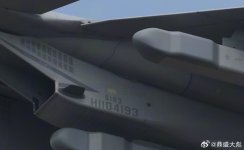
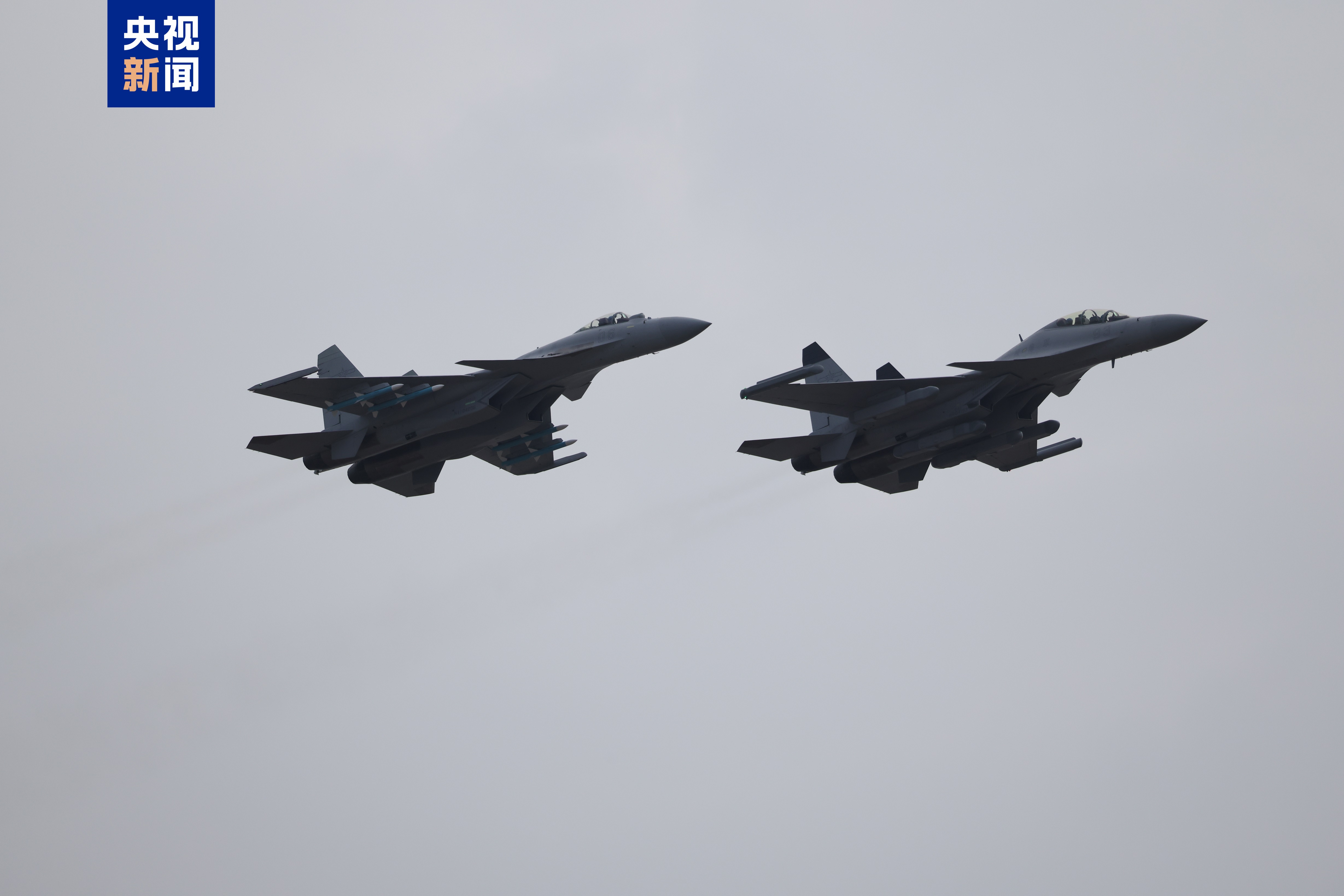
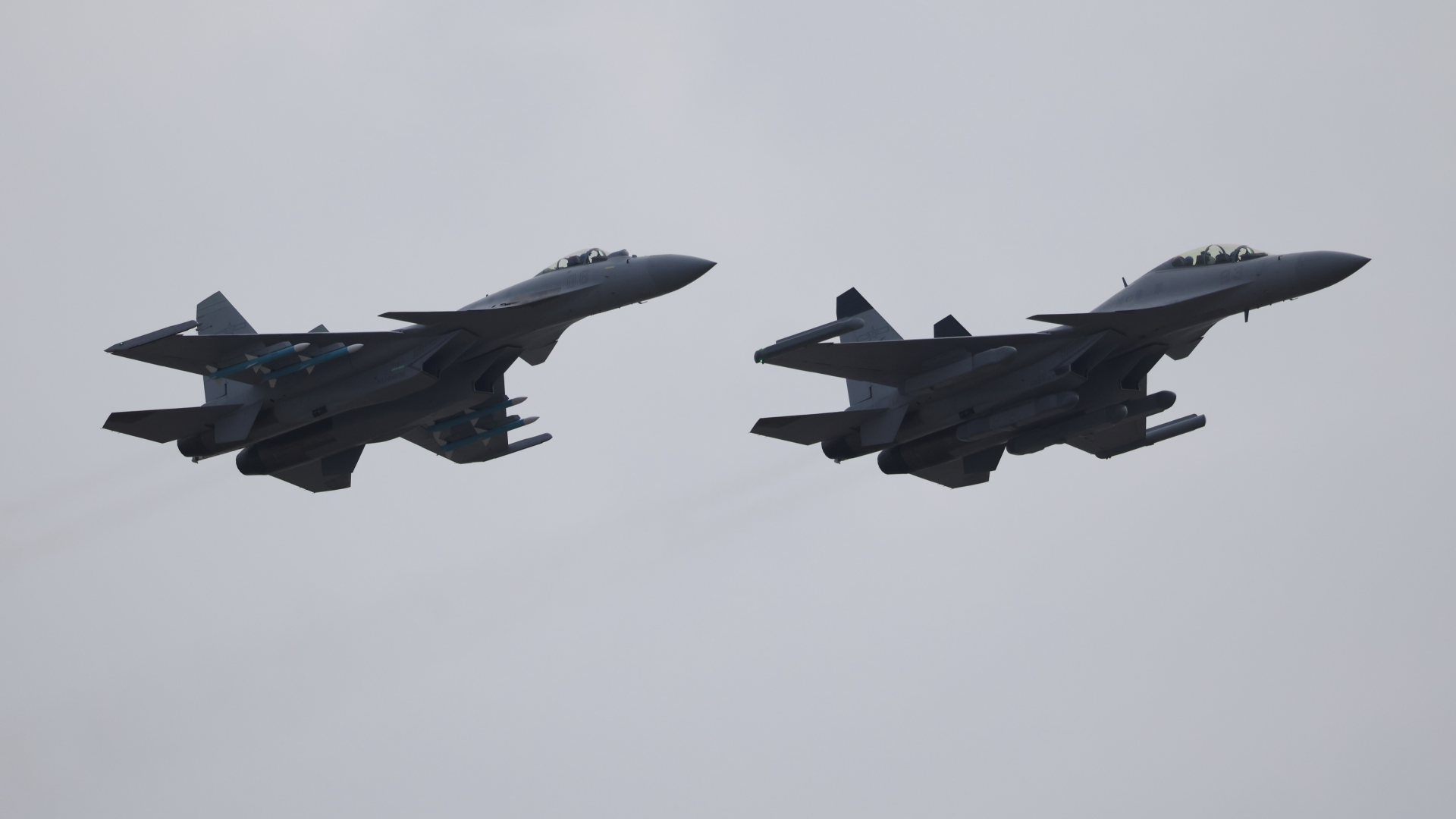
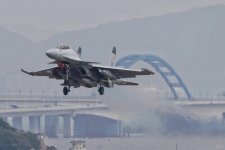
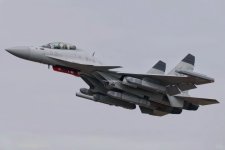
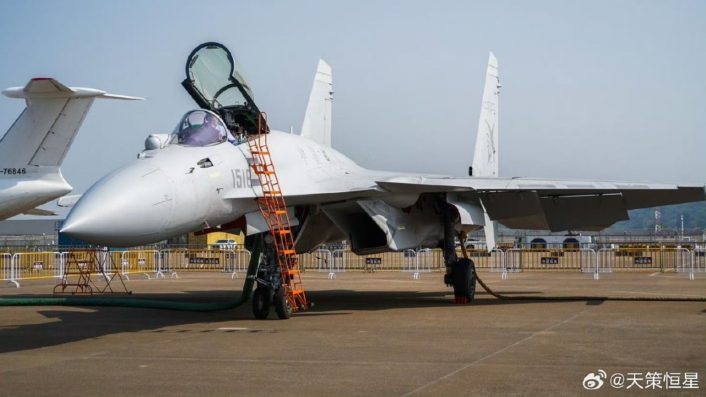
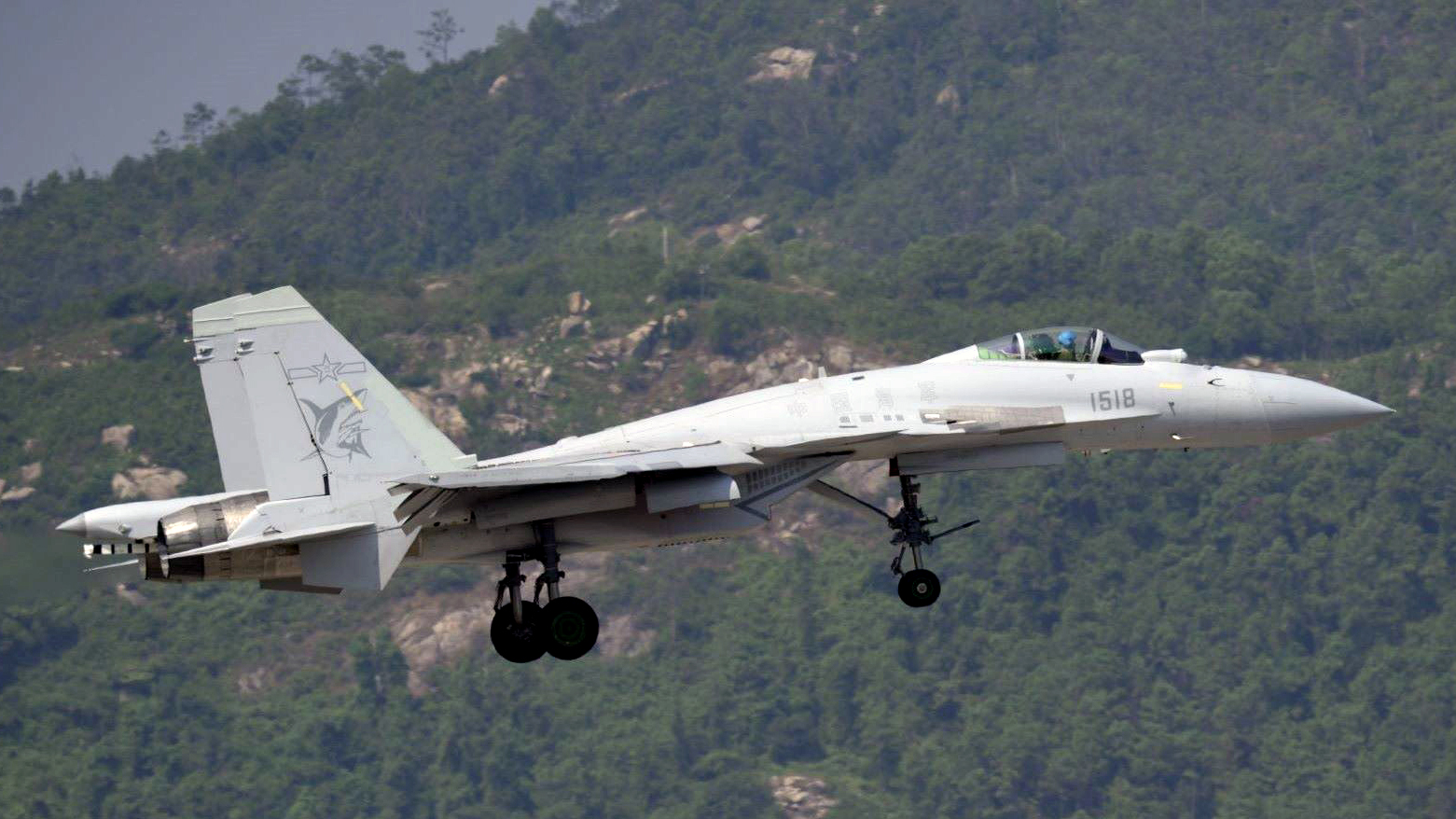
China finally unveiled the carrier-capable J-15T naval fighter jet, when the aircraft (bort number 1518) landed at Zhuhai Airport on Nov. 6, 2024, in its official debut at the China International Aviation and Aerospace Exhibition. Better known as the Zhuhai Air Show, the event will be held from Nov. 12 to Nov. 17.
The CATOBAR (Catapult-Assisted Take-Off Barrier Recovery)-configured jet is designed to operate from the fully flat-deck CNS Fujian aircraft carrier. The older J-15s are restricted to operate only from the STOBAR (Short Take-Off but Barrier Recovery) CNS Liaoning and CNS Shandong, equipped with ski jumps and arresting cables.
China finally unveiled the carrier-capable J-15T naval fighter jet, when the aircraft (bort number 1518) landed at Zhuhai Airport on Nov. 6, 2024, in its official debut at the China International Aviation and Aerospace Exhibition. Better known as the Zhuhai Air Show, the event will be held from Nov. 12 to Nov. 17.Contents
A CATOBAR capable J-15 fighter can operate from both the STOBAR-configured Liaoning and Shandong aircraft carriers with their ski-jumps as well as the EMALS-equipped Fujian, offering greater operational flexibility.Catapult launch-capable naval fighterJ-15B or J-15T?‘It was the J-15T all along’The J-15T’s capabilitiesFujian’s carrier air wing
The CATOBAR (Catapult-Assisted Take-Off Barrier Recovery)-configured jet is designed to operate from the fully flat-deck CNS Fujian aircraft carrier. The older J-15s are restricted to operate only from the STOBAR (Short Take-Off but Barrier Recovery) CNS Liaoning and CNS Shandong, equipped with ski jumps and arresting cables.
Naturally, a CATOBAR-capable fighter, on the other hand, can also operate from the Liaoning and Shandong with ski-jumps, offering greater operational flexibility. This also allows PLA Navy crews to train and experience with the handling of a CATOBAR aircraft before the future naval J-35s enter service.
The unveiling of the J-15T also follows the official public debut of China’s second stealth fighter, the J-35A, meant for the PLA Air Force. The myriad weapon systems and frontline fighters displayed at Zhuhai marks Beijing’s rapid military advancement as China braces for war with peer rival United States in the western Pacific.
Catapult launch-capable naval fighter
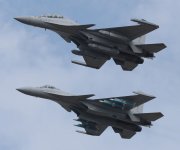
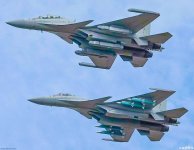
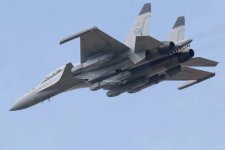
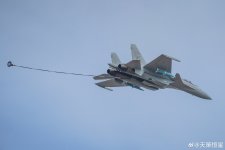
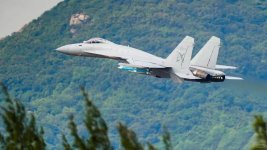
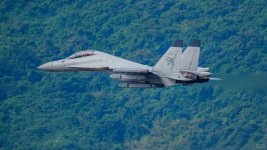
The peculiar aircraft obviously attracted lots of attention as the new naval variant of the J-15 was widely expected and only recently made its operational debut. In fact, just a week ago, China showed the Liaoning and Shandong during a dual-carrier exercise, with both the J-15 and J-15T involved.Videos from Zhuhai showed J-15T demonstrating its wings and horizontal stabilizers folding mechanism. This feature is required when operating from the scarce space on a carrier as it allows it to occupy less space and accommodate other aircraft on the deck and in the hangars.
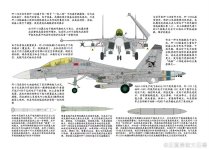
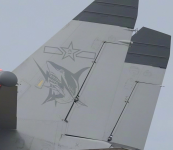
The aircraft is in a full light gray paint scheme, and both the tails have a shark logo, representing the ‘Flying Shark’ moniker bestowed on the fighter. A distinguishing feature from the older J-15, apart from the darker nose cone, is also the different canted section of the radome.
Close up images of the cockpit also show a large wide-angle HUD (Heads-Up Display). While it is not clear if this specific J-15T is a prototype or a serial production aircraft, several airframes are already in PLA Navy service.
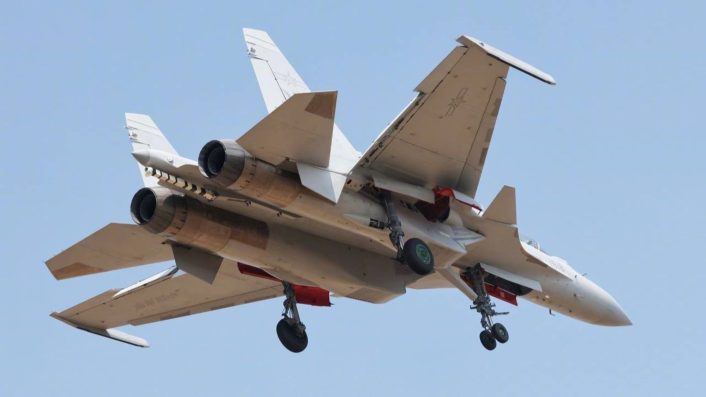
The fighter has a significantly robust and heavily re-engineered twin-wheel nose landing gear, equipped with a catapult launch bar, and an arresting hook below the tail, underneath the longer ‘stinger’ tail boom.
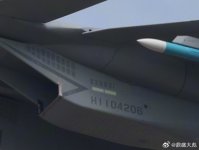
The same ‘stinger’ tail boom showed what appeared to be two MAWS (Missile Approach Warning Sensor) sensors on either side. A jammer and IR countermeasures might also be housed in the tail boom, with the latter used to ‘blind’ heat-seeking AAMs (Air-to-Air Missiles) locking onto the jet’s exhaust plumes. The heavy, twin-engine jet, in fact, makes a juicy thermal target.
The wings also have slightly downward-facing wingtips rails for carrying the PL-10 SRAAM (Short-Range Air-to-Air Missile). Reports also claim that the J-15T at Zhuhai is flying with domestically-developed WS-10 turbofan engines, in place of the Russian-made AL-31F power plants. The J-15 itself is a heavily reverse-engineered and modified derivative of the Russian Su-33 carrier-based naval fighter.
J-15B or J-15T?
The J-15T variant was originally a testbed demonstrator for the CATOBAR flight deck of China’s third carrier, the flat-deck CNS Fujian. The Fujian is equipped with three catapults, which are based on the EMALS (Electro-Magneric Launch System) technology. The final serial-production design resulting from the demonstrator J-15T’s testing was initially expected to be called the J-15B.However, observers now believe the final serial-production CATOBAR J-15s to have retained the same J-15T designation of the demonstrator instead of J-15B, as originally believed, for a host of unknown reasons. This was confirmed as both official and unofficial images of the CATOBAR J-15 started emerging after it landed at Zhuhai airport.
Official Chinese reports, in fact, described the aircraft as the J-15T. Curiously, the PLAN decided to continue with that designation for the serial production jet too. Leading Chinese military aviation researcher Andreas Rupprecht shed some light on the matter for The Aviationist.
According to Rupprecht, the 57 catapult-enabled demonstrator J-15Ts were intended to feed “the development as a serial aircraft – even more with a very different avionics suite/radar.” In fact, according to the reports, the new J-15 variant might be heavily upgraded compared to the older variant.
“This [was supposed to be] called the J-15B. Now the PLA has decided to call this one J-15T too and so there is in fact no J-15B (anymore),” Rupprecht explained. He pointed to the pitot-less gray canted radome, stronger front landing gear and the wingtip pylons to identify the J-15T.
“But now we learnt that the J-15B is in fact non-existent and also officially called the J-15T,” Rupprecht added. It is not clear why the PLA Navy decided to give the serial production CATOBAR variant the same designation as its demonstrator.
The J-15T demonstrator was based on the original J-15 airframe, with the addition of new systems. Similarly, the J-15B was believed to be an evolution of the J-15T but with even newer avionics, an AESA (Active Electronically Scanned Array) radar, and a “two-part” landing gear door arrangement. This configuration is seen in the images of the J-15T coming in to land at Zhuhai airport.
‘It was the J-15T all along’
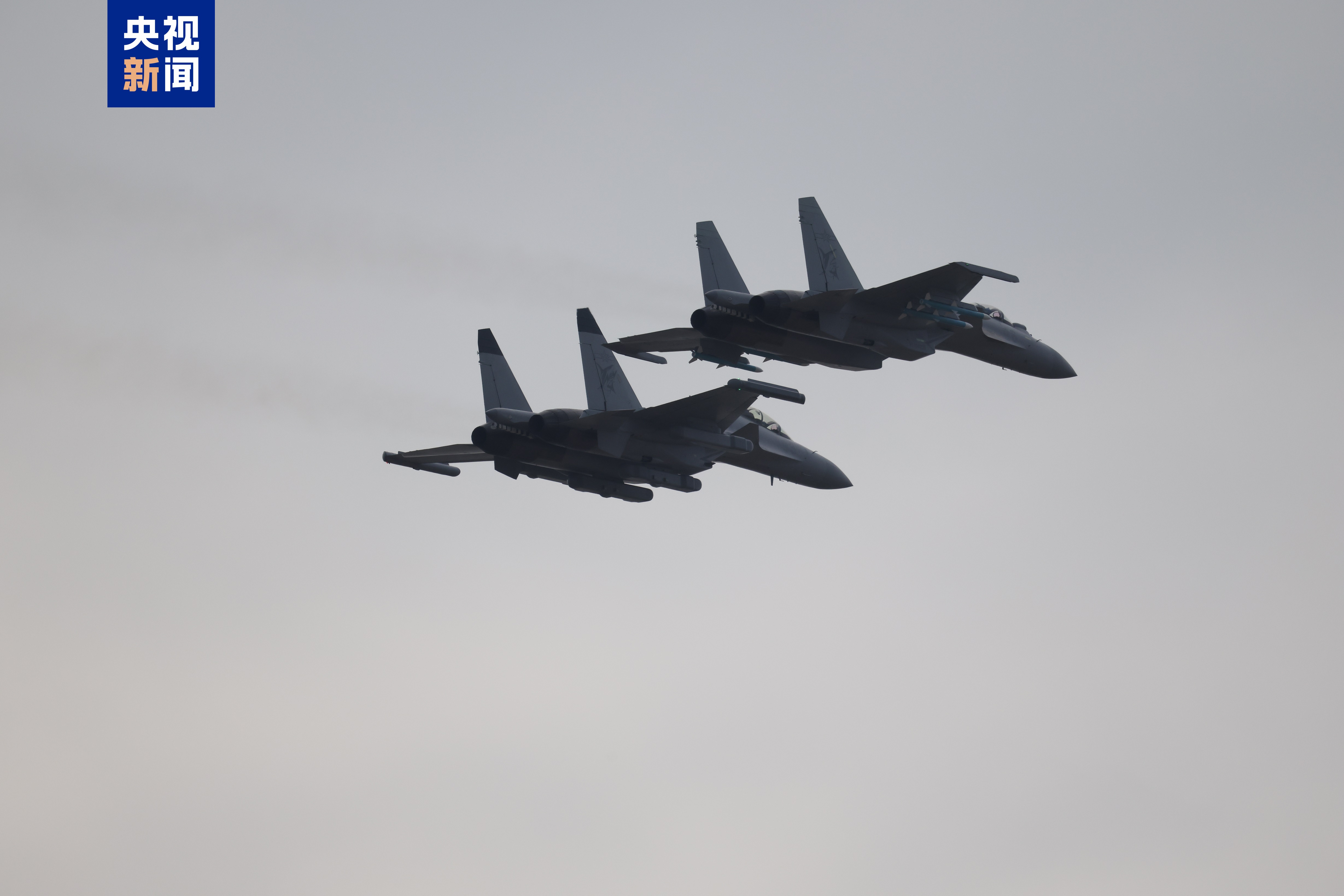
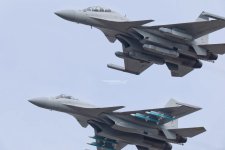
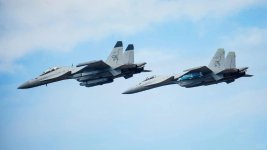
During the PLAN’s first dual carrier operations with the CNS Liaoning and the CNS Shandong late in October, of the 12 J-15s flying overhead the naval armada in the SCS (South China Sea), only two were regular J-15s. The remaining 10 were the newer J-15Ts, with CATOBAR-specific modifications, new radars, engines and electronics.x.com
 twitter.com
Chinese military watchers at the time identified this as the J-15B. The aircraft sports a lighter/all-gray nose cone, while the older J-15 has a darker radome. But, as it turns out, its designation was the J-15T all along, and not ‘B’. Global Times noted how the ‘T’ likely means “Tanshe”, literally translated as catapult-launched.
The implication that the 10 out of the total 12 jets flying over the Liaoning and the Shandong during the dual carrier operations were actually J-15Ts and not the J-15B – going by the inference that the PLAN decided to stick with the name – is “correct” according to Rupprecht.
The J-15T’s capabilities
The J-15 is a heavily reverse engineered and modified Chinese derivative of the Russian carrier-borne Su-33 fighter and, like the Su-30, sports canard foreplanes below the cockpit. The Su-33 is, in turn, derived from the Su-27, and was, in fact, initially called Su-27K.Compared to the original Su-27, the Su-33 has a strengthened landing gear with twin wheels on the nose landing gear, folding wings and stabilizers, larger wings, new engines and air refueling capability. The new engines were required as the ski jump calls for higher thrust-to-weight ratios to be used.
x.com
twitter.com
Even with the new engines, the maximum takeoff weight (MTOW) of the Su-33 and J-15 from the carrier was limited, thus limiting fuel and weapons. On the other hand, the launch by means of a catapult allows the new J-15T to depart the carrier with a heavier load of weapons and fuel.
The introduction of the J-15T marks a notable milestone in the development of Chinese naval aviation and could greatly expand PLAN capabilities, increasing the range of action of the aircraft carriers. The aircraft could be also directly linked to the J-11D, the most advanced land-based Flanker derivative, with many capabilities possibly shared between the PLAN and PLAAF.
x.com
twitter.com
Fujian’s carrier air wing
While no official info are available regarding the definitive carrier air wing that will be embarked on Fujian, mockups of the aircraft expected to operate from the carrier were photographed on deck. Among these are the J-35, J-15, JL-10J and KJ-600.The J-35 is the new stealthy multirole fighter being developed for the PLAN and is expected to be first embarked on Fujian. The J-35 was developed from the FC-31 and is a bit smaller and lighter than the J-15, with many similarities with the F-35C, and also has a land-based variant which will be inducted by the PLAAF.
China has also been working for some time on the J-15T, a variant of the J-15 specifically equipped for CATOBAR operations. The current J-15 is a Chinese variant of the Su-33 Flanker, which is only equipped for STOBAR (short takeoff but arrested landing) operations on carriers equipped with a ski jump. Similarly to the J-15, the J-15T is expected to be the primary combat aircraft on the carrier, and recently made the operational debut.
Another Flanker derivative, the J-15D, is also expected to be among the embarked aircraft. The J-15D is a twin-seater electronic warfare variant which appears to have been designed to perform a role similar to the U.S.-made EA-18G Growler.
An important asset will be the KJ-600 airborne early warning and control (AEW&C) aircraft, the Chinese equivalent of the U.S.-made E-2 Hawkeye. Like the J-35, it shares many similarities with its U.S. counterpart and it’s being flight tested since 2020.
The last but not the least is the JL-10J, the navalized variant of the JL-10 advanced trainer. A rumor about this variant circulated for years, but now a mockup was visible on the aircraft carrier.
Similarly to the two previous carriers, Fujian could include the Z-8/18 family of utility and ASW-helicopters. Later, they will probably be joined by both utility and ASW-variants of the newer Z-20 medium helicopter.
A Breakdown of the PLA Navy’s Catapult-Launched J-15T Unveiled ahead of Zhuhai Air Show
A CATOBAR capable J-15 fighter can operate from both the STOBAR-configured Liaoning and Shandong aircraft carriers with their ski-jumps as well as the
 theaviationist.com