Japan Defence and General News Discussions

What you mean with narrow nationalism?

Narrow nationalism is populism. Emphasize the superiority of one's own ethnic group or ethnicity, regardless of whether it excludes or harms the interests of other ethnic groups. Neglecting unity with other ethnic groups and being conservative, isolated, and exclusive.

Look at Trump and Modi, they are narrow nationalism. Do you think China is very similar to these two idiots?
 

Japan sets sail on rare earth hunt as China tightens supply​

Jan 12, 2026

f972b411-1fba-4780-963f-22b5f992a868_81c02683.jpg

Japan's drilling-equipped research vessel Chikyu departs from Shimizu port in Shizuoka Prefecture on Monday to conduct a test recovery of mineral-rich mud near Minamitori Island, marking the world’s first attempt to continuously lift rare earth seabed sludge from a depth of about 6 kilometers onto a ship.

SHIZUOKA – A Japanese mining ship departed on Monday for a remote coral atoll to probe mud rich in rare earths, part of Tokyo’s drive to curb its reliance on China for critical minerals as Beijing tightens supply.

The month-long mission of the test vessel Chikyu near Minamitori Island some 1,900 kilometers southeast of Tokyo, will mark the world’s first attempt to continuously lift rare earth seabed sludge from the deep onto a ship.
 
Last edited:
Narrow nationalism is populism. Emphasize the superiority of one's own ethnic group or ethnicity, regardless of whether it excludes or harms the interests of other ethnic groups. Neglecting unity with other ethnic groups and being conservative, isolated, and exclusive.

Look at Trump and Modi, they are narrow nationalism. Do you think China is very similar to these two idiots?
Did I ever compare China to India? Populism is a cheap tool to fool people to get their votes. Maduro, the bus driver promised the socialist paradise to become president. Now he can dream socialism in US prison. Putin promised the Russians the return of Russia great empire it turns out he makes Russia into a cheaper gas station.
China is one party state (also Vietnam), what’s populism good for? There is no election in the sense of democracy with multiple candidates, multiple parties.
 
Did I ever compare China to India? Populism is a cheap tool to fool people to get their votes. Maduro, the bus driver promised the socialist paradise to become president. Now he can dream socialism in US prison. Putin promised the Russians the return of Russia great empire it turns out he makes Russia into a cheaper gas station.
And China, which achieved unprecedented growth in the past 3 decades in the whole human history with this current social and political system. Your generalisation doesn't work for China.
 
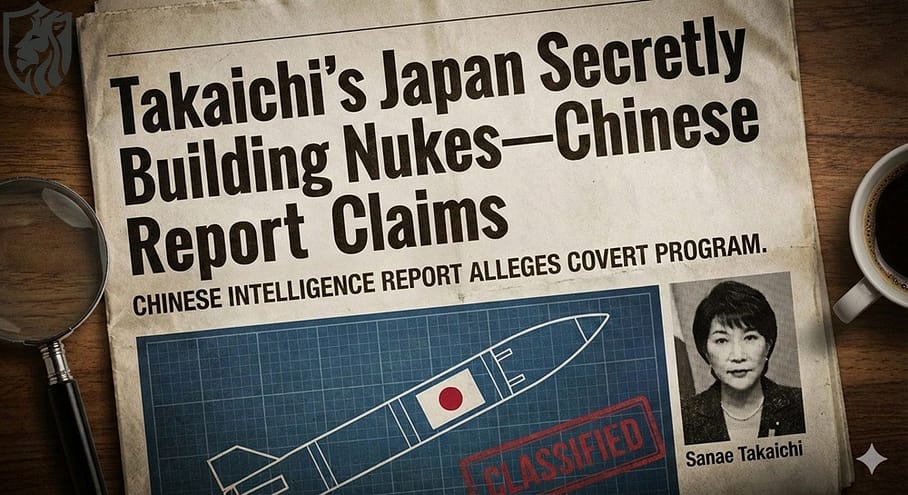
Takaichi’s Japan Secretly Building Nukes—Chinese Report Claims

Takaichi’s Japan Secretly Building Nukes—Chinese Report Claims

Japan Could Go Nuclear Overnight​

A Chinese report has reopened the debate about Japan’s nuclear options. It claims Tokyo could build nuclear weapons quickly. It also hints Japan may have already started. Beijing bases its case on one core idea. Japan runs one of the world’s most advanced civilian nuclear programs.

That industrial strength creates “nuclear latency” for rapid capability shifts. Countries without that base would take far longer. However, its existence is not proof of a weapons program. Still, the timing is relevant for regional security. North Korea’s nuclear threat keeps rising. Meanwhile, China’s military modernization continues apace. As a result, Japan has honed its defensive posture.

Japan’s Nuclear Constraints Remain​

Japan’s public nuclear policy remains anchored to two pillars:
  • NPT membership: Japan signed the NPT in February 1970 and ratified it in June 1976, committing to non-possession as a non-nuclear-weapon state.
  • The Three Non-Nuclear Principles, articulated by Prime Minister Eisaku Satō in December 1967 and later adopted as a Diet resolution, state that Japan will not possess, produce, or permit the introduction of nuclear weapons into its territory.
Therefore, any actual move towards nuclear weapons would require either a dramatic political rupture, a legal-policy overhaul, or covert action with enormous alliance and economic consequences. For more scholarly articles like these, visit Defense News Today.

Japan’s Security Shift Explained​

Even while Tokyo maintains its nuclear principles, it has revised major post-war constraints across defense policy.

2014: Collective Self-Defense Recast​

Japan reinterpreted constitutional limits to allow collective self-defense in narrowly defined scenarios—effectively widening the circumstances under which the Japanese Self-Defense Forces could act with allies.

2022: Counterstrike Becomes Doctrine​

Japan’s 2022 National Security Strategy explicitly frames counterstrike capabilities as a deterrence tool—integrated with missile defense and standoff systems.

2025–2026: Budget, Missiles, and Scale​

Japan’s Cabinet approved a record defense budget exceeding 9 trillion yen (about $58 billion) for FY2026, part of a multi-year plan to lift spending to 2% of GDP.

This matters to the Japan nuclear weapons debate because critics argue that when conventional strike, ISR, and industrial throughput scale up together, they shorten the timeline for any “breakout” decision—if politics ever moved that way.

Takaichi’s Japan Secretly Building Nukes—Chinese Report Claims

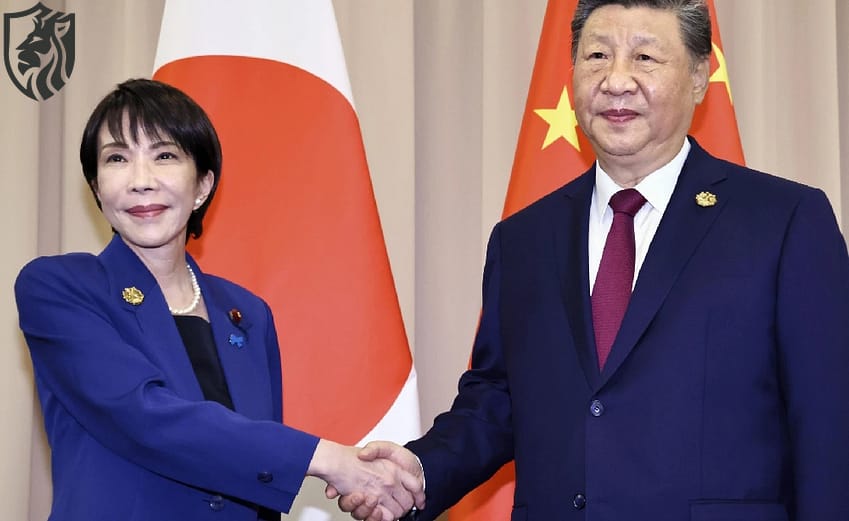
Takaichi’s Japan Secretly Building Nukes—Chinese Report Claims | Takaichi shaking hands with Xi.

China’s Report: Key Allegations​

The report, titled “Nuclear Ambitions of Japan’s Right-Wing Forces: A Serious Threat to World Peace,” was produced by the China Arms Control and Disarmament Association (CACDA) and a think tank linked to China’s nuclear industry.

Its central allegations are
  • Japan has pursued nuclear-weapons-related research since World War II (an assertion not independently proven in the report’s public discussion).
  • Japan has a complete nuclear fuel cycle and could generate weapons-usable material.
  • Political signals from conservative figures indicate a willingness to revisit “non-nuclear” constraints.
Beijing also amplified an older remark attributed to Joe Biden: that Japan has the capacity to go nuclear “virtually overnight.”

Japan’s Plutonium Stockpile Explained​

When the Japan nuclear weapons debate turns technical, it usually centers on plutonium and reprocessing. Japan does hold separated plutonium—officially declared for civilian use. According to Japan’s own reporting, separated plutonium stored domestically at end-2024 was about 8.6 tonnes, with about 35.8 tonnes stored overseas (UK/France), for a total near 44 tonnes.

That stockpile fuels persistent concern because plutonium is a dual-use material. Still, “possession” of civilian plutonium is not the same as “weaponization.” Building an actual nuclear arsenal would require additional steps: warhead design work, high-explosive testing regimes, secure command-and-control, delivery integration, and a political decision to accept the blowback from allies and neighbors.

Japan’s Active Reactors​

Japan’s active nuclear reactors, mostly pressurized and boiling water plants, create plutonium as a routine side effect of power generation. Inside the reactor core, uranium-238 captures neutrons and gradually transforms into plutonium isotopes. Japan also operates a few research reactors, but they produce far less because they run at much lower power.

Crucially, making plutonium in spent fuel is not the same as running a weapons program. The material stays locked inside highly radioactive fuel assemblies unless a state separates it through reprocessing. For that reason, most scrutiny focuses on safeguards, reporting, and how Japan manages its civilian fuel cycle.

JOYO Reactor: Weapons-Grade Claims?​

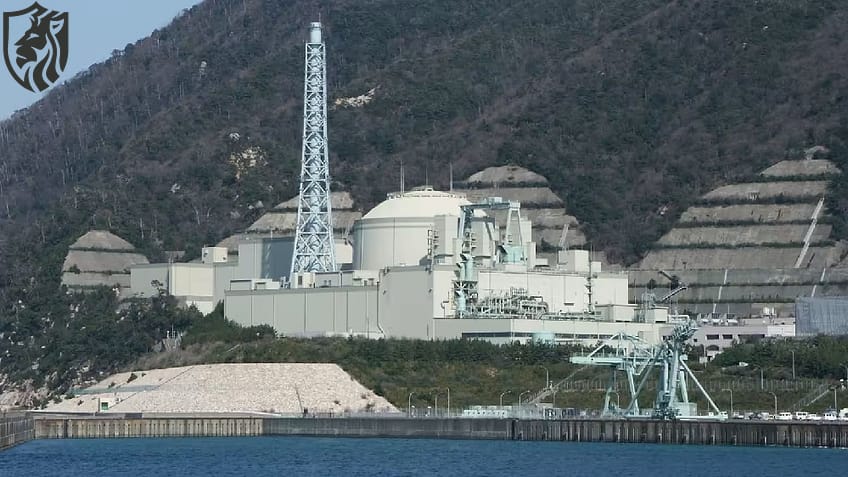
Commentators linked to the Chinese report point to Japan’s JOYO fast reactor. They suggest it could have produced weapons-grade plutonium in some periods. That argument has circulated for decades. Recent coverage revived it with older studies and estimates. Some reports cite Greenpeace and disputed quantity claims.

However, analysts contest these interpretations. A firmer baseline is simpler and better documented. Japan has reprocessing capability. Japan has also declared large separated plutonium holdings publicly. That alone keeps skeptics focused on the issue.

Takaichi’s Japan Secretly Building Nukes—Chinese Report Claims | Japanese JOYO Fast Nuclear Reactor

Takaichi’s Japan Secretly Building Nukes—Chinese Report Claims | Japanese JOYO Fast Nuclear Reactor.


Takaichi, Taiwan, and Extended Deterrence​

Beijing’s report also tries to frame Japan’s leadership as ideologically positioned to break taboos. In early 2026 reports, Prime Minister Sanae Takaichi has taken a sharper line on regional contingencies, including Taiwan, while Tokyo continues a defense buildup.

Even without nuclear weapons, Japan can strengthen deterrence through extended deterrence (US guarantees), precision strikes, integrated air and missile defense, hardened bases, and resilient logistics. In that sense, the most realistic near-term “shift” is not a bomb, but a more explicit alignment of conventional strike doctrine with alliance planning.

Bottom Line: Capability ≠ Intent​

The Japan nuclear weapons debate is unlikely to vanish because Japan sits in a unique position: it publicly rejects nuclear weapons while operating an advanced nuclear industry and living in a worsening threat environment. China’s report is best read as a strategic messaging document—meant to raise costs for Tokyo’s defense normalization and shape international perceptions—rather than as conclusive evidence of a covert Japanese bomb program.

Still, the technical reality remains: latency exists. If Japanese politics ever crossed a red line—triggered by a regional war, alliance rupture, or nuclear coercion—the industrial and scientific base would shorten timelines compared with most states. That is precisely why this issue stays sensitive, and why transparency around plutonium management and fuel-cycle policy continues to matter.

References​


New opposition party pledges election policies that improve life in Japan​

KYODO NEWS- Jan 17, 2026 - 11:10All,Japan

img_1e1fabcdebef632e2866ee190691f8e7911354.jpg


TOKYO - A newly launched Japanese opposition party will put forth policies designed to improve the lives of Japanese people in an upcoming general election, a source said Friday, hoping to appeal to voters seeking an alternative to the conservative ruling coalition.

In a guiding policy statement, the Centrist Reform Alliance, formed between the largest opposition Constitutional Democratic Party of Japan and the Komeito party, seeks to maintain the country's pacifist stance on defense while pushing for a realistic approach to diplomacy.

The source said the document also states the country needs to deepen debate on whether to revise the Constitution, but did not go further, drawing a contrast with the ruling bloc that desires amendment.

The new party is scheduled to unveil its key policy items on Monday, the day when Prime Minister Sanae Takahichi, head of the ruling Liberal Democratic Party, is expected to explain her motivations for dissolving the House of Representatives for a snap election.

The policy statement adopted by the new party says, "Centrist political forces that steadily advance ordinary citizens-first policies are required," according to the source.

The general election is likely to be held on Feb. 8, as Takaichi plans to dissolve the lower chamber on Jan. 23 to take advantage of her Cabinet's relatively high approval ratings.

The ruling camp, comprised of the LDP and the Japan Innovation Party, holds only a slim majority in the lower chamber and remains a minority in the House of Councillors. It has needed to secure support from opposition forces to pass bills.

Noda and Saito have pledged to bring together centrist forces to give an alternative in Japan's "right-leaning" political landscape, apparently with Takaichi's deeply conservative political stances and her recent promotion of populist themes in mind.


Two-thirds of Japan firms see tension with China hurting economy: Reuters poll

January 15, 20267:06 AM GMT+8Updated January 15, 2026

TOKYO, Jan 15 (Reuters) - More than two-thirds of Japanese firms expect the economy to suffer from frayed ties with China, with nearly half reporting or anticipating a direct business impact, a Reuters survey showed on Thursday.

About 9% of survey respondents said their business has already been affected by the issue, while 35% expect some sort of impact.

China has advised its citizens against travel to Japan since the remark. It has also banned exports to Japan of items that can have a military application, stoking concern of curbs on rare-earth shipments vital to the automotive and electronics sectors.

"A decline in the number of Chinese travellers is beginning to weigh on the utilisation rate and per-room revenue of our hotel business," a manager at a railroad operator wrote in the survey.

An official at an electronics maker said China's policy direction on rare earths is a "matter of life and death" for the company.

Japan has strived to reduce its reliance on China for rare earths in recent years but its Asian neighbour still accounts for about 60% of imports.

About 43% of respondents said prolonged deterioration in bilateral relations would likely lead to a review of China-related business.

"If Japanese automakers' sales were affected in China, our sales would decline and we would face the possibility of withdrawing from business in China," said a manager at a transportation equipment manufacturer.

An official at a chemical firm said a protracted diplomatic dispute would prompt the company to reduce China's weighting in sales and procurement.

The poll was conducted by Nikkei Research for Reuters from December 24 through January 7. Nikkei Research reached out to 494 companies of which 237 responded on condition of anonymity.
 

20260119_23_1611893_L.jpg

Japan's last 2 giant pandas to be returned to China on January 27​


The Tokyo Metropolitan Government says Japan's two last remaining giant pandas raised at Ueno Zoological Gardens will be returned to China on January 27.

The Tokyo government said on Monday that the return date for the popular twins, Xiao Xiao and Lei Lei, was decided after discussions with the Chinese side.

In June last year, four giant pandas were sent back to China from a theme park in Wakayama Prefecture. After Xiao Xiao and Lei Lei leave, there will be no giant pandas in Japan for the first time since two arrived in 1972 to commemorate the normalization of diplomatic ties between the countries.

The Ueno zoo is showing the pandas only to the visitors who win a lottery to view them. It says one out of about 25 applicants had a chance of getting a ticket for January 25, the last viewing day.

The Tokyo government says it wants to send Xiao Xiao and Lei Lei back safely and it hopes that China will send new pandas.

https://www3.nhk.or.jp/nhkworld/en/news/20260119_23/
 

Japan wants to become a permanent member of the UN Security Council? Chinese representative to the UN General Assembly angrily slams: They have no right to it.


09:08 2026/01/22
China Times

Li Wenhui


The Chinese delegation reiterated at the UN General Assembly that Japan has no right to a permanent seat on the UN Security Council. (CCTV file photo)

The Chinese delegation reiterated at the UN General Assembly that Japan has no right to a permanent seat on the UN Security Council. (CCTV file photo)

  • Xinhua News Agency reported on the 22nd that Sun Lei, Chargé d'Affaires ad interim of the Permanent Mission of China to the United Nations, said during the intergovernmental negotiations on Security Council reform at the 80th UN General Assembly on the 21st (US Eastern Time) that Japan, a country that has not repented for its historical crimes, violated the basic norms of international relations, challenged the achievements of the victory in World War II, and blatantly trampled on the post-war international order, is unable to assume the responsibility of maintaining international peace and security, cannot gain the trust of the international community, and has no right to demand to become a permanent member of the Security Council.


    Sun Lei stated that the UN Security Council is the core of the international collective security mechanism, bearing a special and important mission in maintaining the post-war international order and safeguarding international peace and security. Eighty years ago, the International Military Tribunal for the Far East officially opened. The Tokyo Trials severely punished Japanese war criminals, upheld international justice, and safeguarded human dignity. It also served as a powerful warning against any attempt to revive militarism or engage in further aggression and expansion. However, Japanese militarism has not only not been thoroughly eradicated, but has instead changed its form and grown stronger. Japanese right-wing forces are actively glorifying their history of aggression, categorically denying historical crimes such as the Nanjing Massacre, the forced recruitment of comfort women, and forced labor, and pushing for revisions to history textbooks in an attempt to rehabilitate their history of aggression. Several current Japanese leaders have visited the Yasukuni Shrine, a symbol of militarism, and paid homage to Class A war criminals. From Japanese Prime Minister Sanae Takaichi's erroneous remarks about Taiwan and her threats of force against the mainland, to high-ranking Japanese officials' public statements advocating for nuclear weapons, and the push to revise the "Three Security Documents" and claim to amend the "Three Non-Nuclear Principles," the sinister intentions of Japan's right-wing forces to promote "remilitarization" and attempt to revive militarism have been fully exposed, posing a new threat to regional and even global peace and security.


    Sun Lei emphasized that a country that is unrepentant about its historical crimes, violates the basic norms of international relations, challenges the achievements of the victory in World War II, and blatantly tramples on the post-war international order cannot assume the responsibility of maintaining international peace and security, cannot gain the trust of the international community, and has no right to demand to become a permanent member of the Security Council.


    Sun Lei said that as a permanent member of the UN Security Council and a responsible major power, China is willing to work with all peace-loving countries and peoples to firmly defend the achievements of the victory in World War II and the post-war international order, jointly safeguard the authority and unity of the Security Council, and play a constructive role in international peace and security.


    Regarding Security Council reform, Sun Lei stated that China supports necessary and reasonable reforms to the Security Council to enhance its authority and efficiency, and better address crises and challenges. Reform must prioritize genuinely increasing the representation and voice of developing countries. The five major categories of Security Council reform issues are fundamental and crucial, requiring a comprehensive solution. China hopes that the current intergovernmental negotiations will focus on in-depth discussions surrounding new reform concepts


Ex-Japanese Prime Minister Abe’s killer sentenced to life​

Tetsuya Yamagami shot the Japanese politician dead in 2022.

Tetsuya Yamagami, Suspected of killing former Japanese premier Shinzo Abe, is escorted by police officers as he is taken to prosecutors, at Nara-nishi police station in Nara, western Japan, in this photo taken by Kyodo July 10, 2022. Mandatory credit Kyodo via REUTERS ATTENTION EDITORS - THIS IMAGE WAS PROVIDED BY A THIRD PARTY. MANDATORY CREDIT. JAPAN OUT. NO COMMERCIAL OR EDITORIAL SALES IN JAPAN.

Tetsuya Yamagami (centre) has admitted in court to the killing of former Japanese premier Shinzo Abe, and is facing the possibility of a lifetime prison sentence [File: Kyodo via Reuters]
ByNews Agencies
Published On 21 Jan 202621 Jan 2026
Click here to share on social media
Share

Save
The gunman who killed Japan’s former prime minister Shinzo Abe has been sentenced to life in prison, more than three years after the politician’s assassination in broad daylight shocked the world.

Judge Shinichi Tanaka handed down the sentence against Tetsuya Yamagami on Wednesday at a court in the city of Nara.

Recommended Stories​

list of 4 items
end of list
Yamagami, 45, had admitted to fatally shooting Abe in 2022 in a crime that convulsed Japan, where gun violence is extremely rare.

In Japan, a sentence of life imprisonment leaves open the possibility of parole, though experts say that many of those who receive the penalty die while incarcerated.

Prosecutors had sought a life sentence for Yamagami, calling the murder “unprecedented in our post-war history” and citing the “extremely serious consequences” it had on society.

At the opening of Yamagami’s trial in October, prosecutors argued that the accused had been motivated to kill Abe by a desire tarnish the image of the Unification Church.

Yamagami “thought if he killed someone as influential as former prime minister Abe, he could draw public attention to the Church and fuel public criticism of it,” a prosecutor said.

Yamagami’s lawyers had argued for a maximum punishment of 20 years imprisonment, citing hardship suffered by his family after his month donated her life savings to the church.

People queued for get tickets to enter the Nara courtroom on Wednesday morning, highlighting the intense public interest in the trial.


image.jpg


Play Video
2:05
  • Now Playing
    02:05

    Japan honours Shinzo Abe with controversial state funeral​

  • Next
    03:39

    Putin proposes using frozen Russian assets to rebuild war-torn Ukraine: Analysis​

  • 01:55

    Greenland dispute: US president framework of a deal agreed​

  • 01:34

    South Africa flooding: Heavy rainfall cuts off communities across region​

  • 02:05

    Nigeria kidnapping: Residents fear for their safety​


Yamagami’s killing of Abe exposed deep links between Japan’s ruling Liberal Democratic Party (LDP) and the Unification Church, an organisation many consider a cult.

Advertisement

An internal party investigation found that more than a hundred lawmakers had dealings with the church, leading many voters to shun the LDP, which has ruled Japan almost continuously since World Word II.

Sign up for Al Jazeera​

Breaking News Alert​

Get real-time breaking news alerts and stay up-to-date with the most important headlines from around the globe.
Subscribe

right-mark-icon.3a446adc.svg

By signing up, you agree to our Privacy Policy
protected by reCAPTCHA
Japanese media quoted Yamagami telling the court that he took out his anger on Abe because the former prime minister had once sent a video message to an event held by a group affiliated with the church.

Founded in South Korea in 1954, the Unification Church is famous for its mass weddings and counts Japanese followers as a key source of income.

While Abe was a divisive figure domestically, he was among the few global leaders to have a strong rapport with US President Donald Trump.

Abe was the first foreign leader to meet Trump after his 2016 election victory, and the two went on to forge a close bond over rounds of golf in the US and Japan.

Abe served as prime minister for 3,188 days over two separate terms, before stepping down in September 2020, citing health reasons.

His protegee Sanae Takaichi now leads Japan and the LDP, but the party’s grip on power has diminished following the loss of its majorities in both houses of parliament.

Takaichi has repeatedly referenced her friendship with Abe in her own dealings with Trump.

 
Narrow nationalism is populism. Emphasize the superiority of one's own ethnic group or ethnicity, regardless of whether it excludes or harms the interests of other ethnic groups. Neglecting unity with other ethnic groups and being conservative, isolated, and exclusive.

Look at Trump and Modi, they are narrow nationalism. Do you think China is very similar to these two idiots?

You have armored cars with soldiers with bayonets in the streets of Urumqi..how is anything Trump is doing worse than that? Trump is targeting illegal migrants and economic migrants. China is targeting its own minority people.


To view this content we will need your consent to set third party cookies.
For more detailed information, see our cookies page.

I Visited China's Most Controversial Region 🇨🇳 (Uyghur Autonomous Region)​

bayonet.png
 
You have armored cars with soldiers with bayonets in the streets of Urumqi..how is anything Trump is doing worse than that? Trump is targeting illegal migrants and economic migrants. China is targeting its own minority people.


To view this content we will need your consent to set third party cookies.
For more detailed information, see our cookies page.

I Visited China's Most Controversial Region 🇨🇳 (Uyghur Autonomous Region)​

View attachment 173921


You're lying.

Now China is offering a week of face-to-face visa to the people of the world, and anyone can freely visit Xinjiang.

Many senior Pakistani members of this forum have been to Xinjiang and Urumqi, and their experiences can prove you hypocritical American scammers.


@Aziqbal

This Pakistani member just visited Urumqi, Xinjiang last year and took a lot of videos and photos of the place. He used to be among most anti-Chinese Pakistanis on this forum, but he became a pro-China member after returning from Xinjiang.

You American liars, the world is becoming more and open, and the false world you built with lies won't last long.
 
Last edited:
You're lying.
:ROFLMAO: :ROFLMAO: :ROFLMAO: :ROFLMAO:

I'm lying? It's a video from 2024. Do you think it was AI generated or something?

Now China is offering a week of face-to-face visa to the people of the world, and anyone can freely visit Xinjiang.

He obviously did and that's why we have video. Or are you saying the guy went to Urumqi just before the place was completely sanitized for the world to view? So he was able to film stuff that you'll deny ever happened?

Here's a UK guy from 2024
To view this content we will need your consent to set third party cookies.
For more detailed information, see our cookies page.

This is How Muslims Live in China 🇨🇳 (Urumqi, Xinjiang)​


bayonet
To view this content we will need your consent to set third party cookies.
For more detailed information, see our cookies page.


I wonder what it was like in 2023..2022..2021 when more wasn't hidden

hey here's another UK guy showing the bayonets
To view this content we will need your consent to set third party cookies.
For more detailed information, see our cookies page.

To view this content we will need your consent to set third party cookies.
For more detailed information, see our cookies page.


Black American showing the bayonets
To view this content we will need your consent to set third party cookies.
For more detailed information, see our cookies page.

Urumqi: The Most Militarized City in China​


Many senior Pakistani members of this forum have been to Xinjiang and Urumqi, and their experiences can prove you hypocritical American scammers.

:ROFLMAO::ROFLMAO: American scammers? They aren't Americans.

So?

@Aziqbal
You American liars, the world is becoming more and open, and the false world you built with lies won't last long.

LOL! The the German in the video didn't fall for the sanitized smokescreen presented by tour guides so he actually walked around on is own to see if it was real.
 
Last edited:

Users who are viewing this thread

Country Watch Latest

Latest Posts

Back
Top