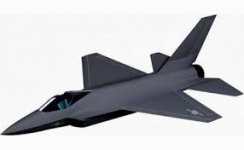
JF-17 PFX program

Furthur, it is actually looking other way around, the way J-10 CE was bought. I dont want to expand it furthur, otherwise it will create a controversy here. But those who understand it, will get it.
Sir please stop with guessing game. You don't debate with a guessing game. J-10 CE was bought to match Rafale.
 
Sir please stop with guessing game. You don't debate with a guessing game. J-10 CE was bought to match Rafale.
Indeed, but you still not shown any evidence of this statement ", now we would get weapons and India will have to match them".


Furthur, J-10 CE wasnt bought to match Rafale, IAF most likely going to use Rafale as DPSA during initial days of war, and its in swing role. J-10 CE was bought to intercept Balakot like strike because of IRST capability and deeply integrated datalink that able to provide situational picture to pilots.

And if the war happen, then bulk of Ops for PAF will be done by F-16 and JF-17, not by J-10 CE.

Furthur PAF required IRST for recongnizing friend and foe, because of lack of "DEEPLY" integrated data-links on both sides before, they have to get visual id to confirm the target, and getting visual id means dogfight. Thats why even PAF's F-16 have to fire AMRAAM at dogfight ranges, after confirming the targets over the coordinates given by PAF's SAAB Erieye.

And as now getting reported Israel/US refused to deeply integrate Phalcons AEW&C with Indian ODL. Maybe that's why, only after induction of Netra AEW&C, IAF started to buy BNET-AD SDR for MKIs.

For most AF and IAF, you need 2 sensors confirmation to recognize a target, otherwise you need visual ID to confirm it.

Now IAF pursuing for, IFF-CIT, NCTR, IRST, Radar fingerprinting and situational-picture through data link to negate the need for visual id of targets.

I guess PAF pursuing the same, thats why they bought J-10 CE, not because of Rafale.
 
I guess PAF pursuing the same, thats why they bought J-10 CE, not because of Rafale.
Then why was IRST taken out of the JFT block 3 early on in the frozen requirements per the hearsay?

And didn’t PAF shoot AMRAAMs at MKIs at true BVR ranges?
 
2019 moment has turned out to be a Eurkea moment for us.

Seriously bro,
Full blown wars of 65 & 71 weren't Eurkea moment for us.
Kargil wasn't Eurkea moment for us
Stand off of 2002 with entire armies wasn't Eurkea moment for us.
India becoming 5th or 4th largest economy wasn't Eurkea moment
India becoming space power & ability to even reach moon isn't Eurkea moment
List goes on...

But oh 2019 is Eurkea moment? This argument of yours has no weightage at all. More than Pakistan, it was the moment of realization for india. Most indian commentators were of a view that SU-30 will dominate skies but it turns out F-16s/amraams outclass & outrange the flanker in BVR. They found their deficiencies. If anything that was some moment of realization for them and not us.

We don't want to remain safe anymore. Like I said, 2019 changed everything, now we would get weapons and India will have to match them

Nope, Pakistan will always try to match minimum deterrence. Only if Pakistan wants to self-destruct then it will try to go in weapons race with India. Only a foolish leadership will try to go in weapons race with an economic giant. They have 600 billion dollars reserves. You got $8 billion. No matter how good of an ally China or Turkey may become, you will always pay for military hardware in one way or the other. There's always a limit to credit spending as well. We are done for the expenditures we had to do for this decade. Please don't give me BS logic of army has its own mean of finances ridiculous theory. No matter how much real estate or how much fauji fertilizer stuff they do, they can't even fullfill their own requirements with it, even army pensions go from civilians budget. The official policy of the state is to keep minimum deterrence.
 
We don't want to remain safe anymore. Like I said, 2019 changed everything, now we would get weapons and India will have to match them. J-10 C is for different role and J-31 will be different role. As for J-31 how we plan to wait for this platform to mature when China itself only plans to induct J-35 the Naval Version of it. We have to get it ourselves and then mature it also.

This is something most would agree upon. Its best for paf to collaborate with China/Turkey to start their own 5th generation single engine plane. The J35 as you just mentioned only has the naval version, this is something confirmed and anything else is not, so for paf to start a new design or turn J31 in to J35 air superiority version, to do all the testing, training and then induct the plane within 2 years sounds unrealistic.

I too believe J35 air version will come to paf, its most beneficial for us, we can always upgrade it once new Chinese technologies are available, we can produce it as pak spec JF35.
 
Nope, Pakistan will always try to match minimum deterrence. Only if Pakistan wants to self-destruct then it will try to go in weapons race with India. Only a foolish leadership will try to go in weapons race with an economic giant. They have 600 billion dollars reserves. You got $8 billion. No matter how good of an ally China or Turkey may become, you will always pay for military hardware in one way or the other. There's always a limit to credit spending as well. We are done for the expenditures we had to do for this decade. Please don't give me BS logic of army has its own mean of finances ridiculous theory. No matter how much real estate or how much fauji fertilizer stuff they do, they can't even fullfill their own requirements with it, even army pensions go from civilians budget. The official policy of the state is to keep minimum deterrence.

Not saying this to @Zarvan but people need to understand Pakistan economic situation, we will buy for minimum deterrence but any weapon race is silly because we have no money. We bought J10Cs because India bought Rafale, we made light weight Jf17s because its cost effective and will give us the large numbers, with excellent capabilities. Paf will wait till India inducts 5th generation and then we will go for it, the advantage will be j35/kaan will be more advance and mature platform. Pakistan does need its own 5th generation though, something in line with Jf17, a cost effective 5th generation plane. Can we afford 400 J10Cs or 400 F16s? They would be really expensive but we can afford 400 Jf17s, the same way we would need atleast 300 5th generation planes, a cost effective plane fits the bill and then another higher end plane like Kaan.
 
Not saying this to @Zarvan but people need to understand Pakistan economic situation, we will buy for minimum deterrence but any weapon race is silly because we have no money. We bought J10Cs because India bought Rafale, we made light weight Jf17s because its cost effective and will give us the large numbers, with excellent capabilities. Paf will wait till India inducts 5th generation and then we will go for it, the advantage will be j35/kaan will be more advance and mature platform. Pakistan does need its own 5th generation though, something in line with Jf17, a cost effective 5th generation plane. Can we afford 400 J10Cs or 400 F16s? They would be really expensive but we can afford 400 Jf17s, the same way we would need atleast 300 5th generation planes, a cost effective plane fits the bill and then another higher end plane like Kaan.

Exactly! PAF would never have got the J-10Cs if IAF had not gone for Rafales. It was to match minimum conventional deterrence. @Zarvan believes we will get more J-10Cs, J-31s & Kaans all in next 7 years. I say the most we should expect is another batch of J-10Cs in next 5-7 years (that too depends upon finances) . Btw, it should not be worrying as PAF is quite capable vs IAF presently and in near future.

There's no way PAF will have two different 5th gen platforms before 2045. PAF will have either the J-31 Or the KAAN. Depends how airforce decides. For now, it looked that J-31 is their decision.

and Yes I agree to you that ideally Pakistan should have collaborated (like JF-17 project) with any of the allies for 5th gen platforms long way back. We were the co-owners of a 4th gen platform (JF-17) but we will be only a user in a 5th gen platform. That's a downgrade for us. While india will be inducting their own. We will be more dependent on others. These are the things to worry instead boasting on shopping wishlist with credit card.
 
People, chillax...

!ncredible !ndia's #1 Defense Analyst (Ritu Sharma) has spoken.

Ritu Sharma.jpg

Acha, it appears all of her articles about the JF-17 are a copy/paste of the previous one on Eurasian Times.


By Ritu Sharma - March 5, 2024

The JF-17 ‘Thunder” fighter program, jointly developed by China and Pakistan, has not yielded the desired commercial success. Despite being imported by Pakistan, Nigeria, and Myanmar, it has received bad press because of the grounding of entire fleets by operating air forces.

Now, the Pakistan Air Force (PAF) has revealed that the Block-III variant isn’t the end of the road for JF-17s as it is working on JF-17 PFX (Pakistan Fighter Experimental).

This new program was unveiled as part of a recent PAF video titled ‘Beyond Retort-From Operation Swift Retort to Operation Marg Bar Sarmachar’ commemorating five years of Operation Swift Retort, Pakistan’s retaliatory response to India’s airstrikes on Balakot in Pakistan in 2019.

According to the video, the JF-17 PFX is part of PAF’s long-term modernization strategy. However, it is still uncertain how the JF-17 PFX will be different from the JF-17 Block III. A new fighter jet in the fleet would eat into the resources; hence, logistically, it makes sense for Pakistan to continue improving JF-17 technology.

The JF-17 ‘Thunder’ combat aircraft is jointly developed by the Pakistan Aeronautical Complex (PAC) and China’s Chengdu Aircraft Industry Corp. It has a Chinese airframe and Western avionics, and is powered by a Russian engine.

Under a workshare agreement with the Aviation Industry Corporation of China (AVIC), PAC manufactures 58 percent of the JF-17’s airframe, specifically the front fuselage, vertical stabilizer, and wings. The remaining 42 percent is imported from AVIC but fully assembled at PAC. PAC is also carrying out the maintenance, repair, and overhaul (MRO) of the Thunder.

Since its induction in PAF in 2007, it has seen a slew of mishaps. There have been reports of the aircraft being grounded several times due to issues like cracks in guide vanes, exhaust nozzles, and flame stabilizers.

Myanmar, which was the first country besides Pakistan to buy JF-17, was forced to ground its fleet owing to technical malfunctions.

Reports suggest the reason behind the grounding in Myanmar was that the airframe of JF-17 reported “vibration issues.”
(She could be talking about the only companion she uses in bed :ROFLMAO: ).​

The Irrawaddy Times noted: “The airframe is vulnerable to damage, especially in its wingtips and hardpoints, when the aircraft encounters strong gravitational forces, according to a former pilot of the Myanmar Air Force.”

Even as the JF-17 is the mainstay of PAF, its unreliable engine and other technical issues make it “hazardous” for pilot safety.

An official of India’s Hindustan Aeronautics Limited (HAL) has earlier told the EurAsian Times: “The Chinese then offered their local ‘unproven’ WS-13 engine to JF-17 operators, which was refused by Pakistan for their Block-3 JF-17 fighter jets.” “Without a reliable engine, the JF-17 is very hazardous for pilot’s safety. Chances of mission success are very poor on JF-17 equipped with WS-13 engine,” the official added.

Block III Variant Of JF-17

In November 2023, PAF inducted the latest Block III version of the JF-17 fighter jet. The Block III variant comes with “superior maneuverability, extended range, and enhanced combat capabilities.”

Block III comes with improved stealth features in terms of reduction in the aircraft’s radar cross-section, a result of greater use of composites and improved avionics. The aircraft is said to be equipped with an active electronically scanned array (AESA) radar.

The radar system is the Nanjing Research Institute of Electronics Technology (NRIET) KLJ-7A X-band airborne 3D fire control radar. (FCR). Its predecessor in Block II, the KLJ-7 V2 radar, can detect an aircraft with a radar cross-section of 3 meters square at a range of 150 km. The KLJ-7A is claimed to be better at multi-targeting capability, increased resilience to jamming, and has greater range.

Recently, Azerbaijan signed a contract to purchase the Pak-Chinese fighter jet, JF-17 Block III variant. The sale of JF-17 ‘Thunder’ to Azerbaijan is the largest defense export deal in Pakistan’s history.

The deal will supply eight fighter jets in the first tranche with a clause for a follow-on order of another 8 JF-17s. Azerbaijan has become the third country after Myanmar and Nigeria to opt for the fighter jet.

PAF’s Modernization Drive

The JF-17 Thunder is one of the workhorse multirole fighter aircraft of the PAF. The PAF has acquired 50 Block-Is, 62 Block-IIs, and 26 two-seat JF-17Bs, and is on track to add 30 Block-III or JF-17Cs to its fleet.

The PAF’s JF-17s are deployed in six fighter squadrons: No.02 (block II), no. 14 (Block II), No. 16 (Block 1,2,3, B), No. 18 (JF-17B), No. 26 (Block 1,2) and No. 28 (Block 1,2). They cover PAF’s north, central, and south commands. Hence, extending the life of the JF-17 airframe continues to be a priority.

Pakistan faces the prospect of keeping the PAC production line running after its order of the Block III variant is complete. Its perilous economic situation can throw a spanner in its acquisition plans.

Modernization Drive

In February 2019, India and Pakistan clashed in a brief but high-octane aerial clash. The IAF’s attack complement consisted of Mirage 2000Hs. The PAF, in turn, retaliated by sending two JF-17s, four Mirages III, and F-16s.

Since Operation Swift Retort, PAF has acquired the J-10 CE equipped with PL-15, an active radar-guided long-range air-to-air missile (LRAAM) developed by China. The PAF has expedited the acquisition and received the aircraft within a year of signing the deal.

The J-10CE filled the gap caused by the lack of induction of the new advanced models of F-16s. In J-10CE, an AESA radar is paired with LRAAM and an actual combination of helmet-mounted display and sight (HMD/S) with a high off-boresight air-to-air missile (HOBS AAM). Before the J-10CE, only the F-16 had an HMD/S, but it lacked a HOBS AAM like the AIM-9X.

[Ab ees bhoosri-wali say koi pochaey kay tairi source kya tairi apni maa-ji hai...]

@Windjammer @Quwa @Zarvan @PakAl @Bilal @farooqbhai
 
People, chillax...

!ncredible !ndia's #1 Defense Analyst (Ritu Sharma) has spoken.


Acha, it appears all of her articles about the JF-17 are a copy/paste of the previous one on Eurasian Times.


By Ritu Sharma - March 5, 2024

The JF-17 ‘Thunder” fighter program, jointly developed by China and Pakistan, has not yielded the desired commercial success. Despite being imported by Pakistan, Nigeria, and Myanmar, it has received bad press because of the grounding of entire fleets by operating air forces.

Now, the Pakistan Air Force (PAF) has revealed that the Block-III variant isn’t the end of the road for JF-17s as it is working on JF-17 PFX (Pakistan Fighter Experimental).

This new program was unveiled as part of a recent PAF video titled ‘Beyond Retort-From Operation Swift Retort to Operation Marg Bar Sarmachar’ commemorating five years of Operation Swift Retort, Pakistan’s retaliatory response to India’s airstrikes on Balakot in Pakistan in 2019.

According to the video, the JF-17 PFX is part of PAF’s long-term modernization strategy. However, it is still uncertain how the JF-17 PFX will be different from the JF-17 Block III. A new fighter jet in the fleet would eat into the resources; hence, logistically, it makes sense for Pakistan to continue improving JF-17 technology.

The JF-17 ‘Thunder’ combat aircraft is jointly developed by the Pakistan Aeronautical Complex (PAC) and China’s Chengdu Aircraft Industry Corp. It has a Chinese airframe and Western avionics, and is powered by a Russian engine.

Under a workshare agreement with the Aviation Industry Corporation of China (AVIC), PAC manufactures 58 percent of the JF-17’s airframe, specifically the front fuselage, vertical stabilizer, and wings. The remaining 42 percent is imported from AVIC but fully assembled at PAC. PAC is also carrying out the maintenance, repair, and overhaul (MRO) of the Thunder.

Since its induction in PAF in 2007, it has seen a slew of mishaps. There have been reports of the aircraft being grounded several times due to issues like cracks in guide vanes, exhaust nozzles, and flame stabilizers.

Myanmar, which was the first country besides Pakistan to buy JF-17, was forced to ground its fleet owing to technical malfunctions.

Reports suggest the reason behind the grounding in Myanmar was that the airframe of JF-17 reported “vibration issues.”
(She could be talking about the only companion she uses in bed :ROFLMAO: ).​

The Irrawaddy Times noted: “The airframe is vulnerable to damage, especially in its wingtips and hardpoints, when the aircraft encounters strong gravitational forces, according to a former pilot of the Myanmar Air Force.”

Even as the JF-17 is the mainstay of PAF, its unreliable engine and other technical issues make it “hazardous” for pilot safety.

An official of India’s Hindustan Aeronautics Limited (HAL) has earlier told the EurAsian Times: “The Chinese then offered their local ‘unproven’ WS-13 engine to JF-17 operators, which was refused by Pakistan for their Block-3 JF-17 fighter jets.” “Without a reliable engine, the JF-17 is very hazardous for pilot’s safety. Chances of mission success are very poor on JF-17 equipped with WS-13 engine,” the official added.

Block III Variant Of JF-17

In November 2023, PAF inducted the latest Block III version of the JF-17 fighter jet. The Block III variant comes with “superior maneuverability, extended range, and enhanced combat capabilities.”

Block III comes with improved stealth features in terms of reduction in the aircraft’s radar cross-section, a result of greater use of composites and improved avionics. The aircraft is said to be equipped with an active electronically scanned array (AESA) radar.

The radar system is the Nanjing Research Institute of Electronics Technology (NRIET) KLJ-7A X-band airborne 3D fire control radar. (FCR). Its predecessor in Block II, the KLJ-7 V2 radar, can detect an aircraft with a radar cross-section of 3 meters square at a range of 150 km. The KLJ-7A is claimed to be better at multi-targeting capability, increased resilience to jamming, and has greater range.

Recently, Azerbaijan signed a contract to purchase the Pak-Chinese fighter jet, JF-17 Block III variant. The sale of JF-17 ‘Thunder’ to Azerbaijan is the largest defense export deal in Pakistan’s history.

The deal will supply eight fighter jets in the first tranche with a clause for a follow-on order of another 8 JF-17s. Azerbaijan has become the third country after Myanmar and Nigeria to opt for the fighter jet.

PAF’s Modernization Drive

The JF-17 Thunder is one of the workhorse multirole fighter aircraft of the PAF. The PAF has acquired 50 Block-Is, 62 Block-IIs, and 26 two-seat JF-17Bs, and is on track to add 30 Block-III or JF-17Cs to its fleet.

The PAF’s JF-17s are deployed in six fighter squadrons: No.02 (block II), no. 14 (Block II), No. 16 (Block 1,2,3, B), No. 18 (JF-17B), No. 26 (Block 1,2) and No. 28 (Block 1,2). They cover PAF’s north, central, and south commands. Hence, extending the life of the JF-17 airframe continues to be a priority.

Pakistan faces the prospect of keeping the PAC production line running after its order of the Block III variant is complete. Its perilous economic situation can throw a spanner in its acquisition plans.

Modernization Drive

In February 2019, India and Pakistan clashed in a brief but high-octane aerial clash. The IAF’s attack complement consisted of Mirage 2000Hs. The PAF, in turn, retaliated by sending two JF-17s, four Mirages III, and F-16s.

Since Operation Swift Retort, PAF has acquired the J-10 CE equipped with PL-15, an active radar-guided long-range air-to-air missile (LRAAM) developed by China. The PAF has expedited the acquisition and received the aircraft within a year of signing the deal.

The J-10CE filled the gap caused by the lack of induction of the new advanced models of F-16s. In J-10CE, an AESA radar is paired with LRAAM and an actual combination of helmet-mounted display and sight (HMD/S) with a high off-boresight air-to-air missile (HOBS AAM). Before the J-10CE, only the F-16 had an HMD/S, but it lacked a HOBS AAM like the AIM-9X.

[Ab ees bhoosri-wali say koi pochaey kay tairi source kya tairi apni maa-ji hai...]

@Windjammer @Quwa @Zarvan @PakAl @Bilal @farooqbhai
Kuttay bhonkte rehte hain, karwan chalta rehta hai.
 
People, chillax...

!ncredible !ndia's #1 Defense Analyst (Ritu Sharma) has spoken.


Acha, it appears all of her articles about the JF-17 are a copy/paste of the previous one on Eurasian Times.


By Ritu Sharma - March 5, 2024

The JF-17 ‘Thunder” fighter program, jointly developed by China and Pakistan, has not yielded the desired commercial success. Despite being imported by Pakistan, Nigeria, and Myanmar, it has received bad press because of the grounding of entire fleets by operating air forces.

Now, the Pakistan Air Force (PAF) has revealed that the Block-III variant isn’t the end of the road for JF-17s as it is working on JF-17 PFX (Pakistan Fighter Experimental).

This new program was unveiled as part of a recent PAF video titled ‘Beyond Retort-From Operation Swift Retort to Operation Marg Bar Sarmachar’ commemorating five years of Operation Swift Retort, Pakistan’s retaliatory response to India’s airstrikes on Balakot in Pakistan in 2019.

According to the video, the JF-17 PFX is part of PAF’s long-term modernization strategy. However, it is still uncertain how the JF-17 PFX will be different from the JF-17 Block III. A new fighter jet in the fleet would eat into the resources; hence, logistically, it makes sense for Pakistan to continue improving JF-17 technology.

The JF-17 ‘Thunder’ combat aircraft is jointly developed by the Pakistan Aeronautical Complex (PAC) and China’s Chengdu Aircraft Industry Corp. It has a Chinese airframe and Western avionics, and is powered by a Russian engine.

Under a workshare agreement with the Aviation Industry Corporation of China (AVIC), PAC manufactures 58 percent of the JF-17’s airframe, specifically the front fuselage, vertical stabilizer, and wings. The remaining 42 percent is imported from AVIC but fully assembled at PAC. PAC is also carrying out the maintenance, repair, and overhaul (MRO) of the Thunder.

Since its induction in PAF in 2007, it has seen a slew of mishaps. There have been reports of the aircraft being grounded several times due to issues like cracks in guide vanes, exhaust nozzles, and flame stabilizers.

Myanmar, which was the first country besides Pakistan to buy JF-17, was forced to ground its fleet owing to technical malfunctions.

Reports suggest the reason behind the grounding in Myanmar was that the airframe of JF-17 reported “vibration issues.”
(She could be talking about the only companion she uses in bed :ROFLMAO: ).​

The Irrawaddy Times noted: “The airframe is vulnerable to damage, especially in its wingtips and hardpoints, when the aircraft encounters strong gravitational forces, according to a former pilot of the Myanmar Air Force.”

Even as the JF-17 is the mainstay of PAF, its unreliable engine and other technical issues make it “hazardous” for pilot safety.

An official of India’s Hindustan Aeronautics Limited (HAL) has earlier told the EurAsian Times: “The Chinese then offered their local ‘unproven’ WS-13 engine to JF-17 operators, which was refused by Pakistan for their Block-3 JF-17 fighter jets.” “Without a reliable engine, the JF-17 is very hazardous for pilot’s safety. Chances of mission success are very poor on JF-17 equipped with WS-13 engine,” the official added.

Block III Variant Of JF-17

In November 2023, PAF inducted the latest Block III version of the JF-17 fighter jet. The Block III variant comes with “superior maneuverability, extended range, and enhanced combat capabilities.”

Block III comes with improved stealth features in terms of reduction in the aircraft’s radar cross-section, a result of greater use of composites and improved avionics. The aircraft is said to be equipped with an active electronically scanned array (AESA) radar.

The radar system is the Nanjing Research Institute of Electronics Technology (NRIET) KLJ-7A X-band airborne 3D fire control radar. (FCR). Its predecessor in Block II, the KLJ-7 V2 radar, can detect an aircraft with a radar cross-section of 3 meters square at a range of 150 km. The KLJ-7A is claimed to be better at multi-targeting capability, increased resilience to jamming, and has greater range.

Recently, Azerbaijan signed a contract to purchase the Pak-Chinese fighter jet, JF-17 Block III variant. The sale of JF-17 ‘Thunder’ to Azerbaijan is the largest defense export deal in Pakistan’s history.

The deal will supply eight fighter jets in the first tranche with a clause for a follow-on order of another 8 JF-17s. Azerbaijan has become the third country after Myanmar and Nigeria to opt for the fighter jet.

PAF’s Modernization Drive

The JF-17 Thunder is one of the workhorse multirole fighter aircraft of the PAF. The PAF has acquired 50 Block-Is, 62 Block-IIs, and 26 two-seat JF-17Bs, and is on track to add 30 Block-III or JF-17Cs to its fleet.

The PAF’s JF-17s are deployed in six fighter squadrons: No.02 (block II), no. 14 (Block II), No. 16 (Block 1,2,3, B), No. 18 (JF-17B), No. 26 (Block 1,2) and No. 28 (Block 1,2). They cover PAF’s north, central, and south commands. Hence, extending the life of the JF-17 airframe continues to be a priority.

Pakistan faces the prospect of keeping the PAC production line running after its order of the Block III variant is complete. Its perilous economic situation can throw a spanner in its acquisition plans.

Modernization Drive

In February 2019, India and Pakistan clashed in a brief but high-octane aerial clash. The IAF’s attack complement consisted of Mirage 2000Hs. The PAF, in turn, retaliated by sending two JF-17s, four Mirages III, and F-16s.

Since Operation Swift Retort, PAF has acquired the J-10 CE equipped with PL-15, an active radar-guided long-range air-to-air missile (LRAAM) developed by China. The PAF has expedited the acquisition and received the aircraft within a year of signing the deal.

The J-10CE filled the gap caused by the lack of induction of the new advanced models of F-16s. In J-10CE, an AESA radar is paired with LRAAM and an actual combination of helmet-mounted display and sight (HMD/S) with a high off-boresight air-to-air missile (HOBS AAM). Before the J-10CE, only the F-16 had an HMD/S, but it lacked a HOBS AAM like the AIM-9X.

[Ab ees bhoosri-wali say koi pochaey kay tairi source kya tairi apni maa-ji hai...]

@Windjammer @Quwa @Zarvan @PakAl @Bilal @farooqbhai
I don't take these cartoons seriously. They are blinded by their patriotism and are delusional as hell. But one question is still there what the hell is JF-17 PFX program. What I am sure for now is that it's not J-31 or KAAN procurement. They are separate programs. JF-17 PFX in my opinion is either a Grippen E type jet or a single engine initially semi stealth jet and eventually a single engine 5th generation fighter jet. I also don't consider it an upgrade program of BLOCK I and II. Not that won't be done but that program is not JF-17 PFX. This is my assessment not based on any news.
 
People, chillax...

!ncredible !ndia's #1 Defense Analyst (Ritu Sharma) has spoken.


Acha, it appears all of her articles about the JF-17 are a copy/paste of the previous one on Eurasian Times.


By Ritu Sharma - March 5, 2024

The JF-17 ‘Thunder” fighter program, jointly developed by China and Pakistan, has not yielded the desired commercial success. Despite being imported by Pakistan, Nigeria, and Myanmar, it has received bad press because of the grounding of entire fleets by operating air forces.

Now, the Pakistan Air Force (PAF) has revealed that the Block-III variant isn’t the end of the road for JF-17s as it is working on JF-17 PFX (Pakistan Fighter Experimental).

This new program was unveiled as part of a recent PAF video titled ‘Beyond Retort-From Operation Swift Retort to Operation Marg Bar Sarmachar’ commemorating five years of Operation Swift Retort, Pakistan’s retaliatory response to India’s airstrikes on Balakot in Pakistan in 2019.

According to the video, the JF-17 PFX is part of PAF’s long-term modernization strategy. However, it is still uncertain how the JF-17 PFX will be different from the JF-17 Block III. A new fighter jet in the fleet would eat into the resources; hence, logistically, it makes sense for Pakistan to continue improving JF-17 technology.

The JF-17 ‘Thunder’ combat aircraft is jointly developed by the Pakistan Aeronautical Complex (PAC) and China’s Chengdu Aircraft Industry Corp. It has a Chinese airframe and Western avionics, and is powered by a Russian engine.

Under a workshare agreement with the Aviation Industry Corporation of China (AVIC), PAC manufactures 58 percent of the JF-17’s airframe, specifically the front fuselage, vertical stabilizer, and wings. The remaining 42 percent is imported from AVIC but fully assembled at PAC. PAC is also carrying out the maintenance, repair, and overhaul (MRO) of the Thunder.

Since its induction in PAF in 2007, it has seen a slew of mishaps. There have been reports of the aircraft being grounded several times due to issues like cracks in guide vanes, exhaust nozzles, and flame stabilizers.

Myanmar, which was the first country besides Pakistan to buy JF-17, was forced to ground its fleet owing to technical malfunctions.

Reports suggest the reason behind the grounding in Myanmar was that the airframe of JF-17 reported “vibration issues.”
(She could be talking about the only companion she uses in bed :ROFLMAO: ).​

The Irrawaddy Times noted: “The airframe is vulnerable to damage, especially in its wingtips and hardpoints, when the aircraft encounters strong gravitational forces, according to a former pilot of the Myanmar Air Force.”

Even as the JF-17 is the mainstay of PAF, its unreliable engine and other technical issues make it “hazardous” for pilot safety.

An official of India’s Hindustan Aeronautics Limited (HAL) has earlier told the EurAsian Times: “The Chinese then offered their local ‘unproven’ WS-13 engine to JF-17 operators, which was refused by Pakistan for their Block-3 JF-17 fighter jets.” “Without a reliable engine, the JF-17 is very hazardous for pilot’s safety. Chances of mission success are very poor on JF-17 equipped with WS-13 engine,” the official added.

Block III Variant Of JF-17

In November 2023, PAF inducted the latest Block III version of the JF-17 fighter jet. The Block III variant comes with “superior maneuverability, extended range, and enhanced combat capabilities.”

Block III comes with improved stealth features in terms of reduction in the aircraft’s radar cross-section, a result of greater use of composites and improved avionics. The aircraft is said to be equipped with an active electronically scanned array (AESA) radar.

The radar system is the Nanjing Research Institute of Electronics Technology (NRIET) KLJ-7A X-band airborne 3D fire control radar. (FCR). Its predecessor in Block II, the KLJ-7 V2 radar, can detect an aircraft with a radar cross-section of 3 meters square at a range of 150 km. The KLJ-7A is claimed to be better at multi-targeting capability, increased resilience to jamming, and has greater range.

Recently, Azerbaijan signed a contract to purchase the Pak-Chinese fighter jet, JF-17 Block III variant. The sale of JF-17 ‘Thunder’ to Azerbaijan is the largest defense export deal in Pakistan’s history.

The deal will supply eight fighter jets in the first tranche with a clause for a follow-on order of another 8 JF-17s. Azerbaijan has become the third country after Myanmar and Nigeria to opt for the fighter jet.

PAF’s Modernization Drive

The JF-17 Thunder is one of the workhorse multirole fighter aircraft of the PAF. The PAF has acquired 50 Block-Is, 62 Block-IIs, and 26 two-seat JF-17Bs, and is on track to add 30 Block-III or JF-17Cs to its fleet.

The PAF’s JF-17s are deployed in six fighter squadrons: No.02 (block II), no. 14 (Block II), No. 16 (Block 1,2,3, B), No. 18 (JF-17B), No. 26 (Block 1,2) and No. 28 (Block 1,2). They cover PAF’s north, central, and south commands. Hence, extending the life of the JF-17 airframe continues to be a priority.

Pakistan faces the prospect of keeping the PAC production line running after its order of the Block III variant is complete. Its perilous economic situation can throw a spanner in its acquisition plans.

Modernization Drive

In February 2019, India and Pakistan clashed in a brief but high-octane aerial clash. The IAF’s attack complement consisted of Mirage 2000Hs. The PAF, in turn, retaliated by sending two JF-17s, four Mirages III, and F-16s.

Since Operation Swift Retort, PAF has acquired the J-10 CE equipped with PL-15, an active radar-guided long-range air-to-air missile (LRAAM) developed by China. The PAF has expedited the acquisition and received the aircraft within a year of signing the deal.

The J-10CE filled the gap caused by the lack of induction of the new advanced models of F-16s. In J-10CE, an AESA radar is paired with LRAAM and an actual combination of helmet-mounted display and sight (HMD/S) with a high off-boresight air-to-air missile (HOBS AAM). Before the J-10CE, only the F-16 had an HMD/S, but it lacked a HOBS AAM like the AIM-9X.

[Ab ees bhoosri-wali say koi pochaey kay tairi source kya tairi apni maa-ji hai...]

@Windjammer @Quwa @Zarvan @PakAl @Bilal @farooqbhai
Aviators sunglasses, a motorbike and aircraft silhouette on the helmet.
Eat you heart out Maverick as Ballistic Basanti is here. Lol
 

Users who are viewing this thread

Latest Posts

Back
Top