JF-17 PFX program

Firstly, I have no power to kill PFX and neither does anyone on this forum most likely. We are here discussing the merits of aircraft development. I responded to a posters listing of things needed for aircraft development with a detailed version that I thought was more accurate based on my personal experience.

To respond to your assertion about uncertainty about PFX, I will maintain that unless PFX is a JF17 2.0 program, Pakistan is NOT equipped to handle it. And we have strong reasons to believe that PFX is not JF17 2.0 - for starters China is conspicuously absent from its partners.

Being hopeful and positive is nice but we can't end up being delusional in that quest.
As indigenous as we hope to make it, there is still the issue of the engine. Any indication which engine will be chosen? Perhaps as the J-35A makes it into the PAF inventory c China would be willing to allow its engine to be used on this otherwise hopefully mostly indigenous project.
 
As indigenous as we hope to make it, there is still the issue of the engine. Any indication which engine will be chosen? Perhaps as the J-35A makes it into the PAF inventory c China would be willing to allow its engine to be used on this otherwise hopefully mostly indigenous project.
If Americans can sell advance engines to India I see no reason China will deny us such priveleges .
 
May be developing a 4.5 ++ version of jf 17 is not a bad idea. As long as goal be to indigenize the the whole aircraft. Save the rest of the money and invest in loyal wingman programs. Or best data link system that's available. Only when operating in contested airspace one might need stealth. Need for 4.5 ++ aircraft isn't going any where. If one combines 4.5 gen aircraft with loyal wingman drone or an suicide drone using data link. That's good enough replacement for 5th gen aircraft.
 
Last edited:
As indigenous as we hope to make it, there is still the issue of the engine. Any indication which engine will be chosen? Perhaps as the J-35A makes it into the PAF inventory c China would be willing to allow its engine to be used on this otherwise hopefully mostly indigenous project.
Any PFX will surely have a foreign engine. There is absolutely no doubt in that.


Edit: 50% it's a Chinese engine. 48% chance it is a Russian engine. 2% it's the Turkish engine built for Kaan (because PFX might take a while to reach anywhere).
 
I want to play the devil's advocate here:

1. Manpower: Physical humans exist, yes. People with requisite skills and knowledge, no. I know I keep repeating the Turkish Aerospace example ad nauseam but it is a good example and one I know well. Look at how much more developed their human resource is than us. And yet they felt the need to get BAE folks to help on Ka'an. Also, I can tell you that the majority of the Turkish people working on Ka'an had experience working on Hurjet and Hurkus. Unfortunately, we don't have such human resource. The people that worked in China on the JF-17 were few and have long since retired (early or natural).

2. Computational infrastructure: Again, you are underestimating the amount of compute time needed. I actually interfaced with the NUST HPC and the TA HPC. You essentially need a ridiculously large HPC that is dedicated to you. Those HPCs were really bad for "us" because we were constantly in lines waiting for our jobs to run. If the CFD you need tomorrow, takes three weeks in line then you are basically screwed. If you were starting an aircraft program, you better have a dedicated high capacity HPC. Pakistan would have to make one for PFX. The current HPCs are used for various other things and are running over capacity if anything.

3.Windtunnels: We have very few and they aren't instrumented well enough due to the restrictions on Pakistan. Again sorry to bring in TA example but for Ka'an they reached out to every wind tunnel on the planet (even us) because you need so much WT time and data. And they have and have built some really nice WTs locally too. So you can't expect to run a fighter program with 3-4 poorly equipped WTs.

4. Machining: You need mass precision machining. We do have machines at AMF that were imported for the JF-17. This is the thing that we do have. Capacity might be a bottle neck here because those CNC centers are few.

5. Surface treatment: This is well established in PAC.

6. Composite manufacture: You can make composites in your garage if you wanted. But they won't be aerospace grade composites. I know for a fact the quality issues that SPD orgs face with respect to composite parts. Tolerances and strength and repeatability are terrible. These things are acceptable for UAVs. But these parts are not fit for actual aircraft. You need very large autoclaves and carefully controlled environments. You need layup machines. Now PAC is in the process of establishing such a facility but like all things, it is a weirdly broken endeavor where they are doing lots of things wrong that will greatly limit the capacity of what they are about to establish. Basically, the knowledge on how to make aerospace grade composites does NOT exist in Pakistan - let alone the infrastructure for it.

7. CAD/CAM: I think of that as machining so discussed already.

8. Digital Design: Sure yes. But this relates to 1. It is quite easy to design something on a computer. But only experience tells you what you should really be desiging on a computer.

The other advanced things you listed shouldn't even be priority. First you need to fix all of the above.


9. System design: Again, this relates to 1. We don't have the knowhow to design a system as complicated as a jet. A UAV is MUUUCH simpler than a jet.

10. Software capability: Yes, we do have the ability to create software. But this capacity would need to be expanded and refined relating to point 1. Firstly, you need a LOT of people to develop code for an aircraft. Every single system has code. Then you also need this code to conform to aerospace standards - you need experts for this. Then you also need to develop code based on experience developing code for aerospace systems - I don't know if we have people with such experience - maybe we do, maybe we don't.

11. Board design. Yes.

12. Harness. Yes.

13. Electro optics: Yes but very limited. There's a lot of room for improvement.

14. Chip design. Sure.


I think more important than what you have listed is what you have not listed.
1. Certification and testing facilities: Each and every single structural part down from the coupon level to entire assemblies to aircraft is tested under all kinds of loads. You need entire setups that do this sort of testing using specialized, large, and expensive machines. We have no such facility or even the knowledge of such things.
2. Control system design expertise: You need full control of your flight-control system stack and you can't be treating it like the holy-magic-that-cant-be-toched. You need this control so you can do modifications (including stores) at will. Unfortunately, Pakistan has a dearth of controls people because PAF babbus only ever specialized in structures or aerodynamics (not that they have any real-world design experience in that either) and any civilians left the country or some were absorbed by SPD orgs. The ones absorbed by SPD orgs were dumbed down and the very few that resisted that specialized in UAVs and missiles, which are much simpler than aircraft when it comes to control. This also relates to human resource again - you need controls people experienced in the developing of control systems for actual aircraft. It is not as trivial a task as some people might be thinking here.
3. Data fusion expertise: Again this relates to HR but what I mean is the ability to combine ALL of the systems into a single aircraft computer. For example, radar tracks need to be correlated with EOTS tracks, and this information may need to be given to the targetting computer. All of this data fusion requires some very specific expertise, which is definitely not present in Pakistan. Just installing an AESA radar is not enough - you need the aircraft to be able to use it to track and target enemy aircraft efficiently, do jamming, also link with data-link, interface with missile-warning sensors. Lots of software things are behind what make great AESA radars great - not just having the hardware. This is primarily where Pakistan's AESA radar and AN/APG81 would be different. What I mean is that if you gave Pakistan's hardware to Northrup Grumman, they would come up with software that would make your radar murder its competition.


There are very likely many many more things that I cannot possibly remember or list. The point is that you need an entire ecosystem that takes decades to develop. You start simple and slowly build your capability - like TA has over decades. It is quite unrealistic to get everything in 6 years, when you basically have very surface level capabilities. Sorry to be such a Debbie Downer but sometimes realism gets lost on this forum and the things I talk about are only appreciable once you analyze things with a little more patience and a fine comb.
Oh, this is extremely rare fine reply content for this thread. Very good!
You mentioned a lot of conditions and content that are technical in nature, and I'd like to add one very important condition.

A stable environment.

A stable political environment. The various political forces within Pakistan (including the various political parties and the military) must agree on this issue. That is, no matter how much the various political forces fight among themselves, they must not get involved in any issue concerning the PAC.
Stable human environment: the PAC maintains a high degree of political independence and neutrality, and all PAC personnel are prohibited from engaging in any political activities during working hours and at their workplaces. Political influence is completely downplayed.
Stable economic environment. This refers mainly to the economic component related to the PAC.

If interested, Pakistani friends can go through it. How China's “Two Bombs and One Star Program” was developed during the “Chinese Cultural Revolution”.

If I were in control I would do the following:
1. Remove PAC from PAF management. PAF is a fighting force and has no business running an R&D setup that we are envisioning PAC to be. Alternatively, you can downsize PAC to just maintenance and overhaul and shift the R&D setup to a differently managed organization. Lets call it PACE (PAC efficient lol). The board of directors of PACE will still include PAF high command BUT it will also include civilian managers and PAF officers will have no place PACE. If they want to work there they must leave the PAF first.
2. PACE will be laser focused on projects and will not be working on different 10 things every 3 years. I would suggest starting off with a UCAV in the category of a loyal wingman. Just focus on this program for at least 5-10 years and build amazing capacity for it.
3. Then maybe after 10 years PACE can think abou a PFX type fleet-builder.
4. And maybe 15-20 years later PACE can think about a 6th gen aircraft in collab with Turkiye and/or China.
This is a very interesting topic. I may try to get involved. But please ignore my Chinese identity for now. I will just analyze this topic from my personal point of view.

If I were in control I would do the following:

Setp 1. After ensuring a sufficiently stable environment, consolidate all relevant industries and assets in Pakistan into the PAC and ensure that the PAC is self-sustaining and economically balanced. ------ i.e., PAC no longer needs any government investment or subsidies.

Setp 2. Reorganize PAC into an international aerospace industry group to attract foreign investors. Pakistan is the majority shareholder but not controlling. A better share structure would be:
Pakistan 40%. all PAC assets in shares.
AVIC 30%. Equity with sufficient talent, technology, research facilities
Saudi 20%. Sufficient cash for equity participation.
Other 10%. Cash equity participation. Priority to invite future target customers to join.
The new company may have a Pakistani name, but it is not advisable to use the word “Pakistan” directly. The new company will have its headquarters and R&D organization in Pakistan, but will have branches in other parts of the world.
As for TAI. Between TAI and AVIC, Pakistan can only choose one or the other. Of course, Pakistan could also partner with TAI in another separate joint venture. Or just replace AVIC with TAI.

As indigenous as we hope to make it, there is still the issue of the engine. Any indication which engine will be chosen? Perhaps as the J-35A makes it into the PAF inventory c China would be willing to allow its engine to be used on this otherwise hopefully mostly indigenous project.
I mentioned in another thread that Pakistan has been given an updated WS-21 engine. I am not sure of its exact purpose and use.
 
Last edited:
Whatever helps you sleep better. Are you also one of those who was adamant that JF-17 would never fly in PAF colours because your ally Russia had assured you it would never allow its engine?
You just seeing my statement with bild hate, all i said you need collabration from other countries like China or turkey to make it fly in current condition.
 
Firstly, I have no power to kill PFX and neither does anyone on this forum most likely. We are here discussing the merits of aircraft development. I responded to a posters listing of things needed for aircraft development with a detailed version that I thought was more accurate based on my personal experience.

To respond to your assertion about uncertainty about PFX, I will maintain that unless PFX is a JF17 2.0 program, Pakistan is NOT equipped to handle it. And we have strong reasons to believe that PFX is not JF17 2.0 - for starters China is conspicuously absent from its partners.

Being hopeful and positive is nice but we can't end up being delusional in that quest.
Obviously I wasn’t suggesting you can kill the PFX and was referring to the view of writing it off as a none starter.
I appreciate China is not mentioned in relation to this project but as I’ve already said, take a look round IDEAS 24 and note all the ‘indigenous’ Chinese products where China is not mentioned, so I wouldn’t read too much into that.
Let’s put it this way, if what you say is correct and Pakistan intends to do this thing entirely on its own - I agree with you, it’s a none starter.
If however, I am correct in my view, that help will be sought from anyone available, especially China for anything Pakistan cannot do itself, with a view to having maximum possible indigenous control of the finished product, then I believe there are solid grounds to be optimistic and do not believe that chances of success in that scenario can be described as ‘delusional’
 
You just seeing my statement with bild hate, all i said you need collabration from other countries like China or turkey to make it fly in current condition.
I’ve said throughout this thread, that the PFX will only be successful with substantial assistance from others, regardless of whether that aspect is highlighted or not.
 
I dont know, I see the point of a JF-17 replacement but if you look at ongoing projects seems like we are again destined to end up with so many types, how can we have an air force with

J-35
J-10CE
JF-17
F-16
KAAN?

Plus PFX!?
Pfx project is decades aways at least 15 years. F16 will go out and also so many mirages will also go out and block 1 2 also. So I think lineup will look like this in 2040
J35 100%
J10ce 100%
Jf17 block 3 100%
KAAN 50/50
PFX 50/50
note: kaan and pfx are not confirmed to be inducted.
 
PFX will be the perfect jf 17......a jf 17 that can be all that can be.
With components that it lacked in the previous blocks eg irst.
With an engine with twr greater then 1 with limited super cruise capability.
Bigger airframe for higher payload capacity, greater range etc.
Limited stealth n limited AI features
Better easa radar, better ew etc.
A 4.75 gen ac.

With the advancements in radar tech, stealth in ac is becoming some wt tacky...
Reports comming in tell us that iran tracked the idaf f35 that were poised to attack iran.....hence nom breached iranian airspace
 
Any PFX will surely have a foreign engine. There is absolutely no doubt in that.


Edit: 50% it's a Chinese engine. 48% chance it is a Russian engine. 2% it's the Turkish engine built for Kaan (because PFX might take a while to reach anywhere).
Ukranian engine?
 
Any PFX will surely have a foreign engine. There is absolutely no doubt in that.


Edit: 50% it's a Chinese engine. 48% chance it is a Russian engine. 2% it's the Turkish engine built for Kaan (because PFX might take a while to reach anywhere).
maybe we could split 1% 1% kaan and another european engine? after all, we were exploring eurojet for the jf-17 right? I could see a european engine ?
 
To view this content we will need your consent to set third party cookies.
For more detailed information, see our cookies page.


Some do not connect the latest One of the points that no one noticed is Pakistan's negotiations with the Russians on engines and engine manufacturing This news

The Russians also have an interest in marketing their engines
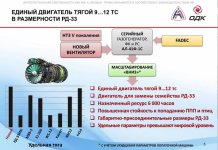
The Russians announced at the Chinese Air Show that they are developing the RD-33 engine to reach a capacity of 12 tons to be used in developing the MIG-29M and also
Gc65-XOb-X0-AANK4mقي33.jpg
The Russians are targeting the Pakistani market for a new version of the Chinese engine, especially since India has turned to American engines

The seller does not analyze any of the matters well China's presence in the state arms market and technology transfer and all the appearance of the Turks led to radical changes taking place in bankrupt Europe now that restricts technology transfer begging customers so Pakistan can get AESA radars from the Turks or the Koreans or the Italians whether technology or complete radars because the technology has already been deployed and Pakistan has fighters with AESA radars, that is, Pakistan will simply get the technology at a lower cost than some imagine
So the main point for Pakistan is to develop a modern advanced structure for the new version manufactured with the best available technology because it is the basis and also with a good life of 8000-12000 flight hours
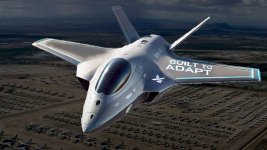
Chasseur-leger-furtif-ngad-usaf.jpeg
Many do not imagine that the United States needs a generation fighter The fourth 4++ is believed to be under design for very simple reasons. There is a shortage of fighters and the effectiveness of the F-35 fighters is questionable. The exit of large numbers of F-16/18/15 fighters in quantity without a real alternative represents a disaster for them. The matter is not as some imagine that the unmanned aircraft will replace the fighters in a short time. On the contrary, there has appeared a need for fighters and aircraft that are not of high performance but at a lower cost to clear the airspace from the unmanned aircraft that are currently spreading intensively.


The most important point is that those who say that Pakistan needs high costs and long years are missing important points. Pakistan is true, it produces 58% of the components of the JF-17. Therefore, the speed of developing avionics derived from it and integrating it into the new fighter, and even with components that go into developing the F-16, will reduce costs to a large extent. No one paid attention to explanatory points, for example, Germany developed the AIM-9 missile and produced the IRIS-T missile development program from it, then developed a complete family and a series of air defense missiles later. No one wants to see Pakistan developed in the aviation industry, whether the Chinese, the Turks, the Europeans, the Russians or the Americans. This is a natural thing because you are competing in the monopoly fighter market, but now the market has been entered by competitors such as the South Koreans, the Turks and even the Swedes, who are getting new contracts in Latin America. That is, you are heading to the position you want and no one will help you. We do not find a policy of belittling and that the project is huge and needs large funding that is not within Pakistan's capacity. All of these matters only target the Pakistani will and make the matter appear It is complicated and no one can, and countries like China steal banned European and American technologies and develop technologies, and the same thing, the Turks also bought technologies from the Israelis, Koreans and Chinese and developed their own technologies based on them, so these opinions should not be paid attention to, as Pakistan was able to develop nuclear weapons despite the ban, and the manufacture of fighters will not be an obstacle as long as there is a will for that, and Pakistan was able to obtain contracts that become small and successive that can help in developing a new version because every fighter that is sold is sold with maintenance and development services, ammunition and spare parts, so the efficiency of the project simply goes back to the good design of the aircraft and the modernity will have an excellent return
 

Users who are viewing this thread

Country Watch Latest

Back
Top