Michael
VIP Member

From your reply, you really don't know the problem between GaN and SiC. So, we can end this paragraph.I don't think you even understood my post. Let's cover from a Science / Technology to Operational effectiveness for our topic.
What's the difference in a GaN (Gallium Nitride, Gen-2) and a Silicon Carbide (SiC, Gen-3) chip? The later (SiC) can process 3 times the information in one circuit, its latest Radar tech, generation-3. I can write a world research article here, but I'll refrain from showing off like you guys. Since the topic is limited to Radar tech, in theory, a Radar when using SiC chips vs. Gallium Nitride, can have 3 times the range. That's your J-20 and J-35. While J-10C uses Gallium Nitride or Gen-2.
Now let's do a comparison. An F-35, can LITERALLY identify a ballistic missile's after burning from 1000+ Kilometers away and they use optimized Gallium Nitride (GaN) in its Radar tech and sensors. So the J-20 and J-35, should have at least 1 time more range than the F-35 (ideally 3 times per science, but we give it that new development optimizes overtime). Chinese don't spend hundreds of millions in R&D to waste when Gallium Nitride was doing what they needed done.
They needed faster processing so R&D on Silicon Carbide is similar to how China's done significant R&D on Thorium and wants it to produce energy for almost all of its energy needs in defense. This is all next generation stuff. You are dead if you technologically don't advance. China is getting on top of innovation to beat the West.
One point you made about the database, yes, threat databases, IFF, etc, are much larger for the West than they are for Chinese systems. Why? Because the West has been building better weapons since WWII using Radar and other technologies so that knowledge carriers over.
But its useless, why? Because older platforms retire.
The Chinese systems cover all major Western systems since Chinese EW and Pakistani EW platforms (they share data) have been active around South China sea, and Pakistan on the Indian side. Between China and Pakistan, capturing electronic data from Japan, South Korea, US Navy in SCS, British & EU navy ships in SCS, Taiwan and India, you cover essentially all major weapon systems from around the world.
Lastly, I've seen people here making comments towards Pakistan they come almost insulting with respect to weapon pricing, economy and all. Let's clear something up, Chinese leaders know how big of a necessity Pakistan is for them. What they say in private is A LOT different than some Chinese members views here.
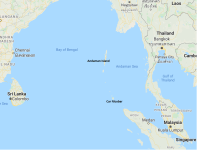
Pakistan isn't China, not that big, don't have 1.4 billion people and a relevant economy. But for China's case, we provide a lifeline to China. China's entire sea lines can be shut down by QUAD in less than a few hours in a war. Indian Nicobar and Andaman islands can close off the Malaca strait in no time, in case of a war. Well, how do you by pass all that and resume supply of fuel and trade to China? Through Gawader port and CPEC infrastructure in Pakistan. So Pak-China relationship is truly an iron brother relationship, joined to the hip. It should be taken as such.
Pakistan will see significant increases in its defense industry from 2028 onwards, especially, in indigenization and KAAN will be built here in Pakistan, may be under PFX. Pakistani version of the 5th gen platform will have Turkish and Chinese weapons integrated. Many Turkish weapons will be built here also, including BVR missiles along with KAAN.
I hope this long detail was educational and now we can all understand where Pakistan is headed. Proof will be in the seeing after 2028. Thanks!
@MastanKhan saw your post above. Agreed on both issues
At the same time, you are completely imaginative about the relationship between China and Pakistan.
So. End of the conversation!