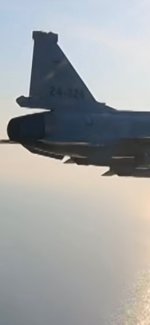
You keep using the jealous word and I don't know why brother.
All I am saying is that today as we speak, Pakistan is busy importing and integrating military hardware from China. These imports make up around 83%.
Only 17% is coming from elsewhere. Why? It's simply because either other don't have what Pakistan needs or they don't want to sell it to Pakistan (unless Pakistan does backflips and rolls over the ground to please them first), therefore, China is the only option.
Pakistan-Turkiye, Pakistan-Turkiye-Bangladesh, Pakistan-Iran, Pakistan-Iran-Turkiye, Pakistan-Saudi Arabia and Pakistan-Saudi Arabia-Turkiye can collaborate as much as they like, but Pakistan is in the middle of a very hostile two-front neighbourhood. Pakistan's needs are immediate. It needs everything readily and available right now and only China can provide that.
Everyone else can provide diplomatic support to Pakistan in time of need but they can't provide material support, except maybe some symbolic gesture.
Can Turkiye, Saudi Arabia and anyone else keep up with the speed of development and production that China is making in military sphere? I don't think so. Even the Americans are now asking the Chinese for "balance of power" in Asia-Pacific instead of "domination" in Asia-Pacific like they tried in the last two decades.
Bhai, not everything can be openly discussed in public forums sometimes you have to read between the lines and connect the dots yourself. The way you’re approaching this issue feels like running in circles without acknowledging the bigger picture.
Yes, everyone knows that China is Pakistan’s primary defense supplier. The reason is obvious: Chinese military equipment is generally more affordable compared to Western systems, and it comes without the heavy political strings or restrictions that Western countries often impose. But relying too heavily on one source creates vulnerabilities. Strategic autonomy demands diversity.
Now that Pakistan has a choice, Pakistan can’t afford to limit itself to a single partner. That’s why cooperation with countries like Turkey, Romania, Brazil, South Africa, and Thailand matters. Each brings unique strengths, technologies, and opportunities for joint development.
Turkey is already playing a crucial role in strengthening Pakistan’s defense industry. From UAVs (like Bayraktar drones) to naval modernization and joint ventures in armored vehicles, Turkish collaboration provides Pakistan with advanced systems tailored to its needs.
Other partners like Brazil (aerospace), South Africa (missile and artillery systems), and Romania/Thailand (industrial cooperation) expand Pakistan’s options, reduce dependency, and open doors for technology transfer.
Why Diversification is Critical ?
•
Strategic Independence: Over reliance on one supplier makes Pakistan vulnerable to shifts in foreign policy or supply chain disruptions.
•
Technology Transfer: Working with multiple partners increases chances of coproduction, joint R&D, and indigenous capability building.
•
Diplomatic Balance: Defense cooperation strengthens political ties, ensuring Pakistan isn’t seen as aligned with only one bloc.
•
Industrial Growth: Partnerships like those with Turkey help Pakistan’s own defense industry mature, creating jobs, expertise, and export potential.
•
Operational Flexibility: Access to varied platforms and technologies ensures Pakistan’s armed forces can adapt to different scenarios without being locked into one ecosystem.
While China remains a cornerstone of Pakistan’s defense procurement, broadening cooperation especially with Turkey is not just desirable, it’s essential. It strengthens Pakistan’s defense industry, enhances resilience, and ensures long term strategic autonomy.


I don't have the exact details obviously but CPD JF-17 is now DCAS- PFX and here is my personal deduction from some other things too which I recently observed... I think they are working on a design in collaboration with China and Turkieye and this can be called as the new Azm project for indigenous 5th gen... now, as it is not easy and I think we will need a lot of help for engine and RAM coating, so it will definitely come after operationalization of J-35, maybe with some basic ToT...

 So for the roadmap we have PFX, project Azm in collaboration with Turkey and China, both as clean sheet designs, as well as a Block 4 JF17. Please correct me of I've misinterpreted. If we're also inducting J35, I guess that doesn't leave any scope for TFX in PAF colours?


 upgrades for the Block52s and legacy fleet? More used/new airframes?