JF-17 - Updates, News & Discussion

میں نے کہا تھا

برا لگے یا اچھا
ڈھیٹ اپنے گلے سے کھولتا ہوّا نیزہ گزر دیں گین مگر پاکستان کی کسی چیز کی تعریف نہ کریں گیں

جہاز تو دور کی بات ہے ۶۸ سال سے یہ پاکستانی کریکٹر کی تعریف کوئی طنز یا برائی لگائے بغیر بیان نہیں کر سکتے

انکا زہر جب سمجھ جاو گے تو اسرائیلی نفرت اور مکر کے ٹکر آنے لگے گی


what does it mean, could you elaborate
 
Really interesting article. National Interest and this writer in particular have been VERY pro Indian over the years. Looks like the narrative is changing.....
Much of what has been written is what we have been discussing on this thread very recently.


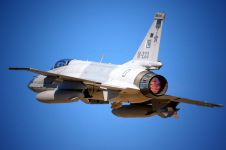
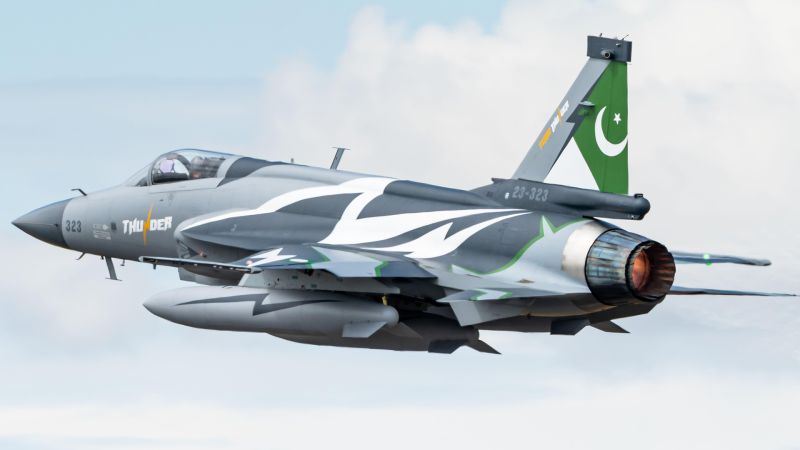
Pakistan’s JF-17 Thunder: The $30 Million Fighter Jet Rewriting the Arms Market​

January 29, 2026
By: Brandon J. Weichert

Share​

Pakistan’s JF-17 appears to be roughly as effective as Western fighter jets—at a third of the upfront price tag, and with far lower ongoing costs.

Pakistan’s JF-17 Thunder (or FC-1 Xiaolong) is a lightweight, affordable, single-engine, multirole combat aircraft that was jointly developed by Pakistan Aeronautical Complex and China’s Chengdu Aircraft Corporation. This bird is meant for maneuverability, and it features an advanced avionics suite to ensure that capability.


The plane also comes with highly effective beyond-visual-range (BVR) missile capabilities. There are currently three iterations of this plane (with the Block III being the most advanced and recent).


More importantly, however, the JF-17 is combat tested and has a demonstrated success against advanced Western-made warplanes. That’s because the Pakistani Air Force (PAF) utilized these warplanes in their recent war with neighboring India.


About the JF-17 Thunder

  • Year Introduced: 2007
  • Number Built: 110+
  • Length: 49 ft (14.93 m)
  • Wingspan: 31 ft (9.45 m)
  • Engines: Russian-made Klimov RD-93 (Blocks I & II); RD-93MA (Block III)
  • Top Speed: 1,190 mph (1,910 km/h) / Mach 1.8
  • Combat Radius: 560 mi (900 km)
  • Service Ceiling: 55,500 ft (16,930 m)
  • Loadout: SD-10 AAMs (beyond-visual-range, BVR), PL-5EII (short-range) missiles, LS-6 Glide Bombs, C-802AK anti-ship missiles, and GBU-series laser-guided bombs
  • Aircrew: 1

How Pakistan’s Thunders Shocked India (and the World)

In May 2025, following a terrorist attack in India’s portion of the disputed Kashmir region, the Indian Air Force (IAF) deployed its various Western-made (and Russian-made) warplanes against Pakistan. The PAF responded by sending their JF-17s—armed with Chinese-made PL-15 air-to-air missiles—into combat against the IAF. To the astonishment of many, the JF-17s were mostly successful against what everyone assumed were more advanced Indian warplanes.

freestar


The JF-17 was designed for air-to-air interception, ground attack, anti-ship, and reconnaissance mission sets. While the Blocks I and II were capable fighters, the Block III is the most impressive. It features an Active Electronically Scanned Array (AESA) radar, holographic wide-angle heads-up display, enhanced fly-by-wire system, and infrared search-and-track (IRST).


Pakistan’s May air clashes with India—where JF-17s operated alongside Chinese J-10Cs—gave Islamabad something it previously lacked: real-world credibility. This was pointed out even in a recent Reuters article. That matters way more than any splashy advertisement or defense expo display. Remember, Pakistan doesn’t just want to use the JF-17. It wants to export it. And winning a war with your larger neighbor—or at least tying it, against everyone’s expectations—is proof that your warplane works. Moreover, the JF-17 is cheap, readily available, and has a politically flexible supplier network, unlike current “values”-driven Western platforms. As Reuters pointed out, this development mirrors Turkey’s Bayraktar TB2 after it proved itself in the killing fields of Syria, Libya, and Ukraine.


Combat-Tested Platforms Are Export Gold

Although the JF-17 is a Pakistani system, people need to remember that it was co-developed with one of China’s leading aerospace firms. In effect, then, the JF-17 and Pakistan’s defense export industry in general, becomes a commercial gateway for the Chinese military-industrial complex.


What’s more, the cooperative model between Chengdu Aircraft Corporation and Pakistan Aeronautical Complex could easily become the model for wider exports to foreign countries.

freestar


Most of the countries that have expressed interest in purchasing the JF-17 from Pakistan have been countries in the Global South. These nations are politically fragile (hence their designation as “developing”), are facing insurgencies or other internal instability, are often sanctioned or diplomatically constrained by the moralizing Western powers and are Muslim-majority.


Thus, Pakistan offers these states religious affinity, a long history of training Middle Eastern militaries, and a willingness to bundle together training, advisers, equipment, and drones.


https://track.roinattrack.com/413c4...}}&ob_click_id={{ob_click_id}}&obOrigUrl=true


Now here’s the real clincher for any Developing Country looking to purchase Pakistan’s JF-17s. The JF-17 costs anywhere between $30–$40 million, whereas more Western-made warplanes cost between $90–$120 million. Suddenly, higher-end capabilities once reserved for only the wealthiest, developed militaries can now be made available to countries with considerably smaller budgets. In essence, the Pakistani JF-17s are major disrupters on the global arms market.


Think about it: one could conceivably purchase three JF-17s for the price of a single Western fighter. What’s more, unlike many of those Western warplanes, the JF-17 is significantly easier to operate and much cheaper to maintain—and can even be maintained locally. And there is no fear of sanctions being imposed at a later date, the way there is with Western systems.

freestar


China’s Silent Hand Behind Pakistan’s Rise

The only real constraint on Pakistan’s desire to sell the JF-17s globally comes down production capacity within Pakistan’s defense industrial base. They make around 20 JF-17s per year. Should they simply double that production rate to 40 birds per year, that might prove more difficult than they think—and that number is still relatively modest compared to what other arms exporting nations can do.


This is where Pakistan’s alliance with China comes into play, though. China can inject tooling, capital, and other important components to boost Pakistani production of the JF-17. Private-sector drone output can scale faster, too. What’s more, the already growing demand from potential global customers warrants a sustained expansion of Pakistan’s defense industrial base to support the growth of the JF-17 production line.


Alas, because Pakistan is not a fully sovereign exporter, but rather a licensed component in China’s larger export network, it must consult with Beijing before making any final sales. China can, therefore, block potential sales to any sanctioned states and to any potential clients that complicate China’s diplomatic strategy globally.


In this case, both Libya and Sudan are sensitive for China, meaning that Beijing would likely balk at Pakistan selling a plane such as the JF-17 that may be produced in Pakistan but is licensed from China.

freestar


Why the West Is Losing the Mid-Tier Arms Market

Pakistan’s rise in the global arms export market indicates a much larger, longer-running trend going forward. Essentially, Western defense contractors are losing the low-to-mid tier arms market. High-cost, slow-delivery, compliance-heavy systems cannot ultimately compete with systems that are produced fast, cheap, and with politically flexible suppliers. So Turkey, South Korea, and now Pakistan is filling this vacuum. All this erodes American influence, one contract at a time.


But it is not only Pakistan that benefits from these potential sales. It is China. Pakistan is becoming a Chinese-aligned, mid-tier arms hub serving the Global South with affordable, combat-tested systems. Thus, Pakistan is becoming a strategic multiplier for China; it is becoming the symbol of a parallel global arms ecosystem that resides outside Western control.


That system, by the way, is getting stronger each day.


About the Author: Brandon J. Weichert

Brandon J. Weichert is a senior national security editor at The National Interest. Weichert is the host of The National Security Hour on iHeartRadio, where he discusses national security policy every Wednesday at 8pm Eastern. He hosts a companion show on Rumble entitled “National Security Talk.” Weichert consults regularly with various government institutions and private organizations on geopolitical issues. His writings have appeared in numerous publications, among them Popular Mechanics, National Review, MSN, and The American Spectator. And his books include Winning Space: How America Remains a Superpower, Biohacked: China’s Race to Control Life, and The Shadow War: Iran’s Quest for Supremacy. Weichert’s newest book, A Disaster of Our Own Making: How the West Lost Ukraine, is available for purchase wherever books are sold. He can be followed via Twitter/X @WeTheBrandon.
 
Surprising we have not raised our Plane count in last 1 years stuck at 160 as indicated in Wikipedia

Is the focus fully on Export orders now?
 
Last edited:
Wow, more positive coverage of JF-17 from the official news channel of British armed forces. West really is taking notice of this plane....

There are a lot of airforces in asia/africa/latin america regions which have legacy and outdated western jets or soviet jets. While Indians were able to get their Migs upgraded somewhat, many other countries did not because a lot of them didn't face the same concurrent threat levels so they just kept the bare minimum airforce.

Now they all have to eventually retire the jets because of airframe issues and maintenance support issues. JF-17 fits right in, especially there is nothing on the market with as good combo as BLKIII AESA + PL15/PL12 in this price bracket and without Russian/Western strings.

JF-17 BLKIII market in reality is actually hundreds of jets..............its just how you navigate the diplomatic issues and maintain the infrastructure to support it for 30 years at least.
 
Wow, more positive coverage of JF-17 from the official news channel of British armed forces. West really is taking notice of this plane....


This article is reflective of the fact that the west has woken up to the fact that they have moved away from the low cost single category both for combat mass for their own air forces, as well as exports to countries to maintain "political" influence.

BFBS did a video on their youtube video too :
To view this content we will need your consent to set third party cookies.
For more detailed information, see our cookies page.


I see these articles being part of an incoming "correction" by both the USA and Europe to develop and field an aircraft in the same category.

Gripen qualifies on size and capabilities in that space, but not on price and that is the issue for that platform, the FA/50 is the only real competitor to the JF17C and right now it is winning on both number of units built and overall number of export customers( dont have data on unit price ).
 
There are a lot of airforces in asia/africa/latin america regions which have legacy and outdated western jets or soviet jets. While Indians were able to get their Migs upgraded somewhat, many other countries did not because a lot of them didn't face the same concurrent threat levels so they just kept the bare minimum airforce.

Now they all have to eventually retire the jets because of airframe issues and maintenance support issues. JF-17 fits right in, especially there is nothing on the market with as good combo as BLKIII AESA + PL15/PL12 in this price bracket and without Russian/Western strings.

JF-17 BLKIII market in reality is actually hundreds of jets..............its just how you navigate the diplomatic issues and maintain the infrastructure to support it for 30 years at least.

PAC ( PAF ) needs to hire a professional sales team who are NOT military people for sales activities. Sales is a skill in itself, and military offices should not be wasting time on sales activities when they should be focussing on being officers and men( &women) of war.
 
Last edited:
PAC ( PAF ) needs to hire a professional sales team who are NOT military people for sales activities. Sales is a skill in itself, and military offices should not be wasting time on sales activities when they should be focussing on being officers and men( &women) of war.

To be fair a lot of defence diplomacy is weapons sales and the local armed forces do get involved a lot (especially in US and UK), but your point remains, certainly not to the level PAF effectively run the show.

Companies like BAE and Lockheed have officers on secondment to give their pitches and talks credibility and both also hire many ex officers and pilots.
 
Last edited:
This article is reflective of the fact that the west has woken up to the fact that they have moved away from the low cost single category both for combat mass for their own air forces, as well as exports to countries to maintain "political" influence.

BFBS did a video on their youtube video too :
To view this content we will need your consent to set third party cookies.
For more detailed information, see our cookies page.


I see these articles being part of an incoming "correction" by both the USA and Europe to develop and field an aircraft in the same category.

Gripen qualifies on size and capabilities in that space, but not on price and that is the issue for that platform, the FA/50 is the only real competitor to the JF17C and right now it is winning on both number of units built and overall number of export customers( dont have data on unit price ).


Yeah, guess its the result of requirements. In the past US made F-86 and F-5s. Superb little fighters ideal for developing countries but not taken up much by the USAF or quickly replaced by advanced types. Same with the Hunter by Britain and Mystere by France. Eventually they had to get better and heavier jets with improved performance so you ended up with the F-4 and F-15 in US and Tornado and Mirage 2000 in Europe.

F-16 was supposed to be "light" but never truly was. Russians moved on to the MIG-29 ad SU-27. Swedes had the Viggen which was big as well.

No one amongst the big customers wanted a light fighter but many developing and even developed countries needed one. In the absence of that in order to make up numbers in the 80s and 90s many countries (even Greece and Turkiye) had to go on buying sprees of old planes to keep up numbers.

PAF had to make do with 200 odd F-6s to maintain a sustainable force, and I love that little plane, but the thought of interception or QRA armed with just a cannon and AIM-9P is not very attractive.

If PAF did not make JF-17 no one would have. Yes, we can all talk about FA-50, Single seat Hawk etc but these were all essentially derivatives of trainers.

JF-17 is literally in a class of it's own, even Gripen is much heavier.

Now what has made people decide to buy a plane? Not just low price tag. Air forces will not send planes to be shot down or pilots to be killed just because they can save a buck. It is a false economy.

JF-17 is packed with much of the same electronics, radar and weapons as the J-10C and it is now combat proven. Chinese tech and PAF combat have turned this plane into a hot ticket.

Think about it. Imagine if they were selling the F-5 or F-7 in the 80s with a smaller APG-68 and AMRAAMS????? Now imagine both were combat proven against modern French and Russian fighters of the time (Mirage 2000 and SU-27).

That is what the JF-17 can give you.
 
Yeah, guess its the result of requirements. In the past US made F-86 and F-5s. Superb little fighters ideal for developing countries but not taken up much by the USAF or quickly replaced by advanced types. Same with the Hunter by Britain and Mystere by France. Eventually they had to get better and heavier jets with improved performance so you ended up with the F-4 and F-15 in US and Tornado and Mirage 2000 in Europe.

F-16 was supposed to be "light" but never truly was. Russians moved on to the MIG-29 ad SU-27. Swedes had the Viggen which was big as well.

No one amongst the big customers wanted a light fighter but many developing and even developed countries needed one. In the absence of that in order to make up numbers in the 80s and 90s many countries (even Greece and Turkiye) had to go on buying sprees of old planes to keep up numbers.

PAF had to make do with 200 odd F-6s to maintain a sustainable force, and I love that little plane, but the thought of interception or QRA armed with just a cannon and AIM-9P is not very attractive.

If PAF did not make JF-17 no one would have. Yes, we can all talk about FA-50, Single seat Hawk etc but these were all essentially derivatives of trainers.

JF-17 is literally in a class of it's own, even Gripen is much heavier.

Now what has made people decide to buy a plane? Not just low price tag. Air forces will not send planes to be shot down or pilots to be killed just because they can save a buck. It is a false economy.

JF-17 is packed with much of the same electronics, radar and weapons as the J-10C and it is now combat proven. Chinese tech and PAF combat have turned this plane into a hot ticket.

Think about it. Imagine if they were selling the F-5 or F-7 in the 80s with a smaller APG-68 and AMRAAMS????? Now imagine both were combat proven against modern French and Russian fighters of the time (Mirage 2000 and SU-27).

That is what the JF-17 can give you.
And with that, they get PAF training and support. that is a big deal specially after may 7
 
And with that, they get PAF training and support. that is a big deal specially after may 7

Yeah, very good point and I forgot that. It helps massively espeically with countries who may have neglected training and infrastructure.

You get Super MKs, simulators, training and capacity building all helped with PAF instructors and ground crew. Not many countries can throw that in
 

Users who are viewing this thread

Country Watch Latest

Back
Top