JF-17 - Updates, News & Discussion

Azerbaijan-JF-17-Order.jpg

JF-17 to Azerbaijan: Pakistan’s Biggest Defence Export Deal​

Pakistan Defence Industry by Bilal Khan

Bilal Khan​

Summary​

With the PAF acquiring new J-10CE and J-35 fighters, the strategic role of the extensive JF-17 fleet is set to evolve. The aircraft is being repositioned as a scalable support asset for standoff weapons deployment, a transition dependent on the PFX Alpha upgrade program.

The export deal with Azerbaijan is a key enabler, though its most significant value may lie not in its commercial price but in how it supports the domestic industry’s capacity for this complex integration work.

For a detailed analysis of how these interconnected factors will shape the PAF’s future force structure, continue reading and subscribe to Quwa for access to the full article and all other Quwa research and analysis.


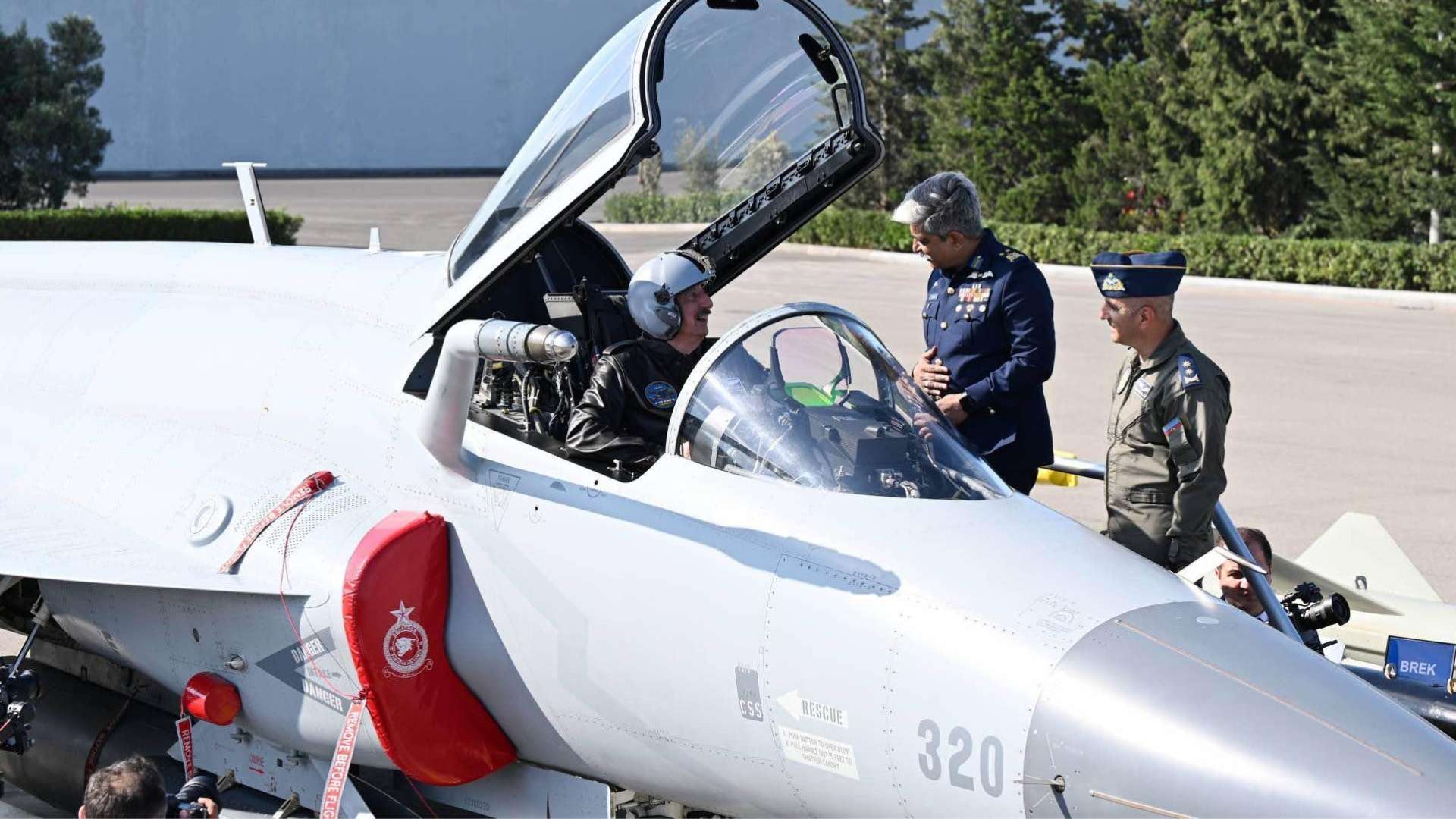
On 06 June 2025, the Government of Pakistan announced that it finalized a landmark sale of 40 JF-17 Thunder multirole fighters to Azerbaijan in a deal valued at up to USD $4.6 billion.

This announcement (which was originally posted on the social media platform X, but deleted recently) was the first definitive confirmation of both the Azeri JF-17 deal and several key specifics, particularly the total cost and the number of aircraft involved.

The sale is not only the single biggest third-party export order of the JF-17 to date, but it is also Pakistan’s largest single export order as well. Efforts to secure this order date back to at least 2019, when the Pakistan Air Force (PAF) initiated a campaign to promote its mainstay multirole fighter to Azerbaijan, Malaysia, and Argentina.

However, the net revenue share returning to Pakistan will not include many of the high-value inputs, such as the turbofan engine, steel for the airframe, radar and other subsystems, and the manufacturing workshare of Pakistan Aeronautical Complex’s (PAC) main partner, the Aviation Industry Corporation of China (AVIC).

That said, even if the commercial value of the Azeri deal is relatively limited to Pakistan, it could still offer a boon to the Pakistan Air Force (PAF) in numerous other ways, not least in securing a critical funding track for the continued development and customization of the JF-17.

Market Pricing Adjustment​

One aspect that stood out in the apparent value of the deal was its cost, i.e., USD $115 million per unit. Granted, a total unit price that is several multiples higher than the flyaway cost is to be expected after ground support equipment (GSE), spare parts, training, ammunition, and other inputs are factored into the equation.

However, is this per-unit price point relatively high in the context of the JF-17, which is positioned as a ‘low cost’ fighter? Or is this a reflection of the upward pricing trajectory of the combat aircraft market generally amid factors like inflation and unstable supply chains?

Regarding the Azeri JF-17 order, the actual answer is somewhere in the middle: combat aircraft have certainly gotten more expensive in a nominal pricing standpoint, but Azerbaijan also might have ordered a custom configuration to align with its security interests and goals.
 
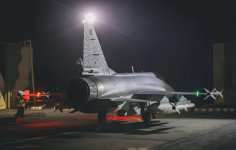
Is there any pic or jf17 with 4 pl15/ or sd10s and 2 heat seekers ? The only i have see is the one in the ground but not flying so not sure if jf17 can carry that load out even in block 3 version
 
Azerbaijan-JF-17-Order.jpg

JF-17 to Azerbaijan: Pakistan’s Biggest Defence Export Deal​

Pakistan Defence Industry by Bilal Khan

Bilal Khan​

Summary​

With the PAF acquiring new J-10CE and J-35 fighters, the strategic role of the extensive JF-17 fleet is set to evolve. The aircraft is being repositioned as a scalable support asset for standoff weapons deployment, a transition dependent on the PFX Alpha upgrade program.

The export deal with Azerbaijan is a key enabler, though its most significant value may lie not in its commercial price but in how it supports the domestic industry’s capacity for this complex integration work.

For a detailed analysis of how these interconnected factors will shape the PAF’s future force structure, continue reading and subscribe to Quwa for access to the full article and all other Quwa research and analysis.


On 06 June 2025, the Government of Pakistan announced that it finalized a landmark sale of 40 JF-17 Thunder multirole fighters to Azerbaijan in a deal valued at up to USD $4.6 billion.

This announcement (which was originally posted on the social media platform X, but deleted recently) was the first definitive confirmation of both the Azeri JF-17 deal and several key specifics, particularly the total cost and the number of aircraft involved.

The sale is not only the single biggest third-party export order of the JF-17 to date, but it is also Pakistan’s largest single export order as well. Efforts to secure this order date back to at least 2019, when the Pakistan Air Force (PAF) initiated a campaign to promote its mainstay multirole fighter to Azerbaijan, Malaysia, and Argentina.

However, the net revenue share returning to Pakistan will not include many of the high-value inputs, such as the turbofan engine, steel for the airframe, radar and other subsystems, and the manufacturing workshare of Pakistan Aeronautical Complex’s (PAC) main partner, the Aviation Industry Corporation of China (AVIC).

That said, even if the commercial value of the Azeri deal is relatively limited to Pakistan, it could still offer a boon to the Pakistan Air Force (PAF) in numerous other ways, not least in securing a critical funding track for the continued development and customization of the JF-17.

Market Pricing Adjustment​

One aspect that stood out in the apparent value of the deal was its cost, i.e., USD $115 million per unit. Granted, a total unit price that is several multiples higher than the flyaway cost is to be expected after ground support equipment (GSE), spare parts, training, ammunition, and other inputs are factored into the equation.

However, is this per-unit price point relatively high in the context of the JF-17, which is positioned as a ‘low cost’ fighter? Or is this a reflection of the upward pricing trajectory of the combat aircraft market generally amid factors like inflation and unstable supply chains?

Regarding the Azeri JF-17 order, the actual answer is somewhere in the middle: combat aircraft have certainly gotten more expensive in a nominal pricing standpoint, but Azerbaijan also might have ordered a custom configuration to align with its security interests and goals.
Are these 40 on top of the 16 previously ordered or are the 16 included in this deal?
 
Last edited:
Is there any pic or jf17 with 4 pl15/ or sd10s and 2 heat seekers ? The only i have see is the one in the ground but not flying so not sure if jf17 can carry that load out even in block 3 version

Why is it so hard to believe? They flew with 2xCM400 in combat, surely - thats a higher weight than 4xBVR missiles.
 

Attachments

  • pakistan-air-force-jf-17-block-3-thunder-on-stand-by-v0-pmv4savi2m5c1.png
    pakistan-air-force-jf-17-block-3-thunder-on-stand-by-v0-pmv4savi2m5c1.png
    576.1 KB · Views: 11
  • Pakistan_deploys_its_JF-17_Block_III_equipped_with_Chinese_PL-15E_missiles_as_tensions_rise_w...jpeg
    Pakistan_deploys_its_JF-17_Block_III_equipped_with_Chinese_PL-15E_missiles_as_tensions_rise_w...jpeg
    345.9 KB · Views: 11
  • GpdiPLrXkAAvvQ7.jpeg
    GpdiPLrXkAAvvQ7.jpeg
    96.8 KB · Views: 11
Full payload of jf17 is 3600-4500kg

We have seen it flown with 2 sd10, 2 antiship missles and 2 heat seakers in full combat

Thats a FAR heavier load then 4 pl15(almost twice)

similar cm 400k is far heiaver load

So i dont get your question? What are you even asking???


Is there any pic or jf17 with 4 pl15/ or sd10s and 2 heat seekers ? The only i have see is the one in the ground but not flying so not sure if jf17 can carry that load out even in block 3 version
 
Azerbaijan-JF-17-Order.jpg

JF-17 to Azerbaijan: Pakistan’s Biggest Defence Export Deal​

Pakistan Defence Industry by Bilal Khan

Bilal Khan​

Summary​

With the PAF acquiring new J-10CE and J-35 fighters, the strategic role of the extensive JF-17 fleet is set to evolve. The aircraft is being repositioned as a scalable support asset for standoff weapons deployment, a transition dependent on the PFX Alpha upgrade program.

The export deal with Azerbaijan is a key enabler, though its most significant value may lie not in its commercial price but in how it supports the domestic industry’s capacity for this complex integration work.

For a detailed analysis of how these interconnected factors will shape the PAF’s future force structure, continue reading and subscribe to Quwa for access to the full article and all other Quwa research and analysis.


On 06 June 2025, the Government of Pakistan announced that it finalized a landmark sale of 40 JF-17 Thunder multirole fighters to Azerbaijan in a deal valued at up to USD $4.6 billion.

This announcement (which was originally posted on the social media platform X, but deleted recently) was the first definitive confirmation of both the Azeri JF-17 deal and several key specifics, particularly the total cost and the number of aircraft involved.

The sale is not only the single biggest third-party export order of the JF-17 to date, but it is also Pakistan’s largest single export order as well. Efforts to secure this order date back to at least 2019, when the Pakistan Air Force (PAF) initiated a campaign to promote its mainstay multirole fighter to Azerbaijan, Malaysia, and Argentina.

However, the net revenue share returning to Pakistan will not include many of the high-value inputs, such as the turbofan engine, steel for the airframe, radar and other subsystems, and the manufacturing workshare of Pakistan Aeronautical Complex’s (PAC) main partner, the Aviation Industry Corporation of China (AVIC).

That said, even if the commercial value of the Azeri deal is relatively limited to Pakistan, it could still offer a boon to the Pakistan Air Force (PAF) in numerous other ways, not least in securing a critical funding track for the continued development and customization of the JF-17.

Market Pricing Adjustment​

One aspect that stood out in the apparent value of the deal was its cost, i.e., USD $115 million per unit. Granted, a total unit price that is several multiples higher than the flyaway cost is to be expected after ground support equipment (GSE), spare parts, training, ammunition, and other inputs are factored into the equation.

However, is this per-unit price point relatively high in the context of the JF-17, which is positioned as a ‘low cost’ fighter? Or is this a reflection of the upward pricing trajectory of the combat aircraft market generally amid factors like inflation and unstable supply chains?

Regarding the Azeri JF-17 order, the actual answer is somewhere in the middle: combat aircraft have certainly gotten more expensive in a nominal pricing standpoint, but Azerbaijan also might have ordered a custom configuration to align with its security interests and goals.
Its probably with 10-20 years support and training etc
 
Full payload of jf17 is 3600-4500kg

We have seen it flown with 2 sd10, 2 antiship missles and 2 heat seakers in full combat

Thats a FAR heavier load then 4 pl15(almost twice)

similar cm 400k is far heiaver load

So i dont get your question? What are you even asking??
All I am asking If anyone has seen a pic of jf17 with 4 pl15s ?
 
Why is it so hard to believe? They flew with 2xCM400 in combat, surely - thats a higher weight than 4xBVR missiles.
Again all these are on the ground ..I have never seen one flying
 
I think Pakistan should put quota on export. If production is 24 than 12 will be used for Pakistan use. Should also remove 200 unit quota and go for as much production as they.
 
I think Pakistan should put quota on export. If production is 24 than 12 will be used for Pakistan use. Should also remove 200 unit quota and go for as much production as they.

It would be interesting to know what capabilities have been put in for J17C for Azerbaijan and how much of those PAF is looking adopt as well. I will assume more Turkish munitions have been integrated and that would be good for Pakistan too. Not much has been declared publically, but the cost and delivery timelines of the deal suggest possibility of additional capability upgrades in the platform itself, other than pure procurement costs.
 

Users who are viewing this thread

Pakistan Defence Latest

Latest Posts

Back
Top