Joint Defense Agreement: Turkey, Saudi Arabia, and Pakistan, news & updates

If the agreement remains limited to Saudi Arabia, Turkey, and Pakistan, it will remain important, but it will not necessarily turn into a complete regional system. Therefore, the next step must be to expand the circle of joining countries, not as a matter of numerical expansion, but rather as a matter of building a strategic bloc that is truly capable of changing the balance of power.

Egypt and Syria stand out here as two additions of different natures, but they are strategically complementary. Egypt represents the largest Arab weight in terms of population, army, location and political ability, and Cairo’s accession will give the agreement an Arab weight that is difficult to overcome, in addition to its location that connects the Gulf to the Levant and North Africa and its supervision of the Suez Canal, one of the most important strategic passages in the world.

As for Syria, its importance stems from its location in the heart of the Levant and from its being a geographical node at which the accounts of Türkiye, Iran, Israel, and the Arab world intersect. Including Damascus into this framework, if the necessary political conditions are met, will not be merely a new expansion in membership, but rather a step towards returning Syria to the state’s regional security system, and gradually extracting it from the logic of open arenas and the struggle for influence. With the joining of Egypt and Syria together, the agreement gains what it lacks: Arab weight from the south and Levantine depth from the north, and it transforms from a tripartite understanding into a project capable of redrawing the region’s balances on broader and more independent foundations.

The participation of Qatar, Bahrain and Kuwait also seems to be a logical step in this path, especially with their official welcome of the agreement. Their accession could open the door to the rest of the Gulf states, and gradually transform the agreement from a limited formula to a more expansive Gulf, Arab and Islamic framework.

The real equation is: Can the countries of the region move from a position of reaction to a position of creating balance? The region does not lack more power, but rather it lacks the distribution of power in a way that prevents one party from deciding the fate of others. The value of the third axis will not lie in the number of its armies or the size of its economy alone, but rather in its ability to say to the other two axes: This region is not a strategic vacuum, and its future will not be shaped without its people.

If the “Mecca Agreement” turns into an institutional structure for consultation, coordination, and joint defense, it may fill one of the largest strategic voids in the region: the absence of a deterrence system based on large regional powers that possess both legitimacy and capacity.
 
One important potential outcome that I think is worth considering is nuclear cooperation. Let me lay out some of the connections I see here:

1. Pakistan: Pakistan has a potential long-term requirement for small modular reactors (SMRs), both for civilian nuclear power and, potentially, for future nuclear-propelled submarine ambitions. Pakistan is also acquiring the Yuan-class/Hangor-class submarines from China, with the longer-term objective of progressively indigenizing submarine construction and absorbing the associated design, manufacturing and maintenance ecosystem. Even with substantial domestic assimilation of that infrastructure, however, a nuclear-powered attack submarine would be a fundamentally different undertaking. It would likely require a substantially larger platform than the current Hangor-class design, along with an entirely new industrial and technological base.

2. Türkiye: This is where Türkiye could become particularly relevant. Ankara already has an indigenous submarine-development programme and is steadily expanding its naval nuclear-technology ambitions. If Türkiye succeeds in developing expertise in compact nuclear-reactor technologies, that could eventually create an additional technological base for cooperation. Pakistan, meanwhile, has decades of experience in nuclear science and engineering and an established civilian nuclear infrastructure. The problem for both countries is less the absence of technical talent than the enormous financial, industrial and regulatory burden associated with developing an entirely new reactor technology and the supporting ecosystem.

3. Saudi Arabia: This is where Saudi Arabia potentially completes the triangle. Riyadh has the financial resources to fund projects of a scale that would be difficult for either Pakistan or Türkiye to undertake independently, while it also has a strong strategic incentive to develop an indigenous nuclear-industrial capability and greater strategic autonomy.

The hypothetical model, therefore, could look something like this: Saudi capital + Pakistani nuclear expertise + Turkish industrial capacity and access to international supply chains. Rather than any one country attempting to build an advanced compact-reactor ecosystem from scratch, the three could theoretically divide the financial, technical and industrial burden.

Of course, this is highly speculative and there are enormous legal, regulatory and geopolitical barriers—particularly around nuclear propulsion, technology transfer and international non-proliferation obligations. But strategically, I think this is one of the more interesting long-term possibilities emerging from a deeper Pakistan–Türkiye–Saudi relationship. The real significance would not necessarily be a single reactor project; it would be the creation of a shared nuclear-industrial ecosystem spanning civilian nuclear power, advanced manufacturing, reactor research and potentially naval applications.

That, in turn, could be far more consequential than any individual defence procurement deal.
 
One important potential outcome that I think is worth considering is nuclear cooperation. Let me lay out some of the connections I see here:

1. Pakistan: Pakistan has a potential long-term requirement for small modular reactors (SMRs), both for civilian nuclear power and, potentially, for future nuclear-propelled submarine ambitions. Pakistan is also acquiring the Yuan-class/Hangor-class submarines from China, with the longer-term objective of progressively indigenizing submarine construction and absorbing the associated design, manufacturing and maintenance ecosystem. Even with substantial domestic assimilation of that infrastructure, however, a nuclear-powered attack submarine would be a fundamentally different undertaking. It would likely require a substantially larger platform than the current Hangor-class design, along with an entirely new industrial and technological base.

2. Türkiye: This is where Türkiye could become particularly relevant. Ankara already has an indigenous submarine-development programme and is steadily expanding its naval nuclear-technology ambitions. If Türkiye succeeds in developing expertise in compact nuclear-reactor technologies, that could eventually create an additional technological base for cooperation. Pakistan, meanwhile, has decades of experience in nuclear science and engineering and an established civilian nuclear infrastructure. The problem for both countries is less the absence of technical talent than the enormous financial, industrial and regulatory burden associated with developing an entirely new reactor technology and the supporting ecosystem.

3. Saudi Arabia: This is where Saudi Arabia potentially completes the triangle. Riyadh has the financial resources to fund projects of a scale that would be difficult for either Pakistan or Türkiye to undertake independently, while it also has a strong strategic incentive to develop an indigenous nuclear-industrial capability and greater strategic autonomy.

The hypothetical model, therefore, could look something like this: Saudi capital + Pakistani nuclear expertise + Turkish industrial capacity and access to international supply chains. Rather than any one country attempting to build an advanced compact-reactor ecosystem from scratch, the three could theoretically divide the financial, technical and industrial burden.

Of course, this is highly speculative and there are enormous legal, regulatory and geopolitical barriers—particularly around nuclear propulsion, technology transfer and international non-proliferation obligations. But strategically, I think this is one of the more interesting long-term possibilities emerging from a deeper Pakistan–Türkiye–Saudi relationship. The real significance would not necessarily be a single reactor project; it would be the creation of a shared nuclear-industrial ecosystem spanning civilian nuclear power, advanced manufacturing, reactor research and potentially naval applications.

That, in turn, could be far more consequential than any individual defence procurement deal.

KSA is one of the most educated societies on the planet with an almost 100% literacy rate with one of the highest scientific outputs per capita as well.

This was an article from 2016 from NATURE:

The rise of Saudi Arabia as a science powerhouse​


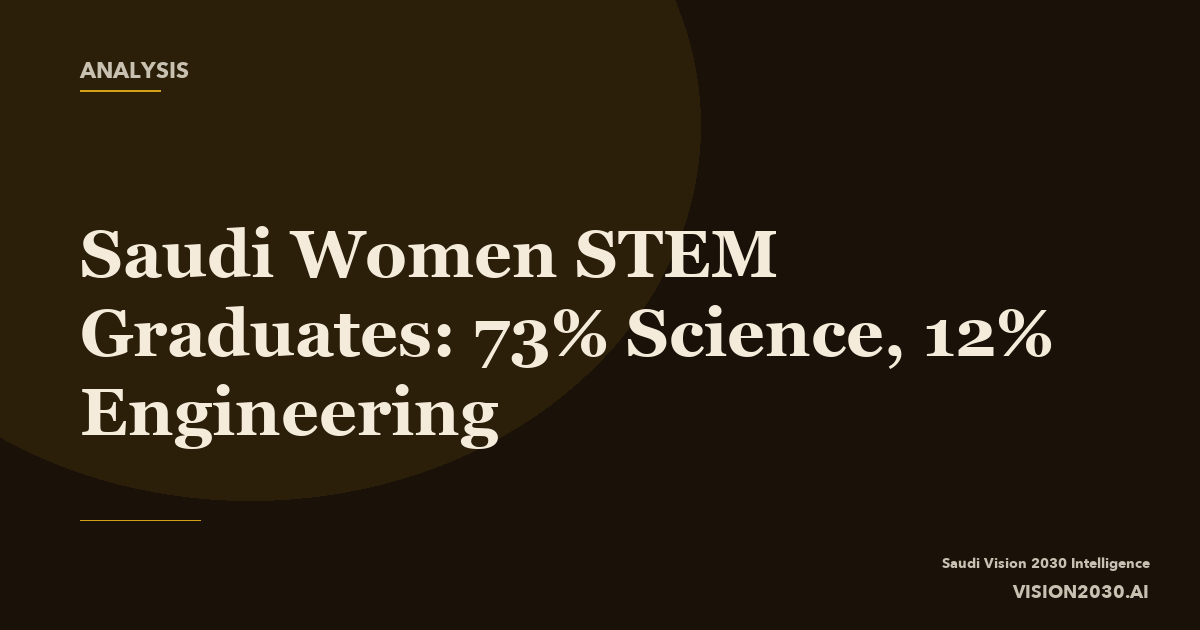
Saudi Arabian women are one of the most educated in the world and have one of the highest percentages of STEM graduates in the world as well.


Recently a half Saudi Arabian half Jordanian (Saudi Arabian citizen as well) received a Noble Prize in chemistry.


We have 1 Saudi Arabian aerospace engineer (woman) in the US (formerly employed by NASA) that runs her own aerospace company that is designing missiles etc.


Saudi Arabian universties are the best-ranked in the entire Muslim world and one of the highest ranked overall.


To view this content we will need your consent to set third party cookies.
For more detailed information, see our cookies page.


The economy is booming as well.

To view this content we will need your consent to set third party cookies.
For more detailed information, see our cookies page.


To view this content we will need your consent to set third party cookies.
For more detailed information, see our cookies page.


One of the highest industrial growths in the world. Recently KSA achieved 26 % self-sufficiency in terms of localization of military spending and production. Many key military sectors are gaining high degrees of self-sufficiency.

Speaking of nuclear energy cooperation, around 5-10% of all the world's uranium reserves are found in KSA.

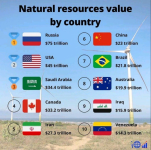
No need to mention that KSA is the richest country in the world in terms of resources compared to per capita wealth.

1787351198767.png


Saudi Arabia ranks first at International Nuclear Science Olympiad as students claim gold medals​


Saudi Arabia ranks first at International Nuclear Science Olympiad as students claim gold medals

August 9, 2026 | 02:28 PM
Saudi Gazette
Last Updated: August 9, 2026 | 02:51 PM

EDDAH — Saudi student Jana Al-Sabil’s gold medal and “Best Female Student” award at the third International Nuclear Science Olympiad 2026, along with Amjad Al-Darwish’s gold medal and “Nuclear Science Ambassador” title, helped Saudi Arabia rank first overall in the competition.

Jana Saleh Al-Sabil won the gold medal and “Best Female Student” award in recognition of her scientific excellence and performance in the competition.

Presented by the International Atomic Energy Agency (IAEA), the award was among the special prizes approved by the Olympiad’s International Council to honor female students for scientific excellence, highlight their contributions to nuclear science, and encourage their participation in specialized scientific fields.

Al-Sabil was selected following her outstanding performance in the Olympiad, which included two examinations — one theoretical and one practical — each lasting five hours.

The exams assessed participants’ knowledge and skills in nuclear science, as well as their abilities to conduct scientific analysis and experiments, interpret results, and solve advanced problems.

Saudi Arabia ranks first at International Nuclear Science Olympiad as students claim gold medals


Saudi Arabia ranked first in the third edition of the Olympiad after Amjad Mahmoud Al-Darwish won a gold medal and the title of “Nuclear Science Ambassador” for achieving the highest combined score in the theoretical and practical examinations among all competitors.

In addition, Abdulaziz Abdulmohsen Al-Sharait won a silver medal, while Saleh Mubarak Dhaifallah Al-Harbi received a bronze medal.

The Olympiad, hosted by Saudi Arabia in Jeddah from August 2 to 9, brought together 120 students and scientific specialists representing 19 countries.

It was jointly organized by the Ministry of Education, the King Abdulaziz and His Companions Foundation for Giftedness and Creativity (Mawhiba), and King Abdullah City for Atomic and Renewable Energy, while King Abdulaziz University hosted the competitions and activities.

The International Nuclear Science Olympiad, approved by the IAEA in 2024, is an international scientific competition for secondary school students that aims to develop their knowledge and skills in nuclear science and its peaceful applications and encourage innovation and scientific research in the field.


KSA just signed a nuclear energy deal with the US which very few strings attached and if implemented it will turn KSA into one of the world's largest nuclear energy powers.


So KSA offers far more than just financial power (which is arguably the most important element in the world).
 

Users who are viewing this thread

Pakistan Defence Latest

Country Watch Latest

Latest Posts

Back
Top