ghazi52
THINK TANK: CONSULTANT


- Thread starter
- #106
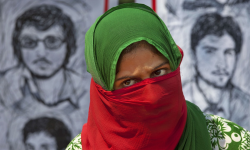
JKLF Chairman Yasin Malik, centre, attends a memorial service to mark the anniversary of an alleged massacre in Srinagar | Mukhtar Khan, AP
Their concerns were not exaggerated. Many political and religious leaders in Pakistan were mobilising people for an Islamic war in Kashmir. On August 14, 1953, Chaudhry Khaliquzzaman, then governor of East Pakistan, exhorted the Pakistanis to “keep their swords shining and horses ready”. Feroz Khan Noon, the then chief minister of Punjab, said in a public meeting in Lahore, two days later, that the Indian government had gone “back on [the] international understanding between the two countries” by sending troops into “a predominantly Muslim country — Kashmir”.
Such provocations, mirrored relentlessly by the Pakistani press and radio, could only lead to an atmosphere full of deep acrimony where conflict was celebrated and peace was mocked as a manifestation of weakness.
In 1954, a pamphlet entitled Fatwa was published in Pakistan which contained virulently anti-India contents with reference to Kashmir. The Indian High Commission in Pakistan requested the Pakistani government to withdraw the pamphlet. The request was turned down.
In these politically charged circumstances, Bogra and Mirza could not make any concessions without risking the fall of their government. The same militaristic narrative that the Pakistani state was actively promoting, thus, circumscribed its negotiating power.
When the two sides returned to the negotiating table the next day, Bogra produced a map of Jammu and Kashmir. It was divided into two parts: the Hindu areas which amounted to a few districts around Jammu were coloured yellow while the rest of the map was coloured green to indicate the Muslim majority areas. The Pakistani delegates suggested a “large area of the Jammu province including Poonch, Riyasi, Udhampur” could go to India along with the “possible transfer of Skardu to India”.
Azad, at that point, stated that India could at best agree to concede some parts of Mirpur district alongside Poonch to Pakistan. For Nehru, the acceptance of Pakistani proposals was as good as an Indian “defeat and the dictation of terms” by Pakistan which, he said, no Indian government could accept. Mirza responded by stating that all he could do was report back to his government in Karachi. And on that inconclusive note, the negotiations ended.