Lebanon-Israel War | 2023-present

To view this content we will need your consent to set third party cookies.
For more detailed information, see our cookies page.


Hezbollah targeted 3 Iron Dome launchers in the past 24 hours

Not saying they didn’t because 99 out of 100 Hezbollah said they did it they did but I definitely like those videos those drone hunters are pretty bad ass
 
There have been lost of videos of Hezb FPV drone hits on Israel posted in this thread. You just need to check the last few pages. Here are some recent ones.

To view this content we will need your consent to set third party cookies.
For more detailed information, see our cookies page.


To view this content we will need your consent to set third party cookies.
For more detailed information, see our cookies page.


To view this content we will need your consent to set third party cookies.
For more detailed information, see our cookies page.


I did bro. I was asking about latest videos.
 
Commander of IDF 401st Division injured along with other IDF terrorists in precise Hezbollah FPV drone strike

To view this content we will need your consent to set third party cookies.
For more detailed information, see our cookies page.


The previous commander of this division was killed by Hamas in Jabalia
 

image
image

Raggi says Lebanon has taken “courageous decision” to launch direct talks with Israel


Politics10:47 AM
Raggi says Lebanon has taken “courageous decision” to launch direct talks with Israel


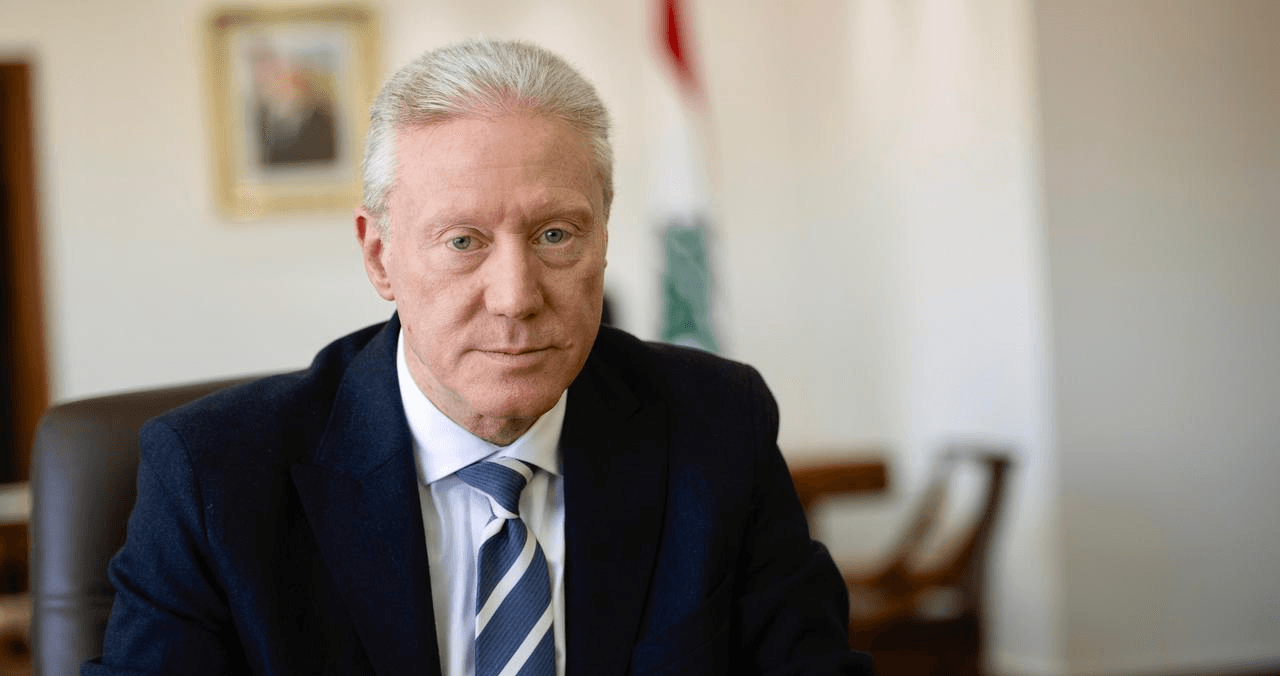
NNA - Foreign Minister, Youssef Raggi, on Wednesday said Lebanon, under the leadership of President Joseph Aoun and Prime Minister Nawaf Salam, had taken the "courageous decision" to begin direct negotiations with Israel aimed at securing a full and permanent ceasefire and the liberation of all Lebanese territory.


Speaking at the second ministerial conference on peacekeeping in the Francophone world in Rabat, Raggi said the talks seek to ensure full Lebanese sovereignty and establish "a state free from foreign occupation and any illegal armed organization."


Raggi also stressed the need to revive UN peacekeeping operations despite growing international challenges, including Security Council paralysis, financing difficulties and hybrid warfare.

He paid tribute to UNIFIL forces in south Lebanon and outlined priorities including stronger regional peacekeeping capacities, realistic mandates and greater investment in conflict prevention.
 
you didn't answer the question:


You say it was the responsibility of the state of Lebanon to act against the Israeli invasion. But they didn't, did they?
MOD EDIT

Non-state actors and foreign proxies are considered as terrorists by international community. Such actors do not follow any constitution and law, and they are no recognition by the international law either.

These terrorist groups consist of criminals who kill others with impunity just based on their own liking or disliking. Hezbollah is no different. It falls under every definition of a terrorist group. It doesn't really matter if the Lebanese government acted against the Israeli invasion or not. That cannot be used to legitimize a terrorist group that has killed more innocent Muslims than enemy Zionist soldiers.

Again it's the time for international community to help the state of Lebanon in restoring its sovereignty by dismantling Hezbollah. This terrorist group is a source of regional instability and killings.

MOD EDIT
 
Last edited by a moderator:
Israeli Channel 14 described war developments in South Lebanon as "a very difficult day as security incidents and battlefield engagements continue."

Hezbollah has continued its retaliatory operations against Israeli enemy assets and soldiers, affirming with every operation that it is in defense of Lebanon and its people, and in response to "Israel's" violations of the ceasefire and attacks, which are leading to the martyrdom and injury of many.

Earlier today, the Israeli occupation army spokesperson confirmed the death of a deputy company commander with the rank of major from Battalion 7008 of Brigade 551, who was killed in southern Lebanon.

According to Israeli Army Radio, a Hezbollah fighter opened fire on the officer in the Al-Qawzah area earlier today, killing him instantly before leaving the area.

Israeli Kan Channel reported that the shooting occurred only 2.5 kilometers from the border area that the Israeli occupation falsely claims is under its control.

#Lebanon #SouthLebanon #LebanonUnderAttack


To view this content we will need your consent to set third party cookies.
For more detailed information, see our cookies page.
 
To view this content we will need your consent to set third party cookies.
For more detailed information, see our cookies page.


Hezbollah targeted 3 Iron Dome launchers in the past 24 hours

To view this content we will need your consent to set third party cookies.
For more detailed information, see our cookies page.


this one is a decoy
 
To view this content we will need your consent to set third party cookies.
For more detailed information, see our cookies page.
 
Commander of IDF 401st Division injured along with other IDF terrorists in precise Hezbollah FPV drone strike

To view this content we will need your consent to set third party cookies.
For more detailed information, see our cookies page.


The previous commander of this division was killed by Hamas in Jabalia
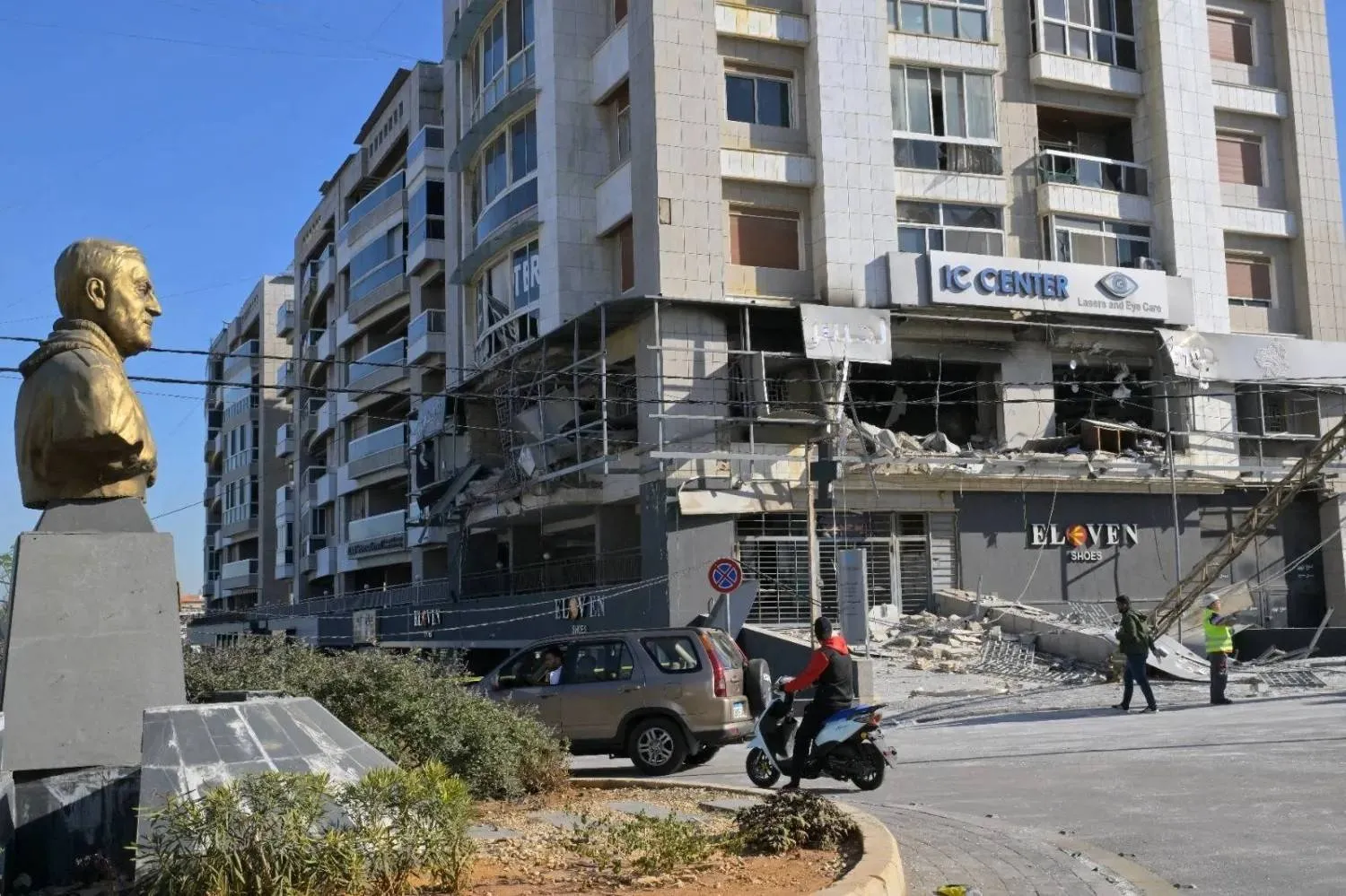
the IDF's 401st Brigade Commander was critically wounded this morning when a FPV drone struck the front entrance of a building in Debl, 2 other IDF terrorists were injured in the same strike

In a separate strike, 7 IDF terrorists were injured (1 seriously injured) in a Hezbollah FPV strike in south Lebanon today

To view this content we will need your consent to set third party cookies.
For more detailed information, see our cookies page.
 
To view this content we will need your consent to set third party cookies.
For more detailed information, see our cookies page.


To view this content we will need your consent to set third party cookies.
For more detailed information, see our cookies page.


To view this content we will need your consent to set third party cookies.
For more detailed information, see our cookies page.
 
To view this content we will need your consent to set third party cookies.
For more detailed information, see our cookies page.


To view this content we will need your consent to set third party cookies.
For more detailed information, see our cookies page.


To view this content we will need your consent to set third party cookies.
For more detailed information, see our cookies page.

I love when they run
 

Lebanon: Truce Gradually Draws South Beirut Residents Back Home

A branch of Al-Qard Al-Hassan in Beirut’s southern suburbs after it was hit by an Israeli strike during the 2024 war (File photo, Asharq Al-Awsat)

A branch of Al-Qard Al-Hassan in Beirut’s southern suburbs after it was hit by an Israeli strike during the 2024 war (File photo, Asharq Al-Awsat)
06:20-21 May 2026 AD ـ 04 Thul-Hijjah 1447 AH


Residents are gradually returning to Beirut’s southern suburbs after a ceasefire agreement was extended for six weeks, three months after they were displaced from the area, and after the suburbs were largely spared Israeli bombardment during the truce.

Residents say they have no choice but to return after experiencing the hardship of displacement and a sense of joblessness.

The return to the southern suburbs began early this week, although residents told Asharq Al-Awsat that complete reassurance remains absent. They said returning to livelihoods and homes had become necessary, driven by the need to restore the rhythm of daily life.

Livelihoods reopen doors

In an area where a large part of the population depends on self-employment and small shops, restoring livelihoods has become essential to restarting life itself.

Ali Zeineddine, a father of two and the owner of a clothing shop in Beirut’s southern suburbs, said, “People are returning because they have work, a business, or a source of income. Today, the return is tied more to earning a living than to feeling reassured.”

He said owning the shop helped him reopen at a time when many others faced difficulty returning because of rent burdens and losses. But reopening did not mean life had fully returned to what it was before.

“There is movement, but it is timid. There is buying and selling on a limited scale, but it helps cover part of the family’s expenses,” he said.

He added that the pattern of life itself had changed after the war.

“Before the war, we used to work until late at night. Today, I open in the morning and close earlier, before sunset, because people’s movement has changed. Many come down during the day and then leave in the evening, so the night is no longer what it used to be.”

He said the overall scene still reflects a gradual return rather than full stability. “People are trying to restore their lives with what is available, but no one is acting as if everything has returned to normal.”

A long wait

Wissam Shehab, the owner of a vegetable shop and a father supporting a family of five, had not initially planned to return quickly, but found himself facing a different reality as time passed.

“We returned because my source of income is here. My shop is in the southern suburbs, and it is how I live and support my family. At first, we thought the displacement phase would be short and that it only needed some time. But when the period began to drag on, it was no longer possible to keep life suspended,” he said.

He added that keeping the family in an open-ended state of waiting would make matters more complicated, both economically and psychologically. That is why he decided to return and settle in his home again.

But the return did not lead him to rule out other possibilities. “We kept our place of displacement in Mount Lebanon as it is, in case of any new developments. It is true that we returned and settled in the southern suburbs, but no one feels that conditions have become fully settled,” he said.

Shehab said the feeling of insecurity was no longer tied to one particular area. “The southern suburbs today appear relatively spared, but insecurity has become a general condition people feel wherever they are.”

Return does not end displacement

By contrast, Umm Hassan Harqous and her family have not yet decided to return fully. The family still moves between the southern suburbs and Bchamoun, where they are currently displaced.

She said she goes down to the suburbs during the day and leaves before sunset, because, for her, returning does not simply mean opening the house door for a few hours.

She explained that the reasons for delaying the return are not only security concerns but also the loss of the source of income on which the family had depended. The grocery shop that had provided its main income became a means of survival during the war, after the family relied on the food items inside it during the displacement period.

“We lived on what was in the shop, and we gradually consumed its contents during the war so we could continue,” she said.

“How can a person return and settle if their very source of livelihood has stopped? Return is not just about a home. People need work and a life they can sustain,” she added.

She said members of her family had also suffered professional and livelihood losses, making the decision to return fully more difficult.

Institutions wait, individuals return

Sawsan Ammar, a teacher at a school in Beirut’s southern suburbs, said schools located deep inside the suburbs, including the one where she works, have not yet reopened due to concerns about the safety of students and teaching staff.

“There is no need to take risks while instability continues,” she said.

She noted that educational institutions differ by nature from individual businesses. “It is not about one person making a decision for themselves, but about hundreds of students and employees.”

Home is less harsh than displacement

On the other side, Hassan Maatouk sums up another aspect of the scene. The man, who had been living with his family in a school designated for displaced people, decided to return home despite realizing that fears remain.

“Returning home, even with a relative risk, remains better than staying in a state of continuous displacement,” he said.

He added that the long period of displacement had left a deep psychological impact. “When a person lives for a long time outside their home, they feel as if they are living a temporary life, as if they are a guest in a place that is not theirs.”

“No one can say they returned because they are no longer afraid, but people grow tired of the life of waiting itself,” he said.
 

Users who are viewing this thread

Pakistan Defence Latest

Back
Top