Lebanon-Israel War | 2023-present

Hezbollah fighter kills IDF platoon commander and injures another IDF terrorist in south Lebanon (6km from border)

According to an IDF probe of the incident, at around 2 a.m., Golani terrorists encountered a Hezbollah fighter as they illegally entered a building in the village of Deir Siryan, south Lebanon. During the clash, the IDF platoon commander was killed and another terrorist was lightly hurt.

The Hezbollah fighter left the location safely.
 
From a military tactical perspective and imho, they only need atgms, fpv drones and man pads. Rockets are useless for them given their poor accuracy and the level of resources they eat up relative to their success, and the same with artillery. Precision of delivery has to be the name of the game now. Pure precision. Why waste time and money(they are very expensive compared to FPV's) on long range rockets, when they are nothing but glorified firecrackers with no accuracy at all ?
They can put pressure on northern israel which would put political pressure on israeli leadership to end the war
 
They can put pressure on northern israel which would put political pressure on israeli leadership to end the war
No, that would pressure Israel to intensify the war against Hezbollah.
How is it you don't understand how these things work?
 

Full Text: Trilateral Israel-Lebanon-US Agreement, June 26, 2026


Israel's Prime Minister Benjamin Netanyahu explains the terms of the trilateral framework agreement between Israel, Lebanon and the US. June 26, 2026
Photo Credit:
Israel Prime Minister's Office (PMO)

By: Hana Levi Julian
June 28, 2026 – 13 Tammuz 5786

Following is the full text of the US-brokered trilateral agreement signed on Friday (June 26) between Israel, Lebanon and the United States.

The Government of Israel and the Government of Lebanon, with the full support of the United States under President Donald J. Trump, affirm their shared goal of achieving lasting peace and security. As reflected in this Trilateral Framework (“Framework”), and through future agreements, the two countries declare their ambition to end conflict between them, ensure the sovereignty and security of both countries, and establish peaceful neighborly relations between the two countries.

1. Israel and Lebanon affirm the right of each state to exist in peace, and their mutual desire to live in security as neighboring sovereign states. Israel and Lebanon hereby declare their intent to conclusively end the conflict, address its underlying causes, and to therewith formally conclude any state of war between them. This Framework, reached after multiple rounds of direct negotiations between the parties, builds upon previous successful agreements and understandings, and expresses a determination to make irreversible progress towards the comprehensive resolution of all issues between the two countries. Both countries affirm their intention to resolve these issues as sovereign states through direct bilateral negotiations, with the mediation and support of the United States.

2. The Government of Israel and the Government of Lebanon commit to a reciprocal, sequenced process, with clear conditions, whereby the LAF will restore effective sovereign authority over all Lebanese territory, pending the verified disarmament of non-state armed groups and dismantlement of associated infrastructure, enabling the Israel Defense Forces (IDF) to progressively redeploy out of the Lebanese territory. The components of this process will be detailed in a Security Annex, developed with the full support of the United States, that will complement this Framework. The Framework will set out the requisite measures, security arrangements, and verification mechanisms to advance this process. Successful implementation of this Framework will pave the way for a stable and peaceful relationship between the two countries and will enable the IDF to redeploy out of the Lebanese territory.

3. Pursuant to the Security Annex, and as part of the broader effort toward the Lebanese state’s monopoly of arms and sovereign territorial control, the LAF will gradually assume full and effective security responsibility in pilot zones, which will serve as the mechanism for phased and verified redeployments of the IDF and the deployments of the LAF. Two initial zones have been agreed to by the IDF and the LAF, and future pilot zones will also be agreed upon by mutual consent. Upon the confirmation of successful disarmament of non-state armed groups and dismantlement of their infrastructure in these zones, the LAF will assume full and effective security responsibility in these zones, internationally supported reconstruction efforts will begin, and Lebanese civilians will be able to safely return to these areas under the exclusive control of Lebanese state authorities. The United States intends to work closely with both countries to verify and support this process.

4. The Government of Lebanon reaffirms its resolute and irreversible commitment to restoring and exercising full sovereignty over all its territory. The Government of Lebanon will rebuild the State’s monopoly on the use of force, achieve the complete and verified disarmament of all non-state armed groups, and ensure that such groups will have no military or security role and no armed capabilities anywhere in Lebanon. The Government of Lebanon herewith requests the support of international and particularly Arab partners, under the leadership of the United States, to achieve this outcome.

5. The Government of Israel stresses that its military actions in Lebanon are solely a consequence of the attacks, threat posed by, and hostile intent of non-state armed groups, particularly Hizballah. The Government of Israel underscores that the termination of this threat, through the disarmament and dismantlement of such groups in all of Lebanon and additional security arrangements to be agreed upon between the two countries, will eliminate any future need for IDF military action or presence in Lebanon. Pursuant to the above, the Government of Israel declares that it has no territorial ambitions in Lebanon.

6. The Government of Lebanon, in accordance with the Charter of the United Nations and in exercise of its sovereign authority, reaffirms that its security forces hold exclusive responsibility for Lebanon’s security and defense and that the Government of Lebanon holds the exclusive sovereign authority to make war and peace. The Government of Lebanon rejects the claims of any state or non-state actor to use force on its behalf without its explicit authorization, and reiterates that any claim by any state or non-state actor to exercise a military or security role is illegal per the decisions of the Lebanese Government and contrary to Lebanese national interests.

7. The Government of Lebanon and the Government of Israel affirm that nothing in this Framework prevents them from exercising their inherent right to defend themselves, as recognized in the Charter of the United Nations and consistent with applicable international law, reaffirming that no third party may exercise that right on their behalf. Both governments commit to establishing a military coordination group, with U.S. support and participation, to ensure overall implementation of this Framework.

8. The two countries affirm that they share the objective of a secure, rebuilt Lebanon, under full Lebanese state sovereignty, in which no non-state armed group poses a threat to Israel, Lebanon, or citizens of either country. Furthermore, the two countries recognize that the restoration of security in South Lebanon through the deployment of the LAF, the safe return of its civilian population, and the security of Israel’s northern communities, are essential to long-term stability and peace.

9. The Government of Lebanon commits to a rigorous, performance-based program to enable the capacity of the LAF to assert full military and security control within Lebanon in accordance with security arrangements, agreed upon within the framework of negotiations, and to implement the disarmament of all non-state armed groups and exercise effective authority across Lebanon. The Government of Lebanon welcomes the readiness of the United States to support such efforts, recognizing that any new U.S. assistance will be strictly conditioned on verifiable milestones, full transparency, demonstrated results, and ongoing oversight. This effort will enable the safe and orderly re-establishment of Lebanese sovereignty, also contributing to the broader stability and security of the entire Middle East.

10. Separately, and simultaneously, the United States will rally international partners to actively support the Government of Lebanon in rebuilding the country, repairing infrastructure, restoring the economy, and creating opportunities for prosperity. This is expected to include mobilizing substantial reconstruction and humanitarian assistance for Lebanon, economic recovery programs, and investment initiatives so that Lebanon can recover from years of conflict and provide a better future for all its citizens.

11. Lebanon and the United States commit to preventing funds from flowing to any entity, organization, or individual affiliated with non-state armed groups and to take available legal measures to proscribe the activity of any such entity, organization or individual. The Government of Lebanon explicitly commits to prevent reconstruction funds from flowing to non-state armed groups and connected entities.

12. Upon the signing of this Framework, the two countries will work to establish working groups to draft the full comprehensive peace and security agreement. Moreover, to achieve the goals of the Framework, the two governments will immediately establish complementary tracks of ongoing direct engagement, facilitated by the United States. The two governments commit to proceeding in good faith until a full and lasting peace is achieved, bringing security, stability, and prosperity to the people of Israel and Lebanon.

13. In line with their shared goals to establish stable and peaceful relations, Israel and Lebanon commit to take good faith measures that demonstrate positive intent, including the cessation of all hostile or adverse actions in international political or legal fora, and pledge to work towards the search for and return of remains and the release of detainees.

14. The two governments acknowledge the role of the United States in supporting their efforts to end decades of conflict and establish lasting stability and comprehensive peace between the two countries and express their deep appreciation for the vision and leadership of President Donald J. Trump.

Signed at Washington DC on the 26th of June, 2026, in three originals, in the English language.
 
No, that would pressure Israel to intensify the war against Hezbollah.
How is it you don't understand how these things work?
I think this is the only time I actually agreed with you like ever the only way to defeat the idf at this point is to keep them bogged down with a constant stream of body bags.
 
What's happening between Hezbollah and IDF? Is their s current ceasefire or they still fighting?
 
What's happening between Hezbollah and IDF? Is their s current ceasefire or they still fighting?
An Israeli reservist was severely wounded in an explosion in southern Lebanon, the IDF said in a statement, adding that the soldier was hospitalized for treatment.
Well another soldier that’s never going back to war or probably live or live a normal life i actually hope these guys survive it’s more of a lasting effect weird they didn’t go into detail regarding this incident it was a quick byline in Haaretz
 
An Israeli reservist was severely wounded in an explosion in southern Lebanon, the IDF said in a statement, adding that the soldier was hospitalized for treatment.
Well another soldier that’s never going back to war or probably live or live a normal life i actually hope these guys survive it’s more of a lasting effect weird they didn’t go into detail regarding this incident it was a quick byline in Haaretz

What I mean to say was, we were getting multiple FPV strikes on IDF a few days/weeks ago and at the moment it seems silent

Is their a ceasefire or something
 
What I mean to say was, we were getting multiple FPV strikes on IDF a few days/weeks ago and at the moment it seems silent

Is their a ceasefire or something
Yes there is a "ceasefire" in Lebanon at the moment with Israelis trying to wriggle their way out of it.
 
ET32bJx2Z6IK3F1MDIozPGuwNRBc2wmyt0hAo0Hc.svg

Lebanon Back on Track

By David Hale

Much work lies ahead, but the June 26 agreement is a rare act of constructive statesmanship in the Middle East.

CvLK8QGImNW8yi83lX78e7kcF39e5ZTxuOg6yFDX.jpeg


Sat 27 Jun 2026 · 12:55Last updated on Sat 27 Jun 2026 · 12:58Beirut, Lebanon

President Aoun is rightly proud of his team that helped reach an agreement on June 26. Together, they have put the Lebanese state fully in charge of a realistic path to peace. It starts with linked and phased Israeli withdrawal, Lebanese Army deployment, and continued disarming of Hezbollah, but opens the door for immediate work on how to realize a shared Israeli and Lebanese ambition to establish peace. Much work lies ahead, but the June 26 agreement is a rare act of constructive statesmanship in the Middle East.

In contrast, Iran's interpretation of the Lebanon passages in its own MOU with the U.S. and subsequent behavior revealed for all to see its true intentions. We all know that when Iran talks about ceasefires, sovereignty and territorial integrity for Lebanon, they mean the exact opposite. They tried but could not succeed in convincing the U.S. administration to support a disorderly and unilateral Israeli withdrawal from southern Lebanon as a price for progress in the Persian Gulf. That outcome would have enabled their proxy and the 100 or more IRCG personnel in occupation of Lebanon to fill the vacuum, much like the withdrawal of 2000. Instead, the momentum has returned to an agreed, practical and phased approach that ensures the Lebanese Army and state, and not Hezbollah, fills in as the IDF pulls out, with international reconstruction aid.

Hezbollah's strident attack on the agreement even before it was published shows how threatening this approach is to them and Iran. Within hours, Hezbollah MP Hassan Fadlallah challenged the state, threatened to use arms, and incited civil strife. He criticized Lebanese leaders for signing an agreement with American support, ignoring the fact that Iran has also signed an agreement with the Great Satan. Hezbollah's opposition is affirmation that Lebanon and Israel are going in the right direction.

Lebanon is back on the right track, but the saga is not over. Iran will continue to try to meddle in Lebanon. It still has a hand on the spigot of violence in the south, even at much reduced strength. It will handle the spigot to serve its own interests, not Lebanon's. First, it will do all it can to defeat this agreement, primarily through violence and terrorism. Second, whenever it needs leverage in the U.S.-Iran negotiations over the Gulf and nuclear file, violence in Lebanon will serve as pressure, a distraction, or way to create tension between Israel and Washington. Lebanese know this old and dispiriting pattern all too well; whenever Hafez al-Assad wanted attention or to escape pressure, he would turn the heat up in Lebanon and then get "rewarded" with lavish American diplomatic engagement.

American, Lebanese, and Israeli leaders are showing their intent to avoid that trap. They are on the right path for Lebanese-Israeli stability, potentially opening a new chapter for these two peoples who have suffered from foreign use of Lebanon as a playground for their own conflicts and ambitions. Now is the time for swift implementation on the many encouraging elements of the June 26 document. As President Aoun rightly said, Lebanon is not a bargaining chip. It has been many decades since a Lebanese president not only would or could say that. Now, it is a statement of truth. All those who want to put the decades-long cycles of violence suffered by Lebanon and Israel need to build on this remarkable breakthrough. The choice for Lebanese is clear: continue with Iran's policy of using Lebanon to fight its war with Israel, or join in a Lebanese strategy for peace.


David Hale is a contributor at This is Beirut and former U.S. Under Secretary of State for Political Affairs who also served as ambassador to Lebanon, Jordan, and Pakistan, as well as special envoy for Middle East peace.
 
original.png

Berri vows tough opposition to framework deal, urges Salam to pull out

by Naharnet Newsdesk 7 hours ago

W460

Parliament Speaker Nabih Berri has warned that he and a large parliamentary bloc will strongly oppose a framework accord recently signed between Lebanon and Israel.

"They have entangled themselves in a major ordeal. If they believe this agreement will pass through constitutional institutions, they do not realize they will be facing Nabih Berri and a large parliamentary bloc. In the past, they faced Najah Wakim and Zaher al-Khatib, but today they will face me alongside a very large number of MPs," Berri was quoted as saying by visitors, in a report published Tuesday in the pro-Hezbollah al-Akhbar newspaper.

According to the daily, Berri advised Prime Minister Nawaf Salam to "back out of the agreement" when the latter called to thank him for calming the public and preventing people from taking to the streets.

Salam reportedly told Berri he is flexible, to which Berri replied: "Then back out of this agreement."

Berri warned again against internal strife, accusing "those who drafted the agreement of wanting to ignite discord." "I do not want strife, and I am applying pressure to prevent an explosion," he was quoted as saying, adding that even Hezbollah is seeking calm. "But they insist on moving forward with an agreement that is worse than the May 17 Agreement... They want strife."

According to Berri, the agreement aims to obstruct the U.S.-Iran deal, which he noted has entered a difficult phase amid disagreements between the U.S. and Israel, as well as within the U.S. administration between Marco Rubio and JD Vance. "I fear the region might pay the price for internal American friction, as well as American-Israeli friction," he warned.

Berri also cautioned against any moves targeting the military or its leadership. "If they touch the army or its commander, we will never remain silent," he vowed.
 

Aoun Optimistic on ‘Best Possible’ Deal for Lebanon, Banks on US Role

In this photo, released by the Lebanese Presidency press office, Lebanese President Joseph Aoun, right, shakes hands with Adm. Brad Cooper, the top US military commander in the Middle East, at the presidential place in Baabda, east of Beirut, Lebanon, Monday, June 29, 2026. (Lebanese Presidency press office via AP)

In this photo, released by the Lebanese Presidency press office, Lebanese President Joseph Aoun, right, shakes hands with Adm. Brad Cooper, the top US military commander in the Middle East, at the presidential place in Baabda, east of Beirut, Lebanon, Monday, June 29, 2026. (Lebanese Presidency press office via AP)
17:19-30 June 2026 AD ـ 15 Muharram 1448 AH

In one phrase, Lebanese President Joseph Aoun answers critics of the framework agreement Lebanon and Israel signed late last week, an agreement he admits is “not ideal”, “Give me the alternative.”

For more than three years, Lebanon has been reeling from the fallout of Hezbollah’s successive “support” wars, first for Gaza in late 2023 and then for Iran on March 2 in wake of the war with the United States and Israel. Still, visitors to Aoun come away with a clear impression that the president is optimistic about the path opened by the agreement.

A senior Lebanese source said the reality created by those wars has added to Lebanon’s burden. Beirut had been negotiating over Israel’s withdrawal from five hills it occupied in the first round.

It then found itself negotiating under fire and occupation, as Israel’s presence expanded to the outskirts of Nabatieh in the east and Tyre on the coast, seizing Bint Jbeil in between.

The source placed direct responsibility for the war on Hezbollah. “Had it not been for its six rockets, which it fired last March, we would not be in this position today,” the source said.

The agreement is the result of facts imposed by the battlefield and by Lebanon’s condition as it buckles under rising human and material losses, with no clear path to a solution, it added.


A framework, not yet an agreement

Still, the source insisted the agreement “is not bad. More precisely, it has not become an agreement yet. It is a framework agreement that sets broad guidelines, pending the fine details that will be negotiated gradually.”

Lebanon is betting on the new US momentum to press Israel into making concessions on those details, it continued.

The clearest sign that the agreement is not bad, according to the source, “was Israel’s fierce rejection of it at first. That rejection would not have turned into approval without the major US pressure applied in the final hours before signing.”

The second sign was how quickly Israeli leaders moved to craft their own version of the agreement, “which has nothing to do with the truth,” the source said.

“Ninety percent of what Israeli Prime Minister Benjamin Netanyahu said is not true,” it stressed.


1635446.jpeg
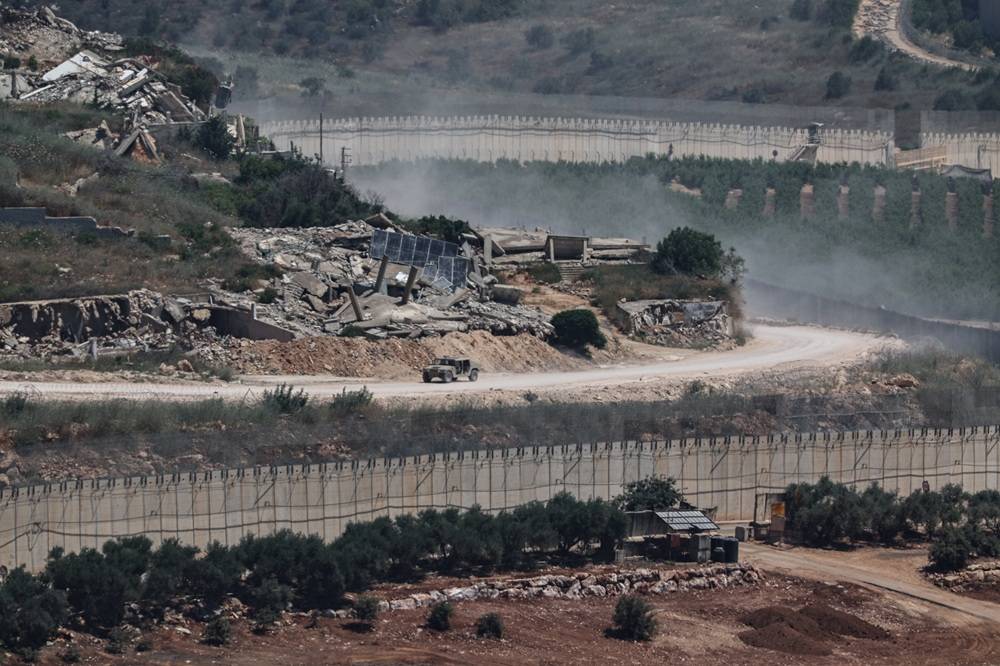
An Israeli military vehicle maneuvers on the Lebanese side of the Israel-Lebanon border, as seen from the Upper Galilee, 28 June 2026, amid an Israel-Lebanon ceasefire. (EPA)


US support

Lebanon sees clear US support as its best weapon against Israel’s lack of interest in a solution and its tilt toward constant escalation.

The strongest proof, Lebanese officials believe, is that US President Donald Trump has called Aoun twice so far. Both calls were highly positive, as were calls from other US officials who contacted Aoun more than once, including Vice President JD Vance and Secretary of State Marco Rubio, who remained in continuous contact with him.

The source asked: Can Lebanon afford to risk losing US support when everyone knows the Americans are the only party able to exert real pressure on Israel?

The source said Trump, in his latest call with Aoun, was very clear in adopting Lebanon’s demands for a full Israeli withdrawal “despite the disruptions.”

Trump also expressed readiness to help revive Lebanon and put it back on track. That track includes the return of displaced people, reconstruction, and extending state authority through its own forces across all Lebanese territory, a Lebanese demand above anyone else’s.


The Doha cell and a Hezbollah representative

The Americans are closely tracking developments in Lebanon.

Although Washington is separating what is being agreed on in the Pakistan with Iran track from the Lebanese-Israeli track, it is working in parallel on the Lebanese file. That includes setting up the cell provided for in the US-Iranian understanding to monitor the ceasefire in Lebanon.

The source said the committee would operate from a liaison point in the Qatari capital, Doha. It would include representatives of the United States, Lebanon, Qatar and Iran, as well as Hezbollah, likely the group’s representative in Tehran.


1635444.jpeg
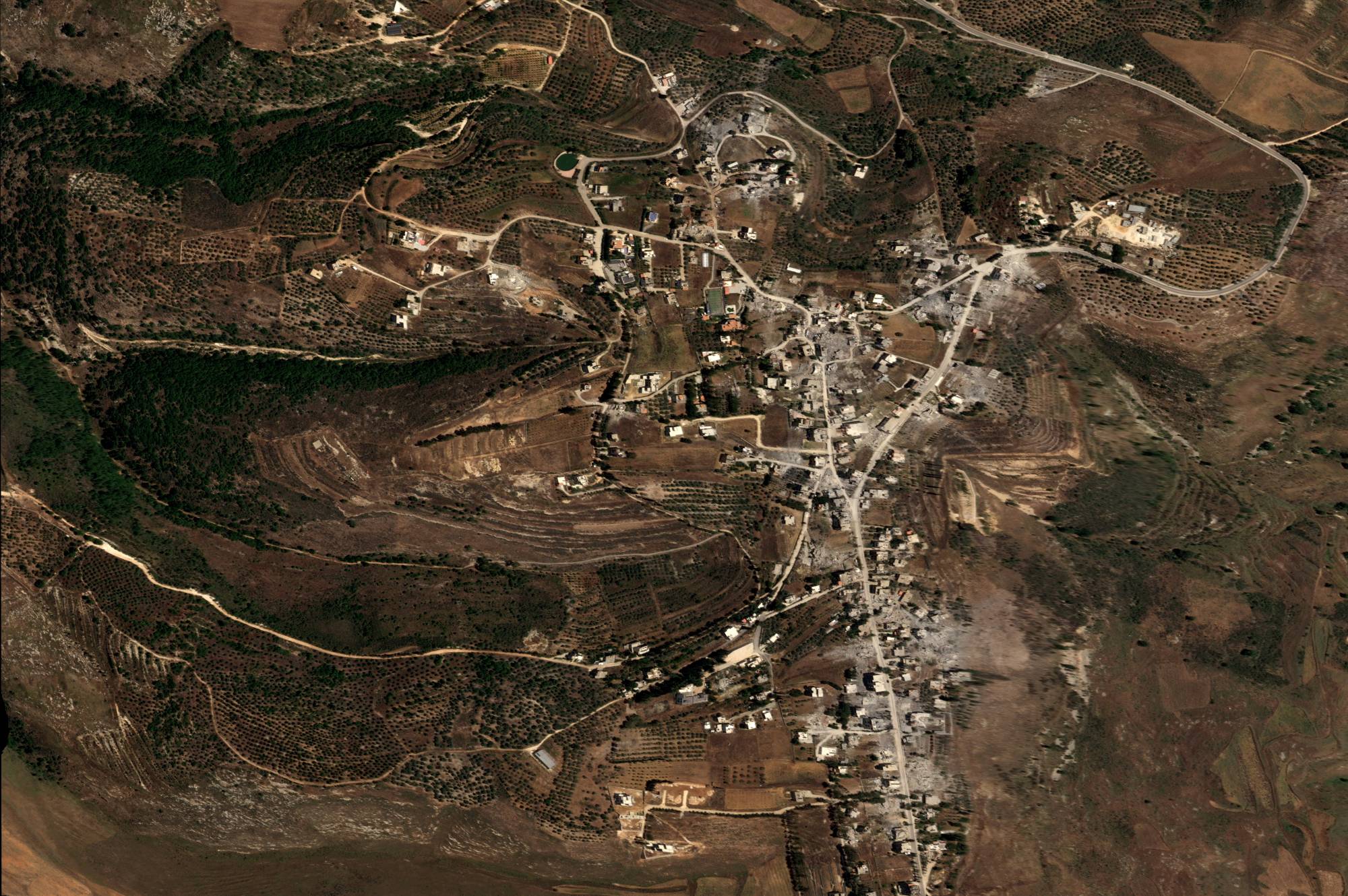
A satellite image shows the village of Froun in Lebanon, June 24, 2026. (Pléiades Neo © Airbus DS 2026/Handout via Reuters)


Ali al-Taher

When practical negotiations over the withdrawal began, Aoun proposed starting with an Israeli pullback from Kfar Tibnit and the historic Beaufort Castle, the last point reached by Israeli forces in their advance. The aim was to push Israeli forces away from Nabatieh after they had reached the city’s outskirts.

But the proposal collided with Israel’s determination to reach the Ali al-Taher heights, believed to contain a massive underground Hezbollah military facility.

Aoun called Rubio and proposed that the Lebanese army enter the area, while the Israeli army would withdraw beyond the Litani River. Rubio contacted the Israelis. Aoun, through intermediaries, contacted Hezbollah.

Israel approved the proposal. Hezbollah gave two contradictory answers. The first allowed the army to deploy without entering the facility. The second rejected the idea completely.

Later, Hezbollah settled on one answer: the matter was absolutely unacceptable. The proposal collapsed.

The area’s importance goes beyond Hezbollah’s facility. If Israeli forces position themselves there, they would directly overlook Nabatieh. From the other side, the heights overlook Israeli settlements, especially Metula, just a few kilometers from Nabatieh.

The idea of a withdrawal from that area was shelved. Instead, the focus shifted to another pullback from Zawtar al-Gharbieh and to the launch of a “pilot zone” there and the towns of Froun and Ghandourieh in the central sector.

That was the middle-ground solution. A withdrawal from the coastal line falls under the same equation because of its proximity to the southern border and, therefore, its high sensitivity for Israel.
 

Lebanon’s Return to Its People

Yusuf-Aldayni.png

Yousef Al-Dayni Tuesday - 30 June 2026

The situation in Lebanon cannot be reduced to the existence of a state within the state, Hezbollah's weapons, and its discourse hostile to the logic of the state. It extends to legitimizing Lebanon’s oscillation between being subordinate to Iran and being transformed into an inherent element of the Iranian body politic, and silence over Israel's violation of its southern borders, as though Lebanese territories were a field for deterrence under the pretext of Israel's security.

Despite the catastrophic condition in Lebanon, the deeper threat goes beyond security and the economy: living with the damage that has afflicted it for decades by treating Hezbollah as a subordinate of Iran or a representative of Lebanon that may be targeted, and by turning this damage into a "fait accompli" that must be managed. Here, the most basic idea is meant to die: Lebanon is a sovereign state, not an experimental arena for the projects of others.

The story of the settlement with Iran - into which Lebanon is being forced by reducing it to Hezbollah - must not be lost amid the crush of deadlines. Any new American-Iranian understanding should not be read only through the window of the nuclear program, or sanctions and the security of navigation in the Strait of Hormuz. More dangerously, the agreement could constitute implicit recognition of Iran's right to operate proxies in sovereign Arab countries under the pretext of the unity of arenas. Meanwhile, the Iranian crisis has revealed that the Middle East is one arena whose struggles are inseparable from the chaos of interference in sovereign states, and from Israeli arrogance as well.

Including Lebanon in any agreement through Hezbollah is dangerous for the region. It cannot be legitimized no matter how powerful the urge to escape it may be. This means turning Beirut, and perhaps other capitals later, into Iranian bargaining ships. Sovereign states will thereby lose the ability to make decisions of war and their monopoly on violence, two of the most important pillars of the modern concept of the state. This negotiating shortcut is troubling, not merely as conduct, but even as political language, because it is asking to Iran to provide guarantees regarding Hezbollah's behavior instead of ending its subordination.

Lebanon’s fragility allowed Iran and Israel to turn it into a proxy battlefield. This fragility did not begin on October 7, 2023; it goes back to the Cairo Agreement of 1969, which legitimized the Palestine Liberation Organization's violation of Lebanon’s sovereignty and opened the gates to the chaos of arms outside state control. When Israel invaded Lebanon in 1982 to expel the PLO, a more complex and more deeply embedded Iranian proxy in Lebanon was born.

Since the 1982 invasion, then the 2006 war, and up to the escalation after October 7, belligerence and attempts to erase these entities have proved unrealistic. It is true that Israel can limit Hezbollah's arsenal, eliminate its leaders, and strike its military structures. It cannot, however, reclaim Lebanon or build the state. Indeed, excessive and futile strikes are a kiss of life to the party's narrative.

The paradox is that speaking of the arms as part of the Iranian body is an illogical shift after the functional failure of these entities. Tehran long bet that Hezbollah, the Iraqi militias, the Houthis, and Hamas were its forward lines of defense. But the recent wars proved that those arms are no longer capable of producing deterrence as Tehran had imagined it. Hamas emerged exhausted, Hezbollah received painful blows that reached its most important leaders, and the remaining arms hovered at the margins and limits of the desire to survive.

What remained was the real damage that states continue to endure to this day: these entities replaced the function of deterrence with the aggravation of domestic crises and the obstruction of the state. This explains Hezbollah's ability to stand as a stumbling block all these years in the project of restoring the Lebanese state.

The realist political discourse effectively calls for mortgaging Lebanon, in all its diversity and capacities, to remain captive between Iranian subjugation and Israeli arrogance. Any negotiation that consolidates this state of affairs would have consequences for the region. It is very true that disarming Hezbollah will be extremely arduous. However, the difficulty of the task does not justify surrender, nor becoming preoccupied with the symptoms of an incurable disease on the pretext that there is no cure.

It is not enough to demand that Iran and Israel leave Lebanon alone or respect its sovereignty. More importantly, Lebanon must stop being part of Tehran's sphere of influence in the Iranian agenda, and it must stop being an explosive buffer zone in the Israeli agenda.

With the fragile agreement, war and its tragedies are no longer the most dangerous challenges of the day after; it would be even more dangerous for the world to normalize these political deformities that violate the sovereignty of states and gamble with the destinies of people and countries.
 

Users who are viewing this thread

Country Watch Latest

Back
Top