Navigation
Install the app
How to install the app on iOS
Follow along with the video below to see how to install our site as a web app on your home screen.
Note: This feature may not be available in some browsers.
More options
Style variation
You are using an out of date browser. It may not display this or other websites correctly.
You should upgrade or use an alternative browser.
You should upgrade or use an alternative browser.
Made in KSA
- Thread starter The SC
- Start date
More options
Who Replied?

The SC
INT'L MOD
- Thread starter
- #1,173
The Naval Forces floated “His Majesty the King’s Ship Medina,” the first ship of the second phase of the “Sarawat Project,” in a shipyard in Spain, after the end of the phase of building and assembling the ship’s hull, in preparation for installing and integrating the systems and conducting acceptance tests in the port and sea trials.
The floating of the Corvette Medina (838) represents a new stage in the process of building the Royal Saudi Naval Force. It is an integrated combat system that embodies the development of Saudi naval thought and its transition towards the era of smart multi-mission platforms.
With its expected addition to the Kingdom’s fleet, this ship will constitute a qualitative addition to the capabilities of the Saudi Navy, with its advanced sensor systems, diverse armament, and integrated capabilities in air defense, surface warfare, and anti-submarine warfare, to be able to operate in various maritime environments and face changing challenges.
Medina 838 is a symbol of a new phase. A stage in which industrial expertise, advanced technology, and national ambition converge to build a modern naval force capable of protecting the Kingdom’s strategic interests and securing its vital sea lanes.
From the building basins to the vastness of the sea... Medina 838 sails carrying the name of an eternal city, and the spirit of a fleet heading steadily towards the future.
It is noteworthy that the news indicated that "a program is currently being implemented to build another five multi-mission naval ships for the Royal Saudi Navy", which aims to enhance the participation of local industry and reach advanced national capacity in building warships within the Kingdom.
The importance of this reference lies in the fact that it reflects that the program has entered the actual implementation phase, suggesting that its transition from the framework of understandings to more advanced industrial stages is approaching, in a step that enhances the path of localization in the defense maritime sector.
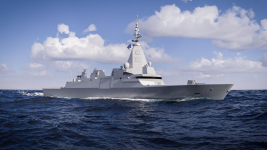
The floating of the Corvette Medina (838) represents a new stage in the process of building the Royal Saudi Naval Force. It is an integrated combat system that embodies the development of Saudi naval thought and its transition towards the era of smart multi-mission platforms.
With its expected addition to the Kingdom’s fleet, this ship will constitute a qualitative addition to the capabilities of the Saudi Navy, with its advanced sensor systems, diverse armament, and integrated capabilities in air defense, surface warfare, and anti-submarine warfare, to be able to operate in various maritime environments and face changing challenges.
Medina 838 is a symbol of a new phase. A stage in which industrial expertise, advanced technology, and national ambition converge to build a modern naval force capable of protecting the Kingdom’s strategic interests and securing its vital sea lanes.
From the building basins to the vastness of the sea... Medina 838 sails carrying the name of an eternal city, and the spirit of a fleet heading steadily towards the future.
It is noteworthy that the news indicated that "a program is currently being implemented to build another five multi-mission naval ships for the Royal Saudi Navy", which aims to enhance the participation of local industry and reach advanced national capacity in building warships within the Kingdom.
The importance of this reference lies in the fact that it reflects that the program has entered the actual implementation phase, suggesting that its transition from the framework of understandings to more advanced industrial stages is approaching, in a step that enhances the path of localization in the defense maritime sector.

_Arabia_
Trusted Member

The Naval Forces floated “His Majesty the King’s Ship Medina,” the first ship of the second phase of the “Sarawat Project,” in a shipyard in Spain, after the end of the phase of building and assembling the ship’s hull, in preparation for installing and integrating the systems and conducting acceptance tests in the port and sea trials.
The floating of the Corvette Medina (838) represents a new stage in the process of building the Royal Saudi Naval Force. It is an integrated combat system that embodies the development of Saudi naval thought and its transition towards the era of smart multi-mission platforms.
With its expected addition to the Kingdom’s fleet, this ship will constitute a qualitative addition to the capabilities of the Saudi Navy, with its advanced sensor systems, diverse armament, and integrated capabilities in air defense, surface warfare, and anti-submarine warfare, to be able to operate in various maritime environments and face changing challenges.
Medina 838 is a symbol of a new phase. A stage in which industrial expertise, advanced technology, and national ambition converge to build a modern naval force capable of protecting the Kingdom’s strategic interests and securing its vital sea lanes.
From the building basins to the vastness of the sea... Medina 838 sails carrying the name of an eternal city, and the spirit of a fleet heading steadily towards the future.
It is noteworthy that the news indicated that "a program is currently being implemented to build another five multi-mission naval ships for the Royal Saudi Navy", which aims to enhance the participation of local industry and reach advanced national capacity in building warships within the Kingdom.
The importance of this reference lies in the fact that it reflects that the program has entered the actual implementation phase, suggesting that its transition from the framework of understandings to more advanced industrial stages is approaching, in a step that enhances the path of localization in the defense maritime sector.
View attachment 202367
Is there anything that prevents Saudi Arabian shipyards from helping build and assemble this ship back in KSA or was it a part of the deal with Navantia/Spain that it should take place in Spain (local workers etc.) when the deal was signed many years ago?
Do we know the degree of ToT in details?
I read that Saudi Arabian engineers have taken part in the work in Spain.
KSA has a developing shipbuilding industry that has been increasing steadily in recent years (past 10 years) and taken great leaps.
It would be great if we could negotiate deals that stipulated production within KSA but I believe that most defense firms will never agree to this.
Local private and public defense firms have come a LONG way in such a short time just looking at the updates on page 78 in this thread alone and the general development across the board.
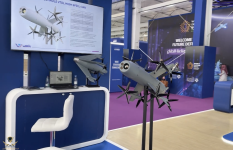
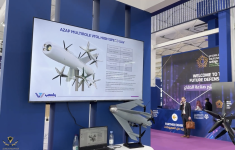
Extremely curious to see what the end results will be of this cooperation and if it will be a truly cost-benefit result.The Kingdom of Saudi Arabia is moving to enhance its defense and manufacturing capabilities in the field of drones, through a new partnership that brings together an American start-up company with a Saudi company to develop a specialized factory near Riyadh. This step comes at a time when the Middle East is witnessing an escalation in reliance on drones, because modern warfare has become increasingly dependent on low-cost, high-impact unmanned systems.
The project also reflects the growing defense cooperation between Washington and Riyadh, as the Kingdom seeks to localize military industries and develop regional deterrence capabilities within a long-term strategic vision.
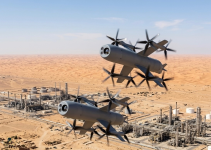
Saudi Arabia has moved to build its own industrial-scale fleet of long-range one-way attack drones as the U.S.-Saudi joint venture SR2Vector began constructing a production facility near Riyadh for the SkyWasp UAV, according to Semafor on May 25, 2026. The program signals a major shift in Gulf military planning toward sustained attrition warfare and mass drone strike capability, giving Riyadh a domestically produced platform designed to overwhelm air defenses and maintain pressure on critical infrastructure during prolonged regional conflict.
The SkyWasp mirrors the operational logic of Iran’s Shahed-136 with a 1,500 km strike radius, low-cost delta-wing design, and simplified navigation architecture optimized for large-scale saturation attacks rather than precision penetration missions. Its emergence reflects a broader global trend in which states increasingly prioritize expendable drones with scalable wartime production capacity to exhaust interceptor inventories, sustain operational tempo, and impose long-term economic pressure on adversaries through persistent infrastructure strikes.
View attachment 199532
On May 25, 2026, Semafor announced that the U.S.-Saudi company SR2Vector started the construction of a drone production facility near Riyadh for the SkyWasp one-way attack drone, establishing Saudi Arabia’s first domestic program focused on serial production of expendable long-range strike UAVs. The joint venture combines Utah-based Vector and Saudi company SR2 Defense Systems under a localized manufacturing structure integrating U.S.-origin UAV engineering with Saudi industrial infrastructure, financing, and sustainment. Reminding the Iranian Shahed-136 drone, the SkyWasp has a strike radius of 1,500 km, sufficient to reach Tehran, Bushehr, Bandar Abbas, and western Iranian military infrastructure from Saudi territory.
The announcement followed the 2026 Iranian strikes on Arab countries, during which Iran launched thousands of Shahed drones and missiles against Gulf airports, energy terminals, logistics hubs, radar systems, military facilities, hotels, and data centers. Although interception rates remained high, the attacks forced continuous radar coverage, permanent interceptor readiness, and dispersed infrastructure protection across Gulf states. Saudi military planning, therefore, increasingly appears focused on prolonged infrastructure attrition campaigns driven by industrial-scale drone production and repeated strike waves rather than short-duration conventional air operations.
The industrial framework of SR2Vector was formalized during World Defense Show 2026 in Riyadh, when Vector CEO Andy Yakulis and SR2 Defense Systems CEO Idris Alzakari signed a memorandum covering localized assembly, manufacturing, sustainment, operational integration, and supply chain development. SR2Vector later became the dedicated structure responsible for the SkyWasp production and export activity. Financing is being provided through MASNA Ventures, a Saudi defense investment structure linked to SR2 leadership that is targeting a fund exceeding $100 million. The Riyadh-area facility is intended for sustained serial output supporting both Saudi procurement and exports to allied Gulf states.
View attachment 199537
Unlike previous Saudi localization programs centered on maintenance infrastructure, licensed assembly, and sustainment contracts, the SkyWasp focuses on sovereign production capacity within the strategic strike category. The objective is to establish scalable wartime manufacturing able to replenish inventories during prolonged regional conflict rather than relying on imported systems and externally controlled logistics networks. The SkyWasp drone uses a delta-wing airframe with a rear-mounted pusher propeller configuration closely matching the Iranian Shahed-136 and Russian Geran-2.
The UAV prioritizes manufacturing simplicity, fuel efficiency, low production cost, and long-range endurance rather than penetration of advanced integrated air defense systems. Claimed operational reach stands at 1,500 km, while navigation combines inertial navigation, GNSS guidance, and anti-jamming systems. Strike operations rely primarily on pre-programmed waypoint routing instead of continuous operator-controlled terminal guidance, reducing onboard complexity and communication requirements during mass UAV attacks. Drones in this category generally carry warheads between 30 and 50 kg, maintain total launch weights between 180 and 250 kg, and cruise between 150 and 200 km/h.
Operational employment will likely mirror Russian Geran-2 tactics in Ukraine, where dozens of expendable UAVs are launched simultaneously to saturate defenses, exhaust interceptor inventories, and maintain continuous pressure against infrastructure and air-defense networks. The SkyWasp’s central driver is the cost asymmetry observed during recent drone warfare campaigns in Ukraine and the Gulf region. Iranian Shahed-136 drones are generally estimated to cost between $20,000 and $60,000, depending on electronics configuration and component sourcing, while interceptor missiles used against them frequently cost several hundred thousand dollars per engagement.
For instance, Patriot PAC-3 interceptors can exceed $3 million per missile, depending on variant and procurement structure, creating an exchange ratio clearly favoring the attacker during sustained drone operations. During the 2026 Iranian strikes on Arab countries, Iranian drone salvos repeatedly forced Gulf states to maintain continuous air defense operations despite high interception rates. Saudi military planners increasingly appear to assess that large inventories of expendable drones can impose greater long-term operational and economic pressure than smaller inventories of advanced combat aircraft or cruise missiles.
The strategic objective of the SkyWasp drone, therefore, centers on sustained strike volume, industrial replenishment capacity, and operational persistence rather than maximizing survivability or individual precision. Saudi Arabia’s pursuit of localized loitering munition production is directly tied to its Vision 2030 objectives, which require the localization of 50% of national defense procurement spending by 2030. Despite annual military expenditures exceeding $70 billion in several recent years, Saudi Arabia has historically depended on imported combat aircraft, missile systems, sensors, and sustainment infrastructure supplied primarily by the United States and Europe.
Previous localization efforts focused mainly on maintenance facilities, licensed assembly, armored vehicle support, and sustainment activities rather than sovereign production of strategic strike assets. Loitering munitions inspired by the Shahed provide a more accessible industrial entry point because they rely on commercial piston engines, simplified avionics, composite airframes, low-cost electronics, and basic assembly infrastructure, especially when compared with ballistic missiles or combat aircraft production. Saudi military planning also appears increasingly influenced by the operational lessons of Ukraine, where prolonged strike campaigns required continuous regeneration of expendable systems rather than limited inventories of expensive precision weapons.
Saudi Arabia joins a rapidly expanding group of states replicating either the aerodynamic configuration, operational logic, or industrial philosophy associated with Iran's Shahed-136. Russia localized production under the Geran-2 designation at the Alabuga facility in Tatarstan, where production planning reportedly targeted 6,000 UAVs by 2025. Belarus introduced the Nomad variant during the July 2024 Independence Day parade in Minsk, while China developed analogous systems, including the DFX-50, DFX-100, ASN-301, Feilong-300, Sunflower-200, and Loong M9. Türkiye’s STM developed the Kuzgun UAV using similar low-cost strike architectures, while Israel created the Delta-wing RS2 for realistic air defense training.
In the United States, systems such as the LUCAS and MQM-172 Arrowhead emerged within the same category of low-cost long-range expendable UAVs, which are intended to provide scalable attritable strike capability without relying exclusively on cruise missiles or tactical aviation. Combat experience in Ukraine demonstrated that mass-produced loitering munitions can sustain operational pressure against national infrastructure over multi-year campaigns even when interception rates remain high. Russian Geran-2 strikes repeatedly targeted electrical grids, transformer stations, fuel depots, logistics hubs, radar installations, and air defense systems, forcing continuous nationwide radar surveillance and permanent interceptor readiness.
Although Ukraine intercepted a large proportion of incoming drones, Russia repeatedly regenerated drone inventories faster and more cheaply than defenders could replenish interceptor stocks. Shahed-class UAVs also reduced Russian dependence on expensive cruise missiles for routine deep-strike missions, preserving higher-end precision weapons for hardened facilities and time-sensitive targets. The broader spread of Shahed-inspired drones reflects an implicit acknowledgement that Iran's relatively inexpensive expendable UAVs can generate multiple key strategic effects through saturation attacks, industrial scalability, inventory depth, and sustained operational tempo rather than technological sophistication alone.
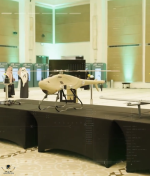
The factory would produce "operationally relevant volumes consistent with the kingdom's strategic deterrence requirements"
View attachment 199534
SR2Vector's factory is backed by MASNA Ventures, which aims to capitalize on deepened U.S.-Saudi defense cooperation following Saudi Arabia's designation as a major non-NATO ally in November, when Crown Prince Mohammed bin Salman met Trump at the White House.
View attachment 199535
The drone will be produced for both the Saudi market and export to allied nations.
The number of sophisticated UAV platforms is truly impressive as well as the new innovate air defenses (BARQ - post 1,165).
Last edited:
The SC
INT'L MOD
- Thread starter
- #1,175
Is there anything that prevents Saudi Arabian shipyards from helping build and assemble this ship back in KSA or was it a part of the deal with Navantia/Spain that it should take place in Spain (local workers etc.) when the deal was signed many years ago?
Do we know the degree of ToT in details?
I read that Saudi Arabian engineers have taken part in the work in Spain.
KSA has a developing shipbuilding industry that has been increasing steadily in recent years (past 10 years) and taken great leaps.
It would be great if we could negotiate deals that stipulated production within KSA but I believe that most defense firms will never agree to this.
Local private and public defense firms have come a LONG way in such a short time just looking at the updates on page 78 in this thread alone and the general development across the board.
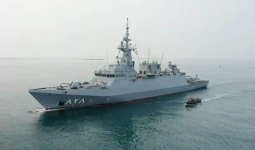
It is noteworthy that the project is proceeding according to the specified schedule, as part of the construction work of the second and third ships is scheduled to be carried out within the Kingdom of Saudi Arabia, with the participation of the Saudi Military Industries Company (SAMI), which will integrate the “Hazm” combat management system with the ships’ armament.
As for the combat level, the ship is distinguished by being equipped with the national battle management system “HAZEM”, which was developed through the Sami Navantia Joint Company, in addition to the “HERMESYS” communications system and an advanced fire control and weapons guidance system. It was also equipped with modern engines produced by the German company MTU, which enhances its operational efficiency and marine capabilities.
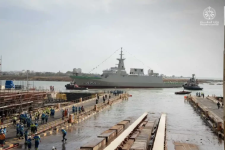
This ambitious program reflects the direction of Saudi Arabia and its partners towards building a long-term strategic partnership in the maritime field, which is not limited to corvettes only, but extends in the future to more advanced projects that include frigates, mine hunters and submarines, as part of the Kingdom’s efforts to modernize its naval fleet and enhance its readiness to face increasing regional challenges.
The SC
INT'L MOD
- Thread starter
- #1,176
Riyadh is considering upgrading 145 F-15 fighters to the advanced F-15EX standard
Boeing officials: Riyadh is considering upgrading the bulk of the F-15 fighter fleet to the F-15EX standard.
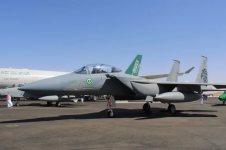
“We are currently in talks with the Royal Saudi Air Force regarding the F-15EX,” said Vince Logsdon, vice president of international business development for Boeing’s Defense, Space and Security sector. “We are studying the possibilities of modernizing the F-15SA aircraft in service, in addition to the possibility of purchasing new aircraft.”
The Royal Saudi Air Force operates the second largest fleet of F-15 fighters in the world after the US Air Force, as it owns 232 aircraft of this type, according to data from Cirium, a company specializing in aviation analytics. This number includes about 150 F-15SA and F-15SR fighters, as the latest version has already been updated based on the older F-15S standard.
The modernization process may include the integration of the Raytheon APG-82 active electronic scanning (AESA) radar, along with large and advanced in-cockpit displays, as well as a more advanced electronic warfare system.
_Arabia_
Trusted Member
I believe that the following is old news that has just been recently released to the public.
- The Saudi Chemical Company announces the production of the first batch of TNT compliant with military specifications and standards, in collaboration with the Brazilian giant Mac Jee.
- The explosives and raw materials industry is considered one of the most important steps to achieve an independent military industry.
- A blessed step and accelerated progress to achieve the goals of the homeland and Vision 2030.

 x.com
x.com

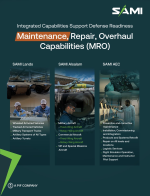
Our pavilion at #Eurosatory2026 welcomed high-level officials and distinguished visitors on its first day, who explored our advanced national capabilities and defense solutions, as well as the rapid growth and progress of Saudi Arabia’s defense industry.
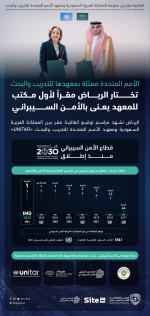
In confirmation of the Kingdom's internationally leading position in the cybersecurity sector..The United Nations, represented by its Institute for Training and Research "UNITAR," selects Riyadh as the headquarters for the institute's first office dedicated to cybersecurity. https://nca.gov.sa/ar/news/2322/
- The Saudi Chemical Company announces the production of the first batch of TNT compliant with military specifications and standards, in collaboration with the Brazilian giant Mac Jee.
- The explosives and raw materials industry is considered one of the most important steps to achieve an independent military industry.
- A blessed step and accelerated progress to achieve the goals of the homeland and Vision 2030.
SAMI (@SAMIDefense) on X
الشريك الوطني الرائد لقطاع الدفاع والأمن #إحدى_شركات_الصندوق The National Defense & Security Champion #aPIFCompany
Our pavilion at #Eurosatory2026 welcomed high-level officials and distinguished visitors on its first day, who explored our advanced national capabilities and defense solutions, as well as the rapid growth and progress of Saudi Arabia’s defense industry.
In confirmation of the Kingdom's internationally leading position in the cybersecurity sector..The United Nations, represented by its Institute for Training and Research "UNITAR," selects Riyadh as the headquarters for the institute's first office dedicated to cybersecurity.
https://nca.gov.sa/ar/news/2322/
The SC
INT'L MOD
- Thread starter
- #1,178
Saudi Arabia achieves a historic achievement by completing the first comprehensive maintenance of the Typhoon fighter outside Europe
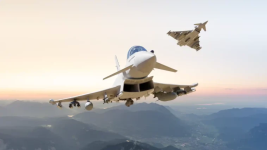
The Kingdom of Saudi Arabia witnessed a prominent defense achievement that reflects the rapid development it is witnessing in the field of military and aviation industries, after national cadres at King Fahd Air Base in Taif succeeded in carrying out the first comprehensive and complex maintenance operation for the Eurofighter Typhoon outside the European continent. This achievement is considered a turning point in the process of localizing defense capabilities, as it confirms that the Kingdom possesses the technical and engineering competencies necessary to maintain one of the most advanced combat aircraft in the world, in line with the goals of Saudi Vision 2030 aimed at enhancing self-sufficiency in the military sector.
The first heavy maintenance on a Typhoon outside Europe
The technical teams of the Royal Saudi Air Force were able to complete the first scheduled heavy maintenance inspection of the Eurofighter Typhoon aircraft after it reached 2,500 flight hours, in a precedent carried out outside Europe since this model entered service.
The maintenance work took about 180 days of continuous work within a specialized facility at King Fahd Air Base, which is the only facility outside the European continent approved to carry out this type of advanced maintenance work. The project also relied heavily on national competencies, as the percentage of Saudi technicians and engineers participating in the process reached about 80% of the total workforce.
This maintenance is one of the most complex operations
This process is not just regular maintenance, but is classified as one of the highest levels of military maintenance for combat aircraft, known in the aviation industry as heavy maintenance or “center level inspection.” This type of examination is of exceptional importance because it requires the dismantling of major parts of the aircraft structure and a comprehensive review of all vital systems before it is rehabilitated for combat service.
The process includes completely dismantling the basic structural components of the aircraft, conducting careful inspections of internal systems that cannot be accessed during normal maintenance work, in addition to carrying out stringent tests for structural integrity and material durability, along with replacing vital components that require this. After completing all checks, the aircraft is reassembled according to the highest engineering standards, before being subjected to a series of tests that confirm its readiness to return to air operations.
Aviation experts confirm that maintaining the integrity of metal structures and composite materials used in supersonic fighters requires a highly precise work environment and advanced engineering competencies that go beyond mere adherence to technical manuals, as success in such operations depends on cumulative experience and highly qualified human capabilities.
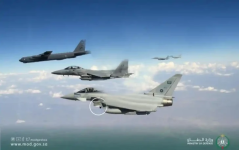
European Typhoon... and maintenance was limited to the European continent
The Eurofighter Typhoon is one of the most advanced multi-role fighters in the world, and is the product of a European industrial cooperation between BAE Systems, Airbus and Leonardo. Since its entry into service, heavy maintenance operations for this model have been carried out exclusively within specialized centers in Europe, which makes the Kingdom’s success in implementing this level of maintenance locally an exceptional achievement that has not yet received widespread coverage in Western defense media, despite its great strategic importance.
The Royal Saudi Air Force fleet currently includes 71 Eurofighter Typhoon fighters that have entered service out of 72 aircraft delivered to the Kingdom, and are mainly stationed at King Fahd Air Base in Taif.
The aircraft undergoes a heavy inspection after it reaches 2,500 flight hours, while the complete maintenance process takes about 180 days. The percentage of Saudiization of the workforce in this project reached 80% of Saudi cadres, while the Kingdom continues its negotiations to obtain an additional 48 fighters of the same type, which will raise the size of the fleet in the future to about 120 aircraft.
The result of years of technology transfer
Reaching this achievement was not the result of short-term work, but rather came after years of cooperation between BAE Systems and its Saudi partner, Al Salam Aircraft Company, within an integrated program to transfer knowledge and localize support and maintenance services for Typhoon fighters within the Kingdom.
The process of technology transfer began gradually through the development of avionics repair capabilities, as Advanced Electronics Company became the first entity outside Europe to obtain certification for repairing Typhoon aircraft electronics, which constituted the starting point towards possessing more complex capabilities.
Specialized reports indicate that the localization of these capabilities brings direct strategic benefits, most notably reducing dependence on external supply chains, accelerating maintenance operations, and raising the level of self-reliance among the countries operating this model.
Completing a complete maintenance cycle for an aircraft that reached 2,500 flight hours is evidence that the Kingdom possesses not only advanced technical equipment and facilities, but also certified human expertise capable of carrying out work that was previously carried out only within European centers.
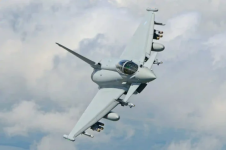
Higher combat readiness and reduced aircraft decommissioning time
The Royal Saudi Air Force operates Typhoon fighters through three squadrons affiliated with the 2nd Wing at King Fahd Air Base in Taif. Due to the operational missions carried out by these aircraft and the nature of the regional environment, they record high flying rates compared to a number of other fleets.
Therefore, having the ability to carry out heavy maintenance within the Kingdom represents a strategic gain that goes beyond the technical aspect, as it ensures that the aircraft remain near their operational bases without the need to send them to Europe, which shortens the period of their departure from service, reduces logistical costs, saves millions of dollars, and raises the level of combat readiness of the fleet.
The project's 80% reliance on Saudi cadres also reflects the success of programs to localize technical and engineering expertise in the military industries sector. This achievement also paves the way for the formation of a national base of engineers and technicians capable of carrying out the most complex maintenance operations.
As the number of aircraft that will undergo inspection increases in the future, local expertise will accumulate to a greater extent, which will contribute to establishing an integrated national system for military aircraft maintenance, support the creation of high-value technical jobs, and enhance the defense industries’ contribution to the national economy away from traditional dependence on the oil sector.
Vision 2030 and the upcoming expansion of the Typhoon fleet
According to Suleiman Al-Muqeem, a Saudi defense expert specializing in logistics and military projects, the center that carried out this operation is the only facility outside Europe that has received official accreditation to conduct this level of heavy maintenance for Eurofighter Typhoon fighters.
This development comes within the framework of implementing the Kingdom’s Vision 2030, which aims to localize at least 50% of military spending, as the Kingdom’s success in carrying out heavy maintenance for an advanced European fighter represents practical evidence of achieving tangible progress in the transfer of military technology.
At the same time, Riyadh continues its negotiations to obtain a second batch of 48 additional Eurofighter Typhoon fighters, which will bring the total fleet to about 120 aircraft. This expansion is expected to increase the volume of maintenance work at the Taif Center, which has proven its readiness to accommodate more complex technical tasks.
In general, the Kingdom’s success in completing the first comprehensive maintenance operation for the Eurofighter Typhoon outside Europe constitutes a turning point in the history of the Royal Saudi Air Force, and confirms that the defense industry localization programs have moved from the planning stage to practical implementation. This achievement also enhances logistical independence, raises the level of combat readiness, and lays strong foundations for building an industrial and technical base capable of supporting the armed forces for decades to come, in line with the Kingdom’s strategic ambitions in the field of defense and military industries.
The SC
INT'L MOD
- Thread starter
- #1,179
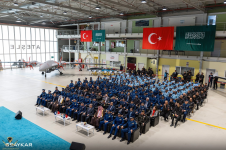
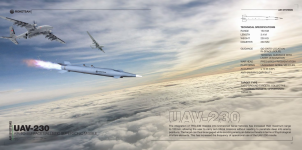
- HGK-84
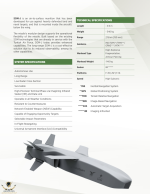
- ÇAKIR
- LGK-82
- TEBER-81
- ELÇİN
- MAM-T
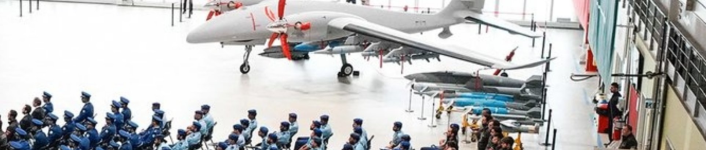
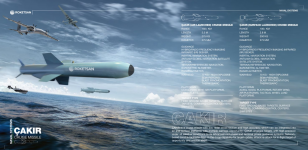
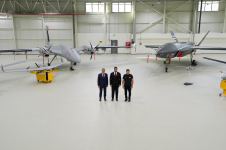
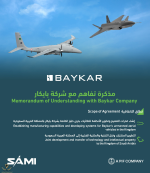
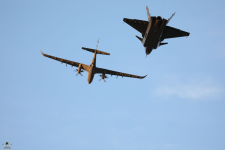
During the visit of His Highness the Minister of Defense, Prince #Khaled_bin_Salman, a memorandum of understanding was signed with the Turkish company Baikar for joint development and transfer of intellectual property to #Saudi Arabia for Baikar's drones.

The SC
INT'L MOD
- Thread starter
- #1,182
The RUKN program is a flagship local content and supplier engagement initiative launched by Saudi Arabian Military Industries (SAMI) to increase local content within Saudi Arabia's defense sector. It aims to enhance localization targets and encourage foreign companies to participate in the Saudi defense market.
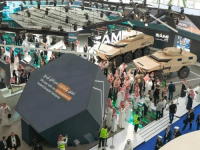
Saudi Arabia's RUKN program is SAMI's fully automated local content and supplier-engagement platform designed to increase defense-sector localization by connecting small and medium-sized enterprises to partnership opportunities.
The RUKN program aligns with Saudi Arabia's broader Vision 2030 goals, which focus on diversifying the economy and reducing dependence on oil by fostering local industries and capabilities.
Overview of the RUKN Program
The RUKN program is a key initiative by Saudi Arabian Military Industries (SAMI) aimed at enhancing local content within the defense sector. It serves as a flagship local content and supplier engagement program.Objectives of the RUKN Program
- Increase Local Content: The program focuses on boosting the amount of locally produced materials and components in defense manufacturing.
- Localization Targets: It sets specific goals for localization to ensure that more defense capabilities are developed within Saudi Arabia.
- Supplier Engagement: RUKN encourages collaboration with local and foreign suppliers to strengthen the supply chain.
Benefits of the RUKN Program
| Benefit | Description |
|---|---|
| Enhanced Local Capabilities | Aims to develop and empower local industries to meet defense needs. |
| Foreign Participation | Encourages foreign companies to invest and participate in the Saudi defense market. |
| Value-Chain Mapping | Helps identify and optimize the supply chain for better efficiency. |
Saudi Arabia's RUKN program is SAMI's fully automated local content and supplier-engagement platform designed to increase defense-sector localization by connecting small and medium-sized enterprises to partnership opportunities.
The RUKN program aligns with Saudi Arabia's broader Vision 2030 goals, which focus on diversifying the economy and reducing dependence on oil by fostering local industries and capabilities.
_Arabia_
Trusted Member
Impressive what education and passion can create:
Saudi Arabian Ali Al-Suhaybani:
An aviation engineer who dedicated 40 years of his life to the world of aviation, and never abandoned his passion even after retirement.
From Idea to Reality:
Researcher Turki Al-Dosari employs artificial intelligence in radar systems; as part of the General Authority for Defence Development's efforts to steer university research toward defence needs.
Saudi female engineers in the Saudi Arabian Military Industries (SAMI):
PRIDE.
Saudi Arabia begins manufacturing anti-drone drones with a production capacity of up to 600 drones per year
(11 more related tweets after this one)
1/ Data centers are not just server rooms, but rather "digital factories" that, behind the scenes, manufacture the AI and cloud economy.And from here begins the story of the Kingdom's transformation from the stage of data hosting to establishing a self-sustaining strategic sovereign industry under the banner of artificial intelligence #SaudiIndustry.
Saudi Arabian Ali Al-Suhaybani:
An aviation engineer who dedicated 40 years of his life to the world of aviation, and never abandoned his passion even after retirement.
From Idea to Reality:
Researcher Turki Al-Dosari employs artificial intelligence in radar systems; as part of the General Authority for Defence Development's efforts to steer university research toward defence needs.
Saudi female engineers in the Saudi Arabian Military Industries (SAMI):
PRIDE.
Saudi Arabia begins manufacturing anti-drone drones with a production capacity of up to 600 drones per year
(11 more related tweets after this one)
1/ Data centers are not just server rooms, but rather "digital factories" that, behind the scenes, manufacture the AI and cloud economy.And from here begins the story of the Kingdom's transformation from the stage of data hosting to establishing a self-sustaining strategic sovereign industry under the banner of artificial intelligence #SaudiIndustry.
Last edited:
_Arabia_
Trusted Member
I did not watch the embedded video clip from Al-Arabiya (6 minutes long) at all, only posted the tweet.In the video..he says 1000 drones / month..which is more logical
However after watching it quickly, the original tweet was not wrong at all.
The company in question is this one https://www.ud.sa/ (certified by GAMI) and their production facilities (at least part of them) are based in Al-Qassim province.
The manufacturer produces 11 different aircraft/drone types. The total production capacity is up to 600 aircraft per year across all those types.
The 1000 per month is the Shaheen X interceptor UAV (the small one at the beginning of the video):
More details below.
This is likely a fruit of the KSA-Ukraine collaboration.
Any way worth posting the article here:
News June 10, 2026 at 11:44 am
The Sky Chase: How Saudi Arabia’s “Shaheen X” Is Changing The Drone Game
By asia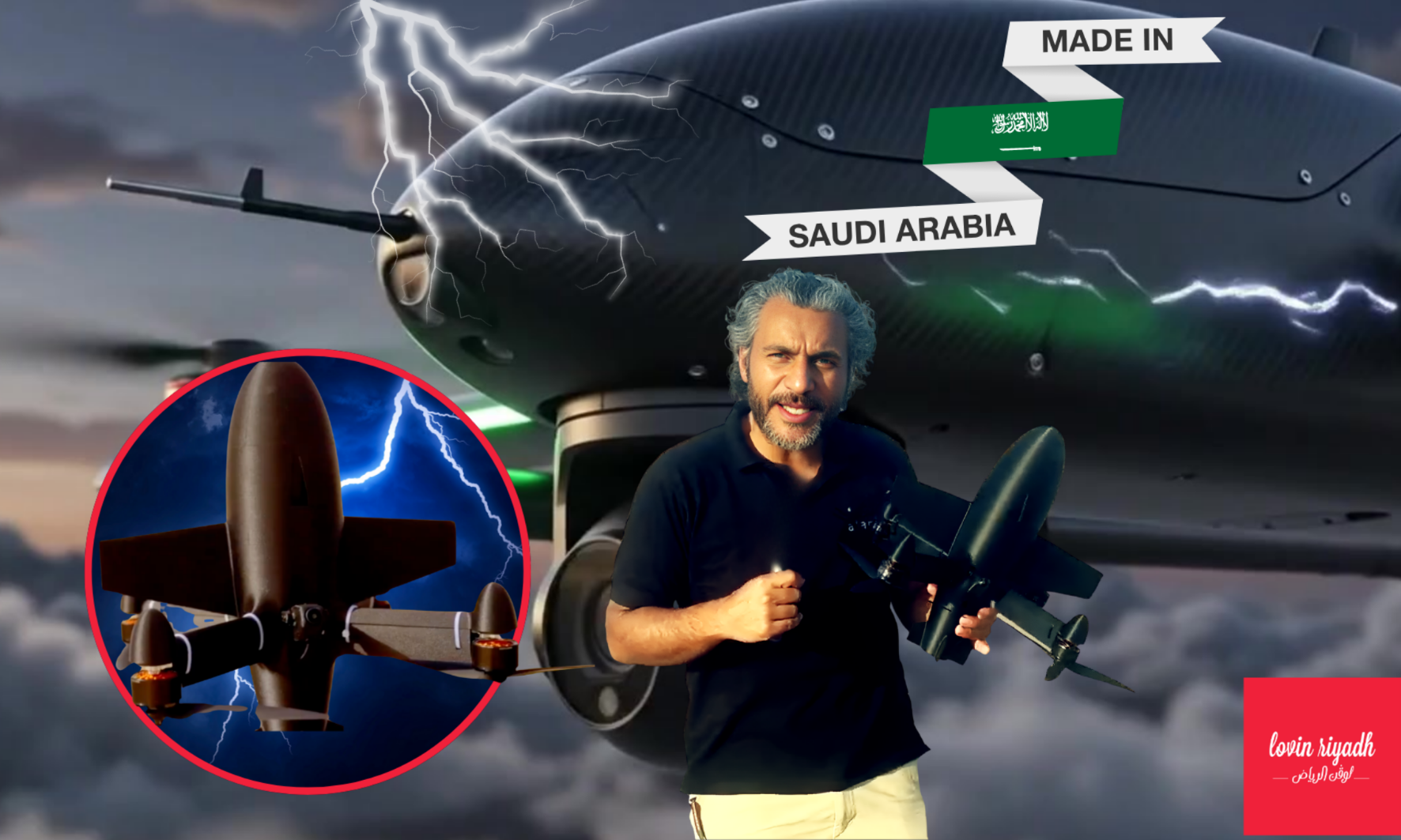
Imagine a drone that doesn’t wait for commands. A drone that detects a threat in the sky, calculates its trajectory, and launches itself into a high-speed chase entirely on its own.
This isn’t a scene from a sci-fi movie. It’s what is happening right now in Saudi Arabia’s defense tech sector
Meet Shaheen X, the newly revealed, AI-powered drone interceptor that is turning heads and shifting the paradigm of airspace security. Built from scratch by Saudi engineers, this local innovation is proving that the future of defense isn’t just automated; it’s highly intelligent
Built for the Chase
At first glance, Shaheen X looks sleek and compact. But don’t let its size fool you. This drone is engineered for one specific, high-stakes job: hunting down hostile attack dronesWhen an unauthorized target enters the airspace, traditional defense systems can sometimes be slow to react. Shaheen X changes that completely. It cuts through the air at blistering speeds exceeding 300 km/h, making it fast enough to outrun and outsmart almost any tactical threat in its class. With a lightweight airframe designed for sharp, sudden maneuvers, it turns mid-air interception into a precise science
The Brain Inside the Machine
What truly separates Shaheen X from standard drones is its brainEquipped with advanced Artificial Intelligence (AI) and seamlessly integrated with live radar networks, the drone operates with full autonomy. Once a target is logged by the radar, Shaheen X is deployed. It doesn’t need a human pilot holding a controller on the ground; the AI takes over the flight, tracks the target’s movements, and locks onto it
To ensure the threat is completely neutralized, it carries a precise 500-gram explosive warhead just enough to take down the target cleanly in mid-air
Local Innovation on a Global Scale
Perhaps the most impressive part of the Shaheen X story is where it comes from. The drone is developed entirely by local Saudi talent at United DefenseIt’s a massive milestone for the Kingdom’s Vision 2030 goals of localizing defense industries. And they aren’t just making a few prototypes production is already moving at a massive scale, with 1,000 units being manufactured every single month. The scalable design allows the team to modify the drone’s size and capacity based on the mission’s needs, making it a highly adaptable shield for the skies
The game of airspace defense has officially changed. With Shaheen X, Saudi Arabia is making it clear that its skies are protected by the sharpest local minds and the smartest AI
Last edited:
Users who are viewing this thread
Total: 1 (members: 0, guests: 1)
Pakistan Defence Latest
-
 Federal cabinet gives nod to imposition of emergency in KP; summary sent to president (26 Viewers)
- Latest: flyingorca
-

-
PTI Murad Saeed in Afghanistan, was 'controlling KP govt' from there: Rana Sanaullah (15 Viewers)
- Latest: Blain2
-

-
Country Watch Latest
-
Iran - Israel/US War: Israel-US declare war on Iran, Iran responds (334 Viewers)
- Latest: BananaRepublic
-

-
-

-

Latest Posts
-

-
Iran - Israel/US War: Israel-US declare war on Iran, Iran responds (334 Viewers)
- Latest: BananaRepublic
-

-
Federal cabinet gives nod to imposition of emergency in KP; summary sent to president (26 Viewers)
- Latest: flyingorca