Navigation
Install the app
How to install the app on iOS
Follow along with the video below to see how to install our site as a web app on your home screen.
Note: This feature may not be available in some browsers.
More options
Style variation
You are using an out of date browser. It may not display this or other websites correctly.
You should upgrade or use an alternative browser.
You should upgrade or use an alternative browser.
Made in KSA
- Thread starter The SC
- Start date
More options
Who Replied?
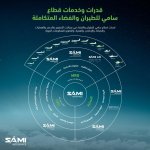

The SC
INT'L MOD
- Thread starter
- #558
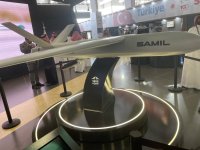
Would you believe that #Saudi Arabia  took Türkiye's drones
  and developed a stronger version of them
The Saudis unveiled “Qaswa” with the design of the Bayraktar TB2
It flies a whole day at an altitude of 7+ km with a weapons payload of 200 kg, i.e. double TB2
What's interesting is that it works with satellites!
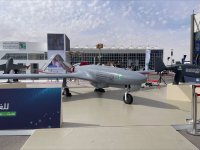
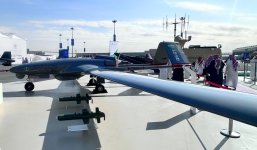
took Türkiye's drones and developed a stronger version of them The Saudis unveiled “Qaswa” with the design of the Bayraktar TB2
It flies a whole day at an altitude of 7+ km with a weapons payload of 200 kg, i.e. double TB2
What's interesting is that it works with satellites!
The SC
INT'L MOD
- Thread starter
- #559
The MacJee Group, one of the main companies in the defense industry in Brazil, announced to the market an agreement with the Kingdom of Saudi Arabia for the joint development of the defense industry in the country. The partnership was signed during the company’s participation in one of the largest global exhibitions in the sector, the World Defense Exhibition, which was held in the capital, Riyadh.
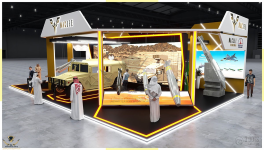
One of the leading companies in the Brazilian Defense Industrial Base, MacJee has a diverse portfolio of aerial ammunition, defense solutions and active materials. The company is known for leveraging technology to develop high-quality products.
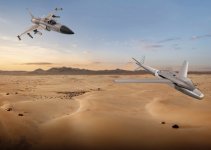
For a decade on the market, the company operates in the defense and aerospace sectors and is responsible for the entire production cycle, offering autonomy to its customers. In addition, MacJee Defensa has partnered with many major national and international companies, aiming to provide the best solutions and products to the industry.
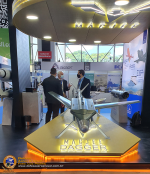
At the Dubai Airshow 2021, the company launched the DAGGER system, an active guidance suite designed to meet the requirements of modern air forces operating in complex operating scenarios,
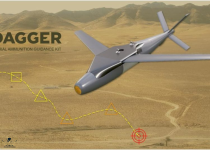
It is an aerial ammunition guidance kit equipped with electronic sensors (over 120 km) developed to hit fixed and moving targets, including land, sea and long-range targets, with high accuracy. In addition, it has Beyond Visual Range (BVR) targeting features that increase the protection of the operation.
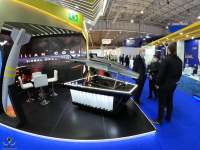
One of the leading companies in the Brazilian Defense Industrial Base, MacJee has a diverse portfolio of aerial ammunition, defense solutions and active materials. The company is known for leveraging technology to develop high-quality products.
For a decade on the market, the company operates in the defense and aerospace sectors and is responsible for the entire production cycle, offering autonomy to its customers. In addition, MacJee Defensa has partnered with many major national and international companies, aiming to provide the best solutions and products to the industry.
At the Dubai Airshow 2021, the company launched the DAGGER system, an active guidance suite designed to meet the requirements of modern air forces operating in complex operating scenarios,
It is an aerial ammunition guidance kit equipped with electronic sensors (over 120 km) developed to hit fixed and moving targets, including land, sea and long-range targets, with high accuracy. In addition, it has Beyond Visual Range (BVR) targeting features that increase the protection of the operation.
The SC
INT'L MOD
- Thread starter
- #560
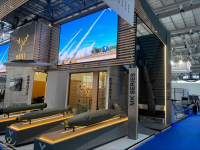
The company MACJEE also offers BGB 81, 82, 83 and 84 series air ammunition
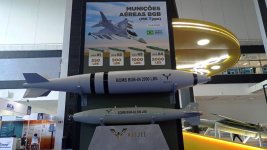
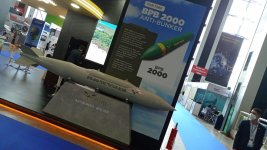
Model BPB 2000 Anti-Bunker
Brazilian 70 mm precision-guided ammunition on the Armadillo TA-2 launcher
It is amazing with its its range of 27 km
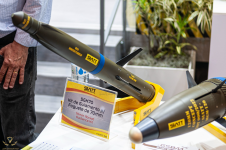
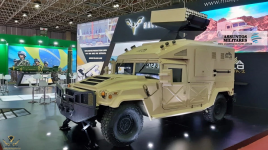
MACJEE offers KSA Strategic ammunition production capabilities
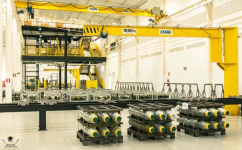
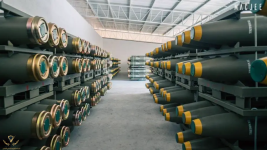
Model BPB 2000 Anti-Bunker
Brazilian 70 mm precision-guided ammunition on the Armadillo TA-2 launcher
It is amazing with its its range of 27 km
MACJEE offers KSA Strategic ammunition production capabilities
The SC
INT'L MOD
- Thread starter
- #561
Developed exclusively by MacJee, state-of-the-art DAGGER sensors ensure high scene accuracy for positioning and overcoming obstacles for the target location.
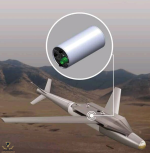
According to CEO MacJee, the company's goal in creating the DAGGER line is to innovate for simplicity and low maintenance, lifting ammunition with loading onto the aircraft using simple equipment such as a winch or a trailer
The DAGGER aerial bomb has target detection using EOS/MWIR
Or use coordinates and a pre-programmed attack
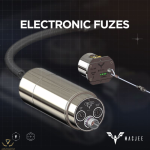
The BEF-1502 fuse for the Brazilian MK80 and BPB-2000 bombs and the winged Dagger guidance kit was developed by Mac Jee
According to CEO MacJee, the company's goal in creating the DAGGER line is to innovate for simplicity and low maintenance, lifting ammunition with loading onto the aircraft using simple equipment such as a winch or a trailer
The DAGGER aerial bomb has target detection using EOS/MWIR
Or use coordinates and a pre-programmed attack
The BEF-1502 fuse for the Brazilian MK80 and BPB-2000 bombs and the winged Dagger guidance kit was developed by Mac Jee
The SC
INT'L MOD
- Thread starter
- #562
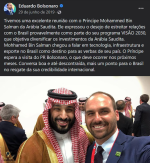
Brazil has strengthened a secret agreement to export products and technologies to Saudi Arabia to build its first military explosives factory. The factories were set up by a Brazilian company at the request of Saudi Arabia, which aims by 2030 to "supply all of the country's military demand" for explosives and detonating fuses, items that could be useful in wars and conflicts in the Middle East.
Permission to sell equipment and services to Saudi Arabia was granted in the second half of 2018, in the last phase of Michel Temer's administration, but the main construction phases took place under the government of Jair Bolsonaro, between 2019 and 2022. In parallel, permits for the export of military technology to the Saudis increased. Private defense industry business with other countries needs approval from three ministries: Defence, Science and The Ministry of Foreign Affairs.
Building a military explosives factory with Brazilian labor and technology is part of Saudi military interest and activity..
The company that requested and received permission from the Brazilian government to close the contract with the Saudis is MacJee, based in São José dos Campos (SP). The structure installed in Saudi Arabia occupies approximately 500,000 square meters and is located within the Saudi Chemical Company Limited (SCCL).
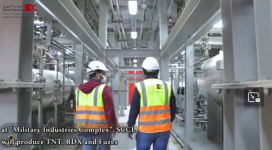
The plant produced TNT and RDX, components used for certain types of bombs. The entire authorization and contracting process is protected by confidentiality. When contacted, the ministries handling the case said they could not comment on the motives or terms of the MacJee agreement. The contract value is also unknown.
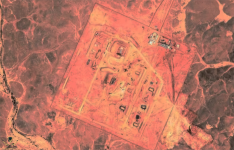
The area where the military explosives factory is located, in Riyadh, Saudi Arabia, built with Brazilian technology.
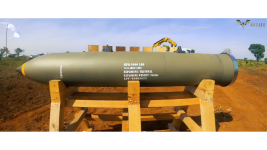
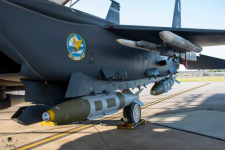
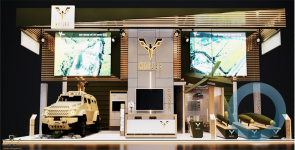
Bomb parts, explosive material, fuses, bomb container, kit, guidance system, and building a TNT and RDX factory, means heavy bombs and ammunition.
The SC
INT'L MOD
- Thread starter
- #563
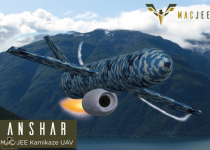
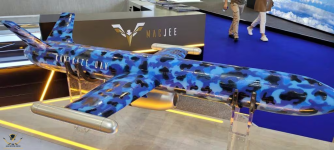
ANSHAR is a product developed by MacJee in Brazil, based on its own investment in research and innovation.. It is a new product that fully conforms to the new doctrines of war.. The drone is designed to destroy high-value targets at low cost, with simple maintenance and easy operation.
To meet the requirements of modern warfare doctrines, ANSHAR will have a speed of 170 m/s or 612 kilometers per hour, a minimum altitude of 10 metres, a range of 120 km up to 180 km and one hour of autonomous flight, with a payload of 20 kg.
This new development represents a leap in technology and capabilities for the Brazilian defense industry base, strengthening MacJee's product offering to ensure the armed forces of allied nations the conditions necessary to fulfill their duty with the best results.
ANSHAR is a versatile and powerful drone that can be used in a wide range of military applications and can be used to attack land or sea targets.
The SC
INT'L MOD
- Thread starter
- #565
Commander of the Saudi Air Force, Turki bin Bandar Al Saud, visited the Republic of Turkey to make contacts regarding the defense industry
The visit included the Roketsan missile and munitions facilities and the Tosash aviation industry
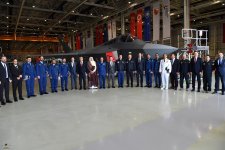
Visiting our country to make contacts regarding our defense industry, Commander of the Saudi Arabian Air Force, Mr. Turki bin Bandar Al Saud and his delegation visited our Roketsan and Tusaş Facilities; met with the management of Roketsan, Tusaş and Aselsan and received information about our defense industry projects.I would like to thank the Commander and his delegation for their visit and hope that this visit, during which we evaluate the cooperation between our countries in the field of defense industry, will be beneficial and auspicious for both countries.
Lieutenant General Turki bin Bandar bin Abdulaziz Al Saud, Commander of the Saudi Arabian Air Force, visited the Air Force Command Headquarters on 14 October 2024.
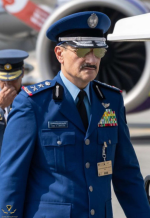
If Saudi Arabia enters the Kaan project, it will be a huge move for the two countries at the level of bilateral relations, and it will accelerate Türkiye’s steps towards more powerful blocks that are expected to be worked on after 2028.
Also, Bikar projects like Kızılelma, of course it will be contracted as a wingman, if Kaan is contracted.
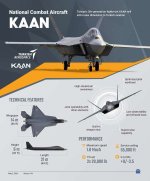
Visits have become frequent recently between the two sides, and this is a positive indication that an agreement will soon be concluded.


The visit included the Roketsan missile and munitions facilities and the Tosash aviation industry
Visiting our country to make contacts regarding our defense industry, Commander of the Saudi Arabian Air Force, Mr. Turki bin Bandar Al Saud and his delegation visited our Roketsan and Tusaş Facilities; met with the management of Roketsan, Tusaş and Aselsan and received information about our defense industry projects.I would like to thank the Commander and his delegation for their visit and hope that this visit, during which we evaluate the cooperation between our countries in the field of defense industry, will be beneficial and auspicious for both countries.
Lieutenant General Turki bin Bandar bin Abdulaziz Al Saud, Commander of the Saudi Arabian Air Force, visited the Air Force Command Headquarters on 14 October 2024.
If Saudi Arabia enters the Kaan project, it will be a huge move for the two countries at the level of bilateral relations, and it will accelerate Türkiye’s steps towards more powerful blocks that are expected to be worked on after 2028.
Also, Bikar projects like Kızılelma, of course it will be contracted as a wingman, if Kaan is contracted.
Visits have become frequent recently between the two sides, and this is a positive indication that an agreement will soon be concluded.
The SC
INT'L MOD
- Thread starter
- #566
Saudi Arabia to Acquire Türkiye's 5th-Generation KAAN Fighter Jet ?
On October 15, 2024, the Twitter account @TurkishFacts4U reported that Saudi Arabia is interested in acquiring over 100 KAAN fighter jets, a 5th-generation aircraft developed by Türkiye under its TFX program. This potential acquisition was discussed during a visit to Türkiye by Saudi Air Force Commander Turki bin Bandar Al Saud, who, along with a delegation, met with officials from Roketsan, Turkish Aerospace Industries, and Aselsan. The visit provided Saudi officials with detailed information about the KAAN’s capabilities and initiated discussions on a potential strategic collaboration regarding this 5th-generation fighter.
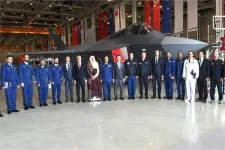
Saudi Air Force Commander Turki bin Bandar Al Saud visits Turkish Aerospace Industries (Picture source: Turkish MoD)
Saudi Arabia interest in the KAAN aligns with its goal of establishing a strong defense partnership, amid growing Turkish-Saudi ties. During this visit, Saudi officials received detailed information on the development and capabilities of the KAAN, which represents a significant advancement for the Turkish defense industry. The potential collaboration could include technology transfers and support for local production, in line with Saudi Arabia's ambitions to increase its industrial autonomy in the defense sector.
Türkiye and Saudi Arabia have recently strengthened their defense ties, marking a significant shift in their bilateral relations. This development was highlighted by a strategic summit in Jeddah in July 2024, where officials from both nations agreed to pursue high-value defense projects collaboratively. The two countries are exploring extensive technology transfer opportunities and joint production efforts, including the potential assembly of Türkiye's KAAN 5th-generation fighter jet in Saudi Arabia. This move aligns with Saudi Arabia's Vision 2030, which aims to build a self-sustained defense industry through partnerships with established defense manufacturers.
Saudi Arabian Military Industries (SAMI) has played a key role in fostering these ties, signing multiple agreements with prominent Turkish defense companies such as Baykar, Aselsan, and TUSAŞ (Turkish Aerospace Industries). These agreements cover various domains, from unmanned aerial vehicles to defense electronics, reflecting a shared commitment to advancing defense capabilities. This deepening cooperation signals a notable alignment between the two nations as they focus on mutually beneficial defense innovations and technology transfers, positioning both Turkey and Saudi Arabia as influential players in the Middle Eastern defense landscape.
The KAAN project, launched in 2016 with an investment of $1.18 billion to secure the necessary technologies, benefits from collaboration with international firms such as BAE Systems from the United Kingdom and Rolls-Royce for engine design and development. Choosing the EJ200 engine, which enables supercruise, KAAN is designed to offer advanced operational capabilities, including the ability to fly at supersonic speeds without afterburners. With dimensions of 14 meters in wingspan, 21 meters in length, and 6 meters in height, KAAN can reach a maximum speed of Mach 1.8 and a service ceiling of 55,000 feet. The aircraft is also designed to be interoperable with other critical assets of the Turkish Air Force, such as the F-35A, enhancing its operational effectiveness in joint missions.
The KAAN is designed to reach speeds over Mach 1.8, with a combat range estimated at around 1,100 kilometers and a maximum operational altitude of approximately 55,000 feet. Its payload capacity exceeds 6,000 kilograms, allowing it to carry a mix of air-to-air and air-to-ground munitions across its 10+ external hardpoints. The AESA radar system offers a detection range of over 100 kilometers, significantly enhancing its situational awareness and targeting accuracy. The aircraft measures around 19 meters in length with a wingspan of 12 meters, and it is powered by twin engines, each producing around 27,000 pounds of thrust, enabling supercruise capability and high agility in combat scenarios.
The KAAN program aims to modernize the Turkish aerial fleet and bolster the national defense industry by developing local engineering and production capabilities. The project ensures that Turkey retains intellectual property rights over key technologies, particularly for the engine, a crucial aspect for the country's strategic autonomy. The involvement of international partners and a focus on local production reflect this ambition.
In recent years, Turkey has emerged as a significant player in the armament industry, significantly enhancing its weapon production capabilities in both the public and private sectors. Companies such as Turkish Aerospace Industries (TAI), ASELSAN, and Roketsan have become well-known names in the production of advanced military equipment, thanks to substantial investments in research and development. A notable example of their success is the Bayraktar TB2 drone, which played a pivotal role in the Nagorno-Karabakh conflict, demonstrating Turkey's strike and surveillance capabilities and sparking international interest.
Türkiye has successfully exported military equipment to several countries. Ukraine, Qatar, and Azerbaijan, among others, have purchased Turkish drones, while nations in Africa and Asia have also imported various Turkish military equipment, ranging from armored vehicles to air defense systems. This expansion of exports is strategically beneficial for Türkiye, not only in terms of revenue but also in defense diplomacy.
Simultaneously, Türkiye has heavily invested in developing local production to reduce its dependence on foreign suppliers. This move towards self-reliance is exemplified by ambitious projects such as the development of its fifth-generation fighter, KAAN, aimed at replacing aging F-16 fleets and circumventing challenges related to foreign technology procurement. These efforts underscore Turkey's commitment to strengthening its strategic autonomy and asserting its status as a regional and global military power.
For several years, Saudi Arabia has been actively working to modernize its combat aircraft fleet to enhance its military capabilities amid an increasingly tense regional context. Historically, the kingdom has relied on advanced American fighters, notably the F-15, and has maintained strategic relations with the United States to meet its military supply needs. The Royal Saudi Air Force currently operates a structured and diversified fleet. It includes four fighter squadrons equipped with the F-15C/D Eagle, known for its air superiority capabilities. Additionally, Saudi Arabia fields three fighter/ground attack squadrons equipped with F-15S/SA Eagles and three squadrons with Typhoon jets, providing robust multi-role capability. For dedicated ground attack operations, the air force deploys three squadrons with Tornado IDS and Tornado GR1 aircraft, further diversifying its tactical options in various combat scenarios.
Saudi Arabia is actively seeking to acquire 5th-generation fighter jets to modernize its air fleet and enhance its military strength amid a region marked by growing rivalries. However, these efforts face significant obstacles, largely due to the U.S. embargo on F-35 aircraft, which Riyadh has been keen to acquire. Unlike the United Arab Emirates, which secured an agreement for the F-35 after normalizing relations with Israel through the Abraham Accords, Saudi Arabia has not been granted the same access due to U.S. concerns over human rights and regional stability. Washington maintains strategic control over the sale of its most advanced military technologies, and despite the strategic nature of U.S.-Saudi relations, key differences limit Riyadh's options for procuring 5th-generation fighters.
In response to these restrictions, Saudi Arabia is exploring alternatives with other international partners. Options under consideration include the French Rafale, Türkiye's KAAN 5th-generation fighter, and China’s J-31, a stealth fighter similar to the F-35. Riyadh is also seeking to negotiate technology transfer and local production clauses within these agreements to develop its own industrial and military capabilities. By diversifying its partnerships, Saudi Arabia aims to achieve greater military autonomy and gradually reduce its reliance on U.S. support. Although challenges remain, including political approvals and the sovereignty concerns of its partners, Saudi Arabia continues to pursue 5th-generation fighters while reinforcing its defense industry.
Saudi Arabia to Acquire Türkiye's 5th-Generation KAAN Fighter Jet ?
Saudi Arabia to Acquire Türkiye's 5th-Generation KAAN Fighter Jet ?
 armyrecognition.com
There are speculations that the Turkish President will visit the Kingdom next Sunday October 20 2024..
The SC
INT'L MOD
- Thread starter
- #567
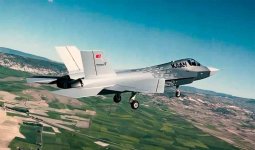
The KAAN is equipped to perform multiple combat functions, including air-to-air and air-to-ground capabilities. Its technical specifications include a maximum cruise speed of Mach 1.8, an operational ceiling of 55,000 feet, and power limits of +9g/-3.5g. Additionally, the fighter jet features an embedded weapon bay, ability to operate over water, low radar signature, and a multitask profile.
The development of the KAAN marks a significant advancement for Turkey’s defense industry and underscores the country’s commitment to technological innovation in military aviation.
TECHNICAL SPECIFICATIONS OF THE KAAN COMBAT AIRCRAFT
• Maximum cruise speed: Mach 1.8
• Operational ceiling: 55,000 feet
• Power limits: +9g/-3.5g
• Embedded weapon bay
• Ability to operate over water
• Low radar signature
• Multitask profile
• Air-to-air capability
• Air-to-ground capability
Source: SavunmaSanayiST.com. Photo and video: Twitter @SavunmaSanayiST. This content was created with the assistance of AI and reviewed by the editorial team.
https://www.msn.com/en-ie/money/tec...kaan-took-off-for-the-second-time/ar-BB1lXNX4
The SC
INT'L MOD
- Thread starter
- #568
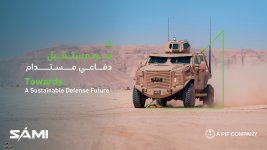
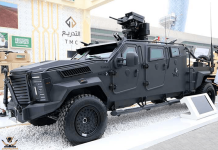
Sami Ground Systems and Kia Corp. base structures for military vehicles
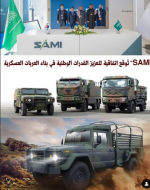
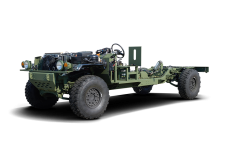
The Saudi Military Industries Company (SAMI), one of the Public Investment Fund companies, announced last February 2023 the signing of a joint cooperation agreement between the SAMI Ground Systems sector and the “Kia” company, in the field of base structures (chassis) for light tactical military vehicles, as well as cooperation in the field of military vehicles. In general, during participation in the 2024 World Defense Exhibition.
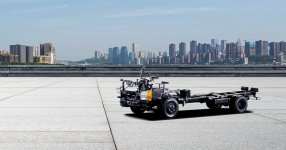
Under the agreement, SAMI aims to benefit from constructive cooperation opportunities that contribute strongly to building and developing local capabilities with regard to developing products in the ground systems sector, and to contribute to the localization of 50% of defense spending within the most prominent goals of the Kingdom’s Vision 2030, which is in line with the efforts of the General Authority. Military Industries in the process of localizing the sector.
The Ground Systems Sector aims to build and enhance local industrial capabilities and work to develop national cadres. To provide high quality products and services in the field of ground systems.
The sector's products include: tracked and wheeled combat vehicles, tracked and wheeled artillery systems, tactical logistical vehicles, unmanned ground vehicles, weapon towers and automatic shooting platforms, comprehensive maintenance, repair and overhaul, and logistical supply services.
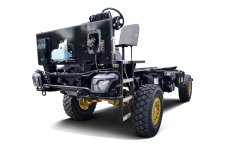
The Saudi Military Industries Company (SAMI), one of the Public Investment Fund companies, announced last February 2023 the signing of a joint cooperation agreement between the SAMI Ground Systems sector and the “Kia” company, in the field of base structures (chassis) for light tactical military vehicles, as well as cooperation in the field of military vehicles. In general, during participation in the 2024 World Defense Exhibition.
Under the agreement, SAMI aims to benefit from constructive cooperation opportunities that contribute strongly to building and developing local capabilities with regard to developing products in the ground systems sector, and to contribute to the localization of 50% of defense spending within the most prominent goals of the Kingdom’s Vision 2030, which is in line with the efforts of the General Authority. Military Industries in the process of localizing the sector.
The Ground Systems Sector aims to build and enhance local industrial capabilities and work to develop national cadres. To provide high quality products and services in the field of ground systems.
The sector's products include: tracked and wheeled combat vehicles, tracked and wheeled artillery systems, tactical logistical vehicles, unmanned ground vehicles, weapon towers and automatic shooting platforms, comprehensive maintenance, repair and overhaul, and logistical supply services.
Users who are viewing this thread
Total: 4 (members: 0, guests: 4)
Pakistan Defence Latest
-
 Federal cabinet gives nod to imposition of emergency in KP; summary sent to president (12 Viewers)
- Latest: Cipher212
-
-

-


