Navigation
Install the app
How to install the app on iOS
Follow along with the video below to see how to install our site as a web app on your home screen.
Note: This feature may not be available in some browsers.
More options
Style variation
You are using an out of date browser. It may not display this or other websites correctly.
You should upgrade or use an alternative browser.
You should upgrade or use an alternative browser.
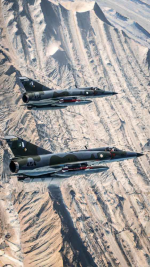
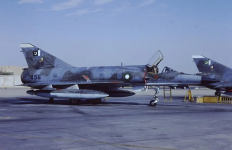
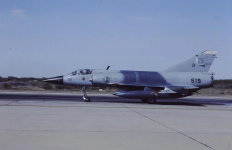
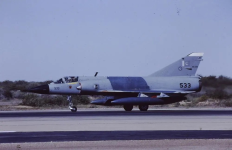
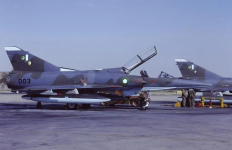
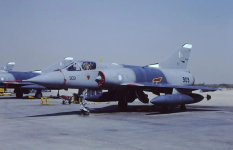
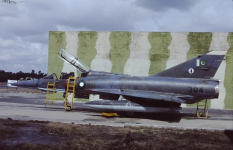
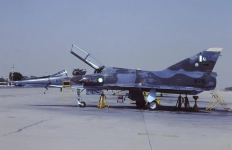
Mirage III / V of Pakistan Air Force
- Thread starter ghazi52
- Start date
More options
Who Replied?



Fatman17
THINK TANK: CONSULTANT
MASTERS OF MIRAGE MAINTENANCE
- Aviation Features
- Masters of Mirage maintenance
By Alan Warnes 19th October 2017
FEATURE
Alan Warnes goes behind the scenes at the Mirage Rebuild Factory at Pakistan Aeronautical Complex Kamra to see how these venerable delta-winged fighters are maintained.
INTEL REPORT

The Mirage Rebuild Factory was established in 1974 for in-country overhaul of Mirage fighters. Since then it has evolved into a centre of excellence for maintenance, repair and overhaul of military aircraft and jet engines.
All photos Alan Warnes
OPERATING A fleet of more than 100 Dassault Mirage IIIs and Vs, the Pakistan Air Force (PAF) has its work cut out to keep these 1960s-era fighters airworthy.
Fortunately, in 1978, a decade after buying its initial batch of 24 Mirage IIIEP, DP and RP jets, the PAF leadership established the Mirage Rebuild Factory (MRF) which, to date, has worked on 350 Mirages and 2,280 of their Atar 09C engines.
It’s also recovered 19 structurally damaged aircraft, upgraded 36 former Royal Australian Air Force (RAAF) Mirage IIIs to Retrofit of Strike Element (ROSE I) standard and modernised 14 Mirage VEFs to ROSE III.
A more recent enhancement added aerial refuelling systems, for which the MRF integrated the Mirage Pressurised Refuelling (MPR) system into the jets.
Independence essential
From the outset, the PAF wanted to overhaul its Mirage fleet in Pakistan. Sending aircraft back to France would be costly and lengthy, with the aircraft being out of service for 18 months.
Work to set up the factory – originally known as Project 741 – got the green light in March 1974. All 24 Mirage IIIEP, DP and RP jets purchased in 1967 would require overhaul in 1975, or around nine years after their manufacture – and, by then, 28 brand-new Mirage VPAs had also been delivered.
The plan was to overhaul all the Mirage IIIs by 1978 – before starting work on the Mirage Vs – with facilities put in place to work on the ‘deltas’, their components and engines.
On May 3, 1978 the first Mirage IIIEP, 67-101 (later named Old Baba), flew to Pakistan Aeronautical Complex (PAC) Kamra, piloted by Wg Cdr Saeed Anwar (who went on to become the organisation’s Director General from 1997 to 1999). Eleven days later the MRF was inaugurated at the new factory, under the command of Air Cdre Atta Illahi Sheikh.
On December 11, 1979, 67-101 made its first post-overhaul flight before being handed back to the PAF on February 20, 1980. In a lavish ceremony, Pakistani President General Muhammad Zia-ul-Haq thanked all those concerned for establishing the factory in such a short time.
By 1987 all the original PAF Mirages had been overhauled, and the ensuing lull in work led the MRF to offer its services to the United Arab Emirates – with a contract being signed in December that year for the overhaul of 26 UAE Air Force and Air Defence Mirages at PAC Kamra.

Mirage IIIEP 67-116 is the oldest Mirage in the PAF inventory. It is seen undergoing a Ground Visit, an inspection and overhaul that takes place after 1,800 hours or 11 to 14 years of service.
Responsibility for providing spares lay with the UAE, while the MRF provided the maintenance. But acquiring components proved difficult and the project ended after six aircraft had been worked on.
Ground Visits

This former French Air Force Mirage IIIDF dual-seater arrived at the MRF with a hydraulics problem. The MRF has a precise pipe-bending and fabrication facility that can manufacture all the required hydraulic and fuel pipes.
While the French term for a Mirage overhaul was a ‘Grande Visit’, the PAF refers to it as a Ground Visit (GV), which signifies a major inspection and overhaul of the jet after 1,800 hours or 11 to 14 years of service.
After GV-I the aircraft is returned to service for another 10 to 14 years or 2,000 hours. The same period of service is then guaranteed by a second overhaul (GV-II). Unsurprisingly all PAF Mirages have now completed both GVs, and are now heading back to the MRF once again for another. This is quite a feat considering Dassault stopped supporting the jet 20 years ago.
Fatman17
THINK TANK: CONSULTANT
A third overhaul cycle (GV-III) – to cover the jets for a further 2,000 hours and 10 to 14 years – was devised by the MRF in consultation with Australia’s Aero Structures, which specialises in fatigue and stress analysis. The ‘guinea pig’ for the work was again 67-101, and the process took almost four years.

Technicians work on a Mirage’s Atar 09C powerplant at the Engine Overhaul Wing. Mirage engines enter the facility every 800 hours, and all components undergo a thorough cleaning process to remove any accumulated contaminants.
AFM saw the old jet receiving attention at the MRF in May 2001 and April 2004, and it eventually left the facility in January 2005. Sadly, the 5 Squadron fighter crashed after an undercarriage problem on January 31 this year, having served the PAF for almost 40 years.

The charismatic Wg Cdr Rafiq is head of the Structures Repair Wing. He has 40 years of experience on the Mirage and is something of a celebrity, having become the first airman to receive the rank of wing commander from a PAF Chief of Air Staff.

The cockpit of Mirage IIIEA 90-513, one of the aircraft to have undergone the ROSE I upgrade, receives attention at Kamra. This former Royal Australian Air Force jet was delivered to Pakistan in November 1990.
By the mid-2000s the expected phase-out of the Mirage by 2015 led to a decision to stop the GV-III overhauls.
Instead, the MRF formulated a revised maintenance package, referred to as ‘Mini GV’, which would see the Mirages return to maintenance six years after completing the GV-II overhaul and provide them with almost half the lease of life as GV-III would – reducing maintenance time and freeing up docks faster in the MRF.
When a new source of spares was discovered in Libya, however, it was decided to extend the life of the Mirage yet again, with a ‘Delta-Mini GV’ carried out six years after the Mini GV. Most of the fleet is now going through the latter.
As the MRF’s Senior Chief Engineer (SCE), Sqn Ldr Shahid, told AFM: “We’re creating GVs to keep the aircraft alive.”
The past PAF leadership’s investment in the MRF is reaping dividends decades later, and the work will continue until the JF-17 Thunder is mature enough, or a new fighter has been acquired, to take on most of the Mirage’s roles.
The MRF has also taken on responsibility for overhauling the PAF’s fleet of Saab 2000s. After a Taliban attack on 3 Squadron’s facility at Minhas in 2012 the facility repaired two badly damaged aircraft (see below).
More support
Supporting the MRF’s main overhaul facility is the Components Overhaul Wing, which began operations in 1975- 76. Back then, 150 testers from Dassault overhauled nearly 400 major components, but the workforce has since doubled to cope with the complexity of, and demand for, its work.
Today the Wing is capable of overhauling and producing more than 10,000 Mirage components every year. It includes a Clean Room, set up in 1980, for overhauling highly sophisticated components such as the gyro centre, which requires controlled atmospheric conditions when it’s being worked on.
In recent years the facility has boosted production by taking on a multi-purpose hydraulic test bench and JF-17 oxygen system components testing facility – part of PAC Kamra’s efforts to ensure that JF-17 work is shared among the company’s different elements, where skilled specialists already exist.
Repairing the jets
Aircraft accidents led to a Fuselage Structural Repair Facility being built at Kamra. After Mirage V 70-415 was involved in a mishap, Dassault was asked for a damage assessment of the jet and repair. A fuselage repair jig was then ordered and, in May 1989, installed in the original production hangar in France, built in 1978 but by then standing idle.
Within months, the high cost of repairing an aircraft abroad, coupled with the time involved, led the PAF to set up a Structures Repair Wing, which began to repair aircraft. To date, 19 PAF Mirages – a squadron’s strength – has been recovered at relatively minimal cost.
A Wing Refurbishing Facility, set up in 1980 using equipment acquired from Australia under the Blue Flash V programme, was soon joined by a ‘lifting and turning jig’ and a wing repair jig – investment that has led to millions of dollars of savings. Today, wing problems are a particular Mirage bugbear, but this department is helping to address them.
Heading up the Structures Repair Wing is Deputy Chief Engineer (DCE) Wg Cdr Rafiq Awan, 63. He’s served the PAF for 44 years (40 on the Mirage, having started work on them straight after completing his airframe training at Korangi Creek in 1974) and joined the MRF in February 1978, just three months before the first Mirage arrived.
Although he retired as a squadron leader in 2006, he was re-employed as a civilian and received his current rank in 2015.
He explains: “I was involved in the recovery of the Saab 2000 Erieyes, two days after the incident [Taliban attack on PAF Base Minhas] in August 2012. Three were damaged; two aircraft were repaired but the third was beyond recovery. It was a very big task: the complete roof and internal structures were severely damaged.
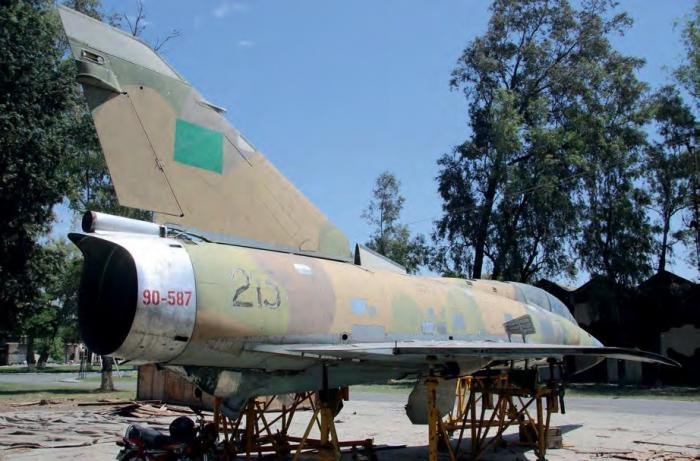
This former Libyan Mirage has received the engine nacelle from Mirage IIIEA 90- 587 and is being prepared for preservation. Out of the 76 aircraft received from Libya, ten two-seater and recce jets were returned to the air.
“Initially there was no spares support, but then our management team and the Deputy Chief of Air Staff [DCAS (Ops)], now the Chief of the Air Staff, Air Chief Marshal Sohail Aman, entered successful negotiations with Saab in 2015.” The Swedish company subsequently provided a spares support package.
A plaque on the wall in Wg Cdr Awan’s office shows he’s been DCE at the Structure Repair Shop since December 1993 when he was a flying officer, and in the 24 years since he’s been promoted three times.
“We’ve repaired 19 Mirages over the years, and increased the fleet by acquiring them from all over the world – Australia, Lebanon, Libya and Spain,” he says. “We used the Spanish wings, but we didn’t use the fuselages – 22 wings were utilised and the rest are still with us.
“We received 76 aircraft from Libya and recovered ten – dualseaters and recce jets were made airworthy again. We didn’t recover the remainder or use their fuselages but the wings have come in very handy.
“Structure and fatigue analysis in Australia and Switzerland found the Mirage fuselage can continue to fly for up 8,000 fatigue hours [with regular servicing and overhaul] so there’s still a lot left in them.
“That’s the reason we’re still flying the Mirages – we know the internal structures and the expiry time of the fuselage or wings, which could allow us to fly them for another ten years. However, in the case of the wings they can only last up to 2,250 hours, so we face difficulties with them.
“Right now we’re facing problems of cracked ribs in the wings, so we’re going to replace the damaged structures. We regularly monitor the wings with x-rays, and if required recover the aircraft. We open the wings to replace the cracked ribs then close them to provide a new life.
“The Libyan ones are in the best condition as they didn’t fly much. We’ve partially recovered 124 wings until now and are in the process of recovering 12 more. The ten aircraft that returned to service took 20 [wings] and, with assistance from Dassault, we’ve fully refurbished seven [aircraft] to date.”
The workshop has repaired Mirage VEF 96-704 twice. Badly damaged at Skardu, it then suffered a fire at Rafiqui, which led to replacement of the rear of the jet and its fin.
As part of the ‘indigenisation’ effort, Wg Cdr Awan’s team makes spare parts for the Mirage that are otherwise unavailable. This includes items produced in a pipe-bending facility.
A state-of-the-art aviation painting and livery shop exists for the Mirage as well as for F-16, JF-17, Dassault Falcon 20 and Saab 2000 aircraft.
Engines
The Engine Overhaul Wing, formally established at the MRF in March 1982, is tasked with overhauling the Mirage’s Atar 09C powerplant and its accessories. The first engine entered the Wing the same month and was completed the following June.

Sqn Ldr Shahid is Senior Chief Engineer at the MRF.
The engines enter the Engine Overhaul Wing every 800 hours, in between the I-level inspection carried out by squadrons and the Centre of Excellence at the two Mirage bases. The process sees the powerplants completely taken apart and lasts from four to six months, depending on the damage and availability of spares.
Every component goes through a non-destructive inspection (NDI), and around 80 Atar 09s are overhauled each year, with half of the hangar dedicated to the SNECMA powerplant.
The other half accommodates engines from other aircraft in the PAF inventory: the K-8’s Honeywell TFE731 (almost 20 per year), the F-16’s Pratt & Whitney F100 (20), the T-37’s Teledyne J69 (30) and the C-130’s Rolls-Royce T56 (6).
There will come a time in the near future when the Mirage will be gone. To ensure the MRF continues to cater for the needs of the PAF, the PAC Kamra leadership is looking to diversify the work of the skilled personnel who, for now, continue to build the reputation of the MRF.

The stripped-down fuselage of a two-seat Mirage awaits inspection at the MRF. Although Dassault stopped supporting the jet 20 years ago, the Mirage remains an important cornerstone of the PAF’s combat capabilities.
Originally published in AirForces Monthly Magazine
Technicians work on a Mirage’s Atar 09C powerplant at the Engine Overhaul Wing. Mirage engines enter the facility every 800 hours, and all components undergo a thorough cleaning process to remove any accumulated contaminants.
AFM saw the old jet receiving attention at the MRF in May 2001 and April 2004, and it eventually left the facility in January 2005. Sadly, the 5 Squadron fighter crashed after an undercarriage problem on January 31 this year, having served the PAF for almost 40 years.
The charismatic Wg Cdr Rafiq is head of the Structures Repair Wing. He has 40 years of experience on the Mirage and is something of a celebrity, having become the first airman to receive the rank of wing commander from a PAF Chief of Air Staff.
The cockpit of Mirage IIIEA 90-513, one of the aircraft to have undergone the ROSE I upgrade, receives attention at Kamra. This former Royal Australian Air Force jet was delivered to Pakistan in November 1990.
By the mid-2000s the expected phase-out of the Mirage by 2015 led to a decision to stop the GV-III overhauls.
Instead, the MRF formulated a revised maintenance package, referred to as ‘Mini GV’, which would see the Mirages return to maintenance six years after completing the GV-II overhaul and provide them with almost half the lease of life as GV-III would – reducing maintenance time and freeing up docks faster in the MRF.
When a new source of spares was discovered in Libya, however, it was decided to extend the life of the Mirage yet again, with a ‘Delta-Mini GV’ carried out six years after the Mini GV. Most of the fleet is now going through the latter.
As the MRF’s Senior Chief Engineer (SCE), Sqn Ldr Shahid, told AFM: “We’re creating GVs to keep the aircraft alive.”
The past PAF leadership’s investment in the MRF is reaping dividends decades later, and the work will continue until the JF-17 Thunder is mature enough, or a new fighter has been acquired, to take on most of the Mirage’s roles.
The MRF has also taken on responsibility for overhauling the PAF’s fleet of Saab 2000s. After a Taliban attack on 3 Squadron’s facility at Minhas in 2012 the facility repaired two badly damaged aircraft (see below).
More support
Supporting the MRF’s main overhaul facility is the Components Overhaul Wing, which began operations in 1975- 76. Back then, 150 testers from Dassault overhauled nearly 400 major components, but the workforce has since doubled to cope with the complexity of, and demand for, its work.
Today the Wing is capable of overhauling and producing more than 10,000 Mirage components every year. It includes a Clean Room, set up in 1980, for overhauling highly sophisticated components such as the gyro centre, which requires controlled atmospheric conditions when it’s being worked on.
In recent years the facility has boosted production by taking on a multi-purpose hydraulic test bench and JF-17 oxygen system components testing facility – part of PAC Kamra’s efforts to ensure that JF-17 work is shared among the company’s different elements, where skilled specialists already exist.
Repairing the jets
Aircraft accidents led to a Fuselage Structural Repair Facility being built at Kamra. After Mirage V 70-415 was involved in a mishap, Dassault was asked for a damage assessment of the jet and repair. A fuselage repair jig was then ordered and, in May 1989, installed in the original production hangar in France, built in 1978 but by then standing idle.
Within months, the high cost of repairing an aircraft abroad, coupled with the time involved, led the PAF to set up a Structures Repair Wing, which began to repair aircraft. To date, 19 PAF Mirages – a squadron’s strength – has been recovered at relatively minimal cost.
A Wing Refurbishing Facility, set up in 1980 using equipment acquired from Australia under the Blue Flash V programme, was soon joined by a ‘lifting and turning jig’ and a wing repair jig – investment that has led to millions of dollars of savings. Today, wing problems are a particular Mirage bugbear, but this department is helping to address them.
Heading up the Structures Repair Wing is Deputy Chief Engineer (DCE) Wg Cdr Rafiq Awan, 63. He’s served the PAF for 44 years (40 on the Mirage, having started work on them straight after completing his airframe training at Korangi Creek in 1974) and joined the MRF in February 1978, just three months before the first Mirage arrived.
Although he retired as a squadron leader in 2006, he was re-employed as a civilian and received his current rank in 2015.
He explains: “I was involved in the recovery of the Saab 2000 Erieyes, two days after the incident [Taliban attack on PAF Base Minhas] in August 2012. Three were damaged; two aircraft were repaired but the third was beyond recovery. It was a very big task: the complete roof and internal structures were severely damaged.
This former Libyan Mirage has received the engine nacelle from Mirage IIIEA 90- 587 and is being prepared for preservation. Out of the 76 aircraft received from Libya, ten two-seater and recce jets were returned to the air.
“Initially there was no spares support, but then our management team and the Deputy Chief of Air Staff [DCAS (Ops)], now the Chief of the Air Staff, Air Chief Marshal Sohail Aman, entered successful negotiations with Saab in 2015.” The Swedish company subsequently provided a spares support package.
A plaque on the wall in Wg Cdr Awan’s office shows he’s been DCE at the Structure Repair Shop since December 1993 when he was a flying officer, and in the 24 years since he’s been promoted three times.
“We’ve repaired 19 Mirages over the years, and increased the fleet by acquiring them from all over the world – Australia, Lebanon, Libya and Spain,” he says. “We used the Spanish wings, but we didn’t use the fuselages – 22 wings were utilised and the rest are still with us.
“We received 76 aircraft from Libya and recovered ten – dualseaters and recce jets were made airworthy again. We didn’t recover the remainder or use their fuselages but the wings have come in very handy.
“Structure and fatigue analysis in Australia and Switzerland found the Mirage fuselage can continue to fly for up 8,000 fatigue hours [with regular servicing and overhaul] so there’s still a lot left in them.
“That’s the reason we’re still flying the Mirages – we know the internal structures and the expiry time of the fuselage or wings, which could allow us to fly them for another ten years. However, in the case of the wings they can only last up to 2,250 hours, so we face difficulties with them.
“Right now we’re facing problems of cracked ribs in the wings, so we’re going to replace the damaged structures. We regularly monitor the wings with x-rays, and if required recover the aircraft. We open the wings to replace the cracked ribs then close them to provide a new life.
“The Libyan ones are in the best condition as they didn’t fly much. We’ve partially recovered 124 wings until now and are in the process of recovering 12 more. The ten aircraft that returned to service took 20 [wings] and, with assistance from Dassault, we’ve fully refurbished seven [aircraft] to date.”
The workshop has repaired Mirage VEF 96-704 twice. Badly damaged at Skardu, it then suffered a fire at Rafiqui, which led to replacement of the rear of the jet and its fin.
As part of the ‘indigenisation’ effort, Wg Cdr Awan’s team makes spare parts for the Mirage that are otherwise unavailable. This includes items produced in a pipe-bending facility.
A state-of-the-art aviation painting and livery shop exists for the Mirage as well as for F-16, JF-17, Dassault Falcon 20 and Saab 2000 aircraft.
Engines
The Engine Overhaul Wing, formally established at the MRF in March 1982, is tasked with overhauling the Mirage’s Atar 09C powerplant and its accessories. The first engine entered the Wing the same month and was completed the following June.
Sqn Ldr Shahid is Senior Chief Engineer at the MRF.
The engines enter the Engine Overhaul Wing every 800 hours, in between the I-level inspection carried out by squadrons and the Centre of Excellence at the two Mirage bases. The process sees the powerplants completely taken apart and lasts from four to six months, depending on the damage and availability of spares.
Every component goes through a non-destructive inspection (NDI), and around 80 Atar 09s are overhauled each year, with half of the hangar dedicated to the SNECMA powerplant.
The other half accommodates engines from other aircraft in the PAF inventory: the K-8’s Honeywell TFE731 (almost 20 per year), the F-16’s Pratt & Whitney F100 (20), the T-37’s Teledyne J69 (30) and the C-130’s Rolls-Royce T56 (6).
There will come a time in the near future when the Mirage will be gone. To ensure the MRF continues to cater for the needs of the PAF, the PAC Kamra leadership is looking to diversify the work of the skilled personnel who, for now, continue to build the reputation of the MRF.
The stripped-down fuselage of a two-seat Mirage awaits inspection at the MRF. Although Dassault stopped supporting the jet 20 years ago, the Mirage remains an important cornerstone of the PAF’s combat capabilities.
Topics
Read more aboutOriginally published in AirForces Monthly Magazine
Users who are viewing this thread
Total: 2 (members: 0, guests: 2)
Pakistan Defence Latest
-

-
Federal cabinet gives nod to imposition of emergency in KP; summary sent to president (29 Viewers)
- Latest: Desprado123
-

-

-

Country Watch Latest
-

-
 India Has Lost Air Superiority to Pakistan, No Jets Left to Fight (16 Viewers)
- Latest: Hakikat ve Hikmet
-
-

-

Latest Posts
-
-
 Makkah Defence Alliance: Turkey, Saudi Arabia, and Pakistan, news & updates (85 Viewers)
- Latest: Oldenwisdom...قول بزرگ
-

-
-
 Israel declares all Arab states as Illegitimate Official government declaration (19 Viewers)
- Latest: PakFactor