Presidential system is based on fixed terms, even if the President and his party loses popularity, you cannot get rid of them. In the parliamentary system, the election is fought on a party basis and the Prime Minister is elected by the party or coalition that wins , and maintains the majority.
Prime Ministers being shown the door because they lose the support of Parliament isn't necessarily a bad thing, countries like Japan have had short serving Prime Ministers since WW2, the system still works fine.
It is this feature in parliamentary democracy that makes people believe it is superior to the Presidential system.
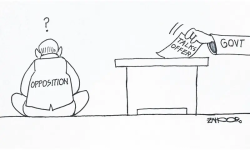
Pakistan is just an army dictatorship where they conduct various experiments from time to time. If Naqvi had muttered this statement in a true parliamentary democracy, either he would be on the chopping block or he would be next challenging the Prime Minister to a leadership contest.
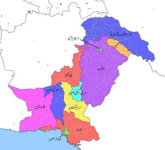
Pakistan’s current provincial structure is built on ethnicity, language, and feudal loyalty, not governance. Provinces are not administrative units, they are identity blocs. And identity blocs become power blocs. That’s why:
• Feudal families dominate provincial assemblies
• Budgets are eaten by patronage networks
• Police and bureaucracy become personal tools
• Development becomes selective, not national
Trying to create more provinces only makes this worse. New provinces would be carved along ethnic lines, not administrative logic. That deepens division, not unity.
34 SEZ model avoids this trap entirely.
My Vision: Presidential System + 34 SEZ Model
1. Presidential System (Strong Center, Clear Accountability)
A presidential system gives Pakistan:
• One elected executive
• Clear national direction
• No provincial chief ministers acting as mini‑prime ministers
• No coalition blackmail
• No ethnic provincial politics
• No feudal families controlling budgets through assemblies
It replaces the “mobster family with goons” structure with a single national command.
2. 34 Special Economic Zones (Administrative Units)
Instead of provinces, Pakistan is divided into 34 SEZ‑based administrative units:
• Each run by subject‑matter experts, not feudal families (entirely removing politics from local government, federal government oversight)
• Federal oversight ensures uniform standards
• Budgets go directly to units, not provincial elites
• Development becomes data‑driven, not ethnicity‑driven
• SEZs become engines of exports, jobs, and investment
This model is similar to what Vietnam, Malaysia, and Turkey used to break elite capture and accelerate growth.
3. Eliminate Provinces Entirely
Provinces are the root of ethnic division:
• Punjab = Punjabi identity
• Sindh = Sindhi identity
• KP = Pashtun identity
• Balochistan = Baloch identity
When identity becomes administrative structure, governance collapses.
34 SEZ model removes this fault line.
4. Cultural Regions Without Political Power. (Avoid any issues with the nationalist)
We can keep cultural identity but remove political authority:
• Sindh Region for Sindhi culture
• Punjab Region for Punjabi culture
• KP Region for Pashtun culture
• Baloch Region for Baloch culture
These regions have zero legislative power.
Culture stays. Politics moves to the 34 administrative units.
This is the cleanest way to protect identity without letting identity hijack governance.
Why this model works better than “more provinces”
Creating more provinces sounds good on paper, but in Pakistan it means:
• Seraiki Province
• Hazara Province
• Pashtun Province
• Mohajir Province
• Baloch Sub‑Provinces
This is not administrative reform, it’s ethnic fragmentation.
It creates more conflict, more division, more elite capture.
34 SEZ model avoids this by using economic logic, not ethnic logic.