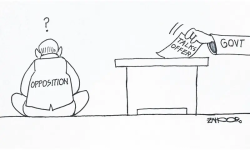
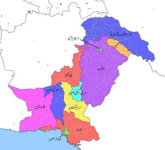
Naqvi urges 'all political parties' to settle issue of more provinces, says current 'system' has collapsed

Around the world parliamentary democracy is considered far better than presidential democracy.
Like where? In terms of? how?
The only thing it's good for is that it's a better version of "democracy," as in a lot more people and groups are represented
But that's about it. It brings no stability to deliver results for the people for example, just look at Italy and the UK.
 
Like where? In terms of? how?
The only thing it's good for is that it's a better version of "democracy," as in a lot more people and groups are represented
But that's about it. It brings no stability to deliver results for the people for example, just look at Italy and the UK.
Presidential system is based on fixed terms, even if the President and his party loses popularity, you cannot get rid of them. In the parliamentary system, the election is fought on a party basis and the Prime Minister is elected by the party or coalition that wins , and maintains the majority.

Prime Ministers being shown the door because they lose the support of Parliament isn't necessarily a bad thing, countries like Japan have had short serving Prime Ministers since WW2, the system still works fine.

It is this feature in parliamentary democracy that makes people believe it is superior to the Presidential system.

Pakistan is just an army dictatorship where they conduct various experiments from time to time. If Naqvi had muttered this statement in a true parliamentary democracy, either he would be on the chopping block or he would be next challenging the Prime Minister to a leadership contest.
 
Presidential system is based on fixed terms, even if the President and his party loses popularity, you cannot get rid of them. In the parliamentary system, the election is fought on a party basis and the Prime Minister is elected by the party or coalition that wins , and maintains the majority.

Prime Ministers being shown the door because they lose the support of Parliament isn't necessarily a bad thing, countries like Japan have had short serving Prime Ministers since WW2, the system still works fine.
Japan and Mexico have been ruled by one party since forever - they are not real multi-party democracies like those in Europe, India, Australia etc
None of these countries are politically stable except for India, but that too because they end up becoming semi-dictatorships under various multi term PM's like the Gandhi family and now Modi. Australia is just filled with natural resources so they don't count.

There's no successful parliamentary democracy anywhere in the developing or middle-income countries.
Presidential system with states' rights is the only way forward.
It is this feature in parliamentary democracy that makes people believe it is superior to the Presidential system.

Pakistan is just an army dictatorship where they conduct various experiments from time to time. If Naqvi had muttered this statement in a true parliamentary democracy, either he would be on the chopping block or he would be next challenging the Prime Minister to a leadership contest.
 
Presidential system is based on fixed terms, even if the President and his party loses popularity, you cannot get rid of them. In the parliamentary system, the election is fought on a party basis and the Prime Minister is elected by the party or coalition that wins , and maintains the majority.

Prime Ministers being shown the door because they lose the support of Parliament isn't necessarily a bad thing, countries like Japan have had short serving Prime Ministers since WW2, the system still works fine.

It is this feature in parliamentary democracy that makes people believe it is superior to the Presidential system.

Pakistan is just an army dictatorship where they conduct various experiments from time to time. If Naqvi had muttered this statement in a true parliamentary democracy, either he would be on the chopping block or he would be next challenging the Prime Minister to a leadership contest.


You’re partly right, but the truth is more complicated and honestly, more familiar. Think of the country like a big mobster family. The public only ever sees the goons on the street, loud, visible, doing the rough work, enforcing whatever the bosses want. In our case, that’s the Army. They’re the muscle. They show up when pressure needs to be applied, and they take the blame when things go wrong.

But the real decisions?
Those aren’t made by the goons.

They’re made by the people sitting quietly in the back room, the political fixers, the intelligence networks, the business elites, the old families who’ve been pulling strings for decades. They don’t show their faces. They don’t give speeches. They don’t need to. They just make sure the system keeps running exactly the way it benefits them.

And that system is designed to keep the public in a controlled kind of suffering. Not enough pain to spark a revolt, not enough comfort to build real independence. Just enough oxygen to breathe, never enough to stand tall.

That’s why saying “the Army decides everything” doesn’t capture the whole picture. If the Army truly had full control, the 18th Amendment would have never passed. That amendment shifted power away from the center, something the real mobster family hates. The only reason it slipped through is because the hidden power brokers allowed it, miscalculated it, or didn’t fully understand how it would play out.

The goons enforce.
The mobster family decides.
And the public pays the price.
 

Attachments

  • IMG_7061.jpeg
    IMG_7061.jpeg
    335.4 KB · Views: 1
Presidential system is based on fixed terms, even if the President and his party loses popularity, you cannot get rid of them. In the parliamentary system, the election is fought on a party basis and the Prime Minister is elected by the party or coalition that wins , and maintains the majority.

Prime Ministers being shown the door because they lose the support of Parliament isn't necessarily a bad thing, countries like Japan have had short serving Prime Ministers since WW2, the system still works fine.

It is this feature in parliamentary democracy that makes people believe it is superior to the Presidential system.

Pakistan is just an army dictatorship where they conduct various experiments from time to time. If Naqvi had muttered this statement in a true parliamentary democracy, either he would be on the chopping block or he would be next challenging the Prime Minister to a leadership contest.

Pakistan’s current provincial structure is built on ethnicity, language, and feudal loyalty, not governance. Provinces are not administrative units, they are identity blocs. And identity blocs become power blocs. That’s why:

• Feudal families dominate provincial assemblies
• Budgets are eaten by patronage networks
• Police and bureaucracy become personal tools
• Development becomes selective, not national

Trying to create more provinces only makes this worse. New provinces would be carved along ethnic lines, not administrative logic. That deepens division, not unity.

34 SEZ model avoids this trap entirely.

My Vision: Presidential System + 34 SEZ Model

1. Presidential System (Strong Center, Clear Accountability)

A presidential system gives Pakistan:

• One elected executive
• Clear national direction
• No provincial chief ministers acting as mini‑prime ministers
• No coalition blackmail
• No ethnic provincial politics
• No feudal families controlling budgets through assemblies

It replaces the “mobster family with goons” structure with a single national command.

2. 34 Special Economic Zones (Administrative Units)

Instead of provinces, Pakistan is divided into 34 SEZ‑based administrative units:

• Each run by subject‑matter experts, not feudal families (entirely removing politics from local government, federal government oversight)
• Federal oversight ensures uniform standards
• Budgets go directly to units, not provincial elites
• Development becomes data‑driven, not ethnicity‑driven
• SEZs become engines of exports, jobs, and investment

This model is similar to what Vietnam, Malaysia, and Turkey used to break elite capture and accelerate growth.

3. Eliminate Provinces Entirely

Provinces are the root of ethnic division:

• Punjab = Punjabi identity
• Sindh = Sindhi identity
• KP = Pashtun identity
• Balochistan = Baloch identity

When identity becomes administrative structure, governance collapses.
34 SEZ model removes this fault line.

4. Cultural Regions Without Political Power. (Avoid any issues with the nationalist)

We can keep cultural identity but remove political authority:

• Sindh Region for Sindhi culture
• Punjab Region for Punjabi culture
• KP Region for Pashtun culture
• Baloch Region for Baloch culture

These regions have zero legislative power.
Culture stays. Politics moves to the 34 administrative units.

This is the cleanest way to protect identity without letting identity hijack governance.

Why this model works better than “more provinces”

Creating more provinces sounds good on paper, but in Pakistan it means:

• Seraiki Province
• Hazara Province
• Pashtun Province
• Mohajir Province
• Baloch Sub‑Provinces

This is not administrative reform, it’s ethnic fragmentation.
It creates more conflict, more division, more elite capture.

34 SEZ model avoids this by using economic logic, not ethnic logic.
 
Pakistan’s current provincial structure is built on ethnicity, language, and feudal loyalty, not governance. Provinces are not administrative units, they are identity blocs. And identity blocs become power blocs. That’s why:

• Feudal families dominate provincial assemblies
• Budgets are eaten by patronage networks
• Police and bureaucracy become personal tools
• Development becomes selective, not national

Trying to create more provinces only makes this worse. New provinces would be carved along ethnic lines, not administrative logic. That deepens division, not unity.

34 SEZ model avoids this trap entirely.

My Vision: Presidential System + 34 SEZ Model

1. Presidential System (Strong Center, Clear Accountability)

A presidential system gives Pakistan:

• One elected executive
• Clear national direction
• No provincial chief ministers acting as mini‑prime ministers
• No coalition blackmail
• No ethnic provincial politics
• No feudal families controlling budgets through assemblies

It replaces the “mobster family with goons” structure with a single national command.

2. 34 Special Economic Zones (Administrative Units)

Instead of provinces, Pakistan is divided into 34 SEZ‑based administrative units:

• Each run by subject‑matter experts, not feudal families (entirely removing politics from local government, federal government oversight)
• Federal oversight ensures uniform standards
• Budgets go directly to units, not provincial elites
• Development becomes data‑driven, not ethnicity‑driven
• SEZs become engines of exports, jobs, and investment

This model is similar to what Vietnam, Malaysia, and Turkey used to break elite capture and accelerate growth.

3. Eliminate Provinces Entirely

Provinces are the root of ethnic division:

• Punjab = Punjabi identity
• Sindh = Sindhi identity
• KP = Pashtun identity
• Balochistan = Baloch identity

When identity becomes administrative structure, governance collapses.
34 SEZ model removes this fault line.

4. Cultural Regions Without Political Power. (Avoid any issues with the nationalist)

We can keep cultural identity but remove political authority:

• Sindh Region for Sindhi culture
• Punjab Region for Punjabi culture
• KP Region for Pashtun culture
• Baloch Region for Baloch culture

These regions have zero legislative power.
Culture stays. Politics moves to the 34 administrative units.

This is the cleanest way to protect identity without letting identity hijack governance.

Why this model works better than “more provinces”

Creating more provinces sounds good on paper, but in Pakistan it means:

• Seraiki Province
• Hazara Province
• Pashtun Province
• Mohajir Province
• Baloch Sub‑Provinces

This is not administrative reform, it’s ethnic fragmentation.
It creates more conflict, more division, more elite capture.

34 SEZ model avoids this by using economic logic, not ethnic logic.
I am slowly warming up to your suggestions. We have 4 provinces but look at China, they have 1.4B population and most of their provinces population exceeds that of Pakistan province population except Punjab but China is doing great. So with more provinces we may end up with 32 corrupt and mismanaged provinces than the current 4. The only issue with new SEZ model is will political/feudal class accept this, money/fund is how they stay in power, buy judges, police, bureaucrats, politicians, once the budget is not given to the MNAs they will become toothless.
 

Users who are viewing this thread

Back
Top