F-22Raptor
Elite Member

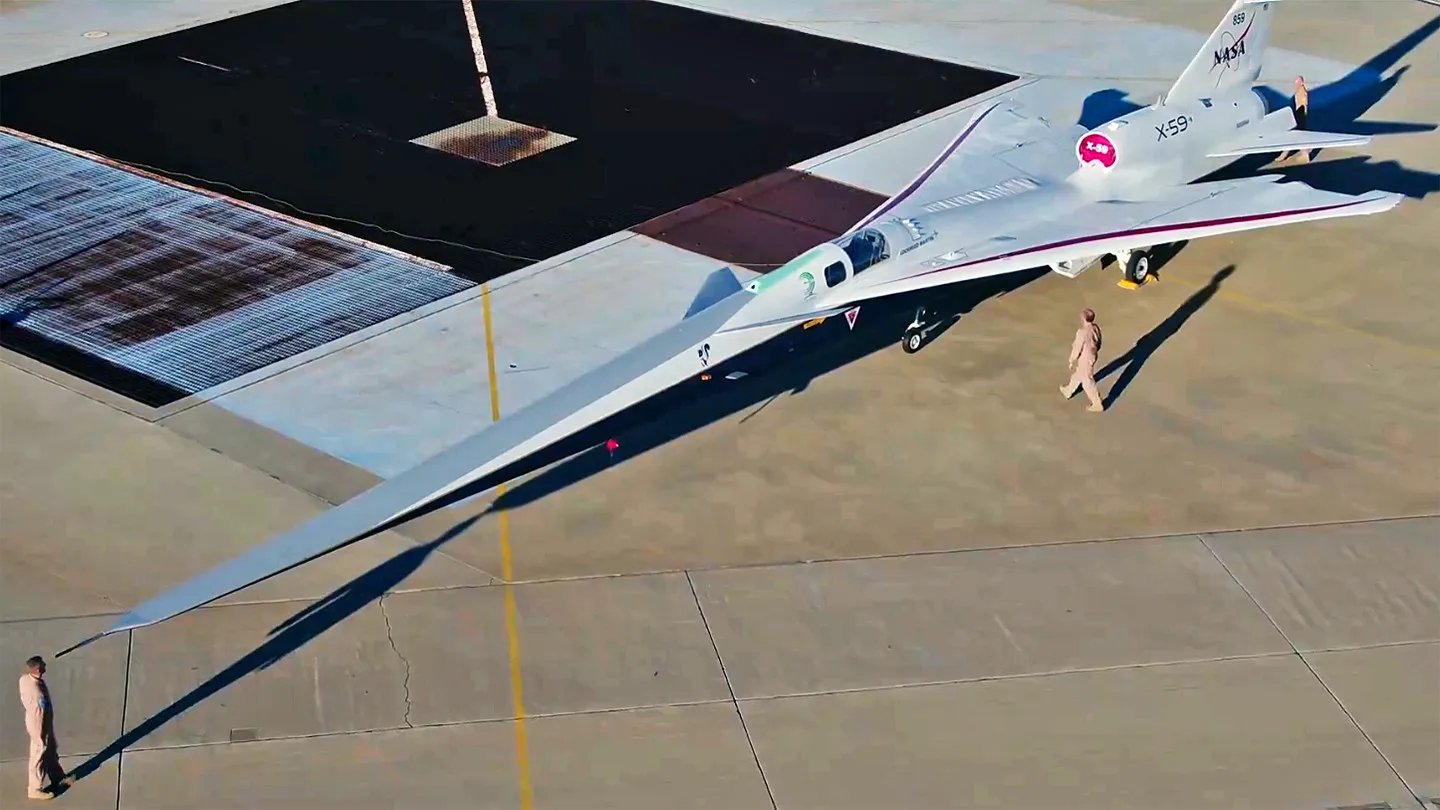
Perhaps the most extraordinary-looking aircraft to have taken to the air in many years, the X-59Quiet Supersonic Technology experimental test aircraft, or QueSST, has made its first flight. Much is resting on the test program that has now been kicked off, with the future of supersonic passenger flight arguably dependent on its successful outcome.
The first flight took place at the U.S. Air Force’s Plant 42 in Palmdale, California. Subsequently, it’s planned for the X-59 to be moved to NASA’s Armstrong Flight Research Center, which is collocated with Edwards Air Force Base in California, for further test flights.
Ahead of the first flight, NASA had outlined its plans for the milestone sortie. This would be a lower-altitude loop at about 240 miles per hour to check system integration. It will be followed by the first phase of flight testing, focused on verifying the X-59’s airworthiness and safety. During subsequent test flights, the X-59 will go higher and faster, eventually exceeding the speed of sound.
Although there were no public announcements, the first flight had been expected earlier this month but was scrubbed for unknown reasons. TWZ has reached out to NASA for more information in relation to today’s flight.
A product of Lockheed Martin’s famed Skunk Works advanced projects division, the X-59 was rolled out at the Skunk Works facility within Palmdale in January 2024.
“In just a few short years, we’ve gone from an ambitious concept to reality,” NASA Deputy Administrator Pam Melroy said at the time. “NASA’s X-59 will help change the way we travel, bringing us closer together in much less time.”
The first flight was preceded by integrated systems testing, engine runs, and taxi testing.
Taxi tests began at Palmdale this summer, marking the first time that the X-59 had moved under its own power. NASA test pilot Nils Larson was at the controls for the aircraft’s first low-speed taxi test on July 10, 2025.