Beijingwalker
VIP Member

- Thread starter
- #46
China booms; US languishes
June 4, 2026
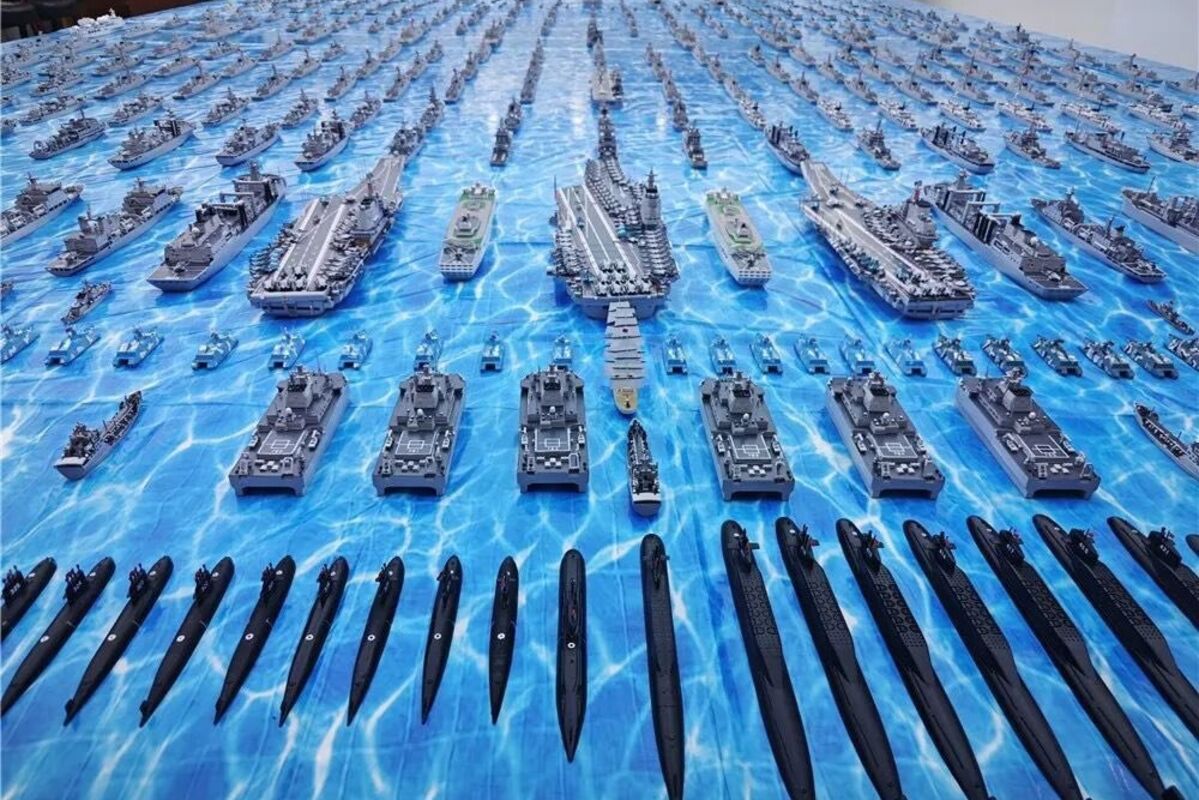
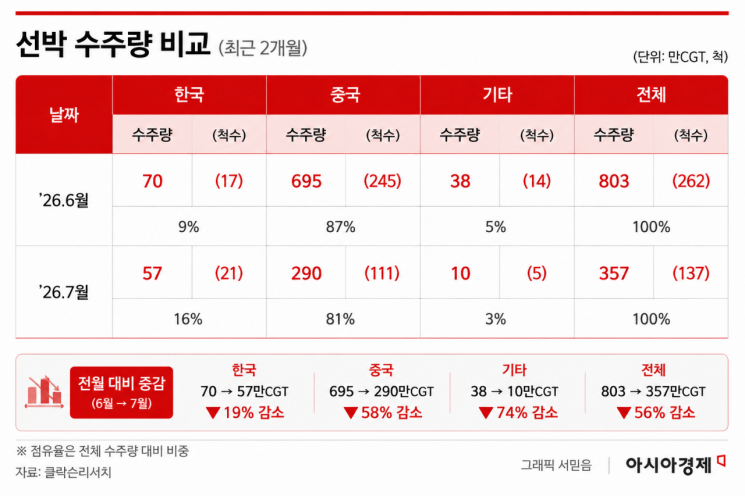
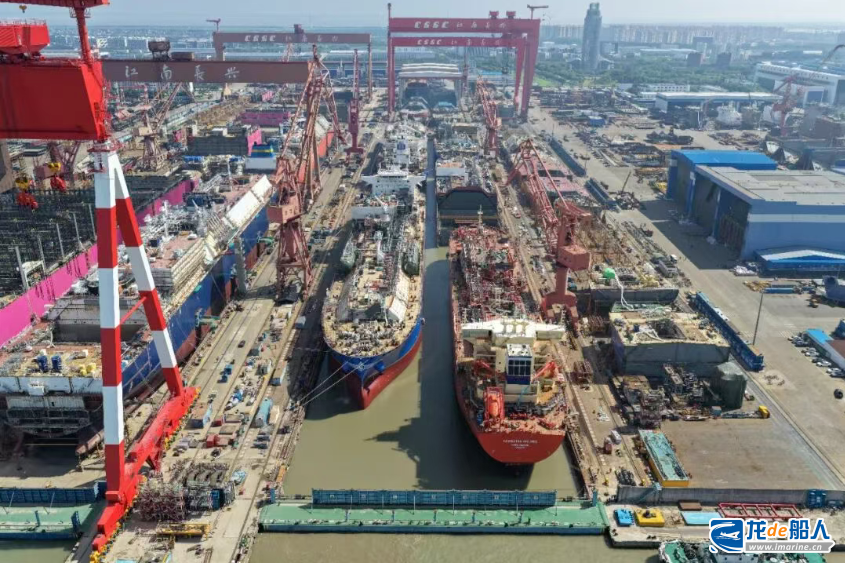
The wind off the Yangtze carries the sound of industry for miles. At China’s Jiangnan Shipyard—one node in a vast network of shipyards dedicated to military production—cranes swing steel while welders labor under floodlights. By contrast, the United States depends on only a handful of naval yards to sustain and modernize its fleet. (From: The US Naval Institute.)
In one Chinese dry dock, a destroyer waits for its radar arrays; in another, the hull of a new amphibious ship is already taking shape. In the time it takes the U.S. Navy to commission a single large combatant, China can launch several.
This disparity reflects more than industrial capacity—it reflects profound differences in political economy and culture. China’s one-party communist system fuses civil and military priorities, allowing leaders to redirect commercial shipbuilding toward naval production with little debate or delay. Costs and timelines are managed by fiat, and industrial mobilization is treated as a strategic imperative. The United States, by contrast, operates under a capitalist model in which competing interests shape outcomes. Lobbyists for shipyards, unions, and defense contractors exert influence in Congress, often leading to compromises that dilute efficiency. Programs are fragmented across political constituencies, bound by layers of regulation, and vulnerable to the annual cycle of budget uncertainty.
The strategic implications of these differences are stark. Rivals exploit technology cycles that move far faster than traditional U.S. defense timelines. A fleet that waits a decade for exquisite ships risks obsolescence before they arrive. The Navy must ask whether its acquisition system can adapt fast enough to sustain superiority, or whether it will be outbuilt by a rival who learns faster.

The Yan’an and Xian’yang are part of an ongoing multiship construction program of Renhai-class cruisers for the People’s Liberation Army Navy. If the United States does not change its acquisition program, it will never keep pace with Chinese shipbuilding. Weibo
Enduring Shipbuilding Problems
The Navy’s record on shipbuilding offers little comfort. The Government Accountability Office has chronicled two decades of cost overruns, schedule slips, and ships that fall short of expectations. Despite a near doubling of the shipbuilding budget, the fleet has not grown as planned.1
Another of China’s bulk ship builds is the Luyang III–class guided-missile destroyer. Here are five being built concurrently at Dalian Shipyard. The U.S. ship construction rate is much lower. China-Arms
The littoral combat ship illustrates the dangers of mismatched ambition and execution. Conceived as a nimble, modular vessel, it was intended to deliver flexible capabilities at low cost. Yet the Navy struggled to balance evolving operational needs with stable program baselines. Requirement changes, some of which were legitimate responses to shifting missions, cascaded into repeated redesigns and delays. Likewise, while new programs inevitably start with immature technologies, the LCS attempted to integrate too many unproven systems at once rather than phasing maturity over time. Survivability standards were increased after construction already had begun, adding costly retrofits. Mission packages for antisubmarine and mine warfare did not progress as expected, leaving the ships without the promised versatility. The result was billions invested for limited combat power and some ships retired far earlier than planned.2
The Zumwalt-class destroyer followed a similar path. Originally envisioned as a class of 32 ships packed with revolutionary technologies, the program collapsed under its own ambition. Multiple critical technologies were pursued simultaneously rather than sequentially, stretching timelines and compounding risk. By the time the first hulls were built, the ammunition for the Advanced Gun System was unaffordable. The planned number of ships in the class shrank from 32 to 3, each costing more than $10 billion in 2026 dollars, including development costs.3
The Constellation-class frigate, billed as a return to realism, has already stumbled. Construction began before the design was fully mature, violating lessons from both commercial industry and Navy history. Delivery of the lead ship has slipped by years, and the class has been curtailed to just two ships.4
These examples illustrate systemic weaknesses. Programs often launch without sound business cases and without the right balance of technology maturity, design stability, resources, and schedule. Once funds are secured, inertia carries them forward even as risks mount. Weak business cases overpromise, forcing cuts in capability or quantity when reality intrudes. The result is a smaller, less-capable fleet delivered late and at higher cost.
The prescription is clear. The United States must maintain design stability before committing to production, use digital integration to catch errors early, and align funding with incremental evidence. Marginal tweaks will not suffice. Only a foundational shift in discipline and culture can break the cycle of paying more for less.
JCIDS in Historical Perspective
The challenges of defense acquisition are not new, nor are the attempts to solve them. In 2003, the Joint Capabilities Integration and Development System emerged as the next turn of the wheel. JCIDS was intended to discipline requirements, enforce joint priorities, and ensure capability investments aligned with strategy. Its processes were rigorous, its templates elaborate, and its staffing chains long.5 The goal was sound, but the result was delay. Reviews stretched for years, requirements ballooned into hundreds of pages, and programs were locked into rigid specifications long before technologies or threats stabilized.By the 2010s, JCIDS was widely derided as too slow, too complex, and too divorced from the realities of acquisition. Operators struggled to see their needs met in a timely fashion. Program managers spent more time chasing signatures than solving problems. Congress grew skeptical.
In August 2025, the Department of Defense closed the book.6 A directive instructed the Vice Chairman of the Joint Chiefs to stop validating most service requirements, rescind JCIDS manuals, and preserve only those joint activities that directly accelerated delivery. A requirement would count as joint only if it carried a Vice Chairman’s memorandum with legal justification. The Joint Requirements Oversight Council is being reshaped to focus on joint force design, capability portfolios, combatant command gaps, and integration of major programs. The intent is to manage by exception, not by default.
The Navy must treat today’s reforms not as bureaucratic churn, but as an opportunity to reset requirements around operational problems, align prototypes with mission engineering, and compete effectively for resources.
The Adaptive Acquisition Framework and Iteration
Even before JCIDS ended, the department tried to accelerate delivery through the Adaptive Acquisition Framework. Established in 2020, the AAF created four main pathways: urgent capability acquisition, middle tier acquisition, major capability acquisition, and software acquisition. Each promised tailoring, shorter cycles, and closer user feedback.Execution has been uneven. GAO’s 2024 review found that only the software pathway fully embraced this cycle of continuous improvement.7 The others lacked guidance on how to capture user input, plan for learning, and preserve knowledge across rotations. Program teams interpreted iteration inconsistently, and some doubted it applied to their efforts at all. Without it, pathways slip back into linear compliance.
Commercial practice points a different way. Companies that build complex cyber hardware, such as servers and routers, rely on continuous cycles of design, validation, and production. Models confirm designs, prototypes are tested across environments, production insights feed the next round, and funding is released incrementally as evidence accumulates. The result is faster learning and better alignment of risk and reward.8
Ukraine has shown what iteration looks like in combat: Unmanned surface drones, commercial satellite imagery, improvised strike packages, and electronic warfare tools were fielded in weeks. Units updated software and tactics cycle by cycle. Russian forces adapted with jamming and decoys, yet advantage flowed to the side that learned faster. Survivability depended on dispersal, deception, rapid patching, and flexible payloads. Those were acquisition outcomes achieved in real time. Of course, it is important to differentiate the truncated acquisition process Ukraine was forced to adapt to survive an existential conflict from a U.S. military process that balances a variety of risk factors. However, facing growing capability and capacity gaps compared to the pacing threat, senior U.S. military leaders are now frequently calling for a wartime footing that accepts increased acquisition risks to reduce operational risk.
For the Navy, the lesson is urgent. Software cannot be the only thing that iterates. Hardware programs must adopt cycles of prototyping, fleet testing, and redesign. Digital engineering and model-based systems engineering can reduce risk by revealing integration issues in the virtual world while changes are still cheap. The Maritime Tactical Command and Control effort has shown how agile methods can deliver software increments at operational tempo.9 Shipbuilding and weapon programs should follow suit, or they will continue to deliver yesterday’s answers to today’s problems.
The middle-tier pathway should be a workhorse. Rapid prototyping aims to field initial combat capability within five years, while rapid fielding can transition proven solutions into production with minimal delay. To realize that promise, program managers need standing agreements with test ranges, access to instrumented fleets, and contracting vehicles that can facilitate quick placement of orders. Development, security, and operations practices should move beyond slogans to measurable outcomes.
Urgent capability acquisition should not be viewed as a separate universe. The techniques that deliver a wartime quick-reaction capability can be scaled into regular practice when paired with modular open-system approaches. A product line architecture, with stable interfaces and swappable payloads, lets the Navy improve the inside of a system without scrapping the outside. That is how smartphones evolve. The shell looks familiar, but the internals change rapidly.
Iteration must include sustainment. Design choices that reduce hours of maintenance or extend time between overhauls deliver real warfighting advantage. Digital twins that pair operational data with engineering models can forecast failure, schedule maintenance just in time, and feed design changes back into the next production lot. A process that stops at initial operational capability is not true iteration; it is a pause.
Speed also depends on how the Navy manages data. Open interfaces and shared test data let new vendors enter without starting from scratch. Digital thread practices can connect requirements, design models, test cases, production records, and sustainment logs, so that each cycle begins smarter than the last. Rather than arguing over drawing ownership, the Navy could compete upgrades through interface standards and data escrow. Metrics could reinforce this approach. Portfolio leaders should track release cadence, mean time to repair, time to integrate a new sensor, vulnerability remediation time, and the fraction of the fleet on the latest software. Those measures are not academic. They express whether the Navy is building a force that can be improved in contact with the enemy, in the same way modern companies improve products while they are in the hands of users.
Learning to Fail Faster
Culture can defeat any policy. The culture of U.S. defense acquisition remains risk averse. Programs are structured to avoid visible failure, not to accelerate learning. Yet innovation depends on failure that is quick, bounded, and informative.Early SpaceX rockets exploded on landing pads, as data points, not embarrassments—each iteration brought rapid improvement. Reusable boosters cut costs and changed launch economics.
SpaceX, however, operates without federal regulatory constraints, congressional scrutiny, or the public accountability DoD programs must bear. DoD need not emulate SpaceX—but it must adapt SpaceX’s iterative culture to a framework that still satisfies legitimate oversight. A culture that refuses to tolerate small failures ends up courting larger ones. By rewarding compliance over outcomes, the system ensures failure arrives wholesale rather than in manageable pieces.
Moving fast does not mean abandoning rigor. It means bounding risk, learning quickly, and scaling what works. Prototypes should fail often in controlled environments: on ranges, in fleet exercises, and inside digital twins. Leaders must protect teams that take smart risks, celebrate learning, and move quickly to incorporate insights. The GAO’s call for pilot programs aligns with this.10 Contracts should include options for rapid repair and retest rather than defaulting to stop work. Operational commanders should receive authority and funding to try small batches of new capability, collect data, and return verdicts on utility. That is how the Navy can prove to itself and to Congress that speed is possible without sacrificing accountability.
Metrics must reflect this intent. A program that reveals a fatal flaw in month six and pivots should score higher than a program that hides its problems until operational tests. Leaders should ask about cycle time between field feedback and the next release, about the percentage of code covered by automated tests and about the number of hours it takes to integrate a new sensor across the fleet. These numbers will never replace judgment, but they can move discussions from opinion to evidence.
Top cover is essential. Senior leaders must make clear that honest failure in pursuit of learning will be protected. Promotion boards and award systems should value experimentation tours. Inspectors and auditors should calibrate findings to the purpose of the activity. A controlled failure in a prototype event is not the same as negligence in a production program.
Cultural Change and Strategic Implications

Shipyard workers on the deck of the PCU Bougainville (LHA-8), which is expected to deliver in August 2026. Shipbuilding programs must adopt cycles of prototyping, fleet testing, and redesign or they will continue to provide yesterday’s answers to today’s problems. USNI News Photo
Policy reform without cultural change will fail. Leaders must shift incentives, career paths, and oversight to reward speed and adaptation. Program managers and contracting officers need training in digital engineering, agile methods, and iterative acquisition. Sailors and Marines should be embedded in development teams, providing continual feedback so that field realities shape design in real time.
Congress has a vital role. Multiyear procurement provides demand signals that allow industry to invest in people and facilities. Flexible software funding enables continual delivery rather than year-end surges. Oversight can insist on open architectures, modular interfaces, and digital artifacts that accelerate integration. Industry must modernize shipyards, expand training pipelines, and embrace advanced manufacturing. Allies should be integrated into experimentation campaigns and modular design standards that allow collaboration at speed.
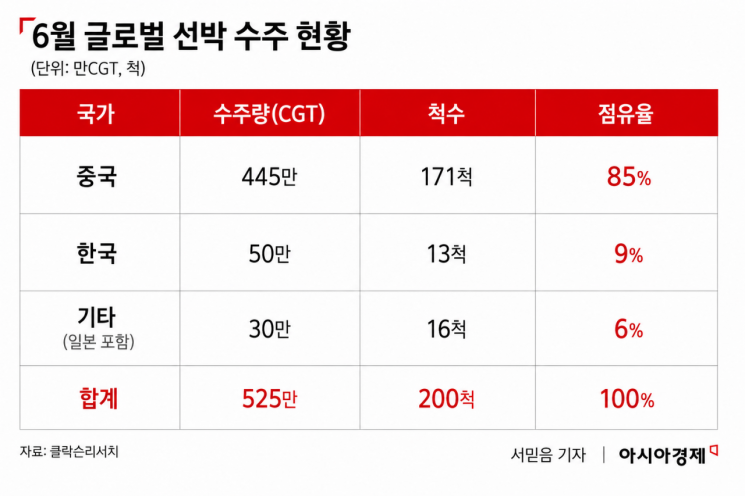
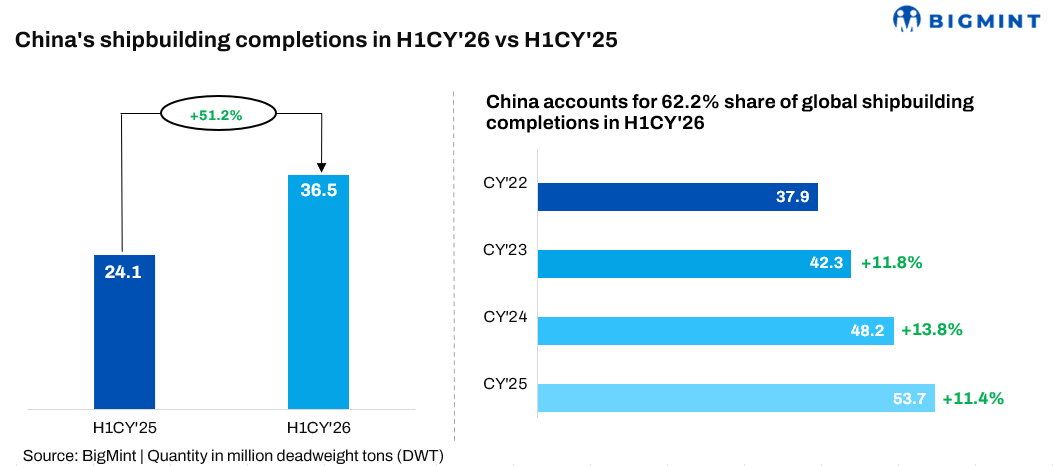
The strategic stakes are clear. China can mobilize industrial capacity at a pace the United States cannot match. To deter such a rival, the Navy must deliver capabilities continuously, not episodically. Deterrence will be restored when acquisition becomes not a liability but a competitive advantage, rooted in speed, learning, and credibility.
In deterrence, signals matter. Programs that spend years in paperwork while threats grow cause partners to hedge and opponents to discount warnings. When the Navy demonstrates the ability to scope a problem, prototype a practical answer, and place a low-risk production order within a single budget cycle, it sends a different message: The United States can adapt inside an opponent’s decision loop without sacrificing accountability. Speed compels respect because it shows a system that learns. Allies invest alongside partners who decide and follow through; adversaries pause when they see a force that gets better every quarter, not every decade. Deterrence is a story told in increments, and acquisition is the narrator.
Allied partners can cofund experiments and agree on shared module standards, allowing each navy to buy what it needs while plugging into a common architecture. Foreign military sales aligned to modular open systems and shared test data reinforce this—turning bilateral transactions into building blocks of collective capability.
The answer is a fleet designed to evolve—one that closes problems, tests solutions, and fields improvements inside the threat’s own improvement cycle. That requires confronting systemic shipbuilding failures, embracing continuous refinement across all pathways, and learning to fail fast to succeed faster. If the Navy combines disciplined speed with modular design and an entrepreneurial culture, it can sustain deterrence at sea. The measure of power will not be the size of ships, but the number and capability of them and the pace of relevance.
China booms; US languishes | The Australian Naval Institute
 navalinstitute.com.au