Jango
THINK TANK: CONSULTANT


You are saying Pakistan has not developed as much as other countries. But OP is saying it is at standstill. There is a difference between not fast enough and not moving.
Hyperbole?
Follow along with the video below to see how to install our site as a web app on your home screen.
Note: This feature may not be available in some browsers.
You are saying Pakistan has not developed as much as other countries. But OP is saying it is at standstill. There is a difference between not fast enough and not moving.

Sir Pakistan is now behind countries that were backwaters in the 1960's! Pakistan is even behind countries like Kuwait or UAE where there were no such things as street addresses uptill the 1980's. The price Pakistan has paid for army dictatorship is gigantic.You are saying Pakistan has not developed as much as other countries. But OP is saying it is at standstill. There is a difference between not fast enough and not moving.

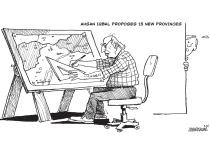
More administrative units is a big part of reforms, it will bring devolution of power and free the country from scared racial divisions , but yes, law, constitution, and justice are the foundations of a society.We keep going in circles because every time we discuss Pakistan’s problems, we stop halfway, we name the issues but avoid the real solutions. After nearly eight decades, it’s clear that simply creating more provinces is not a solution on its own. Without deep structural reforms, administrative reshuffling becomes cosmetic. In the short term, introducing federal‑level administrative units through constitutional amendments could help, but even that is only a bridge, not the destination.
Pakistan’s core challenge is not geography, it’s the entrenched elite structure. A small group of powerful families controls an enormous share of agricultural land, often estimated between 40% and 50%. They influence politics, law enforcement, markets, and even local governance. Laws exist, but implementation collapses because those who benefit from the current system have the power to block change. This isn’t just a political issue; it’s a mindset issue.
What’s even more frustrating is the negativity that comes from many Pakistanis living abroad. They enjoy systems that give them opportunities, stability, and fairness, things they would never have received back home. Yet when you talk to them about reforming Pakistan, they dismiss it as impossible. Why? If other nations can transform themselves, why can’t we?
China did it through long‑term planning.
Bangladesh is quietly becoming a manufacturing powerhouse.
Singapore is decades ahead because it built institutions that actually work.
The UAE and Saudi Arabia are reinventing themselves through bold economic reforms.
Vietnam, Malaysia, and Indonesia have surged past Pakistan in growth and governance.
Even Ethiopia, despite its challenges, is outperforming Pakistan economically.
So the question isn’t whether Pakistan can become an economic hub. It absolutely can. The country has strategic geography, a young population, natural resources, and massive untapped potential. The real question is whether Pakistan is willing to confront the structural barriers that keep it stuck.
To move forward, Pakistan needs long‑term vision, not five‑year political cycles. The government should be working with 200‑year development plans, broken down into clear milestones: institutional reform, land reform, industrialization, education modernization, and governance restructuring. Without this kind of long‑term commitment, we’ll keep repeating the same debates for another 79 years.
What I have shared from governance to tax collection, and from land reform to universal education & Healthcare programs under 34 EZ model. Pakistani establishment with all its power & top economists, will never ever be able to match that. Take another 25 years discussing it, even Nepal & Bhutan will be ahead of Pakistan.
Chance to reconstruct by the same monkeys at the helm will result in more unga bunga.More administrative units is a big part of reforms, it will bring devolution of power and free the country from scared racial divisions , but yes, law, constitution, and justice are the foundations of a society.
Pakistan has nothing of it.
Significant thing is, "System has Collapsed " has come directly from the horse's mouth, so insiders are panicking that system will collapse over their heads.
I hope system will collapse. That will give a chance to reconstruct.

More administrative units is a big part of reforms, it will bring devolution of power and free the country from scared racial divisions , but yes, law, constitution, and justice are the foundations of a society.
Pakistan has nothing of it.
Significant thing is, "System has Collapsed " has come directly from the horse's mouth, so insiders are panicking that system will collapse over their heads.
I hope system will collapse. That will give a chance to reconstruct.
Sometimes it feels like no political party genuinely cares about Pakistan. They talk big, they make promises, they put on a whole show but when you look closely, it’s all about their own interests. Everything else is just Topi drama, and it’s honestly heartbreaking.So PTI has also shown its true status quo khassi colors. They are opposing more provinces and referendum on the question of new provinces.
It is proven, khassi, parochial, retard, archaic, primate, feudal and fan club parties cannot do a fu----ng damn thing for real reforms.
It shall be a massive service if military does.
Their name is Tehrik e insafSometimes it feels like no political party genuinely cares about Pakistan. They talk big, they make promises, they put on a whole show but when you look closely, it’s all about their own interests. Everything else is just Topi drama, and it’s honestly heartbreaking.
What shocks me the most is how seriously people still take them. After everything we’ve seen, after decades of the same cycle repeating, it’s painful to watch ordinary Pakistanis place their hopes in leaders who never show up for them.
Their name is Tehrik e insaf
But it is Tehrik e beinsaf.
Party begin and ends with Imran Khan.
They will still win in Punjab and kpk
But not in sindh, sindh urban and baluchistan.
Bhai sahab how will the constitutional changes required to create your 34 EZ's be achieved ?You are also stuck in "The Matrix". I am trying my best to take people out of "The Matrix" mindset. Pakistan doesn’t need provinces or personality‑based political parties, it needs a grid of strong, professional institutions that directly serve citizens through autonomous Economic Zones.
1. Provinces are large, slow, and politically captured.
The 34‑EZ model replaces them with smaller, manageable administrative units that:
This shifts Pakistan from political geography to administrative geography.
- Have clear boundaries
- Run on digital governance
- Deliver services directly to citizens
- Are accountable through performance metrics, not political speeches
2. In the 34‑EZ model, governance is not driven by political parties but by:
Political parties stop being the operators of governance and become participants in democratic debate not the owners of the state machinery.
- Professional administrators
- SMEs and technocrats
- Digital systems
- Transparent service delivery
3. The model prioritizes institutions, not individuals:
Institutions become the backbone of governance, reducing dependency on political personalities.
- Digital land records
- One‑window service centers (Unified Service Desk, Integrated Digital Portal, Real‑Time Approvals, Zero Middlemen Governance and EZ Authority Control)
- EZ regulatory authorities
- Independent audit & compliance units
- Citizen service portals
4. Instead of relying on politicians to “help” people, the 34‑EZ model ensures:
Protection comes from rules, automation, and transparency, not from political patronage.
- Automated service delivery
- Transparent land management
- Fast dispute resolution
- Digital identity integration
- Local accountability inside each EZ
How to Fix Governance ?
1. Create a National Political Academy
2. Introduce a Political Career Ladder
3. Replace Parties (abolishing feudal politics) with Political Institutions
4. Mandatory Certification for Politicians
5. Continuous Training & Evaluation
6. Independent Oversight Body
Bhai sahab how will the constitutional changes required to create your 34 EZ's be achieved ?
Idea is right, but too futuristic and dystopian.You are also stuck in "The Matrix". I am trying my best to take people out of "The Matrix" mindset. Pakistan doesn’t need provinces or personality‑based political parties, it needs a grid of strong, professional institutions that directly serve citizens through autonomous Economic Zones.
1. Provinces are large, slow, and politically captured.
The 34‑EZ model replaces them with smaller, manageable administrative units that:
This shifts Pakistan from political geography to administrative geography.
- Have clear boundaries
- Run on digital governance
- Deliver services directly to citizens
- Are accountable through performance metrics, not political speeches
2. In the 34‑EZ model, governance is not driven by political parties but by:
Political parties stop being the operators of governance and become participants in democratic debate not the owners of the state machinery.
- Professional administrators
- SMEs and technocrats
- Digital systems
- Transparent service delivery
3. The model prioritizes institutions, not individuals:
Institutions become the backbone of governance, reducing dependency on political personalities.
- Digital land records
- One‑window service centers (Unified Service Desk, Integrated Digital Portal, Real‑Time Approvals, Zero Middlemen Governance and EZ Authority Control)
- EZ regulatory authorities
- Independent audit & compliance units
- Citizen service portals
4. Instead of relying on politicians to “help” people, the 34‑EZ model ensures:
Protection comes from rules, automation, and transparency, not from political patronage.
- Automated service delivery
- Transparent land management
- Fast dispute resolution
- Digital identity integration
- Local accountability inside each EZ
How to Fix Governance ?
1. Create a National Political Academy
2. Introduce a Political Career Ladder
3. Replace Parties (abolishing feudal politics) with Political Institutions
4. Mandatory Certification for Politicians
5. Continuous Training & Evaluation
6. Independent Oversight Body
Folks, everyone must pay attention what @Pakistanithinktank is proposing.Idea is right, but too futuristic and dystopian.
Whatever name you give, EZ, or admin units, it is about manageable governance, break parochial tribal hold, manage corruption, and bring efficiencies.
I understand what you are saying.