North Korea Defence Forum

Formally, they are still at war, and it's a pious illusion that the United States will withdraw from South Korea.
Therefore, with South Korea's significant naval and air developments, we will see North Korea seek to modernize both its navy and air force; for too long, they have been the two Cinderellas of the armed forces.
These modernizations may have different standards than what we are used to seeing elsewhere.
Today, we see it with the nuclear-powered SLBM submarine, but also in some features of the destroyer that the photos currently allow us to see.
As for the next step, the innovations in the aeronautical field, I think Kim Jong Un will soon share with us.
But, I don't know where NK is going to get the money needed to do their navy and air force massive modernization to match that of SK if they don't grow their economy that pretty much requires economic reform.
 
But, I don't know where NK is going to get the money needed to do their navy and air force massive modernization to match that of SK if they don't grow their economy that pretty much requires economic reform.
We calculate costs using the capitalist method, while their philosophy is Juche, based primarily on achieving self-sufficiency, fostered in part by the very strict sanctions and embargoes imposed by the UN.
Therefore, we shouldn't make precise calculations, otherwise we wouldn't be able to understand where they find the money to build new large-scale civilian infrastructure, such as agricultural and industrial infrastructure, to create new modern neighborhoods in cities and modern hospitals. Even more so, to build new homes in rural or fishing villages, which are then given to families free of charge.
So, even in the military sphere, we shouldn't ask ourselves whether they have the money. Instead, for the Navy, we should ask ourselves not whether they will be able to build what they promised, but whether they will be able to quickly acquire the capacity to operate these new ships, given that until now it could be described as a coastal navy with little ability to navigate in blue waters. But the greatest challenge will remain the Air Force, if the theory of autarky is to be followed in this sector as well. Developing design and manufacturing capabilities in this sector is difficult and time-consuming. For example, China currently produces interesting fighter aircraft, but has yet to achieve optimum engine technology (and that's China, with its industrial capacity and, in this case, its spending power).
If, however, the DPRK were to turn to an aircraft manufacturer from a friendly country, it would certainly need a very broad portfolio.
 
We calculate costs using the capitalist method, while their philosophy is Juche, based primarily on achieving self-sufficiency, fostered in part by the very strict sanctions and embargoes imposed by the UN.
Therefore, we shouldn't make precise calculations, otherwise we wouldn't be able to understand where they find the money to build new large-scale civilian infrastructure, such as agricultural and industrial infrastructure, to create new modern neighborhoods in cities and modern hospitals. Even more so, to build new homes in rural or fishing villages, which are then given to families free of charge.
So, even in the military sphere, we shouldn't ask ourselves whether they have the money. Instead, for the Navy, we should ask ourselves not whether they will be able to build what they promised, but whether they will be able to quickly acquire the capacity to operate these new ships, given that until now it could be described as a coastal navy with little ability to navigate in blue waters. But the greatest challenge will remain the Air Force, if the theory of autarky is to be followed in this sector as well. Developing design and manufacturing capabilities in this sector is difficult and time-consuming. For example, China currently produces interesting fighter aircraft, but has yet to achieve optimum engine technology (and that's China, with its industrial capacity and, in this case, its spending power).
If, however, the DPRK were to turn to an aircraft manufacturer from a friendly country, it would certainly need a very broad portfolio.
Even if they can come up with funding not in capitalist sense, it still will be very difficult if not impossible to develop all the advanced military tech by NK in isolation without access to outside tech. Maybe Russia will help NK since they have signed military alliance treaty now.
 
Even if they can come up with funding not in capitalist sense, it still will be very difficult if not impossible to develop all the advanced military tech by NK in isolation without access to outside tech. Maybe Russia will help NK since they have signed military alliance treaty now.
Of course, if assistance is received, development can accelerate. There are many ways to steal technological secrets, and the DPRK appears to be seizing the opportunity.
However, for now, their autarkic production method appears to be working.
Indeed, thanks to their ability to supply weapons abroad, in addition to operationally testing many modern missile systems, making them "combat-ready" and assessing the need for improvements, they also supply conventional ammunition from their stockpiles. This allows them to renew production batches, which, as is well known, have expiration dates. After these expirations, there is a risk of deterioration. If explosives are not subjected to technical and chemical inspections and tests, they risk becoming dangerous or failing to function when needed.
In short, these supplies certainly aren't free, even if the recipient is a strategic ally. They are provided for a fee, which may include the supply of raw materials such as oil or agricultural products such as wheat, but can also be obtained through the transfer of technology, designs, specialized machinery, specific types of metal alloys, and technical and technological assistance. This assistance can be direct or indirect, aimed at improving North Korean projects or jointly implementing projects based on North Korean needs in defense sectors in which Pyongyang has less experience.
Therefore, at present, there is a high probability of witnessing a continuous modernization of the North Korean armed forces without having to bleed itself dry with debt and without the sword of Damocles of a lack of sufficient economic resources to implement it, as is the case in many Western and Eastern economies.
 
To view this content we will need your consent to set third party cookies.
For more detailed information, see our cookies page.
 
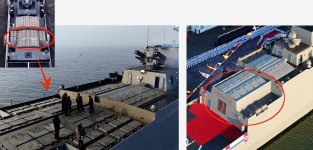
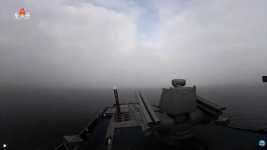
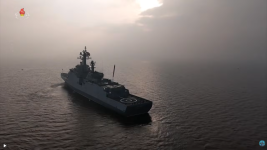
VLS towards the stern. Today, another image emerged from a video screenshot, confirming that changes have indeed been made.
I created a collage,
on the right, which shows the configuration during the launch ceremony, during which the ship then conducted firing tests with its onboard systems,
while on the left is the image from yesterday, March 4th.
As you can see, in the position of the 10 large VLS, there are now 24 smaller ones, plus another 20 VLS (10 + 10) with even smaller cells on the sides.
The 20 VLS positioned under the CIWS system remain unchanged.
Destroyer 51.jpg
The video brought another surprise, at least for me.
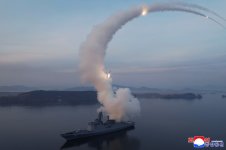
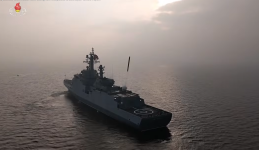
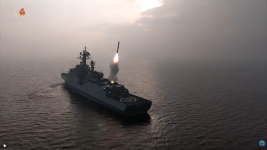
I thought the 20 VLS under the aft CIWS were for air defense missiles, but apparently they launched cruise missiles from these.
Screenshot (2377).png
the cruise missile is launched cold
Screenshot (2372).png
Screenshot (2373).png
Screenshot (2374).png

So, what missiles will the 24 larger VLS launch ??
And which ones from the 10+10 VLS on the sides, which appear to have slightly larger cells than those that launched the cruise missiles yesterday ??
And which missiles will be used in the 24 VLS at the bow of the ship ??

Therefore, the destroyer is equipped with a total of:
24 forward vertical launchers
64 aft vertical launchers
Total
88 vertical launchers
+ 4 inclined launchers hidden amidships in the superstructure forward of the engine exhaust
+ 8 ready-to-use short-range missiles, in a CIWS similar to the Patsir
 
Missile launches by North Korean destroyer Choe Hyon. The North Korean Navy conducted tests of the 51st Choe Hyon-class guided missile destroyer. North Korea has already built two Choe Hyon-class destroyers. These powerful ships, with a displacement of up to 5,500 tons, are equipped with 74 vertical launch tubes for four different missile sizes. The ship also has a 127mm gun mount and two six-barrel 30mm gun mounts. It also carries a Pantsir-ME anti-aircraft missile and artillery system or a replica of it, and other armament. South Korean experts believe the ship was built with Russian assistance.

To view this content we will need your consent to set third party cookies.
For more detailed information, see our cookies page.
 
VLS towards the stern. Today, another image emerged from a video screenshot, confirming that changes have indeed been made.
I created a collage,
on the right, which shows the configuration during the launch ceremony, during which the ship then conducted firing tests with its onboard systems,
while on the left is the image from yesterday, March 4th.
As you can see, in the position of the 10 large VLS, there are now 24 smaller ones, plus another 20 VLS (10 + 10) with even smaller cells on the sides.
The 20 VLS positioned under the CIWS system remain unchanged.
View attachment 183222
The video brought another surprise, at least for me.
I thought the 20 VLS under the aft CIWS were for air defense missiles, but apparently they launched cruise missiles from these.
View attachment 183225
the cruise missile is launched cold
View attachment 183226
View attachment 183227
View attachment 183229

So, what missiles will the 24 larger VLS launch ??
And which ones from the 10+10 VLS on the sides, which appear to have slightly larger cells than those that launched the cruise missiles yesterday ??
And which missiles will be used in the 24 VLS at the bow of the ship ??

Therefore, the destroyer is equipped with a total of:
24 forward vertical launchers
64 aft vertical launchers
Total
88 vertical launchers
+ 4 inclined launchers hidden amidships in the superstructure forward of the engine exhaust
+ 8 ready-to-use short-range missiles, in a CIWS similar to the Patsir
It would not be wrong to assume that the DPRK is refurbishing the cold launch cannisters of the TELs and are using them as cells for VLS just like how the russian use the S300 for on the battlecruisers.s300 fort.PNG
 
Missile launches by North Korean destroyer Choe Hyon. The North Korean Navy conducted tests of the 51st Choe Hyon-class guided missile destroyer. North Korea has already built two Choe Hyon-class destroyers. These powerful ships, with a displacement of up to 5,500 tons, are equipped with 74 vertical launch tubes for four different missile sizes. The ship also has a 127mm gun mount and two six-barrel 30mm gun mounts. It also carries a Pantsir-ME anti-aircraft missile and artillery system or a replica of it, and other armament. South Korean experts believe the ship was built with Russian assistance.

To view this content we will need your consent to set third party cookies.
For more detailed information, see our cookies page.

24 vertical launchers at the bow
64 vertical launchers at the stern
Total
88 vertical launch tubes for four different missile sizes
 
Gotta give it to the North Koreans, this looks like it packs a lot of firepower.
 
Kim Jong Un visited the destroyer "Choe Hyon 51" on March 3 and 4 during its navigation tests and also attended cruise missile launch exercises.
View attachment 182991
View attachment 182992

It is confirmed that the engines are on board ;)
View attachment 182993
View attachment 182994
View attachment 182995
View attachment 182996
The 52 was one that had a bad launch right?
Any news about its sea trials? Did they manage to get it fully operational after uprighting it or is it permanently damaged
 

The Modern City of Pyongyang EXPLAINED | North Korea's Capital City


To view this content we will need your consent to set third party cookies.
For more detailed information, see our cookies page.


Pyongyang, the capital of the Democratic People's Republic of Korea, is a city that has been completely built from the ground up. Rising from the ashes of the Korean War, to becoming both a ceremonial heart of the nation, and a modern city teeming with new skyscrapers and quirky architecture. But Pyongyang wasn't built in a day. The past 8 decades have seen significant changes to the city's design ethos. From the Chollima Era of mass reconstruction, through the Three Revolutions Era when monuments and cultural centres became the focus, to the rapid expansion of the 21st century.
 

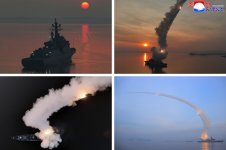
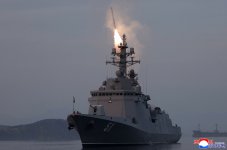
Pyongyang, March 11 (KCNA) -- Amid the continued tests of operational efficiency of the Destroyer Choe Hyon of the Navy of the Korean People's Army, a strategic cruise missile test-fire was conducted again on March 10.
1773212449842.jpeg1773212463566.jpeg1773212480309.jpeg1773212506521.jpeg1773212523062.jpeg

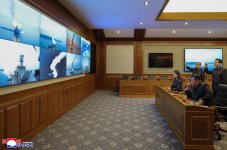
The respected Comrade Kim Jong Un observed the test-fire on TV.

The test-fire on the destroyer was aimed at evaluating the reliability of the national integrated control system of strategic weapons and the destroyer's detection and weapon systems and verifying the combat effectiveness of the integrated combat system in technical aspects, Kim Jong Un said, adding that on the other hand, it is to demonstrate the Navy's strategic attack posture and make sailors well versed in relevant military activities.

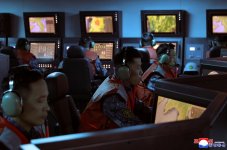
The Destroyer Choe Hyon received target information, and the launch was approved according to relevant procedures and cruise missiles launched simultaneously to hit several targets.

The launched cruise missiles flew along the flight orbit set in the sky above the West Sea of Korea for 10 116s to 10 138s and hit the individual island targets.

Kim Jong Un expressed his great satisfaction over the verified reliability of the national integrated control system of strategic weapons and superiority of the destroyer's integrated combat system.

He gave important instructions on reexamining in our own way the organization of weapon systems of the destroyer, to be built in the future, in the light of the actual requirements in military aspects and from the development-oriented view.

Underlining the need to examine the military efficiency of the naval automatic gun installed on the warship in the light of our specific conditions, he expressed his view that it is more favorable to enhance the anti-warship and strategic attack capabilities, as required by operational features, by equipping high-speed warships of below 3 000 tonnage with such naval automatic guns and additionally installing supersonic weapon systems instead of those guns on the 5 000-tonnage, 8 000-tonnage destroyers in the future.

He gave an instruction on examining the plan of organizing such Korean-style weapon system and applying it to the warships to be built, including the third destroyer under construction.

Saying that it is a very important strategic task to maintain and expand the powerful and reliable nuclear war deterrent, he said:

"The components of our war deterrent are now being included in the very sophisticated operational system in an effective and accelerated manner continuously and the country's nuclear forces have made a switch to the phase of multifaceted operation.

Important successes have been recently made in putting the strategic and tactical strike means on a practical basis and deploying them for an actual war.

Such successes have updated the readiness of our army for strategic action and enhanced the confidence in it.

Our belief and confidence based on those verified capabilities make it possible to take the initiative in the military activities for national defence and will play an important role in further developing our potential."

He stressed that the DPRK's offensive weapon systems undergoing constant development constitute an indispensable factor for self-defence literally.

He set forth a series of important tasks for rapidly increasing the fighting efficiency of the Navy, including the issue of delivering the destroyer to the Navy within the set time by finishing the assessment of its maneuverability and the operational capabilities of its such other weapon systems as anti-air, anti-submarine and torpedo weapon systems, the issue of stepping up the building of another destroyer to finish it before the founding anniversary of the Workers' Party of Korea this year and the issue of reinforcing the existing infrastructure of the naval base and building new one.
 

Users who are viewing this thread

Pakistan Defence Latest

Country Watch Latest

Back
Top