Oil, Gas and Refinery Sectors - updates

Solar, wind boost energy security: power minister

Reuters
March 14, 2026 Updated

KARACHI: Pakistan’s growing reliance on domestic power, including solar and wind energy, nuclear reactors, coal and hydropower, has reduced its vulnerability to global LNG supply disruptions, Power Minister Awais Leghari told Reuters.

The war in the Middle East threatens shipments from Qatar, the world’s No. 2 producer after the US, which supplies most of Pakistan’s imported LNG, used to fuel power plants during peak electricity demand.

“Pakistan has been steadily increasing reliance on indigenous energy resources, and about 74 per cent of our electricity generation now comes from local sources,” Mr Leghari said, adding the government aims to raise that above 96pc by 2034.

The figures have not been previously reported.

“The people-led solar revolution, and earlier decisions to invest in nuclear, hydropower and local coal have all played a role in increasing Pakistan’s self-reliance,” he added.

Pakistan has long struggled with electricity shortages and historically faced hours of daily load shedding during peak summer demand.

The country now has surplus generation capacity after adding coal, LNG and nuclear plants, while demand growth has slowed and the use of rooftop solar has surged, at times exceeding grid demand in some hubs.
 
‘Worst-case scenario’

Qatar halted LNG production earlier this month, and Asian nations, which buy 80pc of its output, are scrambling to meet the shortage.

LNG now accounts for about 10pc of Pakistan’s electricity generation, mainly used to meet evening demand peaks and stabilise the grid, Mr Leghari said.

During the global energy crisis triggered by Russia’s invasion of Ukraine in 2022, the country was forced to cut power for extended periods after failing to secure LNG cargoes on the spot market.

“Even if LNG was disrupted or became too expensive, the impact on production capacity, industry or agriculture would be minimal,” Mr Leghari said.

But he said prolonged disruptions could still lead to additional shortages during summer, when demand surges from the use of air-conditioners.

“In a worst-case scenario, if LNG cargoes stopped for several months, Pakistan might see one to two hours of load shedding during peak summer evenings,” he said, Such outages would likely affect some urban and rural areas, not industry or agriculture, he said, adding Pakistan is developing battery storage to shift excess daytime solar to evening peaks.
 
Local and green

Pakistan is not expected to invest in any source of power that could put it at risk in terms of energy security,” Mr Leghari said, saying the government’s plans for the next six to eight years is to focus on indigenous clean power.

About 55pc of electricity generation now comes from clean sources, and the government aims to raise this to above 90pc by 2034, the minister said.

Hydropower produces about 40 terawatt hours of electricity annually, while nuclear generates roughly 22 TWh and domestic coal about 12 TWh, according to the minister, forming a significant share of Pakistan’s electricity supply without relying on imported fuel.

Rooftop solar installations have surged to more than 20 GW across Pakistan, with behind-the-meter capacity estimated at 1214 GW and possibly up to 18 GW, sharply reducing daytime grid demand, he said.

Hydropower output also rises in summer as river flows increase, adding up to 7,000 megawatts of capacity and helping meet higher electricity demand from air-conditioning.
 
1773510511596.png


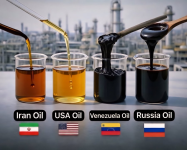
Crude Oil Quality & Refining 🛢

1. 🇺🇸 United States (WTI) – 39–41° API
• Light, sweet crude
• Very easy to refine, high gasoline & jet fuel yield.

2. 🇮🇷 Iran (Iran Light) – 33–36° API
• Medium-light crude
• Iran Light sits near the medium-light range that many refineries are designed for

3. 🇷🇺 Russia (Urals) – 30–32° API
• Medium sour crude
• Requires more processing.

4. 🇻🇪 Venezuela (Merey / Orinoco) – 15–16° API
• Heavy crude
• Thick, tar-like, complex refining needed.

📌 Key Insights 🌍

• Higher API Gravity = Lighter Oil = Easier Refining = Bigger Profits

• Iranian crude sits between ultra-light US shale and heavy Venezuelan oil, making it highly compatible with many global refineries.

• Strait of Hormuz carries a large share of the medium-grade crude many refineries are designed to process.

• If Hormuz supply is disrupted, refineries must switch to heavier or ultra-light substitutes, reducing efficiency and profits.

• Quality of oil often drives global oil politics more than most people realise.
 
yep we built the energy infra but not the economy to use it . but his point was diffrent. rambling about chinese and such, and the orignal thread was about us gaining energy independence but mods merged it .


and this was what the orignal thread was about gaining energy independence , so doing exaclty what we are supposed to be doing
now you see why you guys must have a few cells missing? keep doing dumb things and forget what you did the next day when you start whining about the next dumber thing you did!

these days GPT is making the problem worse. But do learn to at least google.

Energy, economy, food prices, military protection, mining....whatever domain you take, Pakistan has screwed up seriously for whatever reason. In general they don't use common sense and end up deciding based on ethnic preferences or India hatred. None of your governments have ever operated in the interest of Pakistan.
 

Gas debt payment plan awaits IMF nod​

Govt proposes LNG savings, dividends and fuel levy to clear Rs1.5tr circular debt


ISLAMABAD:
Pakistan has sought the International Monetary Fund (IMF)'s consent to retire Rs1.5 trillion worth of gas sector circular debt within three years by using income proceeds of major public sector gas companies, nearly Rs400 billion LNG savings and funds collected from users of petroleum products.

The plan was discussed in depth during the recently inconclusive talks under the third review of the $7 billion bailout package. The IMF has not yet given its final word on the status of the plan, according to sources. The government is aiming to secure the IMF's nod before June so that it can make provisions in the next budget to retire one-third of the total principal debt, said the sources.

Initial discussions suggested that the Fund may allow settling the Rs1.5 trillion circular debt, subject to addressing some of its primary concerns, according to government officials.

The payments of the Rs1.5 trillion dues to oil and gas sector companies would be conditioned upon their prior consent to waive over Rs1.6 trillion in late payment surcharges that have accumulated due to non-payment of the principal amount, said the sources.

The total gas sector circular debt has jumped to over Rs3.4 trillion, including Rs1.8 trillion in principal amounts, said officials. However, the government plans to settle about Rs1.5 trillion, as the remaining amount is stuck in tax refunds and court cases, the sources added.

The Express Tribune had reported in December that the government was planning to retire Rs1.8 trillion circular debt over a period of five to six years. However, it has now reduced the settlement period to three years, subject to the final nod by the IMF.

Sources said the government has proposed to pay off the dues arising from gas price differentials. They added that the IMF has also acknowledged that it is the responsibility of the federal government to clear these dues.

The sources said one of the IMF's major objections was that instead of using close to Rs400 billion savings from LNG diversions for retiring circular debt, the money could be utilised to reduce the cost of energy.

The sources said the government has proposed charging a Rs5 per litre levy on petrol and diesel to settle the gas sector circular debt. The indirect subsidy has already punished consumers, as the government has resorted to increasing costs for electricity and petroleum products to meet its social obligations.


The sources said the government has already built over Rs4 per litre subsidy into the current petrol price and about Rs1 per litre into diesel for the same purpose.

During a recent meeting, Deputy Prime Minister Ishaq Dar asked the finance ministry to set aside the money already collected through an additional levy on every litre of petrol and diesel since January. The monthly collection under this head is Rs12 billion, but the finance ministry is reluctant to make these special allocations, said the sources.

There is also a plan to generate Rs850 billion through dividends and additional dividends from Oil and Gas Development Company, Pakistan Petroleum Limited and Government Holding Private Limited. The government is also planning to obtain less than Rs400 billion from LNG savings for the same purpose.

As per the plan, exploration and production companies would declare regular and additional dividends, and the government would settle the dues of its Sui companies.

Sources said the IMF had apprehensions that extracting Rs850 billion from these companies could compromise their financial health and future investment plans. However, the Petroleum Division was of the view that this would be a temporary settlement mechanism.

Pakistani authorities argued that settlement of the circular debt would also benefit oil and gas exploration companies. They said that due to new regulations, these firms may have to make provisions against these chronic receivables.

The IMF also asked about the implications of extracting dividends for the minority shareholders of these companies.

Pakistan had surplus LNG contracts, which it recently renegotiated with Qatar due to suppressed local economic activity and the Power Division's inability to lift contracted cargoes because of low electricity demand from the national grid.

Qatar, the main supplier of LNG to Pakistan, recently declared force majeure due to Iranian attacks on its energy facilities. This has enabled the government to revive 400mmcfd local gas production, said Ali Pervaiz Malik, the Federal Minister for Petroleum.

Gas prices have been increased substantially in recent years, including the imposition of fixed charges and providing new gas connections to residential consumers at imported LNG prices instead of the average price of local and imported gas.

The government also assured the IMF that it would continue revising gas prices during July and February each year to prevent further accumulation of circular debt.
 
Energy, economy, food prices, military protection, mining....whatever domain you take, Pakistan has screwed up seriously for whatever reason. In general they don't use common sense and end up deciding based on ethnic preferences or India hatred. None of your governments have ever operated in the interest of Pakistan.

India is going through severe LPG crisis right now, can we blame your hatred for Pakistan for stupid decisions which led to that?

Meanwhile Pakistan cities and semi urban areas have enjoyed natural gas direct to the home for decades which is why you don't see pictures of people dying to get LPG cylinder from Pakistan. Only now many are shifting completely to electric stoves after solar panels boom.

Obviously must Pakistanis didn't know how good they had with cheap natural gas which was taken for granted unlike Indians who never had such luxury.
 
India is going through severe LPG crisis right now, can we blame your hatred for Pakistan for stupid decisions which led to that?

Meanwhile Pakistan cities and semi urban areas have enjoyed natural gas direct to the home for decades which is why you don't see pictures of people dying to get LPG cylinder from Pakistan. Only now many are shifting completely to electric stoves after solar panels boom.

Obviously must Pakistanis didn't know how good they had with cheap natural gas which was taken for granted unlike Indians who never had such luxury.
judst read what you wrote. if you decide the two are comparable issues , wonderful you mist be a LUMS MBA
 
judst read what you wrote. if you decide the two are comparable issues , wonderful you mist be a LUMS MBA

My point was that Pakistanis never had to think about getting cooking gas from gutter like Modi. We had luxury of cheap natural gas for decades.
 
My point was that Pakistanis never had to think about getting cooking gas from gutter like Modi. We had luxury of cheap natural gas for decades.
ah you don't like Modi. Ok but your opinion is quite irrelevant.
He is a 3rd time elected leader of the largest democracy on this planet.
You kind of don't matter at all kiddo
 

Petrol reserves sufficient for 27 days, diesel for 21: petroleum secretary tells Senate committee

Khaleeq Kiani
March 16, 2026

ISLAMABAD: Pakistan has sufficient petrol reserves for 27 days and diesel reserves for 21 days, Petroleum Secretary Hamed Yaqoob Sheikh said on Monday while addressing a meeting of the Senate Standing Committee on Petroleum.

The standing committee, chaired by Senator Manzoor Ahmed, was meeting after the government announced a Rs55 per litre hike in the prices of both petrol and high-speed diesel in response to tensions in the Middle East.

The secretary added that jet fuel (JP1) reserves were available for 14 days, crude oil reserves for 11 days and liquefied natural gas (LNG) reserves for nine days.

Additionally, he informed the committee that the import of oil of quality below Euro 5 standard had now been allowed.

Sheikh said that 70 per cent of Pakistan’s petrol comes from the Middle East, and due to the suspension of ship movements affecting supply, prices have increased.

The price of high-speed diesel rose from $88 to $187, while petrol increased from $74 to $130, he added.
 

Users who are viewing this thread

Pakistan Defence Latest

Country Watch Latest

Back
Top