Oil, Gas and Refinery Sectors - updates

The ministry wants the bonded storage framework for suppliers to be finalised by June.

In addition to its lack of strategic reserves, the document cited constrained port infrastructure, limited ship-to-ship capacity and insufficient storage among Pakistan’s vulnerabilities.

The build-up of the government’s own strategic reserves would be paid for by a ring-fenced fund financed by Rs10 per litre from the existing levy on petroleum, with allocations to start on July 1. The document says that allocation would generate about $700 million a year.
 

Pakistan plans oil reserves, storage push as Hormuz constraints expose vulnerabilities

  • Pakistan currently has no strategic petroleum reserves
Published May 26, 2026

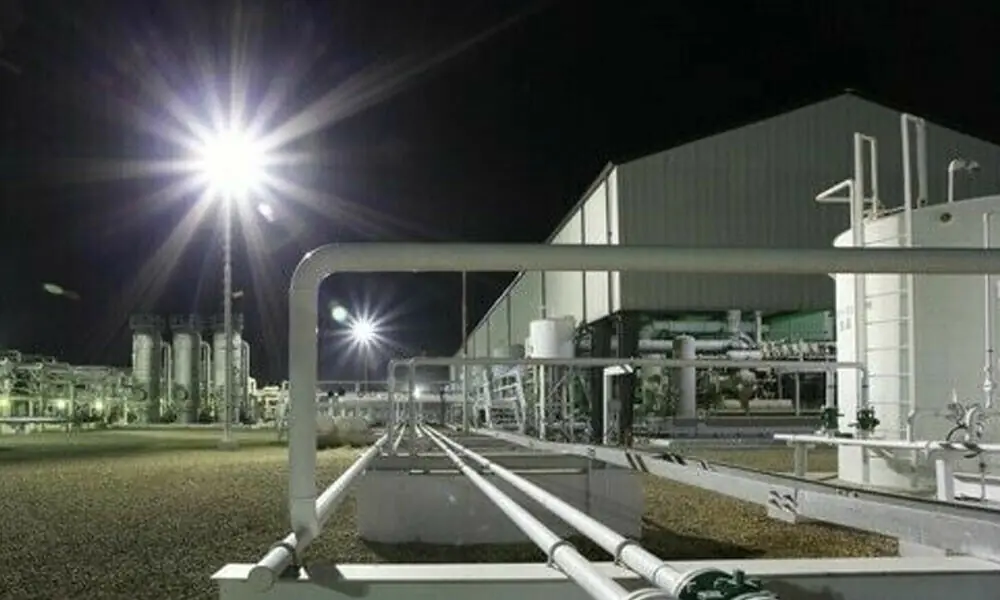
View attachment 198909

By Reuters

KARACHI: Pakistan plans to boost domestic storage for crude oil and refined products to increase its energy security, according to a government document that was shared with oil producers and some of the world’s leading trading firms.

Despite depending on supplies through the Strait of Hormuz for up to 90% of its oil and liquefied natural gas imports, Pakistan has no strategic petroleum reserves.

That has left it exposed to supply shocks provoked by the Iran war even as its lending programme with the International Monetary Fund (IMF) limits room for costly state-owned emergency stocks.

According to the document reviewed by Reuters, the energy ministry is proposing to build strategic petroleum reserves as well as commercial storage through bonded terminals, refineries and oil marketing companies (OMCs). It is also pushing for more oil and gas exploration and production, upgrades to its refineries, and a consolidation of its downstream sector.

“Pakistan’s oil security requires both emergency reserves and stronger local supply capacity,” the ministry said in the document.

It shared the proposed framework with Saudi Aramco, Abu Dhabi National Oil Corp, Kuwait Petroleum Corp, QatarEnergy and PetroChina as well as oil trading firms Vitol and Trafigura and storage operator Vopak.

Trafigura and Vitol declined to comment. The other companies and Pakistan’s petroleum ministry did not respond to Reuters’ requests for comment.

Petroleum Minister Ali Pervaiz Malik said last week that building reserves was “easier said than done”, especially for a country in an IMF programme with severe fiscal challenges, but added the government was trying to move quickly from planning to implementation.

Bonded storage, strategic reserves, and energy infrastructure

Under the bonded storage plan, international suppliers and traders would be allowed to hold petroleum stocks, creating commercial inventories that could support domestic supply during emergencies. The government could also allow companies to store fuel for re-export.

The document did not spell out details such as incentives, pricing, tax, foreign-exchange, offtake or ownership terms, or whether companies would be expected to invest in storage infrastructure.

The ministry wants the bonded storage framework for suppliers to be finalised by June.

In addition to its lack of strategic reserves, the document cited constrained port infrastructure, limited ship-to-ship capacity and insufficient storage among Pakistan’s vulnerabilities.

The build-up of the government’s own strategic reserves would be paid for by a ring-fenced fund financed by Rs10 ($0.0359) per litre from the existing levy on petroleum, with allocations to start on July 1. The document says that allocation would generate about $700 million a year.

Pakistan currently imposes a Rs58 per litre tax on diesel and Rs102.17 per litre on gasoline.

Additionally, the government plans to require that refineries hold 15 days of crude stocks and oil marketing companies to maintain 30 days of finished products, with the rules to be phased in through refinery policy, margin revisions and downstream consolidation by June 2028.

The document also calls for an energy infrastructure corridor around the city of Hub and Port Qasim, including single-point mooring, storage and pipeline connectivity, to reduce reliance on smaller, costlier shipments.
Posted already
 
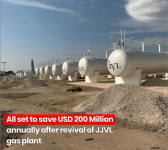
1780581725732.png

Thanks to the strategic intervention of the Special Investment Facilitation Council (SIFC), the long-dormant Jamshoro Joint Venture Limited (JJVL) gas processing plant is officially back online after a five-year hiatus.

Why this matters:

📉
$200 Million Saved: The revival is set to save Pakistan approximately USD 200 million annually in foreign exchange.

⚡
Tech-Driven Energy: As the country's first facility equipped with advanced Ortloff technology for LPG extraction, it drastically boosts local production.
 

New oil & gas discoveries boost Pakistan’s energy reserves in 2025

  • Gas reserve life increased to 18 years, while oil reserve life improved to 11 year, says AHL
Published June 6, 2026

1780844550527.jpeg

By BR Web Desk

Pakistan’s hydrocarbon outlook strengthened in 2025 following a series of new oil and gas discoveries, which have helped extend the country’s reserve life and partially offset the impact of ongoing production.

According to the data released by Arif Habib Limited, Pakistan’s overall hydrocarbon reserve life improved to 17 years as of December 2025, supported by a rise in both oil and gas reserves.

The gains were driven primarily by fresh discoveries and reserve additions across key fields, underscoring the potential of domestic exploration efforts to enhance energy security and reduce reliance on imported fuels amid persistent external account pressures.

“Gas reserve life increased to 18 years, while oil reserve life improved to 11 years,” said the brokerage house.

To view this content we will need your consent to set third party cookies.
For more detailed information, see our cookies page.


It shared that Pakistan’s oil reserves rose 6% YoY to 253 million barrels in December 2025, led by a major 21.01 million barrel addition from Baragzai and gains in Bettani and Shahdadpur.

Gas reserves increased 4% YoY to 18,854 Bcf, driven by additions from Mari Ghazij, Shahdadpur, Shewa, and Bettani, along with contributions from Baragzai, Spinwam, and Soho.

“The improvement in reserve life was largely discovery-led, with newly discovered fields including Spinwam, Baragzai, Bitrism East, Chakar, and Faakir collectively adding 23.8 million barrels to the country’s oil reserves and 367.2 Bcf to its gas reserves as of Dec’25,”it added.

Experts consider the increase a positive development, which comes amid the ongoing US-Iran conflict, which poses a significant risk to Pakistan’s economy, with the energy sector being the most vulnerable transmission channel.

The South Asian nation imports the bulk of its crude oil, petroleum products, and LNG requirements, much of which originates from Gulf countries and passes through the Strait of Hormuz—the world’s most important energy shipping lane.

Any disruption immediately affects energy-importing countries like Pakistan.
 

New oil & gas discoveries boost Pakistan’s energy reserves in 2025

  • Gas reserve life increased to 18 years, while oil reserve life improved to 11 year, says AHL
Published June 6, 2026

View attachment 200584

By BR Web Desk

Pakistan’s hydrocarbon outlook strengthened in 2025 following a series of new oil and gas discoveries, which have helped extend the country’s reserve life and partially offset the impact of ongoing production.

According to the data released by Arif Habib Limited, Pakistan’s overall hydrocarbon reserve life improved to 17 years as of December 2025, supported by a rise in both oil and gas reserves.

The gains were driven primarily by fresh discoveries and reserve additions across key fields, underscoring the potential of domestic exploration efforts to enhance energy security and reduce reliance on imported fuels amid persistent external account pressures.

“Gas reserve life increased to 18 years, while oil reserve life improved to 11 years,” said the brokerage house.

To view this content we will need your consent to set third party cookies.
For more detailed information, see our cookies page.


It shared that Pakistan’s oil reserves rose 6% YoY to 253 million barrels in December 2025, led by a major 21.01 million barrel addition from Baragzai and gains in Bettani and Shahdadpur.

Gas reserves increased 4% YoY to 18,854 Bcf, driven by additions from Mari Ghazij, Shahdadpur, Shewa, and Bettani, along with contributions from Baragzai, Spinwam, and Soho.

“The improvement in reserve life was largely discovery-led, with newly discovered fields including Spinwam, Baragzai, Bitrism East, Chakar, and Faakir collectively adding 23.8 million barrels to the country’s oil reserves and 367.2 Bcf to its gas reserves as of Dec’25,”it added.

Experts consider the increase a positive development, which comes amid the ongoing US-Iran conflict, which poses a significant risk to Pakistan’s economy, with the energy sector being the most vulnerable transmission channel.

The South Asian nation imports the bulk of its crude oil, petroleum products, and LNG requirements, much of which originates from Gulf countries and passes through the Strait of Hormuz—the world’s most important energy shipping lane.

Any disruption immediately affects energy-importing countries like Pakistan.

Posted already elsewhere
 

Users who are viewing this thread

Pakistan Defence Latest

Back
Top