Govt plans Fujairah-style oil hub at Hub with deep-sea terminal
Business
By
Khalid Mustafa
September 04, 2026
ISLAMABAD: Pakistan is planning to develop Hub into an integrated petroleum logistics, storage and trading centre modelled on Fujairah in the United Arab Emirates, Petroleum and Natural Resources Minister Ali Pervaiz Malik said.
The proposed oil city will combine a deep-sea oil terminal, dedicated crude and petroleum-product pipelines, large-scale storage facilities, a refinery and bonded petroleum storage, potentially turning Hub into a regional energy logistics centre.
A UK-based consultancy, Technip Energy, has been hired to conduct a basic feasibility study for the infrastructure required for the project, the minister told The News. The study is expected to be completed within two months, after which its findings will be presented to the prime minister for consideration and approval.
If the project receives federal approval, the petroleum minister and the minister for maritime affairs will hold discussions with the Balochistan chief minister on the proposed development, land requirements and the provincial government’s role, the petroleum minister said.
“The proposed oil city at Hub is being conceived as an integrated petroleum corridor that could bring together crude imports, petroleum-product handling, refining, storage, pipeline connectivity, domestic distribution and regional oil trading and re-export facilities in one strategically located coastal zone,” the minister said.
The project will initially cover about 1,811 acres of government land at Hub. The land had previously been allocated to Pakistan-Arab Refinery Ltd (Parco) for a coastal refinery, but the government is now considering broader use of the strategically located site for petroleum import handling, refining, storage, pipelines and distribution infrastructure.
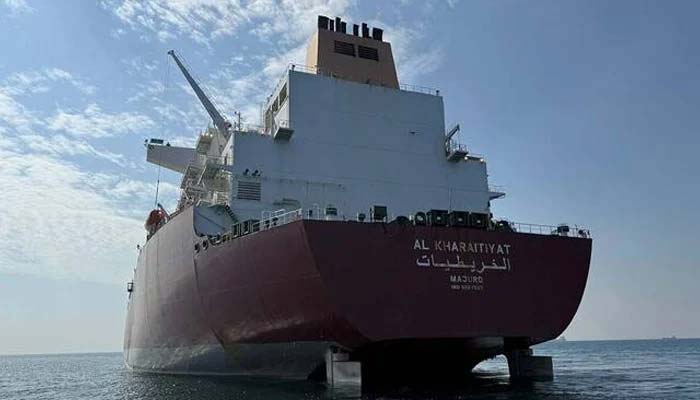
An additional 7,000 acres could be available for expansion, although its use would require approval from the Balochistan government, the minister said.At the centre of the proposal is an offshore single-point mooring (SPM) facility in deep water capable of handling very large crude carriers and other large petroleum vessels. Tankers will be able to transfer crude oil and petroleum products offshore through dedicated pipelines rather than navigating constrained approaches to existing ports.
Under the concept prepared by Parco, the SPM will have dual functionality, allowing crude imports as well as the handling and potential export of refined petroleum products. It is envisaged with throughput capacity of about 15 million tonnes a year.
The offshore facility will be connected to the mainland by two dedicated pipelines. One will carry imported crude towards Karachi Port Trust’s Keamari facilities, while the other will transport finished petroleum products towards Port Qasim, with connectivity to the existing White Oil Pipeline network.
The government believes the arrangement could ease pressure on Karachi Port and Port Qasim, where draft, navigational and other infrastructure constraints can limit the efficient handling of very large tankers. Handling larger vessels offshore could also improve the economics of petroleum imports, although the commercial viability will depend on cargo volumes, tanker traffic, infrastructure costs and market demand.
The proposed Hub oil city will extend beyond the offshore terminal. The site is planned to include a refinery with capacity of about 100,000 barrels a day, 300,000 tonnes of crude-oil storage and 100,000 tonnes of Mogas storage.
Bonded and strategic storage facilities can eventually provide capacity of up to 1.5 million tonnes for crude oil and refined petroleum products. The site can also include storage for liquefied petroleum gas and liquefied natural gas.
The storage component is part of the government’s broader push to revive customs-bonded petroleum storage as it seeks to attract investment, particularly from Gulf countries. Companies from Kuwait, the United Arab Emirates and Saudi Arabia have shown interest in establishing bonded storage facilities for petroleum products, LPG and LNG at locations including Port Qasim, Karachi Port, Hub and Gwadar.
Under the proposed framework, petroleum companies and international commodity traders can store imported products in bonded facilities without immediately paying applicable duties and taxes, subject to customs and other regulatory requirements. They can subsequently supply the domestic market or export the products, depending on regulatory permissions and market conditions.
The model is partly inspired by Fujairah, which has developed into a major global centre for oil storage, bunkering and petroleum trading because of its strategic location and access to deep water. Pakistan hopes to replicate some of those advantages at Hub by linking an offshore petroleum gateway with extensive onshore storage and pipeline infrastructure.
Hub’s proximity to Karachi and its potential links to existing facilities at Kemari, Port Qasim and the White Oil Pipeline system could give the proposed complex an additional logistical advantage.
The proposal gained momentum after a recent visit by the petroleum minister to Karachi, where Parco management briefed him on its concept for the Hub oil city. The minister subsequently directed the company to undertake a basic feasibility assessment, leading to the engagement of Technip Energy.
The project remains at the feasibility stage, with its eventual scale, cost, financing structure and implementation timetable dependent on the study and subsequent government approvals.Separately, the government has commissioned Wood Mackenzie to study the establishment of strategic petroleum reserves to strengthen energy security and reduce vulnerability to disruptions in international oil supplies. The study will assess potential locations, capacity requirements, technical and safety standards, as well as legal, regulatory, financial and institutional arrangements.
The government is also considering bonded petroleum storage facilities at Kot Addu, Machike and Faisalabad, potentially creating a network linking coastal import terminals with inland storage centres and major consumption markets.
Gulf-based companies have expressed interest in petroleum storage at strategic locations including Port Qasim, Kemari, Gwadar and Hub, according to officials familiar with the plans. Investment decisions, however, would depend on the regulatory framework, commercial returns, availability of land and supporting infrastructure, and the broader investment climate.
The proposed Hub complex can give Pakistan greater flexibility in sourcing, storing and transporting crude oil and petroleum products while potentially creating opportunities for international trading and re-export. It can also strengthen the country’s ability to handle larger vessels and reduce reliance on existing port infrastructure.
The project will nevertheless require substantial capital investment in the SPM, subsea pipelines, refinery, storage facilities and supporting infrastructure. The government will need to establish whether expected petroleum demand, storage requirements, trading opportunities and private-sector participation can generate sufficient returns to justify the investment.
Environmental, marine-engineering and safety considerations will also need to be addressed before construction begins. The feasibility study is expected to assess whether the proposed infrastructure can be developed and operated safely and economically over the long term.