Old Karachi

1787152695442.png

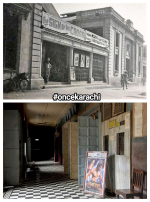
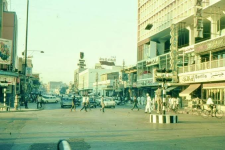
Located in the heart of Saddar, Capitol Cinema was a relatively small but beautifully designed cinema that became an important part of Karachi's rich cinematic heritage.

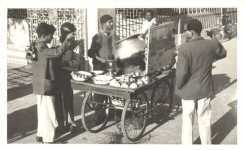
The cinema was situated in the lane around Karim Centre, an area remembered for its lively atmosphere, local shops and the famous chaat vendor whose delicious taste was fondly remembered by generations of Karachiites.

Capitol Cinema and Paradise Cinema were both owned by the same Parsi proprietor, Mr. Mobed. Paradise Cinema stood opposite Mehboob Cloth Market, while Capital Cinema was located near Karim Centre. Because of their common ownership, the two cinemas were often regarded as the “twin cinemas” of Saddar.

Capitol Cinema was particularly admired for its comfortable seating and excellent air-conditioning, making it a favourite destination during Karachi's hot summer months. For many moviegoers, the cool, comfortable atmosphere was itself part of the cinema experience.

Like many of Karachi's historic single-screen cinemas, Capitol Cinema eventually became part of a disappearing era as the city's traditional cinema culture declined and commercial development transformed Saddar.

Today, the cinema itself is gone, but its name remains connected to memories of Old Saddar, grand movie theatres, family outings and Karachi's golden age of cinema.

A small cinema, but a memorable part of Karachi's big cinematic story.
 
1787152823321.png

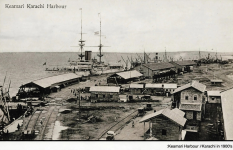
Keamari Harbour — 1900s

The aerial view reveals the scale of Karachi’s port complex more than a century ago. A Royal Navy cruiser lies anchored off the jetty, while goods sheds, railway tracks and harbour facilities can be seen across the waterfront.

The railway tracks ran directly onto the wharf, allowing cargo to move between ships, railway wagons and warehouses. In the foreground are the small stone customs buildings, some of which still survive today, although sadly in ruins.

By this period, Karachi had emerged as one of the most important ports of British India, handling enormous quantities of agricultural produce from Sindh, Punjab and the surrounding regions.
 
1787166162365.png

The Union Jack Club in Karachi, India (Pakistan after 14th August 1947.


The building still stands and is now known as the Services Club (or Services Mess).
 
1787671740551.png

Cantonment Railway Station.
 
1788704026537.png


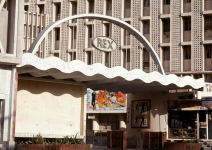
REX CINEMA, SADDAR, KARACHI —

A PIONEER OF THE GOLDEN AGE 🎬

Rex Cinema, located on Fatima Jinnah Road in Saddar, Karachi, was one of the city's legendary single-screen cinemas and an important part of Karachi's golden era of cinema culture.

Owned by Mr. Yousuf Mitha, Rex was renowned for bringing a modern cinematic experience to Karachi. It was reportedly the first centrally air-conditioned cinema in the city and famously introduced Karachi's first CinemaScope screen, offering audiences a wider and more immersive viewing experience.

Rex primarily screened major Hollywood releases, including films from renowned studios such as 20th Century Fox and Columbia Pictures, and also hosted prestigious film events.

As single-screen cinemas began facing financial difficulties with the rise of video piracy and changing entertainment habits, Rex was temporarily converted into Rex Auditorium, serving as a venue for school functions, plays, graduations and community events.

Sadly, even this effort could not save the historic building. Rex Cinema was eventually demolished, and commercial markets and business blocks now occupy the site where this grand cinema once stood.

For generations of Karachiites, Rex was more than a cinema—it was part of the city's social and cultural landscape.

The building is gone, but the memories of Rex Cinema remain.
 
1788704163310.png

Bristle Hotel Karachi: A Shrine of Lost Splendor and Mysterious Tales
By: Nadeem Ansari Toronto Canada

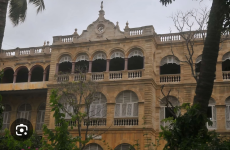
A century-old building, shrouded in silence near Karachi's railway station (Kant Station), known as the Bristle Hotel, harbors countless luminous chapters of the past and dark secrets.

The building was originally constructed in 1907 and 1910 as the residence of a Parsi merchant, Dossabhai Byramji Minwalla, who later became a prestigious hotel for the elite during the British rule.

A glimpse into the past: When Bristle Hotel spoke

This hotel was the center of Karachi's cultural and social life during the last days of British India and the early years of Pakistan. Its high ceilings, beautiful wooden corridors, charming arches, and English-style architecture added to its splendor.

Here, British officers, wealthy merchants, and the city's elite would gather for evening parties. The celebration of the New Year, the grand dinner, and the music parties were the hallmarks of this hotel.

Time passed, the city changed, and this magnificent hotel gradually fell into disrepair, slowly turning into a dilapidated structure, now shrouded in mystery, with a light appearing from its windows as if a centuries-old party was still going on, but as soon as anyone tried to approach, everything vanished in an instant, turning to ashes and darkness in an instant.

The Bristol Hotel still stands today like a silent spectator, reminding us how time's wheel can turn a grand palace into a heap of dust, and what remains behind are only stories and melancholy winds.
 
1788706226666.png

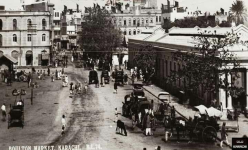
Year: c1900.
Jodia Bazar is one of the old wholesale grocery Market, located on M.A Jinnah Road, near Bolton Market, Saddar Town, Pakistan.
 
1788706698348.png


1940's
The iconic building you see in the picture is one of Karachi's first wholesale markets. Built in (1883 and named after Colonel C.F. Boulton, the Municipal Commissioner of Karachi at the tiime), it was originally established as a fruit and vegetable market.
 
1788707179373.png


The real story of the current five-star hotel in Moinpuk

It is a story from the old days of Karachi, when this city was still under the British and the sea winds used to pass near the buildings of the station. In those days, a Parsi Seth, Arshir Mama, who had earned a lot during the First World War, built a magnificent villa for the residence of his twenty-one children.

Due to the grandeur of the villa, it soon became famous as Mamaz Mansion, and it is said that a small pavilion was also built in one of its corners, where guests used to sit and have tea in the evening.

But fate changed its course. Arshir Mama, burdened with debt, was forced to sell the villa. The bank tried hard to get someone to take over the property, but due to the lack of rooms, no one was willing, and thus the villa remained abandoned for years.

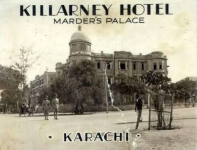
Then in the early 1930s, a European Jew, Sydney Marder, who was running his Clarney Hotel near the railway station, came to the door of the bank. After a long negotiation, he convinced the bank to build new rooms for the guests in the back of the villa.

Thus, in 1933-34, Clarney Hotel moved to its new location on Club Road and was renamed: Clarney Hotel, Marder's Palace. Later, people began to call it briefly the Palace Hotel.
During the days of World War II, this hotel became a residence for American officers, and its splendor was at its peak. After the war ended in 1946-47, it was sold by Sydney Marder and left the country forever. The Singh family of Calcutta took over the reins, and even after the partition of India, Indian citizens were allowed to own private property in Pakistan, so the hotel remained with them.

In the 1950s, when Karachi was still the capital of Pakistan, the city was at its peak. The Palace Hotel was adorned with a night club named Gorme, where jazz artists from abroad would perform. Foreign delegations, journalists, and tourists would visit this hotel, and it remained the third best hotel in Karachi until the 1960s.

Then in 1967, the government took over the building, and after some time, it was sold to the Ram Chandani family.

Eventually, the property reached the hands of Sadaruddin Ghani, who demolished the old, historic building and built new constructions in its place. In 1982, the Sheraton Hotel opened there, and today, the Moon Palace Hotel stands in the same location.

This story of Killarney Hotel, Marders Palace, encapsulates a whole era: from the dreams of a Parsi Seth to the hard work of a Jewish hotel owner, from the turmoil of wartime to the splendor of post-independence, and finally to the tragic moment of its demolition when old Karachi was crushed under new buildings. But for those who remember that era, Killarney Hotel's story still lives on today, a memory that still breathes somewhere in the alleys of Club Road.
 

Users who are viewing this thread

Back
Top