Old Karachi

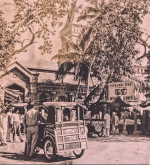
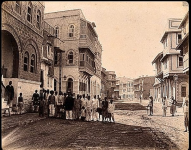
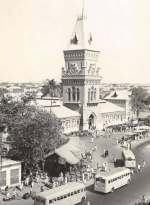
A Scene from Empress Market With Road side Tea Stalls in the Distance, Especially interesting is the Sign for ispahani teas a popular Tea Brand at the Time in Pakistan,

KARACHI, 1950,,,

1705605274260.png
 
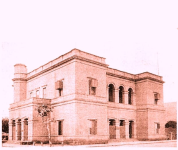
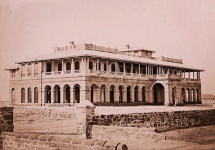
The Chartred Bank Of India, Australia and China,
Karachi Branch,
KARACHI, (1853)

1705613121023.png


1705613057024.png
 
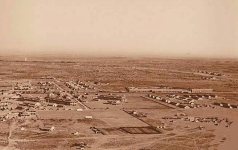
An Aerial Image of KARACHI, 1920,,
Present Shrahi Faisal

1705613181494.png
 
The Law Courts in Karachi, Purchased from the Old Bombay Bank built in 1866 and Located on McLeod Rd ,

1705613532811.png
 
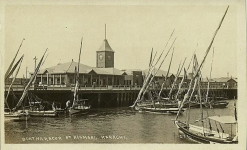
Boat Basin, 1920....

1705614394906.png
 
An 1897 Image Of Karachi's Rampart Row Street In Mithadar,,,


1705617786302.png
 
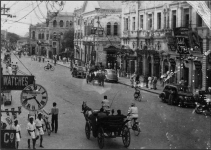
Elphinstone Street, Karachi, 1940. Elphinstone Street is now called Zaib-un-Nisa Street. Old and rare Pictures of Karachi; Old Photo of Elphinstone Street

1705701437523.png


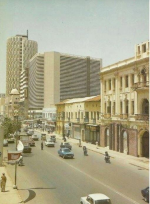
1979

1705701544761.png


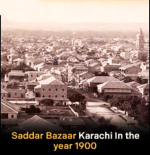
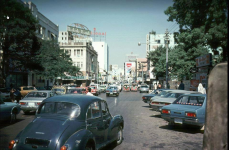
1982, Saddar

1705701617824.png
 

As a Bohra I grew up literally a couple streets from there.

Our school, the BVS, founded in 1859 and nurtured by many an educated man of the community, enrolled only Parsis until 1948, when, on Jinnah’s request,
its doors were opened to admit boys of any faith, irrespective of caste or creed. In the year 2000, the government education division adjudged it to be ‘the best private boys’ school of Karachi, and it was awarded the Millennial Shield.

BVSer here. Our sister school for girls, Mama Parsi, was even better.


I LOVE trams, especially open trams. They give character to a city and are so much more fun than buses.

1945 - Victoria


Ah, schooldays memories!
If you were a good boy and asked nicely you got to ride up front with the driver. If you felt naughty, you could sneak a ride at the back facing back :)

Name of Karachi came during around Kalhora times when a Dutch ship referred to the port as "Karachee." Karachi has its origins in "Kolachi" a Baloch woman who migrated to the region.

We used to joke that some foreigner asked the locals about the drinking water and they replied, "Khara, chee" while spitting it out. :)
 
Last edited:
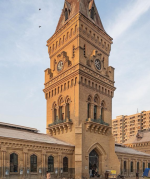
The Empress Market, established in 1886, owes its existence to the events of the first war of Independence in 1857. During this period, 38 sepoys who participated in the Independence movement were captured in Karachi. Eight of them lost their lives during an attempted escape, and the remaining sepoys faced death sentences. In a documented account by Sir Bartle Frere, it is noted that the rebel sepoys exchanged congratulations before their executions.

In response to the perceived rebellion, the British, angered by their actions, sought to make an example of the sepoys. Rather than the customary firing range execution, they used the sepoys as cannon fodder on the grounds where the Empress Market now stands.

Upon learning of this execution method, the citizens expressed their disapproval by placing flowers and lighting candles at the site, gradually turning it into a memorial for the freedom fighters.

To counter the potential construction of a monument by locals honoring the sepoys, the British authorities decided to build the Empress Market at the location. The market was conceived as a commemorative structure for Queen Victoria instead, serving as a strategic measure to suppress the growing homage to the sepoys and redirect public sentiment.

1705768644158.png


1705768664793.png
 
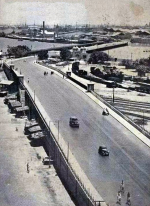
1940 The Old Napier Mole Bridge, also known as the Native Jetty Bridge or Netty Jetty Pull, is a historic bridge located in Karachi. It connects the city with the Port of Karachi.

1705783960198.png


The bridge was originally constructed in the mid-19th century during the British Raj, when a jetty was constructed to connect the city with the harbor.

The jetty was a long structure that extended out into the sea, and the bridge was built at the end of the jetty to provide access to the port.

In the early 20th century, the port of Karachi began to expand rapidly. This led to an increase in traffic on the bridge, and by the mid-20th century, it was no longer able to handle the volume of traffic.

In 1974, a new wider bridge, Jinnah Bridge, was constructed and replaced the Native Jetty Bridge.
 
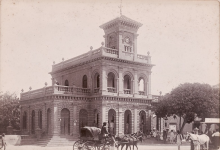
This charitable dispensary (located in present day Saddar near Empress Market) as built with funds provided by Edulji Dinshaw, a local Parsi gentleman who had risen from poverty to become the largest landowner in Karachi.
Constructed in 1882, it was the first building in the city designed in the ‘Italianate’ style, influenced by the Italian Renaissance.
It was one of three dispensaries in Karachi towards the end of the nineteenth century and provided treatment for over a hundred patients a day.


1705942183518.png
 

Users who are viewing this thread

Country Watch Latest

Back
Top