Old/New Articles and News item about PAF


GlobalSecurity.org
Home :: Military :: World :: China :: Aircraft :: Jianjiji / Fighter :: J-7 (Jianjiji-7) ::

Military​

F-7P Sabre II "Super 7" (Chao Qi)​

The Super-7 is a development of the F-7, Chengdu's version of the Mikoyan MiG-21 Fishbed. The upgraded F-7M was to be offered for export by China as a lowcost, new-build replacement for the US-built Northrop F-5, the Soviet MiG-21, and the Chinese F-6 and F-7.
By the early 1980s the PAF was looking for a new fighter to replace the F-6 [Chinese J-6]. Pakistan initiated the Sabre II project which would upgrade the Chengdu F-7M Skybolt with a Western engine and avionics. The early 1980s was characterized by a pronounced improvement in US-Chinese relations. It was therefore only natural that China became a major market for Western military hardware, in contrast to the years following China's 1949 Communist revolution, when an economic embargo imposed by the West forced China to seek assistance from the Soviet Union.
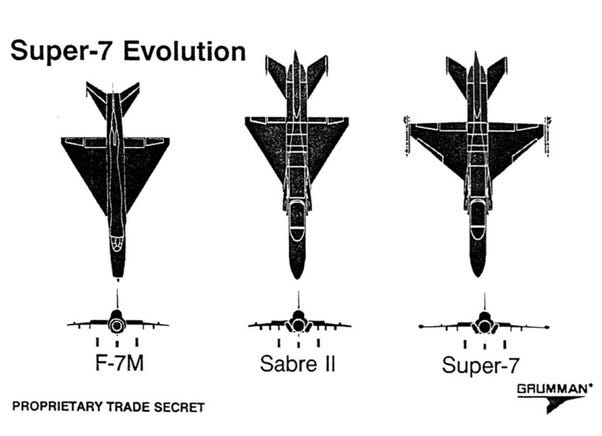
Grumman and China studied the feasibility of producing substantially improved F-7s using US engines and avionics. The extensively modified version of China's F-7 (MiG-21) fighter, called the Sabre II, would be re-engined and given a new forward fuselage with "solid" nose and side intakes. The new plane was deep modernization of J-7 fighter. The Sabre II was an F-7 with a General Electric F404 or Pratt & Whitney PW1216 or PW1120 engine producing between 16,0001b and 20,0001b thrust. The aircraft was equipped with the Westinghouse AN/APG-66 radar (the same as on the F-16 fighter. According to Chinese experts, the combat capabilities of the aircraft "Super 7" must have been closer to the American F-16 fighter.
The "SUPER-7" was the first fighter jet completely designed and manufactured by China. Super-7 (Chao Qi) fighter was a new generation fighter and the first of its kind of China's own intellectual property rights. The third-generation fighter plane, which can carry 3.8 tons of missiles, also has improved systems for attacking ground targets. Its advanced radar positioning and operating systems give the plane greater flexibility and better close-range manoeuvrability.

freestar
The wing area would be enlarged by increasing span (from 23.5ft to 26ft) and chord. Leading-edge slats and combat flaps would be fitted. Two additional hardpoints would be incorporated for Sidewinder-class air-to-air missiles. The higher thrust and lower wing loading would increase manuverability, while the longer fuselage (stretched from 45.8ft to 49.3ft) would give an 1,1001b increase in fuel capacity and single-point refuelling. The extra fuel and more-efficient turbofan would enhance range and endurance. The main landing gear would be beefed up, and larger wheels fitted. The nose gear would also be redesigned, and would incorporate nosewheel steering. An arrester hook would be fitted, and the ventral strake would be reshaped. The cockpit would be changed completely, with a Northrop F-20 Tigershark windscreen and canopy, F-16-type displays and instrumentation, and a new ejection seat. The gaseous oxygen system would be replaced by a higher-capacity liquid oxygen system.
The program was partially funded by Pakistan, which was considered as the main potential customer. The fighter was offered as a low-cost alternative to the F-16 to meet Pakistan's 150-aircraft requirement to replace Chinese-supplied F-6s (MiG-19s). The flyaway cost will be $8-9 million.
Grumman completed a five-month feasibility study in 1987. The American firm had performed preliminary studies and wind tunnel aircraft models. Grumman, China's Chengdu aircraft factory, China Aero Technology Import-Export Company, the Pakistan Air Force and the Pakistan Aeronautical Complex (PAC) promoted the F-7 modification. Chengdu would build the revised rear fuselage to a Grumman design, while the US company would build the new forward fuselage. PAC would assemble the aircraft. Several other Western companies were in competition to supply the engine and avionics.
In November 1988 Grumman and the China National Aero Technology Import-Export Corporation (Catic) started a nine month preliminary design study to upgrade Chinese-built Xian F-7M Airguard (MiG-21) fighter/ ground-attack aircraft. But by 1988 Grumman doubted that its proposal will be accepted, but believed that China could become interested in the modified F-7 for its own use.
freestar
The joint program to produce the Super 7 fighter was delayed in part because of resource constraints which prevented Beijing from meeting the project's initial R&D costs. Within a few years, project costs had escalated, and by 1989 the program was regarded as posing high financial risk by the PAF, given the 40% increase in the cost of the project. Chinese relations with the West broke down following the suppression of the Tiananmen Square protests in June 1989. Consequently, the "Sabre II" project was cancelled.
In the meantime the US lost interest in Pakistan following the Soviet withdrawal from Afghanistan. The US suddenly focused on Pakistan's nuclear weapons development program, and in 1990 the US imposed military and economic sanctions in the Pressler amendments. Development of the "Super 7" upgrade was slowed with the end of American technical assistance following the Tienanmen repression of 1989. The PAF opted for a less ambitious option of acquiring the F-7P Skybolt, an upgraded version of the F-7M, to support the fleet of F-7P Skybolts with over a 100 F-16 Fighting Falcons.
By 1993 Saturn's AL-31F, which powers the Sukhoi Su-27 Flanker, had been selected to power the Chinese Chengdu Super-7, which was due to be flown in 1994. The Super-7 was to have been powered by the General Electric F404, but use of the engine was blocked by a US trade embargo. The Russian powerplant was selected over the Turbo-Union marketed by Rolls-Royce. By 1995 Moscow was willing to assist with a number of Chinese programs, including the Super-7 fighter plane. But even with Russia's help, this aircraft ws not scheduled for delivery until the latter part of the 1990s. Pakistan and China later foreclosed the option of producing F-Super 7 aircraft due to non-availability of engines. However, Chengdu continued it efforts to improve the F-7M airframe by re-designing air intakes on the sides of the fuselage, hence the name Super-7.

freestar


NEWSLETTER
Join the GlobalSecurity.org mailing list


Advertise with Us | About Us | Site Map | Privacy
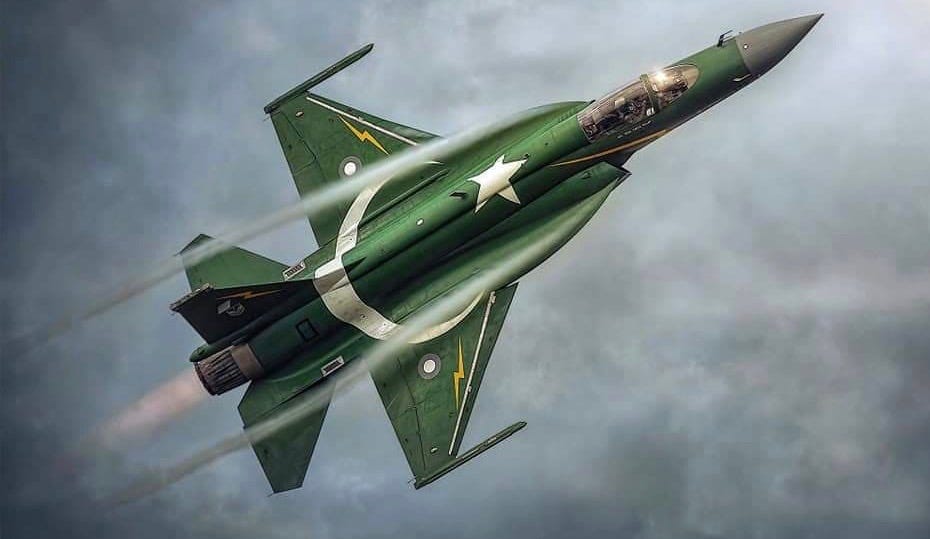
 
1*TSEyDCHt6cM7Fd7pp2ZI3g.jpeg

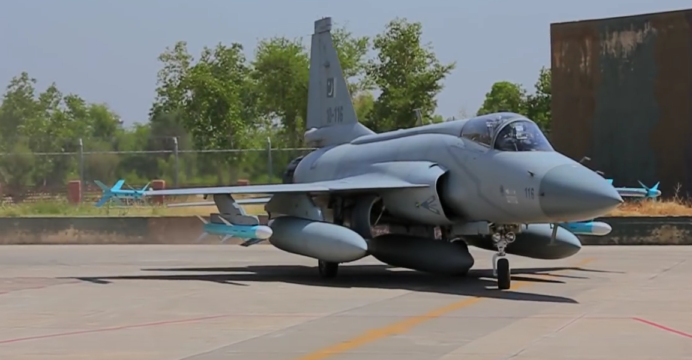
JF-17 “Thunder” (Jeff) in Pakistani colors.

A true hybrid in world aviation!​

Bilal Zaman

Bilal Zaman
·
Dec 19, 2019

https://medium.com/m/signin?actionU...-----------------post_audio_button-----------

I always wanted to write about the JF-17 Thunder but not having a reason to do so kept me from it. But very recently I watched a video of JF-17 on YouTube by a channel Grim Reapers. Upon browsing, I realized, they are a group of aviation enthusiasts who like to fly aircraft and make them compete each other in a simulator. I realized a lot of people don’t know much about JF-17 Thunder, so now I really want to write about it.
But before jumping in on it, I want to say that you guys at Grim Reapers, have single-handedly made Thunder a thing on the internet. Jeff, what you call it, could become it’s official call name eventually, idk.
Here’s some background for those who want to know the story behind Jeff.
So back in 80s, a program was initiated by Pakistan to bring serious upgrades to existing F-7 design resulting in a lightweight and affordable multi-role fighter. Side note: F-7 is essentially a Chinese made Mig-21. So Pakistan Aeronautical Complex, Chengdu Aerospace Corporation and Grumman came together on a project named Sabre II that would come about a lightweight multi-role fighter.
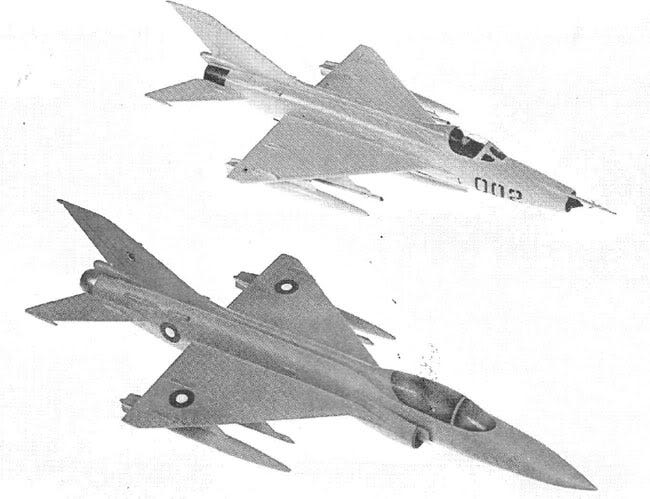
The early designs of Project Sabre II suggest that it could have been a cross between an F-7 and an F-5, with two intakes on each side and replacing the existing Mig-21 style nose intake with the nose cone radome. It could have also used an American power-plant resulting in a very upgraded variant termed as Super-7.
1*jwuB9OYNCtnw4h4-eEoHOQ.jpeg

Top, you can see a traditional F-7. Bottom, a proposed design under Project Sabre II.
But the embargoes on Pakistan and China in the coming years wouldn’t let Grumman work with either or both of them, so they called it a day went home, but Pakistanis didn’t trash the project.
Later in 90s, Pakistan and China went on to make another fighter with better design and avionics and pushed Project Sabre II/Super-7 research and came up with JF-17 Thunder.
1*YneYgiLvNCLEHMx6m9BRXg.jpeg

Jeff has been in production for over a decade now and a third block is on the way. It shall have AESA radar, HMD, could have single-MFD, better BVR capabilities and some more avionic goodies.
Initially, this aircraft was supposed to replace aging Pakistani F-7s and Mirages, but look at it now! On papers, original Block-I can outperform a Block-15 Falcon. And with Block-III, we can expect it to be at par with other modern fighters.
1*bU8tDwg8SfVvZY_GZmQdpg.png

If you look at it, it’s still a Fishbed, that dorsal spine gives it away. But the two intakes, each on the side, from F-5, which are now diverterless supersonic inlets. You could say Jeff is the first aircraft with successfully integrated DSIs.
1*uDuo5mXWaGx1ccmwmvgzgA.jpeg

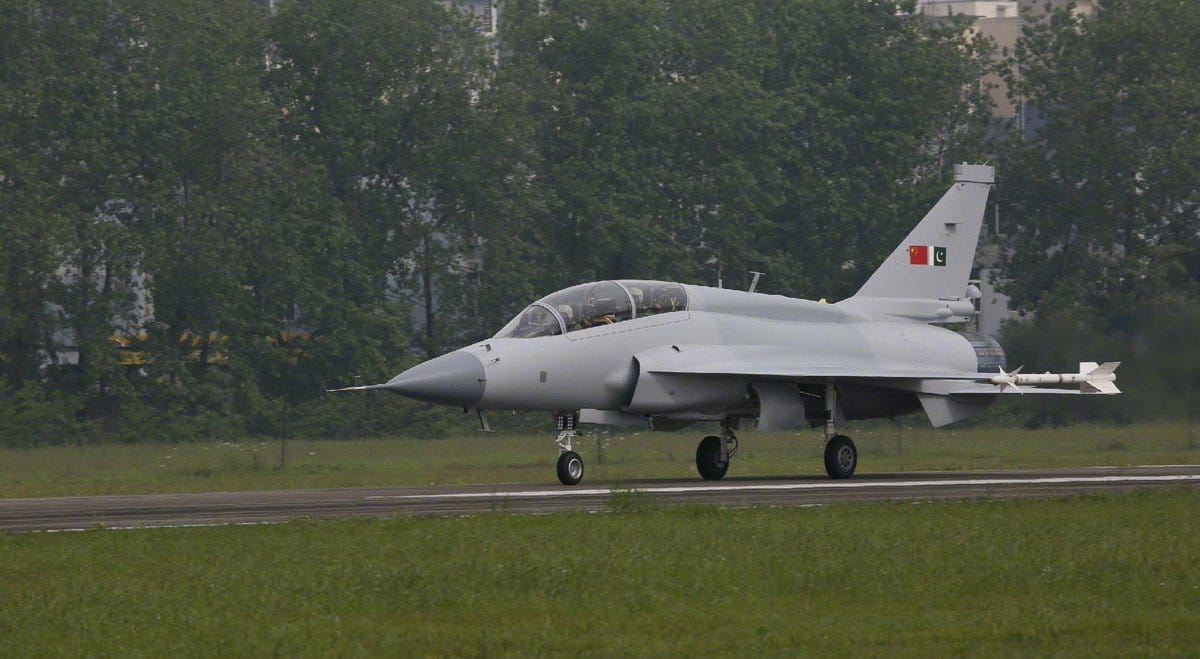
A twin-seater variant is also in production for training and fighter conversion purposes. It could also be used for maritime/attack missions but of course, with a lot of updates in future.
The only thing, holding it back is the engine, which is old and smoky. Pakistan cannot get hands on American or other Western power-plants due to unstable diplomatic relations and also because they are really expensive. Therefore, Chinese are working on a newer one, solely for the Jeff, but it’s not going to be in production any soon.
Jeff has started getting orders from the international market. Myanmar got few delivered already and Nigeria is awaiting delivery. Many other small buyers are seriously looking at it.
I am happy that Jeff got some attention in the western world, even if it’s through a simulator. I hope people who read this appreciate the consistency and patience of Pakistani and Chinese engineers who worked for so many years and came up with such a beauty. A true and modern lightweight Multi-Role Fighter which I don’t think exists in its true sense anywhere, anymore.
I thank you guys at Grim Reapers for making videos of the Jeff and I appreciate your enthusiasm in the aviation altogether.
Peace!
https://medium.com/m/signin?actionU...36---------------------clap_footer-----------


Follow

Written by Bilal Zaman​


7 Followers
IT Consultant | Super task master | General geek


PAF Falcons


Home Featured

Shahbaz Over Golan​

PAF FALCONS

October 3, 2021

Shahbaz Over Golan

Shahbaz Over Golan


By Air Cdre (Retd) Kaiser Tufail
Post-haste summons for volunteers found an eager band of sixteen PAF fighter pilots on their way to the Middle East, in the midst of the 1973 Ramadan war. After a grueling Peshawar-Karachi-Baghdad flight on a PAF C-130, they were whisked off to Damascus by road. Upon arrival, half the batch was told to stay back in Syria while the rest were earmarked for Egypt. By the time the PAF batch reached Cairo, Egypt had agreed to a cease-fire; it was therefore decided that they would continue as instructors. But in Syria, it was another story.
The batch in Syria was made up of pilots who were already serving there on deputation (except one), but had been repatriated before the war. Now they were back in familiar surroundings as well as familiar aircraft, the venerable MiG-21. They were posted to No 67 Squadron, Alpha Detachment (all PAF). Hasty checkouts were immediately followed by serious business of Air Defence Alert scrambles and Combat Air Patrols from the air base at Dumayr near Damascus.


Syria had not agreed to a cease-fire, since Israeli operations in Golan were continuing at a threatening pace. Israeli Air Force missions included interdiction under top cover, well supported by intense radio jamming as the PAF pilots discovered. The PAF formation, using the call sign ‘Shahbaz,’ was formidable in size – all of eight aircraft. Shahbaz soon came to stand out as one that couldn’t be messed with, in part because its tactics were innovative and bold. Survival, however, in a jammed-radio environment was concern number one. As a precaution, the Pakistanis decided to switch to Urdu for fear of being monitored in English. Suspicions were confirmed during one patrol, when healthy Punjabi invectives hurled on radio got them wondering if Mossad had recruited a few ‘Khalsas’ for the job!
After several months of sporadic activity, it seemed that hostilities were petering out. While the Shahbaz patrols over Lebanon and Syria had diminished in frequency, routine training sorties started to register a rise. Under these conditions it was a surprise when on the afternoon of 26th April 1974, the siren blasted from the airshafts of the underground bunker. Backgammon boards were pushed aside and the coffee session was interrupted as all eight pilots rushed to their MiGs; they were airborne within minutes. From Dumayr to Beirut, then along the Mediterranean coast till Sidon, and a final leg eastwards, skirting Damascus and back to Base – this was the usual patrol, flown at an altitude of 20,000 ft. The limited fuel of their early model MiG-21F permitted just a 30-minute sortie; this was almost over when ground radar blurted out on the radio that two bogeys were approaching from the southerly direction ie, Israel. At this stage fuel was low and an engagement was the least preferred option. Presented with a fait accompli, the leader of the formation called a defensive turn into the bogeys. Just then heavy radio jamming started, sounding somewhat similar to the ‘takka tak’ at our meat joints, only more shrill. While the formation was gathering itself after the turn, two Israeli F-4E Phantoms sped past almost head-on, seemingly unwilling to engage. Was it a bait?

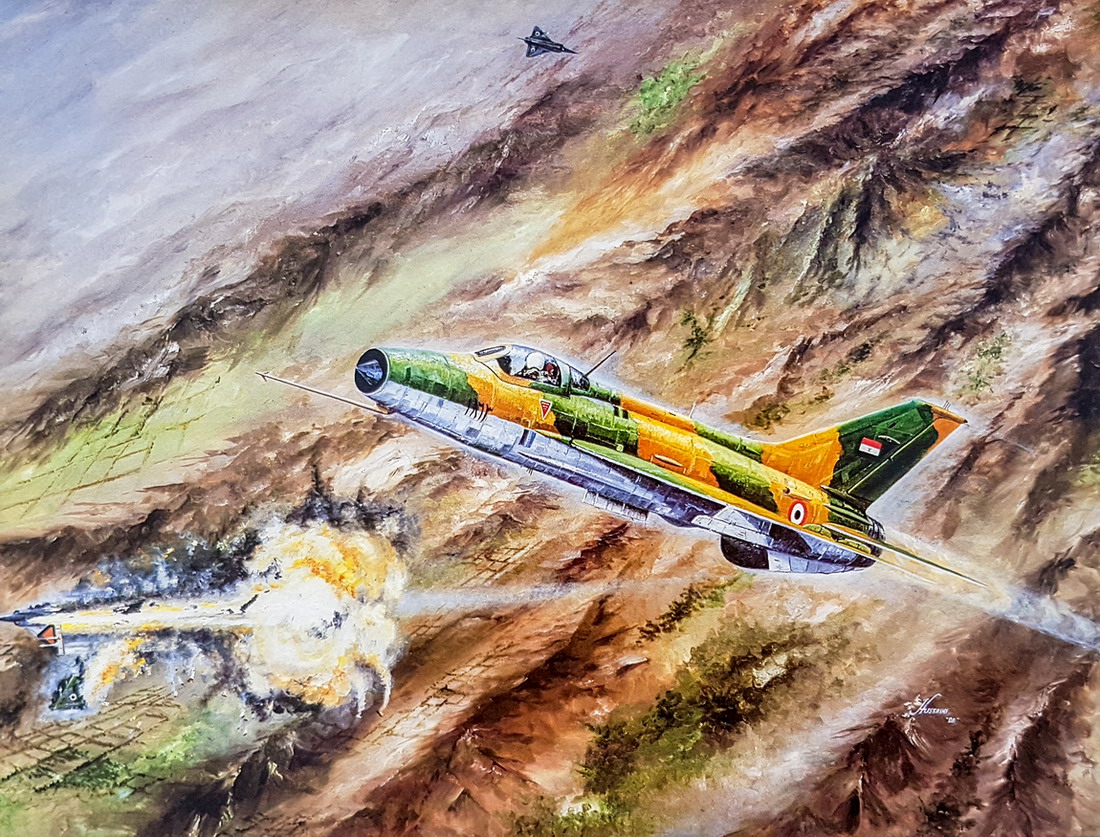
Flt Lt Sattar Alvi, now the rear-most in the formation, was still adjusting after the hard turn when he caught sight of two Mirage-IIICJ zooming into them from far below. With no way of warning the formation of the impending disaster, he instinctively decided to handle them alone. Peeling away from his formation, he turned hard into the Mirages so that one of them overshot. Against the other, he did a steep reversal dropping his speed literally to zero. (It takes some guts to let eight tons of metal hang up in unfriendly air!) The result was that within moments, the second Mirage filled his gunsight. While Sattar worried about having to concentrate for precious seconds in aiming and shooting, the lead Mirage started to turn around to get Sattar. Thinking that help was at hand, the target Mirage decided to accelerate away. A quick-witted Sattar reckoned that a missile shot would be just right for the range his target had opened up to. A pip of a button later, a K-13 heat-seeker sped off towards the tail of the escaping Mirage. Sattar recollects that it wasn’t as much an Israeli aircraft as a myth that seemed to explode in front of him. (The letter ‘J’ in Mirage-IIICJ stood for ‘Jewish,’ it may be noted.) He was tempted to watch the flaming metal rain down, but with the other Mirage lurking around and fuel down to a few hundred litres, he decided to exit. Diving down with careless abandon, he allowed a couple of sonic bangs over Damascus. (Word has it that the Presidential Palace wasn’t amused!) His fuel tanks bone dry, Sattar made it to Dumayr on the vapours that remained.

As the other formation members started to trickle in, the leader, Sqn Ldr Arif Manzoor anxiously called out for Sattar to check if he was safe. All had thought that Sattar, a bit of a maverick that he was, had landed himself in trouble. Shouts of joy went up on the radio, however, when they learnt that he had been busy shooting down a Mirage. The Syrians were overwhelmed when they learnt that the impunity and daring of the Pakistani pilots had paid off. Sattar was declared a blood brother, for he had shared in shedding the blood of a common enemy, the Syrians explained!
Shahbaz-Over-Golan-2.jpg

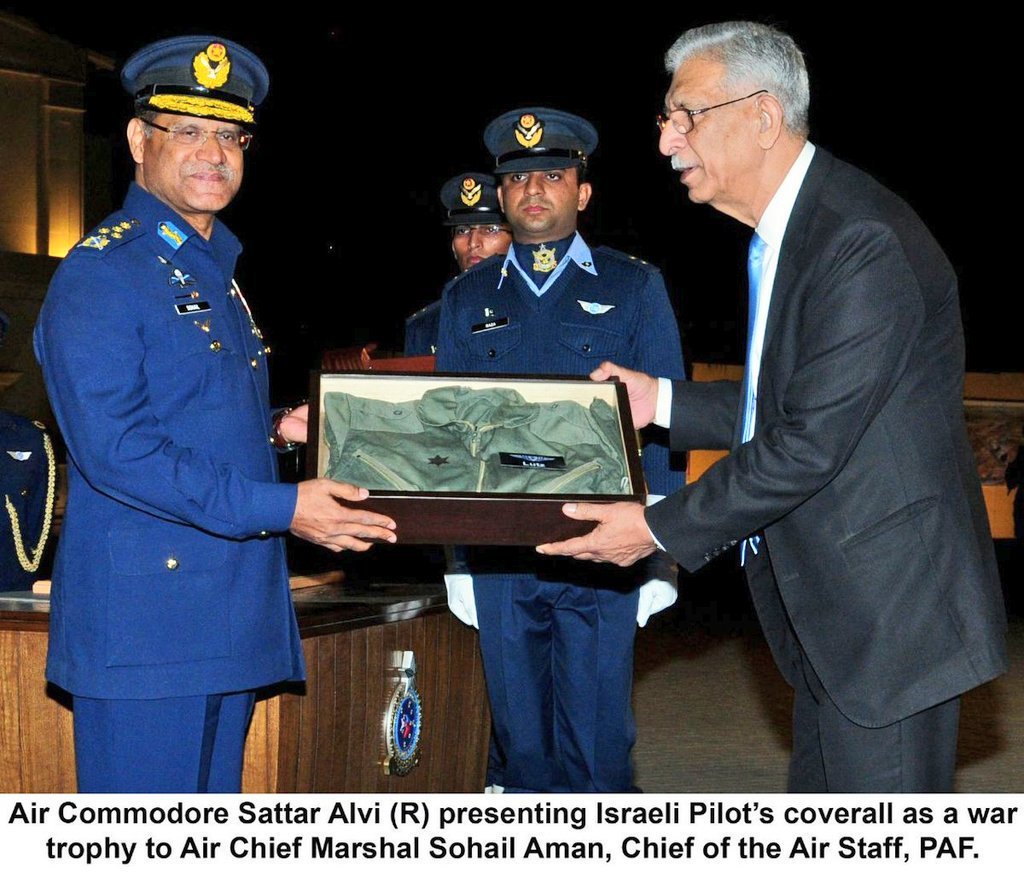
Sattar’s victim Captain M Lutz of No 5 Air Wing based at Hatzor, ejected out of his disintegrating aircraft. It has been learnt that the Mirages were on a reconnaissance mission, escorted by Phantoms of No 1 Air Wing operating out of Ramat David Air Base. The Phantoms were to trap any interceptors while the Mirages carried out the recce. Timely warning by the radar controller (Flt Lt Saleem Metla, also from the PAF) had turned the tables on the escorts, allowing Sattar to sort out the Mirages.
The success of Shahbaz over Golan is testimony to the skills of all PAF pilots, insists Sattar, as he thinks any one could have got the kill had he been ‘Shahbaz-8’ on that fateful day. The Syrian Government awarded the Wisam al-Shuja’a to all the formation members. Additionally, Sattar and Arif were admitted as ‘knights’ (al-faris) in the coveted Wisam al-Istehqaq al-Suriya, one of the country’s highest awards for ‘honourable service and devotion’. The Government of Pakistan awarded Sattar and Arif with a Sitara-i-Jur’at as well. Sattar, an epitome of a fighter pilot, befittingly went on to command PAF’s elite Combat Commanders’ School and the premier PAF Base, Rafiqui. Many a fighter pilot trained by Sattar would swear by his audaciousness in the air. Even today, crew room lore persists that fighter pilots don’t come any bolder!

* This article is an excerpted chapter from Air Cdre Kaiser Tufail’s book, Great Air Battles of Pakistan Air Force, published by Ferozsons (Pvt) Ltd, 2005. It was also published in: Shaheen – Journal of the PAF, Summer 1999 issue; Defence Journal, April 1999; The News International daily newspaper, 26 April 1999; Ausaf daily newspaper, 26 April 1999 (Urdu translation); Family Magazine weekly magazine, 5-11 Sep 1998 (Urdu translation); Akhbaar-e-Jahan weekly magazine, 31 Aug-6 Sep 1998 (Urdu translation)
Share via:
 
To view this content we will need your consent to set third party cookies.
For more detailed information, see our cookies page.
 

Operation Swift Retort one year on​

  1. Operation Swift Retort one year on

By ALAN WARNES 19th March 2020
FEATURES

One year after Pakistan and India almost went to war, Alan Warnes provides a Pakistan Air Force perspective on how events unfolded in the air over Kashmir.
Balakot in Pakistan’s Khyber Pakhtunkhwa region was relatively unknown to anyone outside the country until February last year. The town had been destroyed during the 2005 earthquake but had since been rebuilt, only to be thrust back into the headlines due to an air battle between Indian and Pakistani air forces. That conflict saw the Indian Air Force (IAF) taught a few tactical lessons by its Pakistan Air Force (PAF) counterparts. The biggest? Never underestimate your opponent.
img_30_1_1.jpg

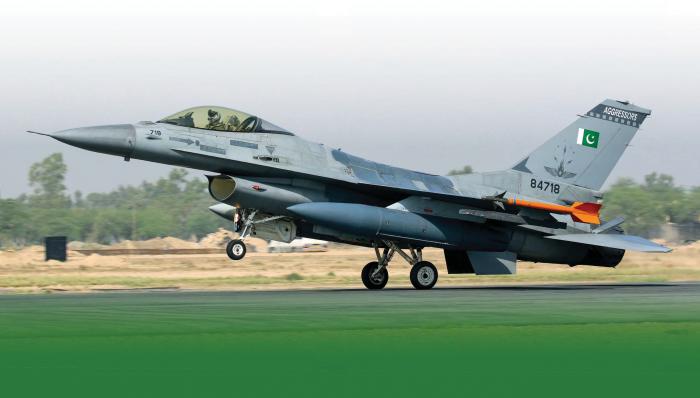
A No 29 Squadron ‘Aggressors’ F-16C landing at a forward operating base somewhere in Pakistan in April last year. The unit is assigned to the Air Combat Centre of Excellence at PAF Base Mushaf, which was commanded by Wg Cdr Noman Ali Khan on February 27. He shot down the IAF Bison.
Given the past two wars in 1965 and 1971, as well as several other skirmishes between the two countries since Pakistan gained independence in 1948, it could be argued that the IAF should have known better. The IAF outnumbers the PAF in every domain and yet its performance against its old foe on February 26-27, 2019, highlighted some deficiencies.
The outcome tarnished the reputation of the IAF commander at the time, Air Chief Marshal Birender Singh Dhanoa. He had emerged from the 1999 Kargil War with merit, after successfully leading a MiG-21 unit, No 17 Squadron ‘Golden Arrows’. He never forgot his old squadron, though. Before retiring on September 30 last year, he resurrected No 17 Squadron at Ambala Air Force Station (AFS) in readiness for the first in-country Rafale deliveries next year.
img_31_1_0.jpg

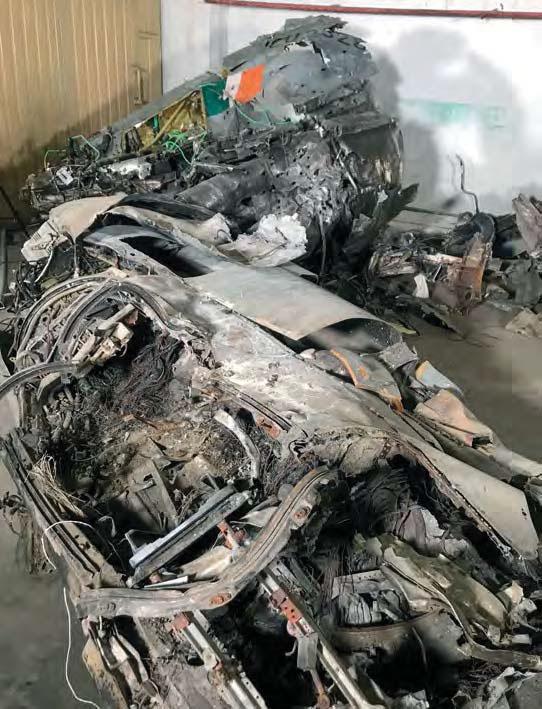
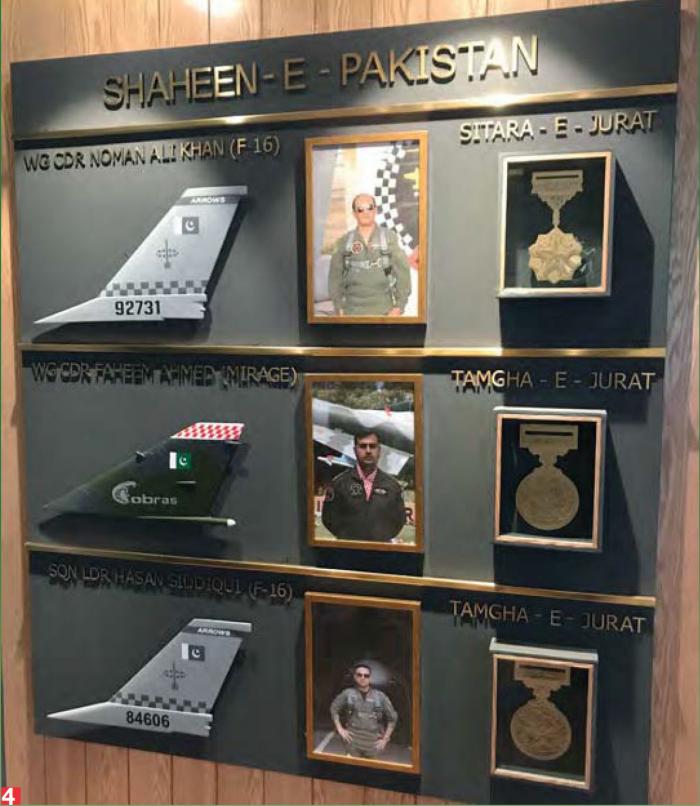
The wreckage of Wg Cdr Abhinandan Varthaman’s MiG-21bisUPG Bison stored at a secret location in Pakistan. The jet was shot down by an AIM-120C-5 AMRAAM fired by Wg Cdr Noman Ali Khan in an F-16A. Wg Cdr Khan received the third-highest military medal, the Sitara-e-Jurat, for his effort.
Indian attack
The background to the Balakot air battle were the deaths of 40 Indian police officers when a Kashmiri suicide bomber packed his car with explosives and crashed into Pulwama police station in Indian-administered Jammu and Kashmir, on February 14, 2019. Responsibility for the bombing was claimed by a Pakistan-based Islamist militant group. The incident was widely condemned amid Indian calls for retribution. The attack coincided with an Indian general election, and an escalation against Pakistan was sure to win favour with many voters.
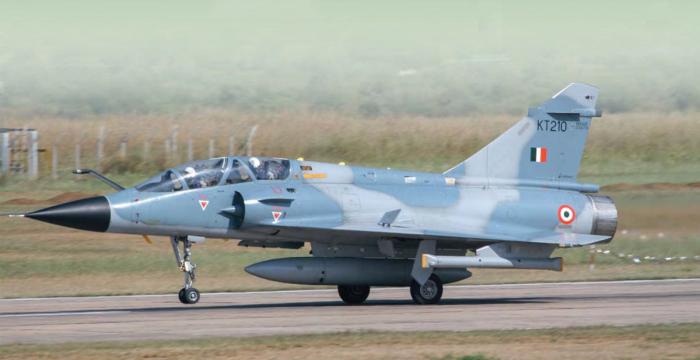
It wasn’t surprising that Indian hostilities towards its neighbour grew and the IAF began regularly testing the PAF’s air defences. Then, in the very early hours of February 26, six Mirage 2000s from No 9 Squadron ‘Wolfpack’, each loaded with a Rafael SPICE 2000 standoff weapon, left Gwalior AFS, around 220 miles (350km) south of Delhi. Their mission was to strike an alleged terrorist training camp. According to Pakistan, the target was in fact a madrassa (religious seminary), where young boys went to learn Islamic teachings, in the village of Jaba near Balakot. According to Pakistan, Indian intelligence was confused about the purpose of the seminary.
Gwalior is home to the IAF’s 40 Wing and two Mirage 2000 units, Nos 7 and 9 Squadrons. Also located there is the IAF’s Tactics and Air Combat Development Establishment (TACDE), which was responsible for developing and writing the tactics the Mirages would employ that night. The French jets were escorted by several Su-30MKIs from No 15 Squadron ‘Flying Lances’ for the two-hour mission to Balakot. At least one Il-78MKI tanker supported them, while two ERJ145 Netra airborne early warning and control (AEW&C) aircraft provided surveillance. On the opposite side of the border, one of the PAF’s Erieye AEW&C aircraft was peering deep into Indian airspace and detected the strike package as it edged closer to Pakistan.
img_31_2.jpg

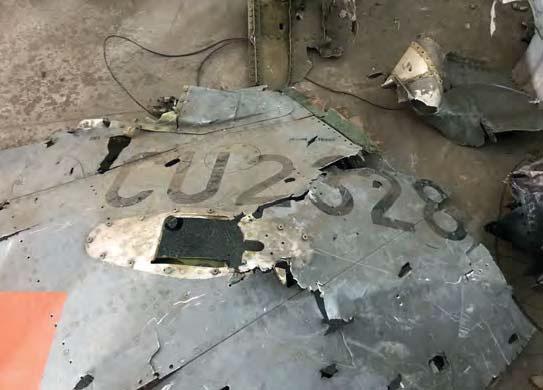
A close-up of the MiG-21bisUPG Bison tail with the serial CU-2328. The Bison pilot, Wg Cdr Abhinandan Varthaman, was returned to India on March 1.
All photos Alan Warnes
As Pakistani air defences monitored their enemy’s moves that night, personnel at the PAF’s Air Headquarters (AHQ), supervised by the operations commander Air Marshal Haseeb Paracha, were plotting their next moves. The busy ops personnel watched as Indian fighters probed PAF air defences in different locations as the Mirage 2000s headed towards the region. PAF quick reaction alert (QRA) F-16s and JF-17s were being stretched all along the border with India. As the IAF Mirages approached the line of control (LOC), they lobbed their SPICE 2000 weapons into Pakistan.
Air Cdre (ret) Kaiser Tufail, who the author first met in 2004 when he was base commander at PAF Base Masroor, continued the story: “With a standoff glide range of around 60km [37 miles] the aircraft did not need to cross the LOC and the SPICE 2000 bombs headed into Pakistani airspace in the autonomous GPS-assisted delivery mode.”

img_32_1_1.jpg

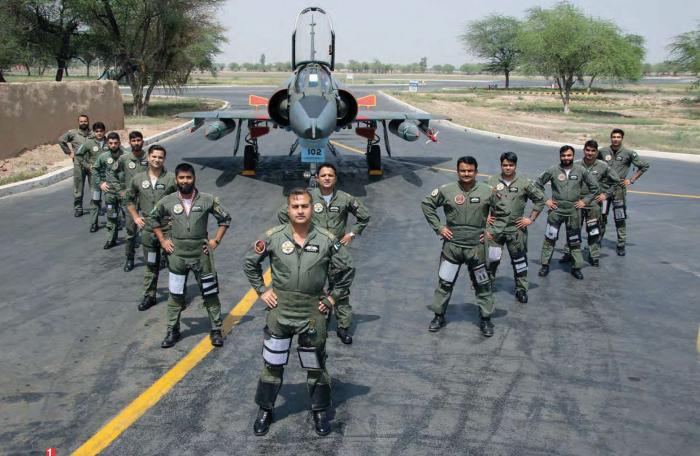
No 15 Squadron commander Wg Cdr (now Gp Capt) Faheem Ahmed heads up the group. He was awarded the Tamgha-e-Jurat, Pakistan’s fourth-highest military medal, for his role leading the squadron into battle. The three pilots directly behind him – Sqn Ldr Waqar Saleem, Wg Cdr Rashid Sulehri and Sqn Ldr Faisal Hassan – also flew in the raid and received medals.
Tufail, a former PAF F-7PG, F-16 and Mirage pilot who has written several books on the PAF, continued: “The bombs were aimed at a religious boarding school where over 200 students aged eight to 15 years were housed for their studies. But instead of hitting their intended target, the bombs fell onto a wooded area a few hundred metres away.
“It is widely believed the target elevation picked up by the weapon’s GPS did not match the orthometric height [altitude above mean sea level as given on aeronautical charts]. Satellite images have shown that all the bombs overshot their targets by similar distances.”
While the IAF continued to claim it had targeted a terrorist training camp, a day later European Space Imaging (ESI) published a high-resolution image of the area. This showed the buildings undamaged, with no sign of casualties. ESI managing director Adrian Zevenbergen added: “There were no signs of scorching, no large distinguishable holes in the buildings and no signs of stress to the surrounding vegetation.”
The IAF disagreed with ESI’s results, saying its own analysis showed four buildings destroyed, but did not release any images to support this.
At the Paris Air Show last June, a member of the Rafael marketing team showed AFM a photocopy of a high-resolution satellite image showing three holes in the roof of one of the buildings. When asked if it could have been Photoshopped, he responded: “I don’t think so, but who knows!”
PAF retaliates
“At the same time as the mission to strike the madrassas was going on, the IAF was feigning multiple intrusions in a bid to draw away the PAF combat air patrol [CAP] F-16s and JF-17 Thunders,” explained Tufail. “But they stood their ground, as this ‘cat and mouse game’ had been on-going for several days by then.”
Now it was the turn of the Pakistani public to call for revenge, while politicians and the military discussed options for what the PAF termed Operation Swift Retort. So, as night fell on February 26, the IAF was on full alert for a PAF counterattack. When dawn came and there was no sign of the PAF, the Indians lowered their alert levels, not believing a strike would occur during daylight hours. They were wrong.
Tensions now escalated into fullblown aerial warfare, as Tufail explained: “A strike package of four Mirage 5PAs and dual-seat Mirage IIIDAs of No 15 Squadron and two JF-17s of No 16 Squadron, supported by a big swarm of escorts and patrolling fighters [a mix of F-16A/Bs and JF-17s], cluttered the scopes of the IAF’s ground radars at 0920hrs. Working at the rear of the fighter package were the PAF’s Saab Erieye AEW&C aircraft, and the Dassault Falcon 20ECM, with electronic warfare officers ready to jam the opposing forces.”
The two Mirage 5PAs were each armed with an H-4 standoff weapon that Pakistan had developed with South Africa’s Denel in the mid-1990s. When the 5PA pilots dropped the weapons, a pilot sitting in the rear of each of the two Mirage IIIDA communications control aircraft steered the H-4 via data-link. These Mirages are more than 50 years old, but the PAF had upgraded the delta-winged fighters several times, adding avionics to ensure they remain capable.

According to Tufail: “The Mirage IIIDA control aircraft has to continue flying towards the target, refining the H-4 bomb’s flightpath till impact. The bomb can be steered with great accuracy, as the high-resolution image of the target seen by the bomb’s seeker head is constantly relayed to the control aircraft.”
The surprise attacks during the early hours of February 27 did not cause any harm.
Tufail continued: “Since the purpose of the mission was essentially to demonstrate that Pakistan had the resolve, as well as the capability, of responding in kind, it was decided that there was no compelling need to pick the front door of a brigade commander’s office or the air shafts of soldiers’ bunkers. General area-bombing of open spaces in military garrisons near the Line of Control was, therefore, agreed upon. It was expected that this ‘abundance of restraint’ would prevent mass carnage in the Indian military garrisons, which could otherwise lead to a chain of escalatory actions, and spiral into a very dangerous all-out war under a nuclear shadow.”
Electronic warfare winners
The JF-17s were each armed with two 1,000lb (454kg) Mk83 Indigenous Range Extension Kits (IREKs) that became operational in 2017. Developed, integrated and qualified by Pakistan-based Global Industrial & Defence Solutions (GIDS), the IREK has a range of up to 37 miles (60km). GIDS has converted Mk80-series general-purpose bombs into satellite-aided inertial navigation system (GPS/INS) guided bombs with a tail unit incorporating aerodynamic control surfaces and glide wings. It provides the JF-17 with a very potent day and night capability to engage a variety of targets.
img_33_1_1.jpg

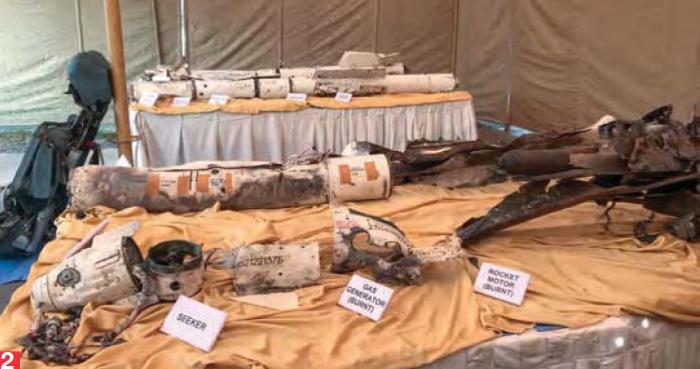
All four of the missiles under the Bison’s wings are stored in a secret location. The R-73 (AA-11 ‘Archer’) and R-77 (AA-12 ‘Adder’) that were under the left wing are seen nearest. Both were scorched by the fire that engulfed the aircraft after it crashed. The ejection seat was also on display.
Not surprisingly, the IAF’s QRAs reacted to the strikes with Mirage 2000s, Su-30MKIs and MiG-21s all heading towards the attackers. Electronic warfare played a pivotal role in both sides’ battle plans, but it was the PAF’s No 24 Squadron with its highly modified Dassault Falcon 20ECM that emerged with its reputation considerably enhanced. The unit’s highly modified business jets jammed the IAF fighters, so they were unable to communicate with each other or their air defence controllers. There was no IAF network-centric warfare – the aircraft on patrol were not data-linked (possibly due to system malfunctions), so the IAF was in complete disarray, unable to determine what was happening.
img_33_2_1.jpg

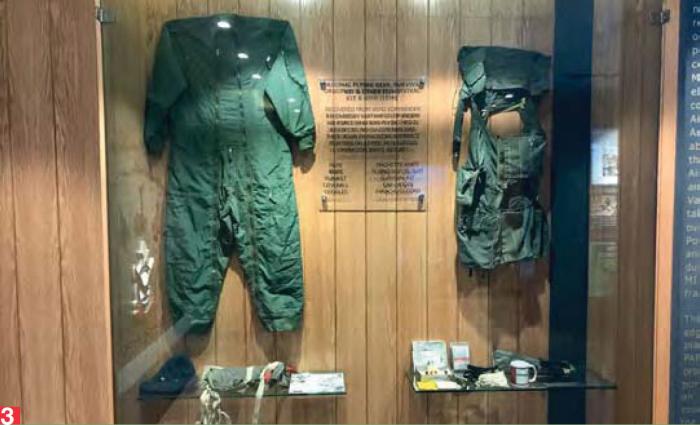
Wg Cdr Abhinandan Varthaman’s flying gear is on show at the PAF Museum at Faisal.
 
Former Indian Army officer Pravin Sawhney, now an independent military analyst, was critical of the IAF: “The PAF had better electronic warfare jammers and, as a result, the IAF could not communicate. If you do not win the battle in the electromagnetic spectrum, you will never win the war.”
img_33_3.jpg

One of the displays at Faisal gives details of the three pilots responsible for the shootdowns and attacks, as well as the tail numbers of the F-16A/Bs involved on February 27. All three pilots received PAF awards.
IAF confusion meant their aircraft were sitting ducks. Two PAF F-16s on a CAP, led by Sqn Ldr Hasan Siddiqui, were vectored by PAF air defence controllers on to what turned out to be Su-30MKIs. Tufail picked up the story: “After sampling the target data and confirming valid firing parameters, Hasan launched an AIM-120C-5 AMRAAM. Missile flight data fed back to the F-16B’s fire-control computer in real-time indicated that the missile had hit the target.” Confirmation, however, remains moot, as the engagement took place across the LOC in Indian-held Kashmir, and the IAF has not been forthcoming with any details.
img_33_4.jpg

Six Indian Air Force Mirage 2000s, armed with SPICE 2000 standof weapons, departed Gwalior late on February 25 but failed to hit their targets. The package is likely to have included a dual-seat Mirage 2000TH – this example is seen at Gwalior AFS fitted with a Remora electronic countermeasures pod.
At the time, Pakistan’s Director-General Inter-Services Public Relations (DG ISPR) stated in error that a JF-17 had shot down the Sukhoi.
A lot of confusion ensued on the IAF side, which led to an Israelimade Spyder surface-to-air missile (SAM) shooting down a Mi-17V-5 helicopter flown by No 154 Helicopter Unit from Srinigar AFS. All six aircrew and a civilian on the ground lost their lives in the crash. Almost immediately after the claimed Su-30MKI shootdown, the Indian military held a press conference to show off damaged AMRAAM components. They were trying to prove F-16s were involved in the action, hoping the US would sanction the PAF, but that doesn’t appear to have happened.

img_34_1_1.jpg

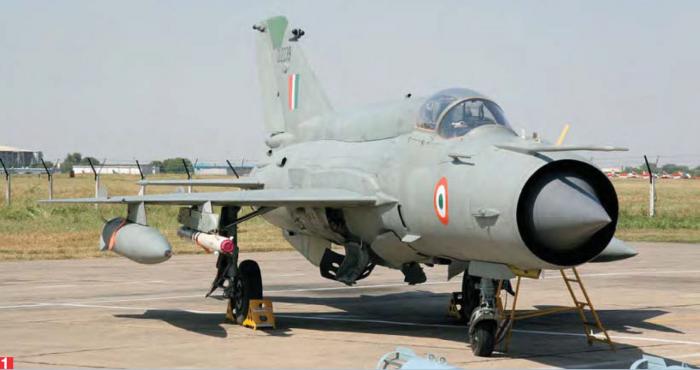
An Indian Air Force MiG-21BisUPG Bison at Gwalior AFS in 2006, armed with an R-60 (AA-8 ‘Aphid’) short-range air-to-air missile.
According to Tufail: “Monitoring of the radios by the PAF revealed the pilot of a Su-30MKI had called ‘Bingo’ [low on fuel] only 25 minutes into the mission, even though it can fly up to two hours. Around the same time, two Mirage 2000s also exited the active zone after claiming their air intercept radars were broken. That was strange, because PAF F-16s had picked up telltale transmission ‘chirps’ of the apparently serviceable Mirage 2000 radar on their threat-warning systems a short time earlier.”
The IAF claims to have shot down a PAF F-16 during the 2 air battle. The PAF denies this ever happened and, on April 5, the US government issued a statement that none of the Pakistani F-16s had been lost.
img_34_2_0.jpg

A No 15 Squadron Mirage 5PA parked at a forward operating base in mid-April 2019. Six weeks after the events of February 27, Operation Swift Retort was still ongoing and all PAF personnel and jets remained on a high level of alert.
Shootdown
The air battle saw five of the IAF’s agile MiG-21bisUPG Bisons of No 51 Squadron from Srinigar AFS being scrambled. They should have been working with the Su-30MKIs and their more powerful N011M Bars passive electronically scanned array (PESA) radars. The Flankers were expected to data-link their longer-range aerial picture to the Bisons operating ahead of them, allowing the MiGs to keep their radars switched off to evade detection by PAF radars.
However, the degraded communications meant the Bisons weren’t receiving anything from the Sukhois or the air defence controller. It left the pilots on their own. One of them, Wg Cdr Abhinandan Varthaman, was initially vectored towards some PAF fighters. Tufail continued: “Abhinandan had stayed low and had even switched off his IFF [identification friend or foe] to stop the PAF from tracking him.” Before communications were downgraded, the Indian pilot had kept his radar controller posted by reporting his position in prearranged codes. “However, he had forgotten that the PAF’s AEW&C aircraft, unlike the ground-based air radars, could clearly see him in their sights,” said Tufail.
The information picked up by the Erieye was relayed to an F-16, flown by Wg Cdr Noman Ali Khan, commanding officer of No 29 ‘Aggressors’ Squadron. Radio monitoring by the PAF heard Abhinandan being told by his controllers to turn back, but he couldn’t hear the instructions so didn’t alter his course. As soon as the MiG crossed the LOC, it was hit by Noman’s AMRAAM, sending the jet spiralling out of control. Fortunately, Abhinandan ejected but he came down in Pakistan. After a confrontation, during which he fired his pistol into the air and was beaten by locals, he was rescued by Pakistan Army police and taken into custody. Abhinandan was subsequently interviewed by PAF intelligence before he was returned to India on March 1.
In the wake of the PAF’s performance, overseen by Air Chief Marshal Mujahid Anwar Khan, Pakistan celebrated. It was an outpouring of national pride perhaps unrivalled since Pakistan won the Cricket World Cup in 1992.
In January, the author was taken to a secret location in Pakistan to see the remains of Bison CU-2328. The fuel tank was still attached to the jet when it crashed, and shrapnel from the AMRAAM had caused damage around the rear of the aircraft. At another unnamed location, the author was shown the jet’s four air-to-air missiles (AAMs). The two R-73s (AA-11 Archer) and two R-77s (AA-12 Adder) were easily recognisable, although the R-73 on the left wing’s outer station was badly burnt from the impact fire, but it was clear to see the missile had never been fired and that the rocket motor was still intact.
This refutes claims made by former IAF commander ACM Dhanoa to the Hindustan Times on February 11 this year that the F-16 was shot down by Abhinandan. For his part, Abhinandan has never said he shot down an F-16.
“We have to be aware of modern technologies, and if the acquisition of a new fighter fits into our doctrine then we will try to acquire it. The balance has to be maintained.”
ACM Mujahid Anwar Khan

img_35_1.jpg

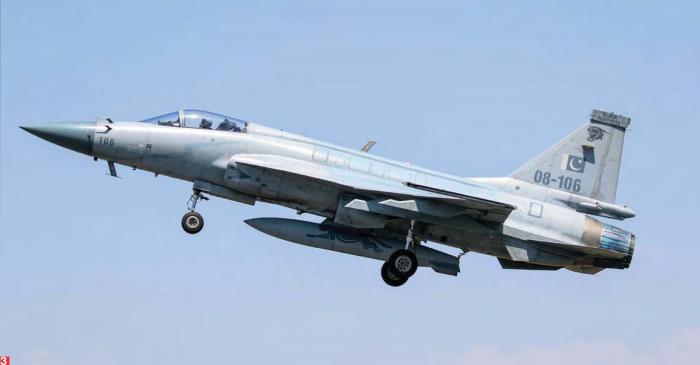
A No 16 Squadron ‘Black Panthers’ JF-17 lifts of during a training sortie. Two of the unit’s aircraft dropped 1,000lb IREKs on targets in India in retaliation for the strikes on Balakot during February 26.
Conclusions
Close observers of the PAF will perhaps not be surprised that the air arm fared so well against the IAF. The PAF makes the most of scarce, often old resources, managed and used in a way that addresses tactical and strategic requirements. Under Project Vision, the PAF has established a networked air defence network, linking many foreign-made systems to the three regional air commands and the AHQ, to provide one recognised air picture.
img_35_2.jpg

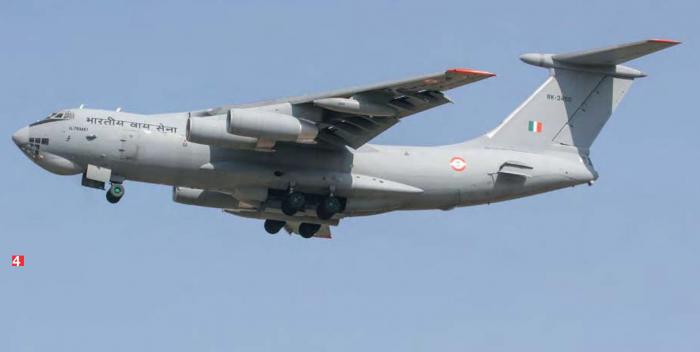
Refuelling support for the IAF’s mission was provided by an Il-78MKI tanker.
In addition, PAF personnel train continuously, often in local exercises such as Saffron Bandit or High Mark, or with visiting air forces such as the USAF, as well as air arms from China, Saudi Arabia and Turkey. There have been regular exercise deployments too, beginning in 2004 when the PAF first attended Anatolian Eagle at Konya in Turkey. The PAF and China’s People’s Liberation Army Air Force (PLAAF) participate annually in Exercise Shaheen, with the latest Shaheen XIII drills taking place last August.
Operation Swift Retort will go down in PAF history and Pakistan will no doubt reflect on the service’s achievements of February 27, 2019. However, the IAF will also learn from its mistakes. When AFM spoke to the PAF commander, ACM Mujahid Anwar Khan, in late January this year, he said: “One of the lessons the Indians should heed is not to use military applications, especially air power, flippantly.” The commander, who had been in his post less than a year when Swift Retort took place, added: “Restraint is needed because with BVR [beyond-visual-range] and standoff weapons, air forces can attack at longer ranges and then the situation spirals out of control. India should have known we would respond to their attacks – they didn’t have to cross the LOC. They underestimated our resolve.”
He continued: “We could have done a lot more damage than we did, by shooting down more aircraft, so I was very proud of the guys that they showed restraint.”
The IAF is already talking about upgrading the radars of its Su-30MKIs with an active electronically scanned array (AESA) to provide increased situational awareness. Longer-term, the IAF will operate the Rafale and the Meteor, perhaps the best BVR air-to-air missile in the world. On this point, ACM Khan told AFM: “In the 1970s and 1980s we were always outnumbered, and we didn’t have BVR. But we did have [infrared] missiles, so we trained hard and were prepared. Denial is the first failure, but acceptance leads to success.”
The PAF commander, an F-16 pilot, added: “Do you think we haven’t trained for the Rafale? It doesn’t matter what kind of technologies the IAF has, we will have the capacity to defeat it. We have to be sharp and outmanoeuvre them with various methodologies.”
ACM Khan concluded: “We have to be aware of modern technologies, and if the acquisition of a new fighter fits into our doctrine then we will try to acquire it. The balance has to be maintained.”

Originally published in AirForces Monthly​


Deadly Stroke

KAISER TUFAIL

My photo
19 November 2008

The Indian Army had responded vigorously to Pakistani infiltration of irregular forces into Kashmir which had started in August 1965. With a double pincer on Badori bulge, the Indians had captured the strategic Haji Pir Pass. Core areas in Azad (liberated) Kashmir including towns of Muzaffarabad and Mirpur lay threatened. The only way out of this critical situation was to launch a diversionary manoeuvre; the Pakistan Army therefore put into motion a well-considered plan to capture Chamb and subsequently, Akhnur. Capture of Akhnur Bridge on River Chenab would have snapped land communication over the vitally important Jammu-Srinagar road, thereby isolating Indian forces in Kashmir.
Operation ‘Grand Slam’ was thus launched in the early hours of 1st September 1965. Audacious as the plan was, it took the Indians by complete surprise. A Pak Army force consisting of an infantry division and two armoured regiments, along with extensive artillery support, started the attack on Indian positions. Outnumbered and out-gunned, Brig Man Mohan Singh, Commander 191 Infantry Brigade, was faced with a critical situation and he frantically called for air support. By the time the request got an ultimate approval from the Ministry of Defence in Delhi, it was late in the afternoon.

Pathankot was the nearest airbase in the zone of conflict. It housed three squadrons including two with Mystère IVs – Nos 3 and 31 – and one with Vampires – No 45. Under command of an enthusiastic and energetic Sqn Ldr Sudesh K Dahar, No 45 Squadron had recently moved from Pune in anticipation of the hostilities. The Vampires had been armed and waiting on the tarmac since morning. Three missions had been planned and on receipt of orders, the first formation of four aircraft took off at 1650 hrs (PST) with Dahar leading.

The grim situation on the ground found the Vampires at work immediately. Much has been made of their success by the IAF, but Maj Gen G S Sandhu was not impressed; in his book History of Indian Cavalry, he recounts how the first Vampire strike of four “leisurely proceeded to destroy three AMX-13 tanks of India’s own 20 Lancers, plus the only recovery vehicle and the only ammunition vehicle available during this hard-pressed fight. The second flight attacked Indian infantry and gun positions, blowing up several ammunition vehicles.” 3 Mahar is also said to have shared the ignominy at the hands of IAF. Any pretension as to the success of Dahar’s mission was quashed when Flt Lt S V Pathak was hit by ground fire [1]. He however managed to stagger across to friendly territory before carrying out a remarkable bail-out, as the early vintage Vampires were not equipped with ejection seats.

At Sargodha, the main PAF airbase, Air Defence Alert duties were being shared by different F-86 Sabre squadrons. The exuberance and excitement of the pilots was exemplified by nobody better than Flt Lt Imtiaz A Bhatti of No 15 Squadron who, having completed his 0400-1200 hrs shift, pleaded to stay on for the second half, hoping to get an opportunity of flying a coveted combat sortie. With him on alert was PAF’s highly regarded and popular Sqn Ldr Sarfaraz Ahmad Rafiqui, the Squadron Commander of No 5 Squadron. Rafiqui’s happy-go-lucky style belied a thoroughly sound professional standing amongst PAF’s elite group of pilots. A gifted flier, he had bagged the ‘Atcherly Trophy’ for the Best Pilot as a cadet in the Flying College at Risalpur. He continued with a string of above average reports in his Advanced Flying Course as well as the Fighter Weapons Instructors’ Course, both done in USA.

He again showed his prowess as a superb fighter pilot by topping the course at PAF’s Fighter Leaders’ School. After yet another course at RAF’s prestigious Fighter Combat School, he ended up piling a unique assortment of highly rated qualifications that served him (and the PAF) in good stead. As an exchange pilot in UK, he flew Hunters for two years. His credentials looked good; it remained to be seen if he was equally impressive in actual combat.

As the pilots ‘scrambled’ in response to the buzz on Sargodha hot line shortly before 1700 hrs (PST), it seemed certain that Rafiqui’s flair and Bhatti’s fervor [2] would come together in a lethal combination. Within minutes, the Sabres took-off and were directed by Sakesar radar to head 060º and climb to an altitude of 20,000 ft or ‘Angels 20’, in radar jargon. Reaching the area, the radar controller set them up in a racetrack pattern in Sialkot-Chamb direction, ten miles from the border. It wasn’t long before they were ‘vectored’ to Chamb, where the second formation of four Vampires led by Flt Lt A K Bhagwagar was busy in the fray.

The Sabres descended and started a visual search not only for the attacking aircraft, but also for the PAF C-in-C who was reported to be making an on-site assessment of the battle in a T-37. To say that consequences of fratricide would have been grave would be an under-statement!

Bhatti was the first to spot two Vampires crossing 3-4,000 ft underneath and the sooner he informed his leader, Rafiqui immediately acknowledged, “Contact, going for them.” Bhatti set about clearing tails while Rafiqui stalked his prey. Just then,

Bhatti spotted two more aircraft a mile away, which he mistook for Canberras in the glare of the low evening sun; in fact these were Vampires from Dahar’s formation on the way out after completing their mission. As Bhatti was about to seek his leader’s permission to go for the pair, he saw another two Vampires trying to get behind Rafiqui. Almost instinctively, Bhatti broke off, positioned behind these two and in no time had one of them in his gunsight; but before Bhatti could shoot, he had to have Rafiqui out of his line of fire.


Rafiqui had, meanwhile, despatched one of the Vampires with a blazing volley from the lethal 0.5” Browning six-shooter (actually six guns) and was chasing the other. At this stage, the Vampire on whom Bhatti had trained his guns was closing in on Rafiqui and the situation was getting perilous. “Break left,” yelled Bhatti, but Rafiqui managed to make short work of the second one before reacting just in time. Rafiqui then readjusted on the wing of Bhatti who got busy with his quarry. While Rafiqui cleared tails, Bhatti did an equally fast trigger job.

One Vampire nosed over into the ground, which was not too far below; the other, smoking and badly damaged, ducked into the trees. Its bewildered pilot, Flg Off Sondhi, staggered back to tell the horrifying tale. The less fortunate Flt Lts A K Bhagwagar, V M Joshi and S Bharadwaj went down with their Vampires in full view of the horrified Indian troops.

Also watching the dogfight was Pakistani Brig Amjad Choudhry, Commander Corps Artillery. He reminisced in his book September ’65 – Before and After, “When we saw the bombers from our command post, we were apprehensive because our tanks and infantry surrounding Chamb were in the open, in close formations and were very vulnerable to air attack.

The bombers went into action and came low to drop their bombs. Before they could do much damage, there was a flash in the air on top of these bombers and before we could comprehend what had happened, the Indian bombers came down in three columns of smoke.” Suggestion of Divine intervention aside, Choudhry correctly mentions the number of Vampires that fell in the dogfight, an issue that has been mired in some confusion over the years.

Back at Pathankot, the first three Vampires landed, then a singleton came in and finally, another four Vampires landed. Those on the ground thought that the lone Vampire was actually a straggler from the first formation, the four Vampires were of the second formation and, four more were yet to come. When Flt Lt Farokh J Mehta and his wingmen removed their oxygen masks, the Engineering Officer was shocked to discover that three of the second formation were missing. “He had this horrified look on his face,” Mehta recollected.

Providentially, Mehta had changed places with Bhagwagar on the latter’s request, being the more experienced to lead the last formation in poor lighting conditions. He ruefully remembered how a badly shaken Sondhi narrated details of the dogfight to the crest-fallen squadron mates.


When Air Marshal M Nur Khan, who had landed at Sargodha after his recce sortie, summoned Rafiqui and Bhatti, nobody was sure if it was for a dressing down for starting an air war. Shoot-to-kill orders had not yet been issued and Rafiqui felt somewhat apprehensive, though he re-assured Bhatti that he alone would take the flak from the C-in-C. “Well done my boys,” was the reply from the man who was never in doubt about how the PAF should have responded.

This single engagement resulted in a windfall of strategic dimensions for the PAF. The shocked and demoralised IAF immediately withdrew over 80 Vampires, together with 50 Ouragons, from front-line service. The IAF was effectively reduced in combat strength by nearly 30% in one deadly stroke, thanks to Rafiqui and Bhatti’s marksmanship. Both were awarded a Sitara-i-Jur’at each. As for Sqn Ldr Dahar, he made up for his dampened enthusiasm with a display of considerable fortitude; it earned him a consolation Vir Chakra .​
 
JOINT USAF / PAF AIR EXERCISES IN 1978

by Air Cdre (retd.) Jamal Hussain


Early this year, USAF had conducted a joint air exercise with the Indian Air Force, codenamed ‘Cope India’. A brief report of the event appeared in the Dawn article of Friday June 15 titled, “Air exercise with India a wake-up call for US: general”.


Midlink 78


1623709439238.png


F-111 seen deployed at Masroor Air Base during the Midlink 78.


Exercise Midlink 78 was held in November/December 1978 where air and maritime forces of Pakistan and USA interacted with each other off the Karachi coast and in the air spaces around Karachi and the Arabian Sea. As the Flight Commander of No.5 Squadron, I was again fortunate and privileged to have taken part in the Exercise.

The air portion of Exercise Midlink 78 was fairly conventional. Red forces (aggressors) were represented by land based USAF F-111 and F-4 squadrons operating from Masroor. PAF Mirage IIIs and F-6s again from Masroor operated in the air defence role. F-111s (singly) and F-4s (in pairs) conducted raids over Masroor while Mirages and F-6s from Masroor carried out interceptions with the aid of air defence radar that were deployed for the purpose.

The aggressors ingressed at low levels and while the minimum height from safety point of view was 250 feet Above Ground Level (AGL), the F-111s, having their terrain following radars at their disposal invariably flew in at about 100 feet AGL. We as the defenders rarely complained.

As per the Rules of Engagements, the interceptor was permitted to carry out a single attack simulating a heat missile (Fox 2) or gun shot (Fox 3) while the attackers were permitted one hard turn into the interceptor at which point further manoeuvring by both was to cease. These restrictions were placed for flight safety reasons. These restrictions, as we soon learnt, existed on paper only.

F-111s, basically being an attack aircraft with little pretence to air combat potential, generally adhered to the laid down rules. The F-4s were a different kettle of fish. They had too much of fighter ego ingrained in their psyche to tamely allow another fighter jock to expose gun camera film on them capturing their theoretical destruction without a serious struggle. On a number of occasions, a hard turn by the strike formation led to full fledged combat at what in our fighter pilots’ lexicon is termed as the ‘deck level’.

These manoeuvrings and subsequent claims were never officially revealed as it would have resulted in strict disciplinary actions on both the guilty parties. But unofficially we talked about it in a hushed manner, displaying the cines on the quiet and only to each other.

Till the advent of F-15s and then F-16s, F-4s were the most potent fighter/ground attack aircraft in USAF’s inventory. During the Arab – Israeli war of 1973 when the Israeli Air Force possessed both F-4s and Mirages, the former was considered to be their No.1 air combat aircraft. With that impressive background, we expected a very tough dog-fight if the F-4s decided to engage us seriously in air combat.

The F-4s, as I had mentioned earlier, on more than one occasion took us on and much to our surprise and delight we normally enjoyed the upper hand in those engagement. Mercifully also, there were no mishaps.


1623709609266.png


F-4 in Mirage gun sight - Midlink 78

Was Mirage a better air superiority fighter than the F-4 or were we better trained in air combat than the F-4 crews we had engaged? Even the F-4 crews were surprised at our dexterity. Informal discussion with the F-4 squadron pilots revealed that the particular squadron we were dealing with had reconnaissance and strike as their primarily roles. Air combat manoeuvres were restricted primarily to defensive manoeuvring. No wonder, we had outperformed that lot of F-4 pilots in the air combat role.

1623709674010.png


Now a word of advice and caution from an old sinner to my younger colleagues. Exercise Midlink was one of the very few occasions when I had deliberately violated the rules and was fortunate to get away with it. In my 28 years of active service with the PAF where I flew practically all the fighters in the PAF inventory for about twenty years, I was not involved in a single accident, major or minor. Either I was fortunate or I really was not a habitual rule breaker. The fact that I was and will always remain a fighter pilot at heart and that we were engaging the world’s premier air force pilots in combat led me to believe, wrongly I realise now, that PAF’s honour had to be protected at any cost. Perhaps we were fortunate or perhaps we had the necessary skill to engage in low level combat without flying into the ground. A bit of both I think and the fact that I had just completed the Combat Commanders’ Course where we had trained for low level combat. My fervent appeal therefore to my young friends is not to indulge in any activity for which you have not been specifically trained, or which is strictly forbidden.

1623709718398.png
 
Second to None
@SecondtononePAF

Faithful Warrior. Read Article Link
https://secondtonone.com.pk/2023/10/12/faithful-warrior/…Pdf

E-magazine link.https://secondtonone.com.pk/wp-content/uploads/2023/07/Second-to-none-3rd-Magazine-July-2020.pdf…

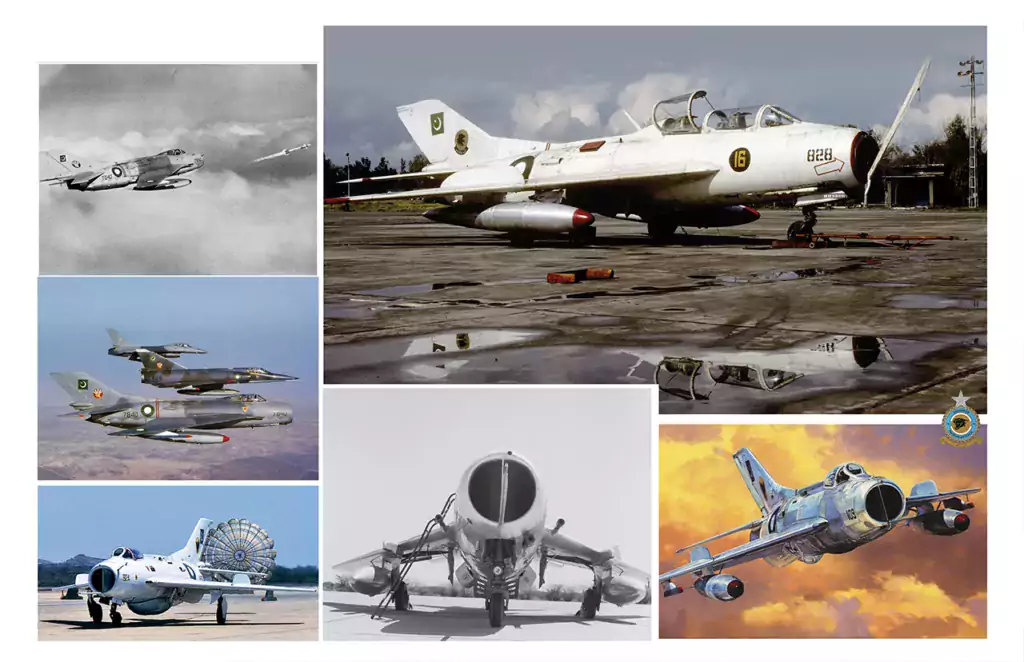
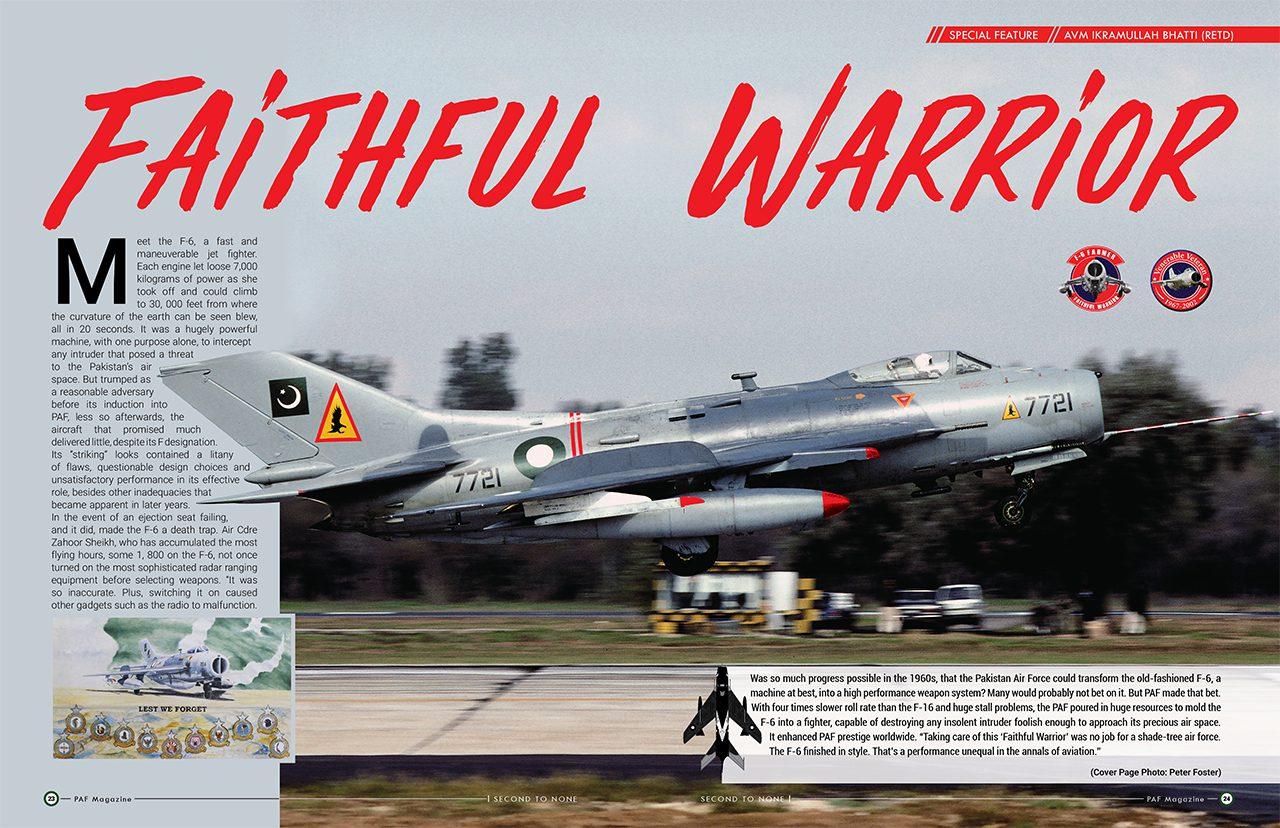
Meet the F-6, a fast and maneuverable jet fighter. Each engine let loose 7,000 kilograms of power as she took off and could climb to 30, 000 feet from where the curvature of the earth can be seen blew, all in 20 seconds. It was a hugely powerful machine, with one purpose alone, to intercept any intruder that posed a threat to the Pakistan’s air space. But trumped as a reasonable adversary before its induction into PAF, less so afterwards, the aircraft that promised much delivered little, despite its F designation.

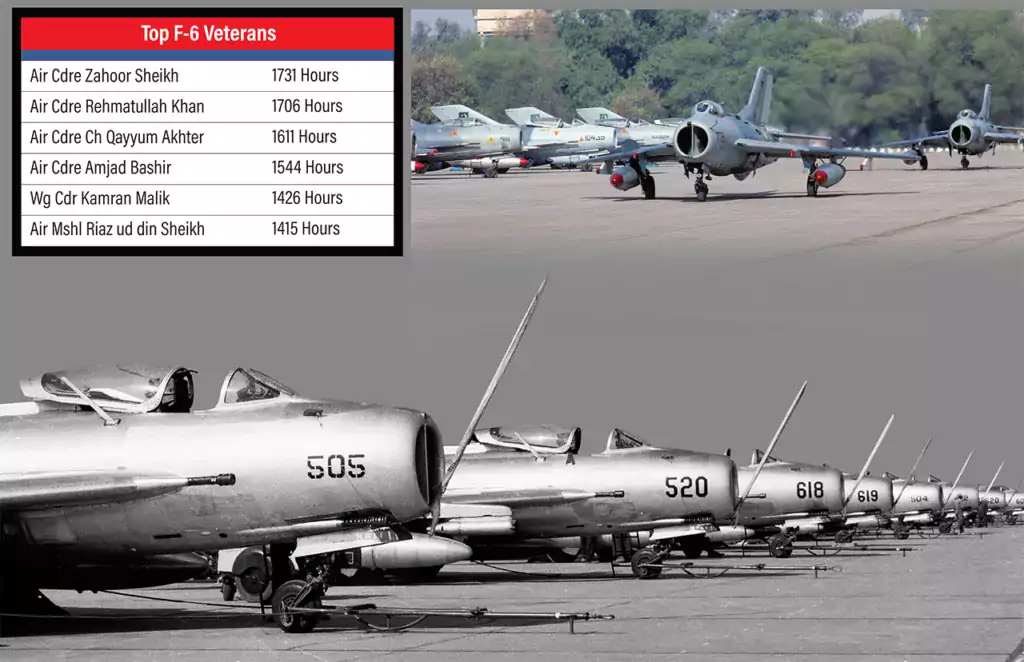
Its “striking” looks contained a litany of flaws, questionable design choices and unsatisfactory performance in its effective role, besides other inadequacies that became apparent in later years. In the event of an ejection seat failing, and it did, made the F-6 a death trap. Air Cdre Zahoor Sheikh, who has accumulated the most flying hours, some 1, 800 on the F-6, not once turned on the most sophisticated radar ranging equipment before selecting weapons. “It was so inaccurate. Plus, switching it on caused other gadgets such as the radio to malfunction.

For some reason, no one ever bothered to fix it,” he said. Yet this jet soldiered on for the next 35 years after induction only to become a potent symbol of PAF air power. Its ground up 130 plus modifications to transform the F-6 into a weapon system boasted of PAF greatness and ability in teaching the world that it is best at modifying planes. So grab a cup of tea as you read about the F-6, which your father and grandfather flew to war.

Origin of F-6

The F-6 story began almost 55 years ago at the height of the Cold War. The F-6, or in fact Mig-19, was the first supersonic fighter aircraft of the Soviet Union. The Chinese called their licence produced Mig-19s as J-6. Its export version was named F-6. And NATO code named it, the “Farmer”. During this era of the cold war, military technology developed at a rapid pace. Mig-15, the veteran of Korean War and Mig-17 that it developed into, were two of its precursors.

The Mig-19 was the first mass produced supersonic aircraft in the world. It was designed in the early fifties and went into mass production in 1955. The rushed growth and developments in the Soviet military aviation industry soon led to the emergence of another far better fighter aircraft in 1956, the Mig-21. The Soviets thus stopped the production of Mig-19 in 1960. The Chinese had begun the licensed production of their J-6/F-6 in 1959. Owing to slower development in their aviation industry, a relative resource crunch and urgent requirements, they continued its production till 1981.

PAF Selects the F-6

1-11-1024x662.webp


Soon after the start of 1965 war, USA put an embargo on sale of weapons to both Pakistan and India. India did not have any significant military hardware of US origin, hence the embargo was to effect Pakistan only. Sensing an impending crunch, the military planners of Pakistan quickly diversified their sources of military hardware. PAF was the hardest hit by this embargo. As such, the acquisition of F-6 fighter aircraft from China was a timely, logical and cost effective choice.

A contingent of around 60 personnel were sent to China in October, 1965. The members consisted of pilots, engineers and technicians. It was a clandestine operation. They travelled via Ceylon and Canton as civilians and did not wear uniforms throughout their stay at a training facility close to Beijing.

The training was challenging. All the books and technical manuals were in Chinese language and all that these people could gather were their notes in English. Everyone had his own understanding and noted as he understood. This resulted in a lack of standardization both in engineering and operational practices, which continued in the initial few years of F-6 operations in the PAF. Later, PAF personnel had to learn Chinese, which subsequently helped in understanding and developing standardized training and working manuals.

Ferry Flights

The delivery of the initial batch of 75 F-6s from China began in Dec 1965. Ferrying from Hotian, China, Wg Cdr Sadruddin and Flt Lt Khalid Iqbal landed the first two F-6s at PAF Base Sargodha (now Mushaf Air Base) on the afternoon of 20th December. They were the lead element of 12 F-6 aircraft that had taken off from Hotian that day in a discreet operation. No one knew at Sargodha that an F-6 ferry was to happen that day but when the formation arrived there was a huge gathering at the base, ready for the reception. A large number of F-6s were also shipped from China in crates. They were assembled at PAF Base Faisal and flown up country to Sargodha. The ferry operations from the neighbouring country were conducted over the next 15 years. The last ferry operation was undertaken in 1980. All ferry operations were undertaken from Hotian, a small town in western China on the edge of Taklamakan desert. The ferry itself was an exciting flight that included the challenge of crossing the Himalayas. Weather was the most serious consideration in these operations besides terrain. Sandstorm and thunder clouds were a frequent phenomenon. The weather forecasting services were not quite developed at that time. As such PAF’s C-130 transport aircraft was used for weather reporting and radio relay. Pilots had to be appropriately dressed for crossing over the snow covered mountains and briefed for all untoward situations. The excitement of crossing over the Himalayas, seeing the K-2 and the relief of seeing the river Indus still lives in their memories.

F-6 in PAF Service

How an aircraft that did a 90 degrees turn in a second, compared with an F-16 that does a 360 in same time, could survive, let alone fight, was one of the enduring mysteries. In all, a terrifying 260 were inducted from 1966 to 1980 to equip ten of its fighter squadrons. No 23 Squadron was the first PAF fighter squadron to be equipped with F-6 aircraft on 8th Feb 1966, an interestingly was also the last to bid farewell to this faithful warrior. The F-6 was not built for the faint hearted. It was a real stick and rudder type flying, often unresponsive at low speeds. No matter how many hours pilots had in it, this jet kept finding ways to challenge them. “Still, the F-6 was a pilot’s airplane. You could feel the aircraft talking to you through all those manual controls. We used to feel part of this jet. It pushed us to become better,” said Air Cdre Amjad Bashir, veteran pilot of F-6. The air force operated the F-6 without a dual seat trainer until 1980. It relied on UMig-15 for initial conversion and instrument training.

2-11-1024x662.webp


Along with this, the absence of a flight simulator was another serious impediment in standardised training, in familiarizing controls and to practice basic cockpit procedures and emergency drills. This was indeed a challenging time. The F-6 was a more challenging machine to fly compared with modern planes that have carefree handling, said

Air Cdre Amjad Bashir. “It involved intense pilot workload. Simply put, it separated men from boys. Hence for its first ten years, the F-6 was treated with caution and respect until pilots gained more operational and technical experience on it. Initially, it was an exclusive club open only to experienced fliers who were converted to this aircraft. However, with the phasing out of F-86s and having flown the F-6 for a decade, in 1976, PAF started inducting new graduates from Fighter Conversion Unit on to F-6. It was a well thought out undertaking, although strewn with anxious moments.

The F-6’s twin engines could develop more than 15, 000 lbs of thrust each, punching the F-6 higher than Mt Everest in a matter of seconds. To produce that incredible engine thrust meant massive fuel consumption. To put it in layman terms the average car fuel tank will be empty in 5 seconds in this machine. High fuel consumption and a relatively lesser fuel capacity restricted the flight time of the F-6. The sortie duration varied between 25 to 55 minutes depending upon the fuel configuration and type of mission. Pilots had to prudently plan their use of after burner (AB) in air combat missions. Just five minutes of AB use would force the pilot to start looking at the fuel gauge and begin thinking of his recovery. The concept of energy manoeuvrability had “fuel in the tanks” a much higher premium for F-6 pilots besides “height” and “speed”.

The Air Traffic Controllers (ATCOs) of 70s and 80s recall that among all fighter aircraft of the PAF the F-6 had the maximum episodes of landing with minimum fuel. PAF, therefore, had attempted to increase fuel capacity of F-6. A gondola (under belly) integral fuel tank was fitted like the British Lightning aircraft. But this did not succeed. Bigger drop tanks were also introduced, which did increase the fuel capacity but at the cost of manoeuvrability of the F-6. With a higher weight and drag and lower “Gs” limit, these tanks were good only for ground attack or ferry flights.

Despite possessing a cuddly aesthetic, the F-6 was a killer. It was not an easy jet to shoot down even though in the absence of an on-board air-to-air radar, the air combat in an F-6 had to be visual. Whosoever, gained sight of the adversary first had higher chances of success as he could execute his planned tactic first and achieve surprise.

The concept of HOTAS (hands on throttle and stick) had not come into vogue by that time and pilots had to lift their left hand from the throttle to manipulate vital switches and buttons. A popular piece of advice at the time from the F-6 veterans to the younger pilots was “Lose sight lose fight”. Pilots could not afford to look inside during crucial moments of air combat. Hence they had to know the F-6 cockpit like the back of their hands. All the cockpit switches, lights, indicators and gauges were marked in Chinese.

While the F-6 RF (Rebuild Factory at Kamra) had broken into the writing technique of Chinese cockpit lights by placing appropriately captioned negative films under the light cover, special decals had to be made in English to read the instruments and controls correctly. PAF had several types of fighter aircraft in its inventory. Pilots in instructional, command or staff positions flying the western aircraft concurrently had to be watchful in cockpit drills while flying the F-6. There was the training regimen of blindfold cockpit checks.

The experienced pilots could easily select the desired weapon, operate flaps, select and deselect the military or AB setting of the engine with their eyes glued to the adversary. This was their secret of success besides experience and confidence to maneuver the F-6 at low speeds with flaps and rudders.

secondtonone.com.pk

Faithful Warrior - Second To None

Meet the F-6, a fast and maneuverable jet fighter. Each engine let loose 7,000 kilograms of power as she took off and could climb to 30, 000 feet from where
secondtonone.com.pk
secondtonone.com.pk
 

Users who are viewing this thread

Pakistan Defence Latest

Latest Posts

Back
Top