GT ROAD
If functional Pakistan can earn $10 billion to $20 billions a year.
It’s a trade route from Burma Bangladesh and India to Europe
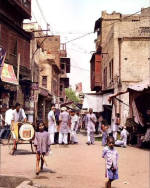
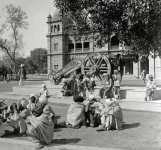
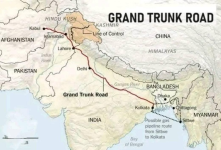
The Grand Trunk Road formerly known as Uttarapath, Sarak-e-Azam, Shah Rah-e-Azam, Badshahi Sarak, and Long Walk, is one of Asia's oldest and longest major roads. For at least 2,500 years it has linked Central Asia to the subcontinent.
It runs roughly 3,655 km (2,271 mi) from Teknaf, Bangladesh on the border with Myanmar west to Kabul, Afghanistan, passing through Chittagong and Dhaka in Bangladesh, Kolkata, Kanpur, Agra, Aligarh, Delhi, Amritsar in India, and Lahore, Rawalpindi, and Peshawar in Pakistan.
Route information
Length: 3,655 km (2,271 mi)
Status: Currently functional
Existed before 322 BCE–present
The highway was built along an ancient route called Uttarapatha in the 3rd century BCE, extending it from the mouth of the Ganges to the north-western frontier of India.
The Great Indian epic "MAHABHRATA" refers to the existence of Grand Trunk road even before the Maurya Empire and was called Uttarapatha or the "Northern road". The road connected the eastern region of India with Central Asia, the terminus of the Khorasan Road.
Further improvements to this road were made under Ashoka. The old route was re-aligned by Sher Shah Suri to Sonargaon and Rohtas. The Afghan end of the road was rebuilt under Mahmud Shah Durrani. The road was considerably rebuilt in the British period between 1833 and 1860.
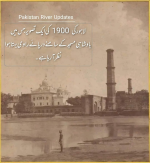
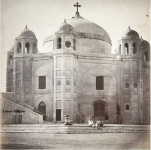
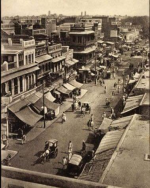
Over the centuries, the road acted as one of the major trade routes in the region and facilitated both travel and postal communication. The Grand Trunk Road is still used for transportation in the present-day subcontinent, where parts of the road have been widened and included in the national highway system.




 Federal cabinet gives nod to imposition of emergency in KP; summary sent to president (18 Viewers)
 Bangladesh - China keen to build 100MW nuclear power plant in Mongla (4 Viewers)


 Türkiye - Azerbaijan | Strategic Partnership, Regional Alliance, Military Cooperation - News & Updates (11 Viewers)