Operation Ghazab Lil Haq (Pakistan - Afghanistan War)

To view this content we will need your consent to set third party cookies.
For more detailed information, see our cookies page.
 
To view this content we will need your consent to set third party cookies.
For more detailed information, see our cookies page.
 
To view this content we will need your consent to set third party cookies.
For more detailed information, see our cookies page.
 
To view this content we will need your consent to set third party cookies.
For more detailed information, see our cookies page.
 

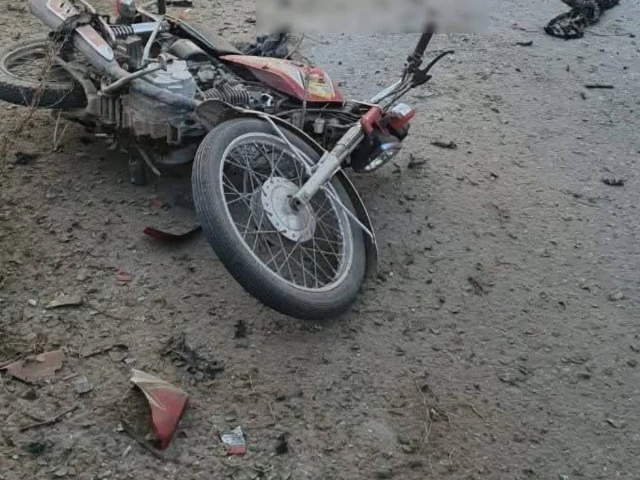
IED explodes prematurely in Bannu, kills terrorist planting bomb​

Bridge in Sorani, 2km from Bannu, key route to Peshawar for local travellers


Ramzan SeemabNovember 18, 20251 min read
facebook twitter whatsup linkded email

tribune


One terrorist was killed when an improvised explosive device (IED) he was installing near Doh Ghoda Bridge in Bannu detonated prematurely on Tuesday, while his injured accomplice fled towards a nearby residential area, police said.

No civilian casualties were reported, and the bridge, a key route for travellers from Bannu and Miranshah to Peshawar, remained undamaged. The area has been cordoned off, and a search operation is underway to apprehend the injured terrorist.

Read: FC soldier freed by terrorists in Bannu


Police collected evidence at the scene and are working to identify the deceased terrorist. The bridge, located about 2km from Bannu city in the village of Sorani, sits within a densely populated area with schools and office buildings nearby. Police said the attack appeared aimed at disrupting connectivity to Peshawar.

Read more: K-P forces kill five terrorists in Bannu, Lakki Marwat raid

Bannu Region Deputy Inspector General of Police Sajad Khan said the police responded swiftly to prevent a major disaster. “The search for the injured terrorist has been intensified, and we urge citizens to report any suspicious individuals or activities immediately,” he added.

The Tehreek-e-Taliban Pakistan (TTP) operates separate command groups across different regions. In Bannu and surrounding areas, the TTP sub-group Gul Bahar, led by commander Gul Bahar, is believed to be responsible for the attempted attack.
 
🚨🚨 BREAKING:

Bajaur: Major terrorism plot foiled;
CTD and police arrest Afghan suicide bomber and facilitator

According to CTD, in collaboration with Bajaur police, upon receiving intelligence about the presence of two suspicious individuals in a nearby ravine in the area, an intelligence-based operation was conducted, leading to the arrest of suicide bomber Qais, who belongs to Balkh, Afghanistan, along with his facilitator Rafiullah.

Three hand grenades were recovered from the possession of the arrested terrorists, while a locally made IED, fuse, and explosive material were also recovered from a blue bag in the possession of the suicide bomber. CTD.
 
To view this content we will need your consent to set third party cookies.
For more detailed information, see our cookies page.
 
The Intel Consortium
@IntelPk_

Three Taliban officials who had leaked news of an attack against Hibatullah Akhundzada to a journalist have been arrested.

One of them made a chilling claim in his last message yesterday: Hibatullah Akhundzada has succumbed to his wounds.

It is said that the Taliban are concealing this information because they fear it will spark a new internal war for power.

Now the real question is this: Who is truly pulling the strings of power now? The Kandaharis or the true believers?

The paralysis of decision-making, sudden appointments and changes—even officials appointed just a week ago being replaced—the abrupt warming toward India and distancing from Pakistan: all of this indicates that some major event has occurred, and the Taliban are trying to keep it hidden from the world

To view this content we will need your consent to set third party cookies.
For more detailed information, see our cookies page.
 
To view this content we will need your consent to set third party cookies.
For more detailed information, see our cookies page.
 

TTP ‘serious threat’ in South and Central Asia, receiving support from de facto Afghan authorities, UNSC told


News Desk
November 20, 2025

1763639197077.png

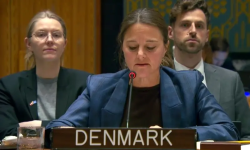
Denmark’s Deputy Permanent Representative to the United Nations Sandra Jensen Landi. — Screenshot courtesy UN WebTV website

Denmark has pointed to the “serious threat” posed by the banned Tehreek-i-Taliban Pakistan (TTP) in Central and South Asia and says that the terror outfit has been receiving “logistical and substantial support from the de facto authorities”.

In the capacity of the chair of the Security Council ISIL (Daesh) and Al-Qaeda Sanctions Committee, Denmark raised these concerns while briefing a UNSC meeting held in New York on Wednesday.

The presence of TTP militants in Afghanistan has long been a point of contention between Islamabad and the Taliban administration. Since the Taliban’s return to power in Kabul in 2021, Pakistan has accused the group of sheltering thousands of TTP fighters, who have escalated attacks on Pakistani security forces, particularly in the Khyber Pakhtunkhwa and Balochistan provinces.

Denmark’s Deputy Permanent Representative to the UN Sandra Jensen Landi told the UNSC meeting that the TTP, “with its approximately 6,000 fighters, is another serious threat emanating from the region, receiving both logistical and substantial support from the de facto authorities”.

“The TTP has conducted numerous high-profile attacks in Pakistan from Afghan soil, some of which incurred mass casualties,” she added.
 
Landi also gave an overview of the evolving terrorist threat posed by Daesh, Al-Qaeda and their affiliates, drawing on the latest assessments of the Analytical Support and Sanctions Monitoring Team.

“The threat posed by ISIL (Daesh), Al-Qaeda and their affiliates remains dynamic and geographically diverse, with the highest intensity observed in Africa. ISIL, Al-Qaeda and their affiliates continue to step up their propaganda, exploiting social media platforms to glorify violence, recruit youth and raise funds. Their continued use of cryptocurrencies poses a growing challenge to sanctions implementation,” she said.

Landi further stated that after losses in the Middle East, Daesh had “pivoted towards Africa, where affiliates such as the Islamic State West Africa Province (ISWAP) have expanded activities and propaganda”.

“ISIL-Khorasan (ISIL-K) is one of the most serious threats in Central and South Asia, with at least 2,000 fighters under Sanaullah Ghafari. They continue to target Shia communities, de facto Afghan authorities and foreign nationals,” she said.

“Across regions, foreign terrorist fighter movements — particularly between Syria, Africa and Central Asia — remain a persistent concern for member states.”

Landi further said that Al-Qaeda’s central leadership remained weak and largely marginalised, while affiliates — including Jamaat Nasr al Islam wal Muslimin in the Sahel region of Africa — had “exploited local grievances to expand their reach and financing”.
 

Users who are viewing this thread

Pakistan Defence Latest

Latest Posts

Back
Top