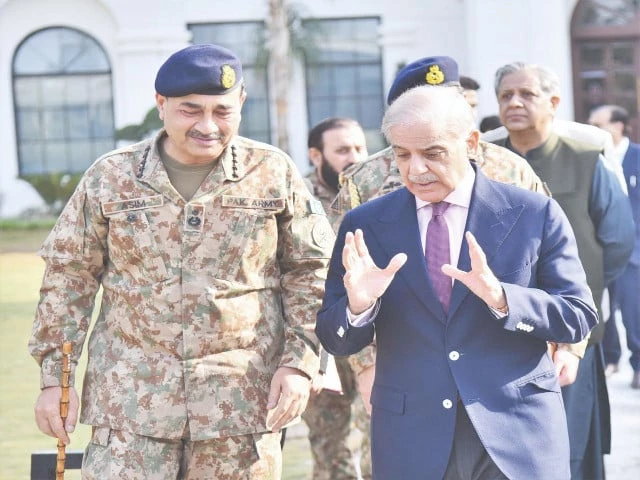
Operation Ghazab Lil Haq (Pakistan - Afghanistan War)

As someone who has been following the Afghanistan-Pakistan situation since at least 2015 when Pakistanis would cheer the Taliban and suck-up to Afghans that would insult them, ironically this Indian probably has it more correct than most Pakistanis but still off.

For some reason, most of these analysts are still ignoring the elephant in the room here, and I'm not sure why. The Taliban, is of course a terrorist group, but it misses the fundamental motives & reasoning behind its actions and why it is so belligerent against Pakistanis. Afghan society has long had claims and desired to establish something called Loy Afghanistan (Greater Afghanistan) which means annexing 2 of Pakistan's provinces, KP and Balochistan through hook or crook. It also has an old historical racial supremacy complex over "Punjabis", which pushes it to its more violent form of belligerence, that's almost genocidal. It believes it is their inherent right all must fight for to the death, no matter how many must die.

Essentially, no ceasefire is going to last and it's foolish to think a ceasefire is an actual solution, it's kicking the can of conflict down the road. Such mindsets can only be resolved through giving them the satisfaction of conflict that they want. Usually requiring humiliation before giving up.
True, this will be a battle of wills between two races and societies. At first the Afghans were holding back on the hatred for Pakistan, but now the gloves are off and Afghans have become so unhinged that they have also exposed themselves especially their animosity towards Punjab and how in their pov Punjab is the biggest barrier to their dreams of Loy Afghanistan.
But Afghans should know that Punjab is not invading their homeland, heck not even Sindh or any other province and the people living inside. These people will keep on fighting them even for centuries because historically they have been in conflict with India. If Afghans want a taste of battle and conflict, then so be it and we are already seeing them making alliances with India out of desperation and mutual hatred for Pakistan.
 
Afghan accounts are celebrating the Chinese talks for a simple reasom: They benefit Afghanistan, but do not favour Pakistan.

It's as simple as that, kinetic action and military capability is the best option for us, talking with false aurrances and weak deals favours Afghanistan.

They'll continue aiding terrorism beneath the surface by expanding their recruitment, building capacity, while fully taking advantage of Pakistani trade routes, then strike again when they are confident with intensified terrorism.

To view this content we will need your consent to set third party cookies.
For more detailed information, see our cookies page.
 
Afghan accounts are celebrating the Chinese talks for a simple reasom: They benefit Afghanistan, but do not favour Pakistan.

It's as simple as that, kinetic action and military capability is the best option for us, talking with false aurrances and weak deals favours Afghanistan.

They'll continue aiding terrorism beneath the surface by expanding their recruitment, building capacity, while fully taking advantage of Pakistani trade routes, then strike again when they are confident with intensified terrorism.

To view this content we will need your consent to set third party cookies.
For more detailed information, see our cookies page.

so now we are sharing a 2 day old account created God knows where as a credible source ?
 
To view this content we will need your consent to set third party cookies.
For more detailed information, see our cookies page.
 
Attempt to Attack Pakistan from Afghanistan Foiled, Deaths of Dozens of Taliban Confirmed .

In Khost, dozens of Afghan Taliban were killed during an attempt by the Taliban to attack Pakistani security forces' checkpoints.
This morning, the large number of funerals that took place sent waves of fear and anxiety through the area.

To view this content we will need your consent to set third party cookies.
For more detailed information, see our cookies page.
 
ISPR
Field Marshal Syed Asim Munir, NI (M), HJ, COAS & CDF, presided over the 274th Corps Commanders’ Conference (CCC) at General Headquarters (GHQ), Rawalpindi.

The Forum undertook a comprehensive review of the prevailing internal and external security environment, reaffirming that all terrorist proxies operating on behest of Indian and other external sponsors, along with their facilitators and abettors, will be pursued and eliminated, relentlessly, and without exception. The pace of Operation Ghazab-lil-Haq will be maintained till the culmination of terrorists’ safe heavens and use of the Afghan soil against Pakistan is decisively brought to an end.

source ispr

idk what to say man , one side they are signing a stupid deal and another saying we wont stop
 
ISPR
Field Marshal Syed Asim Munir, NI (M), HJ, COAS & CDF, presided over the 274th Corps Commanders’ Conference (CCC) at General Headquarters (GHQ), Rawalpindi.

The Forum undertook a comprehensive review of the prevailing internal and external security environment, reaffirming that all terrorist proxies operating on behest of Indian and other external sponsors, along with their facilitators and abettors, will be pursued and eliminated, relentlessly, and without exception. The pace of Operation Ghazab-lil-Haq will be maintained till the culmination of terrorists’ safe heavens and use of the Afghan soil against Pakistan is decisively brought to an end.

source ispr

idk what to say man , one side they are signing a stupid deal and another saying we wont stop
seems like no more Air strikes, just some odd news of border clashes.
 
Friend, Turkey’s situation is completely different to Afghanistan.

The situation with Afghanistan is that they are an actual nation recognized by the UN, the Kurds aren’t. The Kurds have the same rights as the Turks, they can be elected as officials, open shops, own property, there is no real discrimination only felt discrimination; their grievances are mostly wanting a state of their own and wanting independence, their sentiments are purely nationalistic.

The dilemma in Pakistan is completely different, I would say their motives are more ideological and nationalistic and on top of that there is an actual nation backing them, while with the Kurds every nation that Kurds reside in are opposed to a Kurdistan.

Putting that aside. At the current moment the real threat for Pakistan isn’t Afghanistan. It’s the current situation that is happening with Iran and the UAE, I believe something big is going to happen soon, from the news I’ve been reading I think the UAE with Saudi might be getting ready along with US for a ground operation in Iran, and I believe it wants Pakistan to also help in that hence why the UAE has been cancelling visas and why Pakistan gave back 3 and half billion back to the UAE.

Afghanistan is a minor nuisance at the current moment, Pakistanis should prepare themselves for what will happen in the next 3 months, hopefully peace can prevail in this region as all this region ever has known is war and destabilization, I truly feel bad for all the people in the region hopefully in the next decade and forward there will be peace and brotherhood instead of all this bad blood.
Afghanistan is a country but Taliban are not recognized as its government by the UN or anyone else.

Agreed on Afghanistan being a lesser issue currently, but almost everyday we have been losing police to Taliban attackers - one yesterday, another a few days ago. So this cannot be set aside.

For other Pakistanis, it's worthwhile to listen to this retired San Ldr's views on the Taliban and Pakistan's strikes inside of Afghanistan:
To view this content we will need your consent to set third party cookies.
For more detailed information, see our cookies page.


I have voiced similar views on this forum and then came across his video last night. Dair se aiye, durust aiye is the general gist of his talk. The qatilana harkatain of the Taliban left no other choice for Pakistan.
 
ISPR
Field Marshal Syed Asim Munir, NI (M), HJ, COAS & CDF, presided over the 274th Corps Commanders’ Conference (CCC) at General Headquarters (GHQ), Rawalpindi.

The Forum undertook a comprehensive review of the prevailing internal and external security environment, reaffirming that all terrorist proxies operating on behest of Indian and other external sponsors, along with their facilitators and abettors, will be pursued and eliminated, relentlessly, and without exception. The pace of Operation Ghazab-lil-Haq will be maintained till the culmination of terrorists’ safe heavens and use of the Afghan soil against Pakistan is decisively brought to an end.

source ispr

idk what to say man , one side they are signing a stupid deal and another saying we wont stop
There is no signing anything till Pakistan's demands are met. None have been met thus far. This article takes stock of Pakistan's stance/posture towards Afghanistan.


From Panic to Posture​

Operation Ghazab Lil Haq reset deterrence, improved coordination, and signaled Pakistan’s firmer western posture

Rai Mohammad Mustafa Bhatti|April 06, 2026

Operation Ghazab Lil Haq will likely be remembered less for a single strike and more for what it changed in the psychology of the western front: Pakistan stopped treating cross-border pressure as an “acceptable level of pain” that must be absorbed quietly while the country tries to fix everything else. For years, raids, fire assaults on posts, militant movement, and the sense that violence could be switched on and off from across the line acted like a steady tax on security, investor confidence, and diplomacy. The operation’s first and biggest success is that it signaled a ceiling to that tolerance, and it did so in a way that looked organized rather than emotional.

A key difference this time was consistency. Pakistan’s western posture has often suffered from oscillation: anger followed by fatigue, strong statements followed by drift. Adversaries exploit that pattern by waiting Pakistan out. Ghazab Lil Haq was designed to break that expectation. Whatever one thinks of the politics around it, the state communicated a repeated message: the frontier will be defended actively, and cross-border testing will carry real costs. Consistency may not sound like a dramatic achievement, but in deterrence it is the entire game; as the maxim goes, “Actions speak louder than words.” When a state becomes predictable in its response, it becomes harder to probe casually.

The second success was clarity of purpose. The operation was framed not as venting, but as a structured response to a defined problem: repeated cross-border pressure and the militant ecosystem that feeds it. That matters because force becomes strategically useful only when it is tied to a policy message—“we want stability, but we will impose costs when tested”—instead of being treated as a short burst meant mainly for domestic optics.

In plain terms, Ghazab Lil Haq tried to reset the cost-benefit calculation of those who assumed Pakistan would limit itself to protests and brief retaliation. As Sun Tzu put it, “In the midst of chaos, there is also opportunity.” The opportunity here was to convert a dangerous, recurring problem into a clearer strategic lesson: tests will be answered, and ambiguity will be reduced.

The third success was diplomatic. Pakistan’s warnings on the Afghanistan file have often been heard internationally and then quietly shelved. A large, sustained operation forces attention, even from actors who do not want deeper involvement. Attention is not sympathy, but it is leverage. By making the costs of inaction visible, Ghazab Lil Haq pushed the issue back into a higher-priority lane and made it harder for external stakeholders to treat the western frontier as “background noise.”

This is where Chief of Defence Forces and Chief of Army Staff Field Marshal Asim Munir, deserves due credit—not because he “solved” the Afghanistan problem (nobody can), but because the operation reflected discipline: tighter decision cycles, clearer thresholds, steadier messaging, and a response that looked planned rather than improvised. Pakistan appeared less surprised by events on its western front. That is not a small thing; it is usually the difference between a state managing a frontier and a frontier managing the state.

Just as important, this operation has highlighted a broader change inside Pakistan: the synchronisation of state machinery.

Pakistan’s weakness has often been that its institutions operate like separate departments in separate universes—one message from politics, another from enforcement, another from diplomacy, another from intelligence—creating gaps that hostile networks exploit. Under the CDF’s stewardship, the state has looked more “stitched together.”

Intelligence collection, kinetic response, border administration, and strategic communication have appeared to move in tighter sequence, reducing lag time between warning, decision, and action. That matters because modern threats don’t give governments the luxury of slow coordination: attacks are planned quickly, narratives are weaponized instantly, and financing routes shift overnight.

For ordinary Pakistanis, this kind of synchronisation translates into a simpler outcome: fewer surprises. When the state’s arms work together, it becomes harder for militants to exploit seams—crossing points that aren’t watched, legal loopholes, bureaucratic delays, or mixed public signals that create confusion. A more coordinated state also reassures the public in the most basic way: it looks present.

That sense of presence is what pushes back against fear, rumor, and panic—the invisible forces that can destabilise a society even when the battlefield is far away. In that sense, the CDF’s most valuable contribution may be less about any single operation and more about turning security from episodic reaction into an organised, continuous posture.

The real test will be whether Ghazab Lil Haq reduces the frequency and lethality of future attacks, shrinks the space for militant maneuver, and creates a firmer basis for controlled diplomacy. But measured against its immediate objective of restoring deterrence and reasserting that Pakistan will not be bled indefinitely at low cost, the operation has already achieved something important: it made Pakistan look steadier, more deliberate, and harder to casually test.

The author is an International Relations expert and an alumnus of London School of Economics.
 
so now we are sharing a 2 day old account created God knows where as a credible source ?
It's an Afghan intelligence run account, age doesn't matter, but the narrative they are promoting does as it tells you a lot.
 
how do you know its an afg intel account ? its a 2 day old account being operated from india most probably.
- Account created in April
- Operated from Afghanistan
- Instantly smears Pakistan
- Promoted by other Afghan propaganda accounts

My common sense tells me it's a pretty solid assumption.
 
- Account created in April
- Operated from Afghanistan
- Instantly smears Pakistan
- Promoted by other Afghan propaganda accounts

My common sense tells me it's a pretty solid assumption.
anyone with an internet connection can do that, stop quoting every tom dick and harry, if we start this then this thread will be filled with nothing but misinformation and chest thumping.
 

Users who are viewing this thread

Pakistan Defence Latest

Back
Top