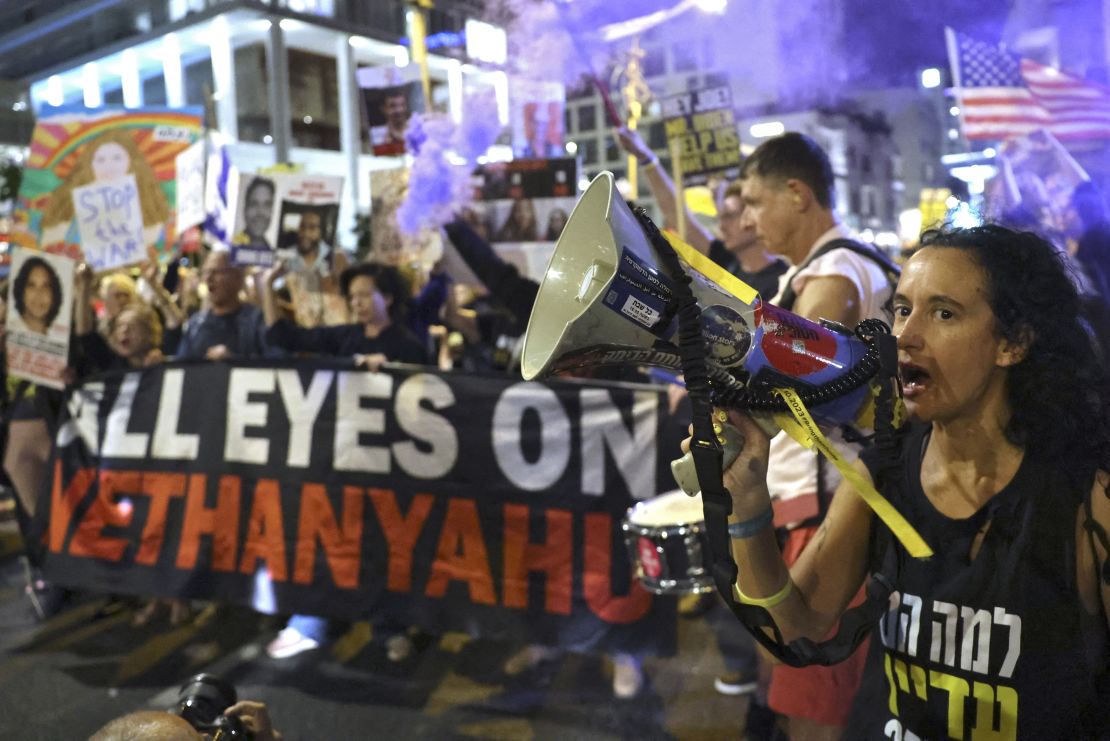
‘No incentive to end the war’
Netanyahu is playing a complicated game, trying to balance the contradictory demands of the many allies he cannot afford to lose.
His government relies on the support of far-right figures such as Security Minister Itamar Ben-Gvir and Finance Minister Bezalel Smotrich, who make no secret of the fact that they want Israel to continue occupying Gaza and are even suggesting
building Jewish settlements there.
Netanyahu’s approval ratings have improved over the last year, but not enough for him to be able to call a new election and win. So, he is stuck.
“Ending the Gaza war and the Lebanon war is not an option for his political partners in the coalition. They want to go all the way, so he cannot finish the war with the current coalition,” said Gayil Talshir, a political scientist at the Hebrew University in Jerusalem.
“The usual Netanyahu that we’ve seen for the last 15 years would have probably gone for a national unity government and a big (ceasefire) agreement with the support of the US. But this is not the political situation we are actually in, so politically, with this coalition, he has no incentive to end the war,” she added.
Talshir explained that a broader national unity government is not an option for Netanyahu as it would likely mean a public inquiry, headed by a judge, into the failures that led to the October 7 attacks.
Relatives and supporters hostages held in Gaza gather in Tel Aviv on October 22, 2024.
Jack Gue3z/AFP/Getty Images
On top of that, Netanyahu is still on trial for several charges of fraud, breach of trust and bribery. He is scheduled to begin testifying in December – the first sitting Israeli prime minister to appear in court as a defendant.
Before the October 7 terror attacks, Netanyahu and his government tried to push through a controversial judicial reform which would give much more power over courts to the government – potentially enabling Netanyahu to influence his own trial. A national unity government would not allow that, Talshir said.