Yes, we will do whatever is possible within our capacity. But the issue here is, IN is superior to PN by a lot. We need PN numbers soon and PN needs more VLS system on urgent basis also, to create a larger long range missile and AD force. We also need to acquire supersonic to hypersonic weapons very quickly. In other words, the PN needs upgradation this year and massive.
We don't target economic activity where civilians are. That's not how PA operates. No civilian casualties. There is a religious aspect to it also.
IN may be superior on paper, but PN in reality can deliver serious damage without even inducting numbers.
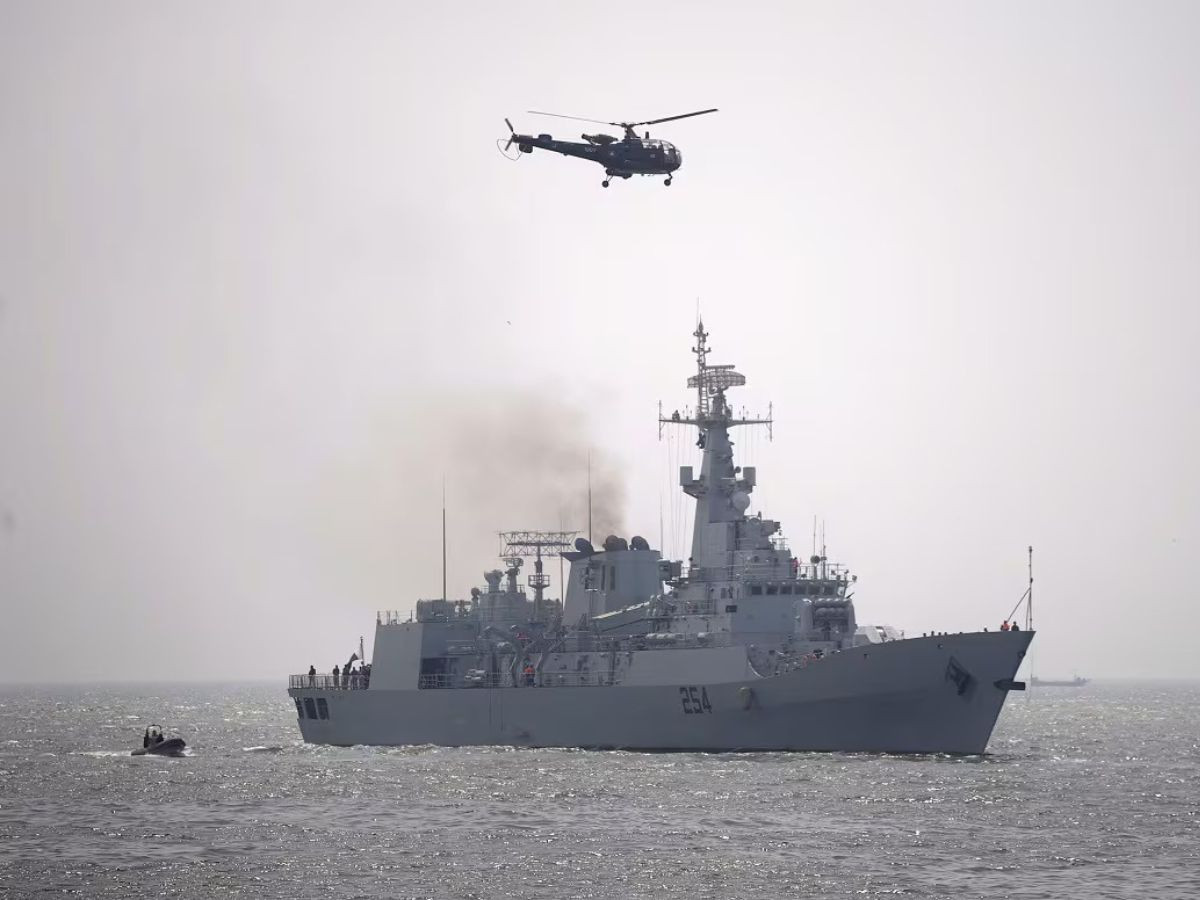
By quietly enhancing its capabilities, PN has ensured Delhi can’t take the Arabian Sea for granted

tribune.com.pk
PAKISTAN NAVY’S DETERRENCE: NEUTRALISING INDIA’S SIGNALING
BY
DR RABIA AKHTAR |
facebook twitter whatsup linkded email
PUBLISHED AUGUST 10, 2025
In May 2025, India and Pakistan fought a brief, but intense conflict triggered by a terror attack in Pahalgam, Jammu & Kashmir. India’s response, code-named Operation Sindoor, involved unprecedented air and missile strikes deep inside Pakistan.
The
four-day clash (May 7–10) saw both sides pushing new boundaries with drones, cruise missiles, and short-range ballistic missiles, yet carefully avoiding full-scale war. Notably, while the Indian Navy surged its western fleet into the Arabian Sea, no naval battles occurred; the deployments were signal rather than direct engagement.
After a ceasefire was brokered by the US on May 10, Indian officials were quick to boast. Defence Minister Rajnath Singh warned that any future “evil” act by Pakistan would
“face the firepower and ire of the Indian Navy,” stressing that India had “paused” Operation Sindoor “on our own terms” and that its forces “had not even started showing their might”
. This aggressive maritime signaling, essentially a threat that next time India would unleash naval power, was meant to project dominance.
Pakistan, however, read these signals very differently. Islamabad’s civil and military leadership dismissed India’s chest-thumping and highlighted that Pakistan’s armed forces, including its Navy, had held their own. In a post-conflict briefing, Pakistan’s Director General of Inter-Services Public Relations
noted that only a “small portion” of Pakistan’s capability was used in the fight, and that the Pakistan Navy had effectively kept the Indian Navy at bay during the hostilities.
Naval officers displayed maps and slides to media, explaining how Pakistan’s fleet protected its waters and deterred India from any seaborne misadventure. Indeed, despite
India’s deployment of an aircraft carrier group and other warships, they never engaged Pakistan’s coast or ports, underscoring that India’s maritime muscle-flexing was neutralized by Pakistan’s own posture and the inherent risks of escalation. Pakistan Navy’s quiet deterrence ensured that India’s much-touted naval power remained a bluff that was never called in battle.
Asymmetric Strength of the Pakistan Navy
Despite being smaller in size, the Pakistan Navy wields a mix of capabilities that make it a formidable deterrent force in the Arabian Sea. History offers a powerful reminder: during the 1971 war, Pakistan’s diesel-electric submarine
PNS Hangor prowled the Indian Ocean and detected an Indian task force led by the frigate INS Khukri. In a daring attack, the lone sub fired a homing torpedo that struck and
sank INS Khukri, the first warship ever lost to a submarine in the region.
This feat shocked India and forced its navy on the defensive for the remainder of that war. The Hangor’s victory, achieved despite Pakistan’s naval inferiority, has become legend, a single submarine’s remarkable courage altering the course of battle. The lesson endures: any major Indian warship venturing into Pakistan’s domain could face a similarly fateful encounter with one of Pakistan’s “silent service” vessels.
Today,
Pakistan’s submarine fleet remains the ace of its arsenal. The Navy operates modern Agosta- 90B (Khalid-class) diesel-electric submarines, equipped with Air-Independent Propulsion for extended stealth endurance. These subs carry heavyweight torpedoes and
Exocet SM39 anti-ship missiles, enabling them to strike surface targets without warning. In a conflict, Pakistan’s subs would likely lie in wait along India’s approach routes, unseen hunters in the depths. Even India’s largest units, such as aircraft carriers, would be vulnerable; a carrier strike group is inherently exposed in the confined North Arabian Sea, where Pakistan’s coastal radars and short response times favor the defender.
Former Pakistani strategic planners have noted that India’s 7,500 km coastline and numerous high-value naval assets are a
target-richenvironment from a
sea-denial perspective. In plainer terms, India has far more to lose at sea, large warships, oil tankers, port infrastructure, all of which present lucrative targets for Pakistan’s undersea and coastal forces.
Pakistan’s Navy demonstrated its growing indigenous firepower with tests like the Harbah naval cruise missile, shown here launching from fast-attack craft PNS Himmat. Harbah is a dual-purpose anti-ship and land-attack missile with a range of up to 280 km, significantly extending Pakistan’s striking reach. (Source: DefenseNews)
In addition to subs, Pakistan has invested in high-tech asymmetric weapons to counter India’s naval might. One major leap has been the development of indigenous cruise missiles. In 2018, the Navy test-fired the
Harbah cruise missile from the Azmat-class FAC PNS Himmat, dramatically hitting a target ship over the horizon. Harbah, a variant of the Babur missile family, is a surface-to-surface weapon with both anti-ship and land-attack capability. Defense analysts called Harbah, a step up for the Pakistan Navy, noting it out-ranges and outperforms older systems like the Harpoon and C-802.
The test’s success once again demonstrated the credible firepower of the Pakistan Navy and the high level of indigenization achieved by its defense industry. In Navy Chief Adm. Zafar Abbasi’s words, such strides reflect the resolve
to ensure seaward defense of Pakistan and safeguard national maritime interests at all costs.
Harbah NG Anti-Ship Missile. (Source: Quwa.org)
Pakistan has also deployed shore-based anti-ship missiles (often kept shrouded in secrecy) that further complicate an adversary’s plans.
A Babur coastal-defense variant (Zarb) was tested in 2017, giving Pakistan a land-based missile to target ships approaching its ports. Combined with modern frigates now entering service, like the new Chinese-built Type 054A/P frigates equipped with long-range LY-80 (HQ-16) surface-to-air missiles, the Navy is steadily improving its area denial envelope.
Pakistan cannot match India ship-for-ship, but it does not need to. Instead, its strategy focuses on denying the Arabian Sea to hostile incursions. Fast attack craft with cruise missiles, coastal batteries, and lurking submarines create layered threats that would make any Indian naval offensive a dangerous gamble.
Mass is not decisive in these waters;
Pakistan’s naval doctrine focuses on sea denial and coastal defense, seeking to restore deterrence equilibrium despite a smaller fleet. The Pakistan Navy may surprise a numerically superior adversary by the creativity and lethality of its responses. The Indian Navy, for all its size, would have to respect these asymmetries.
To illustrate, consider what an Indian task force would face if it tried to approach Karachi or Gwadar in a future clash. Long-range anti-ship missiles could rain down without the launch platform ever coming into the Indian fleet’s radar. Diesel submarines could pick off a destroyer or even a carrier, just as Hangor did in 1971, sowing panic and paralysis. Swarms of smaller missile boats and drones could harass and confuse the invaders.
Meanwhile, Pakistan’s coastline bristles with defenses; any warship venturing too near risks being targeted from land. India’s vaunted blue-water navy would effectively be chained by the invisible perimeter Pakistan has set up. Thus, the quiet deployment of these capabilities deters India from even attempting a naval adventure.
As one retired Pakistani general observed, India’s heavy dependence on the maritime domain (for power projection and energy imports) is a strategic vulnerability Pakistan can exploit. Simply put, the cost of a naval war would be unbearably high for New Delhi, a reality that Pakistan’s Navy leverages to keep the peace.
Pakistan’s sea-based second strike
Perhaps the most profound aspect of Pakistan’s maritime deterrence, and one often overlooked in India’s saber-rattling, is the introduction of a sea-based nuclear capability. Pakistan has quietly but steadily worked to complete its nuclear triad, and the Navy is integral to this effort.
In January 2017, Pakistan successfully tested the
Babur-3 submarine-launched cruise missile (SLCM) from an underwater platform. This stealthy missile, with a 450 km range, was specifically designed to carry a nuclear warhead.
The Babur-3 test was hailed by Islamabad as achieving a credible second-strike capability, in other words, the ability to retaliate with nuclear weapons from the sea, even if the
country’s land-based nukes were taken out. The plan now coming to fruition is to arm Pakistan’s diesel-electric subs with nuclear-tipped cruise missiles, which are far harder for an enemy to detect or preempt
. By dispersing nuclear assets under the ocean surface, Pakistan closes off any enemy hopes of a disarming first strike.
A Pakistan Navy Khalid-class submarine at a 2024 maritime exhibition. These Agosta-90B subs, now upgraded with air-independent propulsion and modern weaponry, are reportedly capable of launching the Babur-3 nuclear-capable cruise missile.
Indian criticism of Pakistan’s SLCM
The Indian
critiques of Pakistan’s Babur-3 submarine-launched cruise missile (SLCM) highlight supposed vulnerabilities, such as limited missile range, detection risks from Indian surveillance, and alleged operational constraints. However, these assessments overlook critical strategic and operational dimensions.
Firstly, the introduction of the Babur-3 fundamentally complicates India's deterrence calculus, regardless of its stated operational range. Even a modest sea-based nuclear capability introduces significant uncertainty for adversarial planning, compelling India to expend considerable resources toward continuous maritime surveillance and anti-submarine warfare efforts without guaranteed success.
Secondly, Indian analyses underestimate Pakistan Navy’s operational ingenuity and experience, particularly its demonstrated capability for stealth and strategic surprise, evident from historical incidents like the successful evasion and engagement by Pakistani submarines in past Indo-Pak crises.
Thirdly, Indian assertions about detection capabilities and confinement of Pakistani submarines overlook modern submarine operational doctrines, which leverage mobility, stealth, and deception, raising serious doubts about India's claimed ability to confine Pakistani submarines to territorial waters effectively.
Lastly, while challenges in command, control, and communication exist universally in submarine- based deterrence, Pakistan’s investments in secure communication infrastructure, redundancy, and procedural controls significantly mitigate the risks associated with nuclear command delegation.
Thus, contrary to Indian claims, the Babur-3 substantially enhances Pakistan's strategic depth, providing a credible and resilient second-strike capability vital for regional stability.
Today, Pakistan’s Naval Strategic Force Command is believed to be operational, overseeing these sea-based nuclear forces. At least one of the Agosta-90B subs (PNS Khalid) has undergone upgrades in Turkey, rejoining service with the ability to fire Babur-3 missiles
. This development significantly strengthens Pakistan’s credible second-strike capability, enhancing strategic stability by reinforcing deterrence against potential aggression.
If India were ever to contemplate a naval preemptive strike, such as an attempt to neutralize Pakistan’s naval assets or blockade its ports, it must contend with Pakistan's robust capability to mount an effective conventional retaliation at sea, independent of its nuclear deterrent. Pakistan's maritime forces are fully prepared to respond decisively through conventional means, significantly raising the strategic costs for India and diminishing any potential gains from such aggression. Such a scenario is the worst nightmare of any military planner, effectively deterring India from entertaining fantasies of an easy, one-sided naval war.
Moreover, the introduction of nuclear weapons at sea blurs the line between conventional and nuclear domains in a crisis. India’s military thinkers sometimes speak of fighting a
limited war under the nuclear overhang, implying they can carefully calibrate strikes (even at sea) without crossing Pakistan’s red lines. But Pakistan firmly rejects the idea that the Indian Ocean is a safe sanctuary for limited aggression. Any attack on critical Pakistani targets, be it a coastal city, naval base, or strategic economic node like Gwadar port, would be judged by its effect, not the domain it came from.
A missile fired from an Indian warship that devastates a Pakistani port could very well be seen as strategic escalation, regardless of whether that missile was conventional. The risk of miscalculation is immense. India has deployed supersonic BrahMos cruise missiles on multiple platforms, including warships and coastal batteries, and even integrated them into its Strategic Forces Command.
Pakistan regards the BrahMos as a dual-capable system (able to carry nuclear or conventional warheads) and thus inherently destabilizing. During the 2025 conflict, Indian media claimed that up to
15 BrahMos missiles were launched at Pakistani targets. Islamabad viewed that as a menacing signal, because when such high-speed missiles are in play, radar operators and decision-makers cannot know if the incoming warhead is conventional or nuclear. In the fog of war, a navy launching a volley of BrahMos could trigger Pakistan’s worst-case assumptions, forcing its hand toward escalation.
This is why Pakistan persistently warns that any Indian naval attack would be playing with fire. There is no neat geography of war where India can contain escalation at sea. Pakistan’s leadership has signaled that its nuclear thresholds are not fixed lines on a map, they depend on the nature of the attack and the targets. An attack on a Pakistani Navy submarine base or a strike intended to choke Pakistan’s economy would be interpreted as an existential threat. Under its doctrine of Full Spectrum Deterrence, Pakistan reserves the option to respond with tactical or strategic nuclear weapons if its survival is at stake.
The presence of nuclear-armed submarines simply reinforces this stance by adding an element of uncertainty for the aggressor. The end result is sobering: even India’s most hawkish planners must realize that attempting a decisive blow at sea could ignite a nuclear confrontation, an outcome no rational actor wants. In effect, Pakistan’s sea-based nukes serve as the ultimate quiet backstop, guaranteeing that a naval conflict would never remain “limited” for long.
Dire consequences of a misadventure at sea
India’s talk of launching an “air and sea” offensive next time might be intended to cow Islamabad, but a closer look reveals that such a gambit would carry dire consequences for India itself, strategic, economic, and political. Pakistan’s robust naval deterrence ensures that a maritime misadventure would be a high-risk, high-cost proposition. Indian leaders contemplating pre-emptive action at sea should consider the following outcomes:
The Indian Navy would face the genuine possibility of losing capital warships in combat. A single Pakistani submarine or missile salvo could cripple or sink a multi-billion-dollar vessel, for example, an aircraft carrier like INS Vikrant or Vikramaditya. Such a loss would not only decimate India’s naval prestige but also shock the nation. The psychological impact of, say, a carrier going down (with thousands of sailors) is hard to overstate; it could rival the trauma of past military defeats.
Even smaller losses, like destroyers or frigates struck by cruise missiles, would erode India’s numerical advantage and prove Pakistan’s point that the Arabian Sea cannot be dominated at will. Pakistan’s navy, though modest, would impose serious attrition on any attacking force, as its strategy is to make the sea a no-go zone through layered defense. Indian naval planners know that even a “victory” could look pyrrhic if key assets lie at the bottom of the ocean.
A war at sea in South Asia would send shudders through the global shipping industry and India would be hit hardest. The Indian economy is heavily dependent on seaborne trade and energy imports (most of India’s oil arrives via sea routes). Pakistan’s navy, by virtue of geography, sits astride the arterial shipping lanes of the Arabian Sea.
In wartime, it could implement a sea-denial strategy to disrupt these flows. Pakistani submarines and missile units could threaten commercial shipping along India’s west coast or in the Arabian Sea choke points. Just the credible threat of a submarine on the loose would likely force merchant traffic to reroute or halt.
War risk insurance premiums for vessels heading to Indian ports would skyrocket overnight. Oil tankers might refuse to enter conflict zones, leading to fuel shortages and price spikes in India. Vital exports and imports could languish. The economic cost to India, already severe from military expenditures, would compound with each day of maritime insecurity. Pakistan, with a smaller economy, would also suffer
disruptions, but India’s much larger stake in global trade means it stands to lose far more in absolute terms. Moreover, India’s coastline hosts major refineries, ports (like Mumbai, Kandla), and industrial hubs; these are high-value targets that Pakistan could hit with long-range missiles if pushed.
Damage to just one large port or petrochemical complex could inflict billions of dollars in losses and long-term setbacks. In essence, initiating a naval war would be akin to India shooting itself in the foot economically, a fact Pakistani deterrent strategy counts on.
Aggression at sea would not occur in a vacuum. Internationally, India would risk diplomatic isolation if it were seen as the instigator of a conflict that endangers global maritime commerce. The Arabian Sea and Indian Ocean are busy highways for oil tankers and cargo ships heading to many countries. A naval clash could draw in outside powers eager to protect their economic interests and prevent escalation.
We saw in May 2025 that the United States intervened actively to mediate and halt the fighting. Next time, the intervention might be swifter and more coercive, potentially curtailing India’s freedom of action. Within the region, an Indian attempt to blockade Pakistan or land a crippling blow could backfire by rallying Pakistan’s allies and sympathizers.
China, for instance, has a deep stake in Pakistan’s Gwadar port and overall stability; while Beijing would likely stay out of direct combat, it could apply pressure behind the scenes (or provide Pakistan intelligence and hardware support) to ensure India does not succeed. Politically at home, Indian leaders would face huge risks as well. If their gambit failed to achieve a quick win, or worse, led to heavy Indian casualties or a nuclear scare, the domestic backlash would be fierce.
The Indian public and opposition would question the judgment that led to a needless war. In Pakistan, by contrast, successfully repelling Indian naval aggression (even at great cost) would vindicate the military’s stance and could unite the nation in defiance. Thus, India could find itself isolated and chastened, rather than triumphant, if it underestimates Pakistan’s deterrent. An attempted knockout punch at sea is exactly the kind of misstep that could spiral out of control, a point not lost on sober minds in New Delhi or Islamabad.
Stability through quiet strength
In the high-stakes rivalry between India and Pakistan, much attention goes to armies and air forces, while the navies often operate in the shadows. Yet, as the post-Sindoor sabre-rattling showed, the maritime domain is emerging as a new front for signaling and potential conflict. Pakistan’s Navy may not grab headlines or flamboyantly brandish its weapons, but it remains the silent guardian of Pakistan’s security, practicing a quiet deterrence that is no less effective for its subtlety.
By quietly enhancing its capabilities, from indigenous missiles to stealthy submarines, the Pakistan Navy has ensured that India cannot take the Arabian Sea for granted. Every Indian warship commander must think twice, knowing an unseen adversary may be lying in wait.
Every Indian strategist must calculate that a naval strike on Pakistan carries a serious risk of uncontrollable escalation. In this way, the Pakistan Navy, though smaller and less publicized, punches above its weight to keep the strategic balance. It neutralizes India’s maritime signaling not through bluster, but through credible readiness and demonstrated will.
Pakistan Navy’s professionalism and preparedness were on display in May 2025, when it quietly countered India’s pressure without fanfare, no Indian ship dared cross Pakistan’s maritime red lines during the crisis. This positive performance deserves recognition.
In an era of regional naval build- ups, Pakistan has shown that security is not about matching an adversary ship-for-ship, but about making any conflict unthinkable. The Navy’s evolving conventional and nuclear deterrents serve exactly that purpose. They safeguard Pakistan’s shores and sea lanes, and in doing so, protect the nation’s economic lifeline and strategic sovereignty.
For India, the message is clear: temper your ambitions of preemptive “air+sea” offensives. Any future attempt to test Pakistan on the high seas would risk disastrous consequences, from sunken warships and economic calamity to potential nuclear escalation. No amount of boastful rhetoric can obscure the reality that Pakistan’s deterrence is robust and ready.
The quiet prowlers beneath the waves and the watchful sentinels on Pakistan’s coast ensure that war at sea will harm the instigator as much as the target. Thus, wisdom dictates refraining from lighting a fuse that could set the entire region aflame.
In the end, the Pakistan Navy’s silent vigilance contributes to strategic stability by keeping aggressive designs in check. It may operate out of the limelight, but if peace prevails in the Arabian Sea, much credit goes to those dark hulls and diligent crews who secure Pakistan’s shores, unseen, but ever prepared.
The quiet deterrence continues.
Dr. Rabia Akhtar is the Dean Faculty of Social Sciences, University of Lahore. She tweets @Rabs_AA and can be emailed at
[email protected]