"Long-range Stand off Attack capability has become a key multiplier in current warfare, the Russia-Ukraine conflict having show the importance of such assets. Debates on A2/AD (Anti-Access/Area Denial) issues, and in particularly how to overcome the limitations imposed by enemy air defences, have shown that long-range artillery is definitely one of the potential keys to open those bubbles.
Fatah-II is being inducted in the artillery divisions of the army for stand-off and precision engagement of deep target strikes and it would be used in conventional warfare by the Pakistan Army.
In 2021, the Pakistan Army (PA) began adding to its stand-off range precision-strike capability
by inducting the Fatah-1, an indigenously produced surface-to-surface missile (SSM) with a range of 140 km. Before the Fatah-1, the PA’s primary guided rocket was the A-100, a 100 km-range multiple-launch rocket system (MLRS) acquired from China and locally produced under license. In 2024,
Pakistan inducted the Fatah-2, a larger SSM with a range of 400 km. It also announced that the
Fatah-3 and Fatah-4, with ranges of 450 km and 700 km, respectively, were also under development.
In effect, the PA has inducted a new family of ballistic missiles under the “Fatah” designation, and this family appears to be a key piece of Pakistan’s efforts to build its land-based precision-strike capabilities.
Background: Fatah-Series of Ballistic Missiles
Pakistan revealed the Fatah-1 in 2021 as an indigenously developed MLRS. It was likely
a result of a program disclosed by the Ministry of Defence Production (MoDP) in 2017 to develop an “extended range” MLRS. When it announced the Fatah-1, the Army remarked that the missile gives it the ability to precisely engage targets “deep in enemy territory,” thus signaling its intent to develop stand-off range capabilities.
In 2023, Global Industrial and Defence Solutions (GIDS), the conglomerate representing Pakistan’s state-owned defence enterprises,
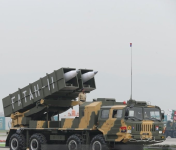
revealed an improved variant of the Fatah-1 called the Fatah-2. It had seemed that this missile was a direct evolution of the Fatah-1, i.e., it had the same diameter (likely 300 mm) and used an eight-cell launcher. However, it offered a range of 250 km.
Towards the end of 2023, Pakistan announced that it test-fired the Fatah-2, but this missile differed from the “Fatah-2” GIDS showed earlier. This new missile was larger in diameter (possibly 400 mm), requiring a two-cell launcher rather than the eight-cell launcher of the Fatah-1. It also announced that the Fatah-2 had a longer range – i.e., 400 km – than originally announced. According to GIDS’ CEO,
Asad Kamal, the Fatah-2 fields a “supersonic glide vehicle” that separates from the propulsion system in the upper atmosphere. This alludes to a maneuvering warhead capability.
The forthcoming Fatah-3 will likely be based on the Fatah-2 as its range increase is relatively modest (from 400 km to 450 km), but the Fatah-4 – which will have substantially more range at 700 km – could be a larger missile, possibly with a diameter of around 600 mm. With the Fatah-series’ roadmap involving significant range improvements, one should not discount the possibility of longer-ranged missiles that can reach or exceed 1,000 km.
Ukraine’s effective use of the High Mobility Artillery Rocket System (HIMARS) generated significant interest in both the concept and, in particular, the system. Pakistan likely studied the HIMARS’ use and saw the benefits of deploying a land-based strike capability, especially through a ‘shoot-and-scoot’ system that can launch a munition and quickly relocate to a different location to avoid enemy return fire.
However, while the Pakistan Army is working to emulate the general capability (i.e., land-based precision strike), its approach is different from the HIMARS. The HIMARS is not just a system, but a concept.
The idea behind the HIMARS is to leverage a rapidly deployable system that can quickly fire its munitions, relocate, and reload with fresh missiles via preloaded containers.
The container is a key feature as it makes HIMARS units compatible with different munition types, from 122 mm to 610 mm rockets and niche munitions, such as the Ground-Launched Small Diameter Bomb (GL-SDB). This technical versatility is paired with a capacity for high-intensity long-range strikes. When the HIMARS exhausts its munition stores, it rapidly ejects the canister and relocates to a different area where it can re-arm and resume firing. For this capability to work, the end-user would have to develop a doctrine where it leverages preloaded canisters and places those stores in different locations for launch vehicles to relocate to after firing.
Hence, while the rockets are the central assets, there are many other parts to the HIMARS design that one does not see in Pakistan’s strategy as it is currently constructed. For example, there is no sign that the Pakistan Army is interested in rapidly ejectable preloaded canisters. Hence, the Army’s focus is on acquiring long-range strike capabilities, but not necessarily HIMARS-type high-intensity or mobility.

The new rocket is powered by a single-stage dual-thrust rocket motor which boost it at supersonic speed and is guided until impact by an inertial navigation system (INS) with satellite upgrade, the receiver being open to more than one satellite positioning system, which give it a circular error probable (CEP) under 50 metres at maximum range. The rocket is guided on the target until hit, being capable of manoeuvring all along the trajectory, which should be quite flat, the rocket. According to data provided by GIDS, the Fatah-II rocket can hit targets at ranges between 100 and 290 km.
click on image to enlarge
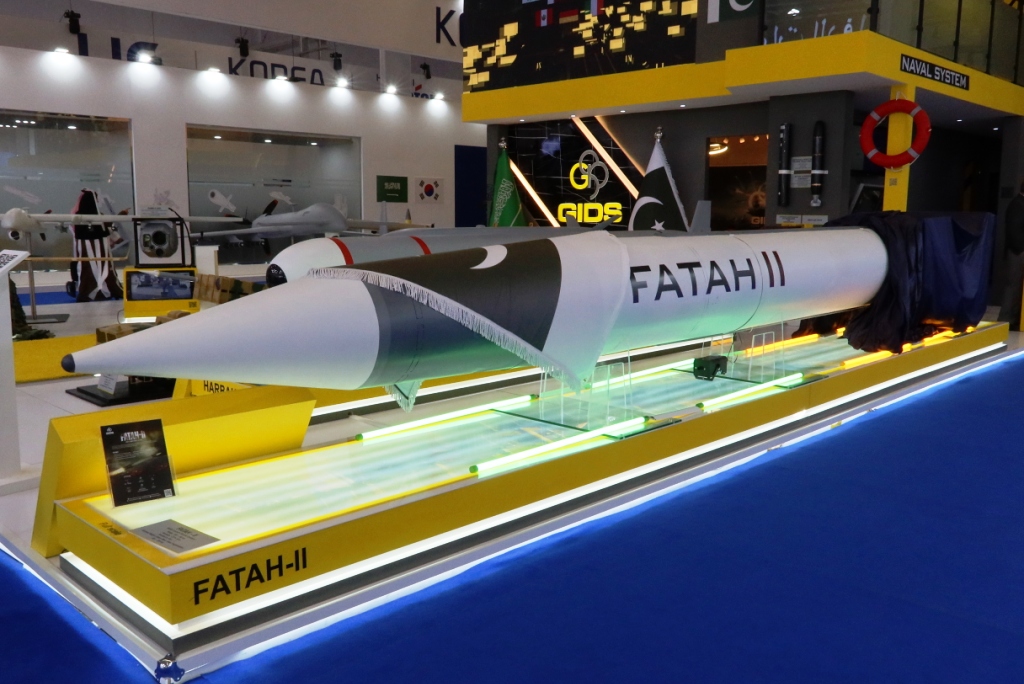
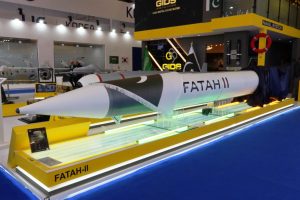
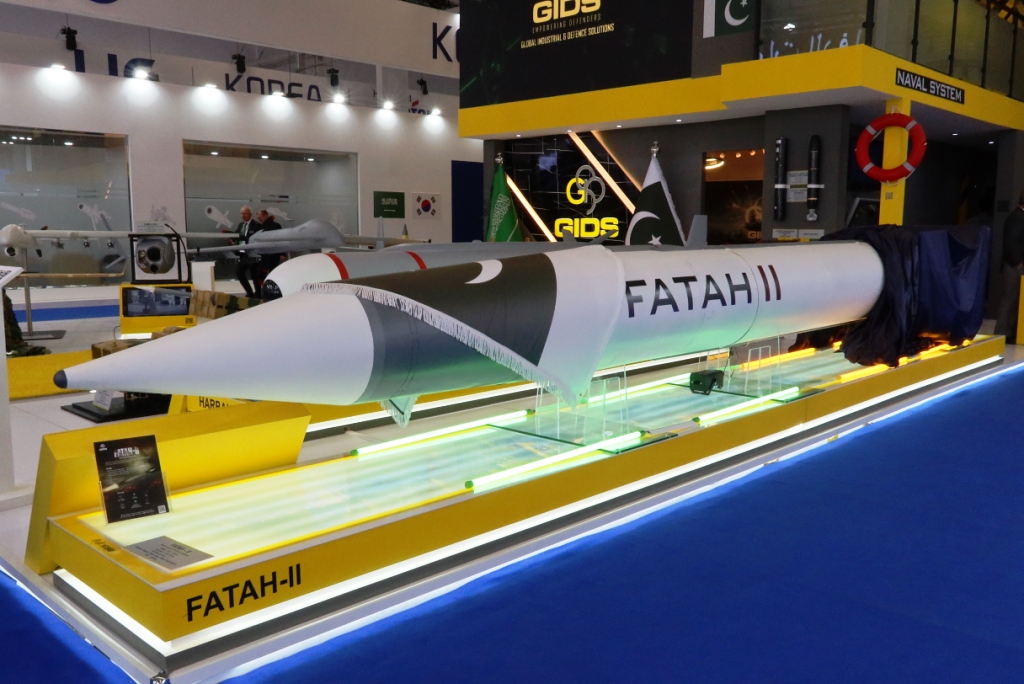
In late December 2023 the firing of a new rocket unveiled the existence of the Fatah-II system, which mock-up missile was showcased at the Riyadh exhibition. While the Fatah-I launcher was exhibited as a model, that of the Fatah-II was not present, however company officials confirmed that the new launcher carries two guided rockets. He also told EDR On-Line that the launcher is different, hence we understood that the Fatah-I launcher is not compatible with the Fatah-II missile, which is not the case i.e. for the US MLRS system, which accepts several different munitions.
Seven-and-half metres long, it carries a 365 kg unitary blast/blast fragmentation warhead, which lethal radius was not provided. The rockets can be launched in single mode as well as in salvo mode.
It is to note that technical data provided by GIDS are more conservative than those declared by the Pakistan Army to the national press last December, following the first launch.
According to GIDS the first batch of Fatah-II is already in production for the
Pakistan Army. EDR On-Line understood that the new indirect fire system should be delivered to divisional artillery units.
The Fatah-II will allow Pakistan to conduct deep strike missions in Indian territory, countering the new Indian doctrine which aims at launch surprise attacks using Brigade-level Integrated Battle Groups. The new guided rocket will allow hitting rear areas where command and logistic assets are located, without employing short-range ballistic missiles, the Fatah-II shorter reaction time, thanks to the solid fuel rocket motor, and time on target, due to supersonic speed and flatter trajectory, making it better suited to counter objectives that materialise in a very short time.
The international unveiling of the new multiple rocket system at the Riyadh exhibition confirms what EDR On-Line was told by company officials, that the company considers the Middle East one of main potential export areas.
click on image to enlarge
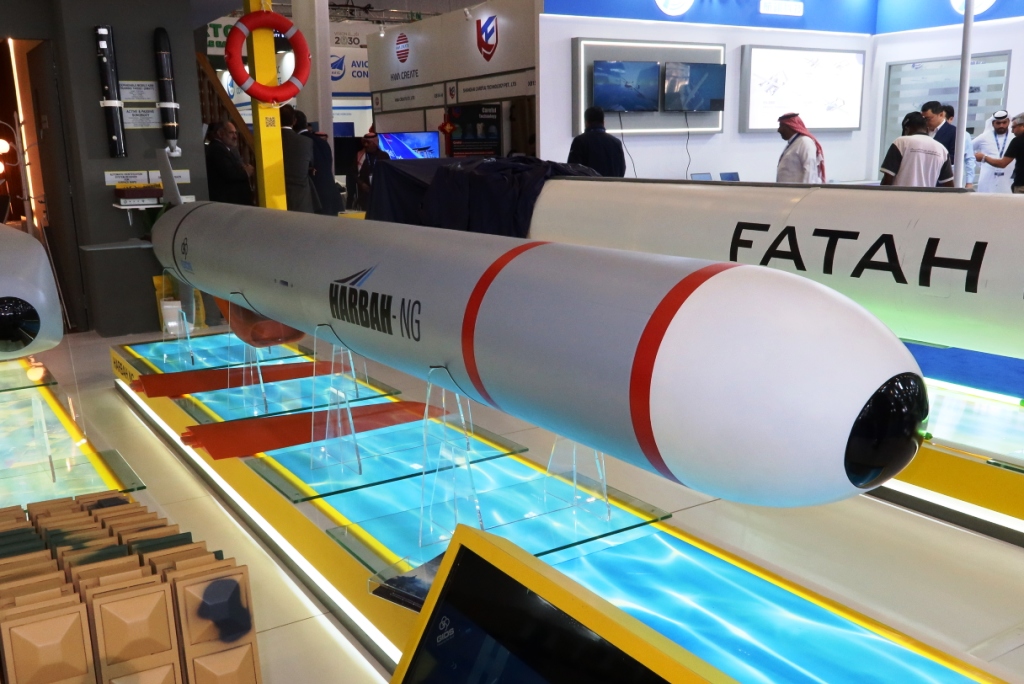
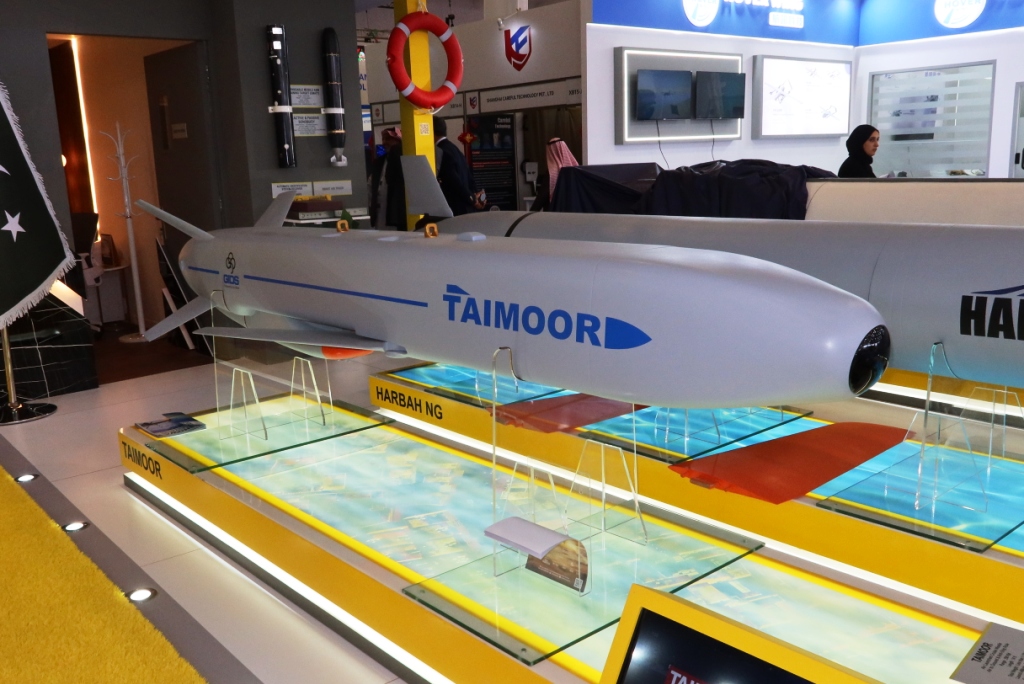
Beside the new Fatah-II, at the GIDS booth
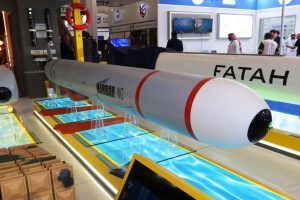
WDS visitors could also see two cruise missiles unveiled one year ago. The ship launched Harbah-NG, has a 280 km range, a 0.6-0.8 Mach speed, an inertial/GPS-GLONASS navigation system with a dual radar/imaging infrared seeker as well as a camera for the attack phase. Its modular design allows to fit different warheads according to the type of target.

click on image to enlarge
The air launched Taimoor was the other cruise missile visible at the Riyadh exhibition. Fitted with a blast/fragmentation warhead, its weight at launch is 1,100 kg and it navigates for a maximum of 290 km under an INS/GNSS navigation suite, the imaging infrared seeker being activated in the last phase of the mission once the target is in view. The Taimoor is 4.38 metres long and has a 3.2 metres wingspan.
At the WDS 2024, GIDS of Pakistan showcased the new Fatah-II long range guided rocket, which first test took place on 27 December 2023.

www.edrmagazine.eu




 www.radio.gov.pk

 defencepk.com

 click on image to enlarge
 click on image to enlarge
 click on image to enlarge