PAF J-10CE News, Updates and Discussion

Status
Not open for further replies.
Do you mean 100% local manufacturing? (Except engines)

In the Chinese perception, local manufacturing means that the local manufacturing rate of the product, from raw materials to the final product, is at least 80%. ------ Focus: Starting from raw materials......

If we use this standard to measure the local manufacturing rate of JF-17......
I don't think Pakistan has any real intention to increase the local manufacturing rate of JF-17. (Political propaganda slogans are not in the scope of discussion.)
Yes, something along those lines even if not exactly. The main goal is having control of the platform and total flexibility to integrate weapons systems and other modifications without having to reach out to China, I don't believe this counts in the realm of political propaganda because it's something that has been a genuine desire by the air force.
 
Any Idea of PL17 (PL21) integration possibility with J10C..

If yes then what are chances of PAF J10s with have this integration and availability of Pl 17 .....

IMO of PAF if have this option, then that can wait for J35s maturity and availability as well.. ....

Plus can counter Indian new induction possibilities of long rang BRVs from Israel and Russia to counter PAF ...

Will reduce ... potential threat to our AWACS and EW , instead convert this thread towards India..
confidential info, will never come out in public domain until and unless the missiles are actually used in combat
 
Ok. Its clear how much you know about airframe design! If we can build a JF-17's stealthy version, what on earth makes you think we can't do that with J-10C's canard design where J-20's canard design can easily be reduced to fit? In fact, you might see a stealthy design by the PAF based on J-20 like canards and J-20 cross with J-10.
Hi,

Look at it this way---if the J20 is a canard design stealth---then why do we need to invest in the J10---.

Basically a stealth J10 is known as a J20 for simplicity sake---.

Someone has already invested heavily
 
Back in the day, it used to be PDF and then something else. I used to champion this SAME idea. That Pakistan should build JF-17 in immediate needed numbers to build a low cost, high effect back-bone for 24-7 CAP mission / workhorse stuff.

And later, Pakistan should start production of J-10C (back then there was no CE even as C was about to come out). Since it's a medium tier jet, after a couple of blocks, a stealth project could've been started for evaluation to build a stealthier version of J-10C's future blocks. That would've been much easier to do, and done in block steps vs. big jumps for industry maturity. That would've retired our Mirages and F-7's with replacement having 4.5 gen capability and kept our JF-17 a workhorse with PL-15 like state of the art capability.

My analysis back then included the fact that as India grows, it will definitely domiss-adventures. That happaned in 2019 and 2025.

That SAME analysis is still valid today. @MastanKhan - Do you remember debating on the above? No one liked that theory back then. If you research J-20 on some aerodynamic system, you will find that it's smaller dimensions can bring it near J-10C size. The Chinese can create a single engine stealth design that we can develop locally.
Hi,

The JF17 is a "low cost aircrfat" because our labor costs are extremely low---. Our general assembly techs would get maybe $1800 a year salary and engrs etc starting at around $7500 a year to $15000 a year---.

Otherwise this aircraft would be in the similar price category as the Gripen / F16.
 
Last edited:
Hi,

Look at it this way---if the J20 is a canard design stealth---then why do we need to invest in the J10---.

Basically a stealth J10 is known as a J20 for simplicity sake---.

Someone has already invested heavily

Thank you. I was avoiding from saying it. You hit it right on the head :). The case for the J-10 is, we still need mass replacement of Mirages and F-7's, etc and do need a medium category combat aircraft. So better to co-assemble J-10C's vs. buying them in numbers.
 
Hi,

The JF17 is a "low cost aircrfat" because our labor costs are extremely low---. Our general assembly techs would get maybe $1800 a year salary and engrs etc starting at around $7500 a year to $15000 a year---.

Otherwise this aircraft would be in the similar price category as the Gripen / F16.

Right, but not with Russian WD engines though. With say WS-X with 30% more thrust to weight, I agree, it would be in Gripen or up to F-16 block 52 price category.
 
The idea of creating a stealthier version of the JF-17 or even the J-10C often gets thrown around without a proper understanding of what that really entails both technically and financially. You’re drawing a loose comparison to efforts like the F-15 Silent Eagle or the later Su-35 variants, which do feature some reductions in radar cross-section (RCS), but you’re missing the full picture. This isn’t just a matter of reshaping a few panels and slapping on RAM (radar-absorbing material).

RCS reduction is not linear, nor is it plug-and-play.

RCS reduction is a systems-level design philosophy. You cannot just reduce the aircraft’s frontal profile or add coatings and expect dramatic results. That is why true stealth platforms like the F-22 or B-2 are built from the ground up around low observability. Every inlet, edge alignment, internal bay design, engine nozzle shape, and surface treatment is optimized for signature suppression. In contrast, legacy airframes like the JF-17 or J-10C have not been designed this way. Their internal geometry, external hardpoints, and aerodynamic shaping are not conducive to VLO (very low observability) optimization.

Even in Western programs, partial stealth upgrades have limitations. Take the F/A-18E/F Super Hornet, for example. Boeing put significant effort into reducing its frontal RCS compared to the older Hornet. But the moment you hang external fuel tanks, targeting pods, or air-to-air missiles under the wings, the benefit drops sharply. External stores become dominant RCS contributors. This is why aircraft like the F-35 carry weapons internally. Without internal bays, stealth becomes highly conditional.

The KF-21 Boramae is a textbook example of this intermediate approach. It is a reduced RCS platform, not a stealth platform. It features some shaping elements for frontal RCS control and RAM treatment, but it lacks internal bays and has conventional engine exhausts. It is designed to lower detectability in certain scenarios, not disappear from the battlespace. And even this program, backed by South Korean defense industry and Lockheed Martin tech transfer, costs billions.

Now apply that to PAC and it is even more difficult because there is no evidence it has the capacity to design and integrate a true stealth upgrade to an existing platform. Even modest RCS reduction would require re-engineering the airframe, redesigning intakes, modifying avionics architecture, integrating RAM coatings with sustainable lifecycle support, and re-certifying aerodynamic performance.

Pakistan does not have the industrial base, testing infrastructure, or software ecosystems to pull this off alone. Stealth is not just about shaping metal. It involves computational fluid dynamics, electromagnetic signature modeling, advanced materials science, radar signature testing, and long-term maintenance planning. All of these are expensive and require sustained investment.

The why is important too.

A stealthified JF-17 would cost significantly more without delivering near-peer survivability. You end up spending resources on partial improvements without reaching the threshold where it changes the operational equation. It’s the classic case of diminishing returns. For a country that relies on budget flexibility, donor funds, and subsidized imports, this is not the kind of project that returns strategic value.

I agree with your analysis to the majority extent. The main point behind both of us is the same. JF-17 going PFX-Alpha, etc and into stealth is NOT an easy thing to do. Because Pakistan doesn't have the industrial base to do so. And we don't want a light weight capability now when we can have medium combat jets for stealth. We also saw the Project AZM scrapped also.

So let's get a design from China that would work and can be mass produced like the JF-17 locally. By getting a design vetted out from China and it's super computing labs, we would only have manufacturing to do and that's fine. If its a delta - canard design and we start producing / assembling J-10C, that's even better and cost effective because we do need to replace mass numbers of Mirages and F-7, both purposes can be done through one manufacturing line with obvious additions to it for stealth RAM / metallurgy. But that's also how you build industries, in blocks. Its easier if you acquire a tested design.

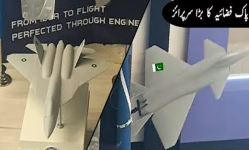
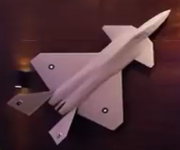
Here are some pics taken from NASTP. Note: delta, canard stealthy models at display under PFX. One of them resembles the KAAN, rest seem like cousins of the J-20. Sort of inline with my thoughts on this topic.

NASTP-STEALTH1.png

NASTP-STEALTH-J20-2.png
 
I agree with your analysis to the majority extent. The main point behind both of us is the same. JF-17 going PFX-Alpha, etc and into stealth is NOT an easy thing to do. Because Pakistan doesn't have the industrial base to do so. And we don't want a light weight capability now when we can have medium combat jets for stealth. We also saw the Project AZM scrapped also.

So let's get a design from China that would work and can be mass produced like the JF-17 locally. By getting a design vetted out from China and it's super computing labs, we would only have manufacturing to do and that's fine. If its a delta - canard design and we start producing / assembling J-10C, that's even better and cost effective because we do need to replace mass numbers of Mirages and F-7, both purposes can be done through one manufacturing line with obvious additions to it for stealth RAM / metallurgy. But that's also how you build industries, in blocks. Its easier if you acquire a tested design.

Here are some pics taken from NASTP. Note: delta, canard stealthy models at display under PFX. One of them resembles the KAAN, rest seem like cousins of the J-20. Sort of inline with my thoughts on this topic.

View attachment 134547

View attachment 134548

a) Pakistan "NEEDS" to complete the JF17 PFX programme, because that will give it a full industrial capability to build an entire airframe in Pakistan. If you go down the hole of abandoning that programme, then you are back to maybe having a design but no industrial capability to build that design. This has been a recurring problem in Pakistan's ability to build systems as it never invests in core infrastructure that it can reuse later on for new projects. It always takes a project centric view, which is why most Pakistani projects fail, or don't go on to develop new projects and technology.

The purpose of PFX should be to bring into Pakistan all of the sophisticated machined and tooling required to build the more complicated parts of JF17.

Turkey is reusing the infrastructure it developed for its F16 and F35 programmes to now build the Kaan!

b) If you go down the route of adopting a Chinese design, then you will bring into the platform the entire Chinese military industrial complex involvement where large swathes of technology will be provided as black box that need to be sourced from China. Anything that China provides will be based on products that the Chinese industry will provide.

c) There is no value to Pakistan of "assembling" another jet in Pakistan. That lesson is learnt for Pakistan. Completing the PFX programme to get a industrial capability for the entire airframe of a modern jet is of more value than another assembly project. If more J10C's are required, then buy them directly and save the money required for getting the custom jigs required for assembly of that platform.

d) Focus on designing and building new Pakistani AESA radars, mission computers, FBW computers, munitions where Pakistan owns the technology, intellectual property and more importantly Pakistani manufacturing capability. Pakistan has enough industrial manufacturing capability now through the various drone/uavs programmes and radar manufacturing capabilities to take the "next" step. Pakistan should focus on being able to replace the entire avionics suite of the JF17 PFX with a Pakistani design and manufactured versions, and use the infrastructure(and people) it develops for that to then be used for a new design project down the road.

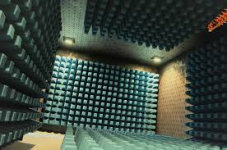
e) kick off a programme for stealth design tooling, i.e. the software tools and validation infrastructure (large rooms to validate radar signatures). This will take a long time to build, and validate. Once that is done, you will find the other steps are closer to completiona and you then have something that you can then reuse for "Azm"...

i.e. the following is an example of radar testing infrastructure, does Pakistan have something like this ? If not, then is it not required? Turkey built all this so that it could then do the Kaan project.

1752401461743.png

f) Only then can you attempt the final step of "airframe design" of a stealth platform design that incorporates all of the technologies, infrastructure built above. Project Azm tried to do all the "backwards" and it failed for that reason. Ideally a new platform is built on an a engine sourced from China or Turkey so that variable does not pose a risk to the programme. Don't try and mix a new platform with a new engine design. Look at the issues Turkey is facing right now with Kaan and their industrial capability is decades ahead of Pakistan.

Summary, the PFX programme is mandatory to be able to build UCAVs, and fighter jets down the road.
 
Last edited:
a) Pakistan "NEEDS" to complete the JF17 PFX programme, because that will give it a full industrial capability to build an entire airframe in Pakistan. If you go down the hole of abandoning that, then you are back to having a design, but no industrial capability to build anything. The purpose of PFX is to bring into Pakistan all of the sophisticated machined and tooling required to build the more complicated parts of JF17.

b) If you go down the route of adopting a Chinese design, then you will bring into the platform the entire Chinese military industrial complex involvement where large swathes of technology will be provided as black box that need to be sourced from China.

c) There is no value to Pakistan of "assembling" another jet in Pakistan. That lesson is learnt. Completing PFX to get a industrial capability for the entire airframe of a modern jet is more of value than another assembly project. If more J10C's are required, then buy them directly and save the money required for getting the custom jigs required for assembly of that platform.

d) Focus on designing and building new Pakistani AESA radars, mission computers, FBW computers, munitions where Pakistan owns the technology, intellectual property and more importantly Pakistani manufacturing capability. Pakistan has enough industrial manufacturing capability now through the various drone/uavs programmes and radar manufacturing capabilities to take the "next" step.

e) kick off a programme for stealth design tooling, i.e. the software tools and validation infrastructure (large rooms to validate radar signatures).

i.e. something like this :

View attachment 134550

f) The final step is the airframe design of a stealth platform design that incorporates all of the technologies, infrastructure built above, but ideally on a engine sourced from China or Turkey. Don't try and mix a new platform with a new engine design. Look at the issues Turkey is facing right now with Kaan and their industrial capability is decades ahead of Pakistan.

I don't know how to respond to your long article. Because you probably didn't read the entire thread or topic. So kindly read the entire topic first. No one said to abandon JFT program.

Secondly, after reading a bit, what I've understood is, you don't have much idea about advance manufacturing. For example, a manufacturing line can be programmed to produce parts based on X design. Same manufacturing line can then be programmed to produce system Y parts. So if we expand our manufacturing to let's say assemble initially and partial build J-10C, the same labor with some training can do the job. I used J-10C as example, it doesn't need to be that. It could be KAAN or any system Y after JFT. Hopefully this would explain. Kindly go through prior posts so you understand better, the discussion.
 
Time is the teller of everything. You don't seem to watch defense related news, etc? Most of this stuff is public knowledge now.
I want source? And do not give me sources of youtube and Twitter post to backup your claim because they are unreliable and junk sources

And AZM and PFX will be totally different from JF-17 design because AZM and PFX would be structurally (stealth shaping/composite material) and mechanically different from JF-17 basic design you have to design everything from scratch
 
Secondly, after reading a bit, what I've understood is, you don't have much idea about advance manufacturing. For example, a manufacturing line can be programmed to produce parts based on X design. Same manufacturing line can then be programmed to produce system Y parts. So if we expand our manufacturing to let's say assemble initially and partial build J-10C, the same labor with some training can do the job. I used J-10C as example, it doesn't need to be that. It could be KAAN or any system Y after JFT. Hopefully this would explain. Kindly go through prior posts so you understand better, the discussion.

Reading your reply, I am quite certain I understand the logic of design, engineering, manufacturing pipelines of a platform much better than you it seems.

Right now, Pakistan does not have the manufacturing infrastructure to build all the various part of the JF17 airframe in Pakistan. It can fully assemble the JF17C jet but not fully manufacture the airframe, so 'assembling' a J10CE adds nothing to Pakistan industrial capabilities that it does not already know how to do as of now. Setting up a J10CE assembly line in Pakistan would therefore be a waste of both time and money without adding anything new in industrial capabilities. If Pakistan needs to increase its military capabilities via the J10CE, then simply buy off the shelf from China, it is a lot cheaper. It can continue to try and grow its industrial aviation capabilities via the JF17/PFX programme.

Right now, Pakistan only has the machining and tooling capability to build a portion of the airframe for the JF17. The complicated pressing tools required to manufacture the stress load critical parts of the JF17C are still made in China and then shipped to Pakistan for final assembly. Pakistan needs to get that manufacturing capability, and it needs to do that by buying the remaining tooling for from China and then setting up the manufacturing pipeline for those parts. PAF officials have gone to China to acquire the clearances required for that tooling to be exported to Pakistan in the last few months. If you had kept up to date and read the various threads on this forum, you would know that already.

You have therefore completely missed the point of needing to have infrastructure, people and processes and procedures in place so that you "can programme a machine to produce some random part" and the most efficient place to do that is the JF17C platform. That is what the PFX programme should bring to Pakistan. J10CE assembly line wont do that, the PFX programme will. Once you have that in place, you can then reuse that on new projects which is exactly what PFX will bring to the table.

The next programme after that manufacturing pipeline has been setup should be to design and manufacture something like a UCAV like the Boeing MQ-28 Ghost Bat(or the many clones of that now being floated around the world as ideas) in Pakistan using Pakistani technology.

The goal is build an indigenous manufacturing capability in Pakistan in the most effective and efficient manner as a function of both time, and money.
 
Last edited:
a) Pakistan "NEEDS" to complete the JF17 PFX programme, because that will give it a full industrial capability to build an entire airframe in Pakistan. If you go down the hole of abandoning that programme, then you are back to maybe having a design but no industrial capability to build that design. This has been a recurring problem in Pakistan's ability to build systems as it never invests in core infrastructure that it can reuse later on for new projects. It always takes a project centric view, which is why most Pakistani projects fail, or don't go on to develop new projects and technology.

The purpose of PFX should be to bring into Pakistan all of the sophisticated machined and tooling required to build the more complicated parts of JF17.

Turkey is reusing the infrastructure it developed for its F16 and F35 programmes to now build the Kaan!

b) If you go down the route of adopting a Chinese design, then you will bring into the platform the entire Chinese military industrial complex involvement where large swathes of technology will be provided as black box that need to be sourced from China. Anything that China provides will be based on products that the Chinese industry will provide.

c) There is no value to Pakistan of "assembling" another jet in Pakistan. That lesson is learnt for Pakistan. Completing the PFX programme to get a industrial capability for the entire airframe of a modern jet is of more value than another assembly project. If more J10C's are required, then buy them directly and save the money required for getting the custom jigs required for assembly of that platform.

d) Focus on designing and building new Pakistani AESA radars, mission computers, FBW computers, munitions where Pakistan owns the technology, intellectual property and more importantly Pakistani manufacturing capability. Pakistan has enough industrial manufacturing capability now through the various drone/uavs programmes and radar manufacturing capabilities to take the "next" step. Pakistan should focus on being able to replace the entire avionics suite of the JF17 PFX with a Pakistani design and manufactured versions, and use the infrastructure(and people) it develops for that to then be used for a new design project down the road.

e) kick off a programme for stealth design tooling, i.e. the software tools and validation infrastructure (large rooms to validate radar signatures). This will take a long time to build, and validate. Once that is done, you will find the other steps are closer to completiona and you then have something that you can then reuse for "Azm"...

i.e. the following is an example of radar testing infrastructure, does Pakistan have something like this ? If not, then is it not required? Turkey built all this so that it could then do the Kaan project.

View attachment 134550

f) Only then can you attempt the final step of "airframe design" of a stealth platform design that incorporates all of the technologies, infrastructure built above. Project Azm tried to do all the "backwards" and it failed for that reason. Ideally a new platform is built on an a engine sourced from China or Turkey so that variable does not pose a risk to the programme. Don't try and mix a new platform with a new engine design. Look at the issues Turkey is facing right now with Kaan and their industrial capability is decades ahead of Pakistan.

Summary, the PFX programme is mandatory to be able to build UCAVs, and fighter jets down the road.
If it were years ago, I would fully support your point of view. But now, this plan is too late.
 
If it were years ago, I would fully support your point of view. But now, this plan is too late.

Pakistan is a country of close to 250million people. It is a large, and proper country and it has the intellectual capital in its people to be able to build the engineers required to build the military products it needs.

The question is how best can it create an aviation industry such that the bulk of that perform all of the day to day operations can be performed by a local product? What is the pathway from where Pakistan is now, to where it needs to get it?

Pakistan will need to procure the Kaan, and J-35AE, but how does it solve for needing to purchase a lot of jets for its backbone operations? The answer surely cannot be "continue" to buy from China, or Turkieye ?

Even if Pakistan now says, it is only going to focus on building UCAVs and loyal wingman, the problem is that those platforms need the same manufacturing infrastructure as a modern jet which Pakistan does not have currently because it has never taken seriously the act of building a local industry.

So, how do you think Pakistan can build an indigenous capability ??
 
So, how do you think Pakistan can build an indigenous capability ??
This topic is not suitable for discussion here.
=============================
BTW. In a CCTV news video, there were some things that shouldn't have appeared.
AVIC has a set of self-developed design software. You can design aircraft at will on this platform. All product information of all aircraft subsystem providers in China is on this platform. The design platform will automatically match relevant data; automatically perform relevant calculations such as aerodynamics and electromagnetic signals.
This system cannot design cutting-edge aircraft. But for a project of the level of PFX, it should be able to complete all preliminary design work within a few hours.
Maybe, AVIC will open the software system to Pakistan.
 
Last edited:
Status
Not open for further replies.

Users who are viewing this thread

Back
Top