PAF J-10CE News, Updates and Discussion

Status
Not open for further replies.
View attachment 125333

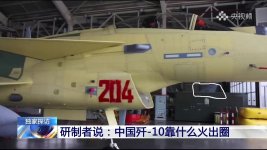
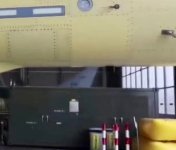
At Chengdu , Yellow primer new airframe being test flown for a new batch for an export customer J10CE spotted.
With production line of J-10CE already shifted to Guizhou some time back, this indicates potential tweeks or modifications which need to be fully tested at Chengdu.
Is this news true? (The caption below on location)

@Deino
 
Is this news true? (The caption below on location)

@Deino


The point is, this particular - and also other J-10CEs - were indeed seen at CAC, however so far we haven't seen yet a single J-10C or CE at GAIC!

wait before you jump the gun - keep following this news

Funny, the only ones who are constantly jumping the gun are these fan-boys claiming they would know something and repeatedly try to outdo each other with even more amazing predictions! :ROFLMAO:

So, who's the one "jumping the gun" here? The one who urges caution, asks for genuine, reputable sources, and has been critically following and analysing things for years, or the group of enthusiastic nerds who take every rumour at face value and amplify it three times over to get even more likes?
 
IMG_4186.jpeg

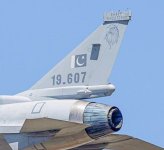
The painter J-10C in the middle right side of the pic, highlighted section. Does it look like a PAF flag?
 
J-20 defeated the J-10C 72:0 in an internal exercise of PLAAF, and the Rafale was just an appetizer. United States has lost its air superiority in the Asia-Pacific region.
Underestimating your enemy is a critical mistake in warfare. While exercises provide insights, real combat experience determines air superiority. Western technology is battle-tested, proving its effectiveness over decades. The Indian Air Force’s losses highlight the risks of overconfidence and limited combat exposure, superior aircraft alone don’t guarantee victory.

The J-20’s dominance over the J-10C in simulations may indicate advantages, but actual combat introduces unpredictable factors. The United States’ air power in the Asia-Pacific remains strong, supported by advanced stealth aircraft, electronic warfare, and integrated battle networks. True air superiority requires continuous modernization, realistic training, and strategic preparation, not just theoretical advantages.
 
Underestimating your enemy is a critical mistake in warfare. While exercises provide insights, real combat experience determines air superiority. Western technology is battle-tested, proving its effectiveness over decades. The Indian Air Force’s losses highlight the risks of overconfidence and limited combat exposure, superior aircraft alone don’t guarantee victory.

The J-20’s dominance over the J-10C in simulations may indicate advantages, but actual combat introduces unpredictable factors. The United States’ air power in the Asia-Pacific remains strong, supported by advanced stealth aircraft, electronic warfare, and integrated battle networks. True air superiority requires continuous modernization, realistic training, and strategic preparation, not just theoretical advantages.
Humility is a good quality, but excessive humility is hypocrisy.
The United States has lost its air superiority in the Asia-Pacific region. That is a fact.
Influenced by Confucianism, Chinese people have always been too tolerant and low-key. I don't think this is a good thing.
When faced with Western provocations, China must have the courage to take the initiative and demonstrate its strength.

India is not worthy of being China's opponent. Their overconfidence stems from overestimation of their own strength and blind optimism. China is much more pragmatic.

It is one-sided to overemphasize the role of humans and ignore the decisive role of the performance of weapons themselves in combat outcomes. A good weapon platform is an important factor in determining the outcome of a war.
犒添市换不赖真正的中吧游弋的,遍地煎十在战阵中的作用不是正人君子所谓。
A true Pakistani friend is not someone who makes sarcastic remarks after winning the war with Chinese weapons. I scoff at the arguments in the forum that belittle the decisive role played by the J-10C and P15 in the war.

PAF pilots are very capable, but Pakistan cannot win this war without Chinese weapons.
 
Last edited:
The point is, this particular - and also other J-10CEs - were indeed seen at CAC, however so far we haven't seen yet a single J-10C or CE at GAIC!

Hi Mr. Deino,
Hello Mr. Deino,
Thank you for providing valuable ,advance information about J-10C .
I am a Canadian living in Toronto.
Pakistan has, currently 20 J-10 C jet.
Can you please provide infor that Pakistan plan to get more of J-10 CE from China ?
 
I was going through the 1st page and came across posts which I had posted years ago, pleasantly surprised. Also, I was expecting J-10D's for PAF, guess I was hoping for too much.

I also recall boasting about PAF getting the J-31's in the event the IAF acquired Rafael. Again, I guess I was getting ahead of myself. But I would much rather have acquired the J-31, with a leap in technology, instead of the J-10C or even J-10D and who knows, we might have been able to perform SEAD missions neutralizing Indian S-400 systems.
 
Hello Mr. Deino,
Thank you for providing valuable ,advance information about J-10C .
I am a Canadian living in Toronto.
Pakistan has, currently 20 J-10 C jet.
Can you please provide infor that Pakistan plan to get more of J-10 CE from China ?
Pakistan has received J-10C fighter jets from China, with additional 16+ units pending delivery. To maintain regional air superiority, Pakistan ideally needs 72 J-10Cs to replace aging Mirage and F-7 aircraft.

Expanding the fleet would:
  • Enhance air combat capabilities with advanced avionics and PL-15E missiles.
  • Counter India’s Rafale and Su-30MKI fleet.
  • Ensure multi-role versatility in air defense, strike missions, and electronic warfare.
Pakistan’s air force modernization depends on securing additional J-10Cs or pursuing next-generation fighters for long-term defense strategy.
 
Status
Not open for further replies.

Users who are viewing this thread

Latest Posts

Back
Top